

Questions to Ask a Venue Before You Book a Live-Streamed or Hybrid Event
On this page
Before you sign, ask four things: is production built in or brought in, what's the backup if the stream fails, can remote attendees take part, and can your crew run the show. Specific answers mean the room was built for broadcast. Vague ones mean add-ons.
Key Takeaways
- A quote that covers only the space usually leaves staging, lighting, audio, streaming and crew as add-ons. Ask for a finished-event number.
- Redundancy is the live-stream question that matters most: a backup signal path, a dedicated internet line, and rehearsal time on the real equipment.
- "We can stream it" and "your remote attendees can participate" are different capabilities. Ask which one you're buying, and whether you can have both at once.
- Outside-crew policies range from fully open to fully locked. Find out what your team can run, which positions the venue holds, and whether there's a surcharge.
- The strongest answers are specific, offered without prompting, and easy to see for yourself on a walkthrough.
The most useful questions to ask a venue before a live-streamed or hybrid event aren't about square footage. They're about production. Ask whether the hybrid event production is built in or brought in, what happens if the signal drops mid-show, whether remote attendees can participate or only watch, and whether your own crew can run the room. A venue's answers to those four tell you more than any brochure.
Each section below ends with how we answer the same question at Worre Studios, so you know what a specific answer sounds like before you put it to anyone else.
Is the Production Built In or Brought In?
Ask this first, because it decides what your quote actually covers. Some venues have broadcast infrastructure permanently installed and crewed. Most quote the empty room and bring production in through approved vendors, line by line.
Neither model is wrong, but they price very differently. At a raw venue, lighting, audio, staging, power, rigging, streaming and the crews to run them typically arrive as plus-charges. Teams that priced comparable LED walls into a hotel ballroom found the walls alone ran $300,000 to $500,000, before crew, audio or the room itself. We've broken down what ballroom production actually costs line by line.
| Ask the venue | A strong answer | A red flag |
|---|---|---|
| What's installed and staffed every day, and what gets brought in for our date? | A specific list (walls, audio, lighting, control room) and the crew who runs it. | "Our AV partner handles all of that." |
| Are we required to use your approved vendors? | A clear yes or no, with the policy in writing before you sign. | The requirement surfaces after the contract. |
| Can you quote the finished event, not just the room? | A scoped number built around your run of show. | A room rate plus "we'll figure out the rest." |
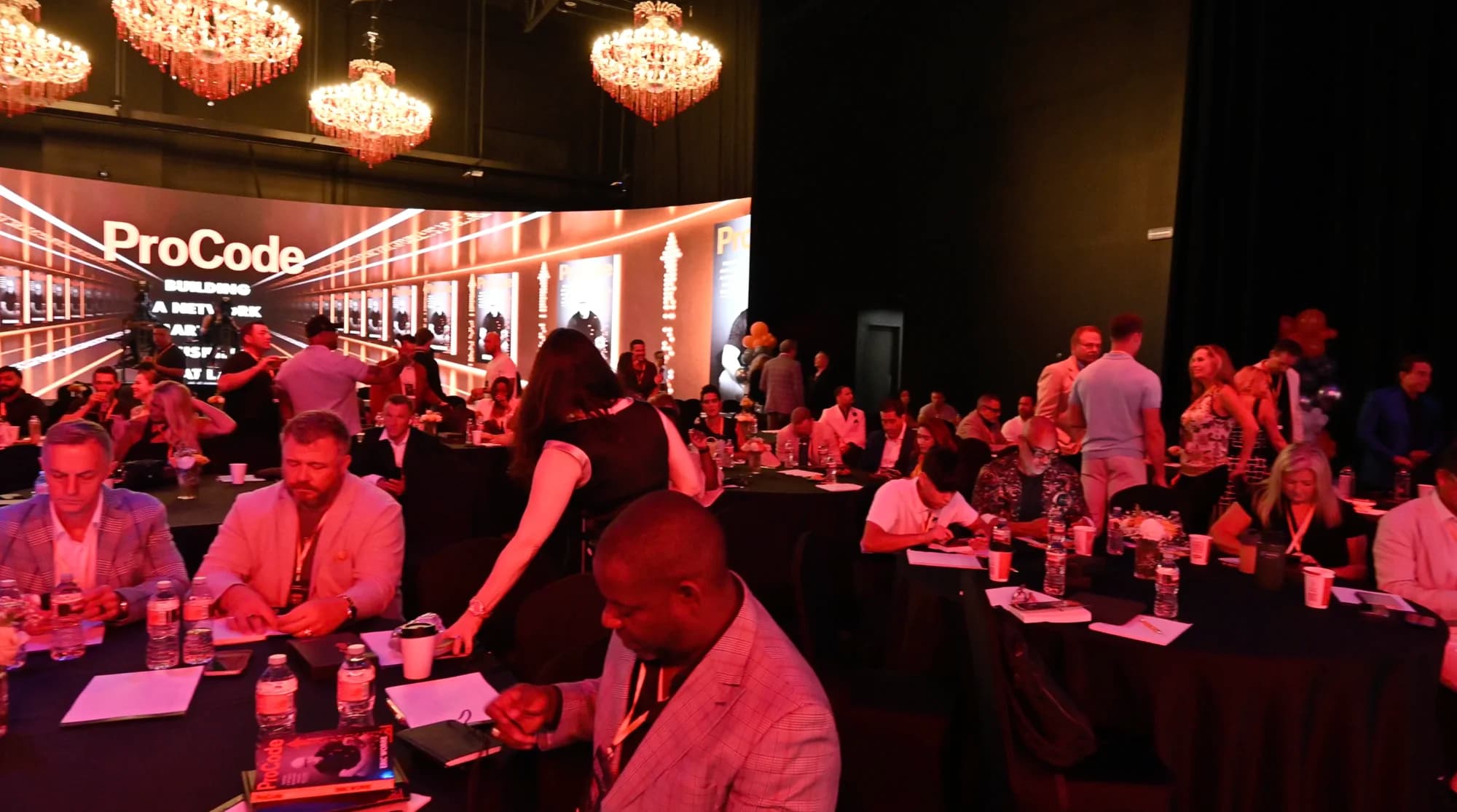
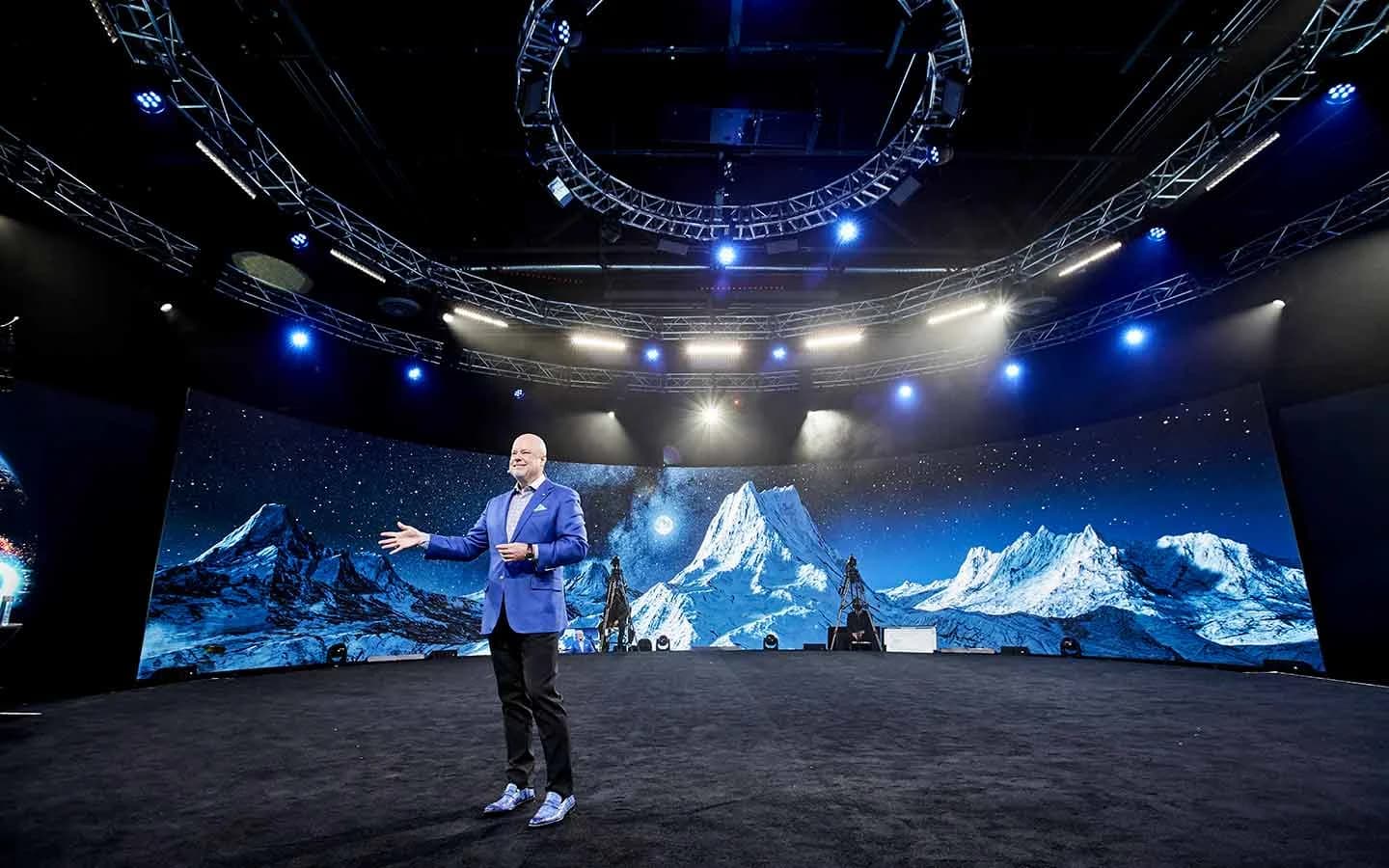
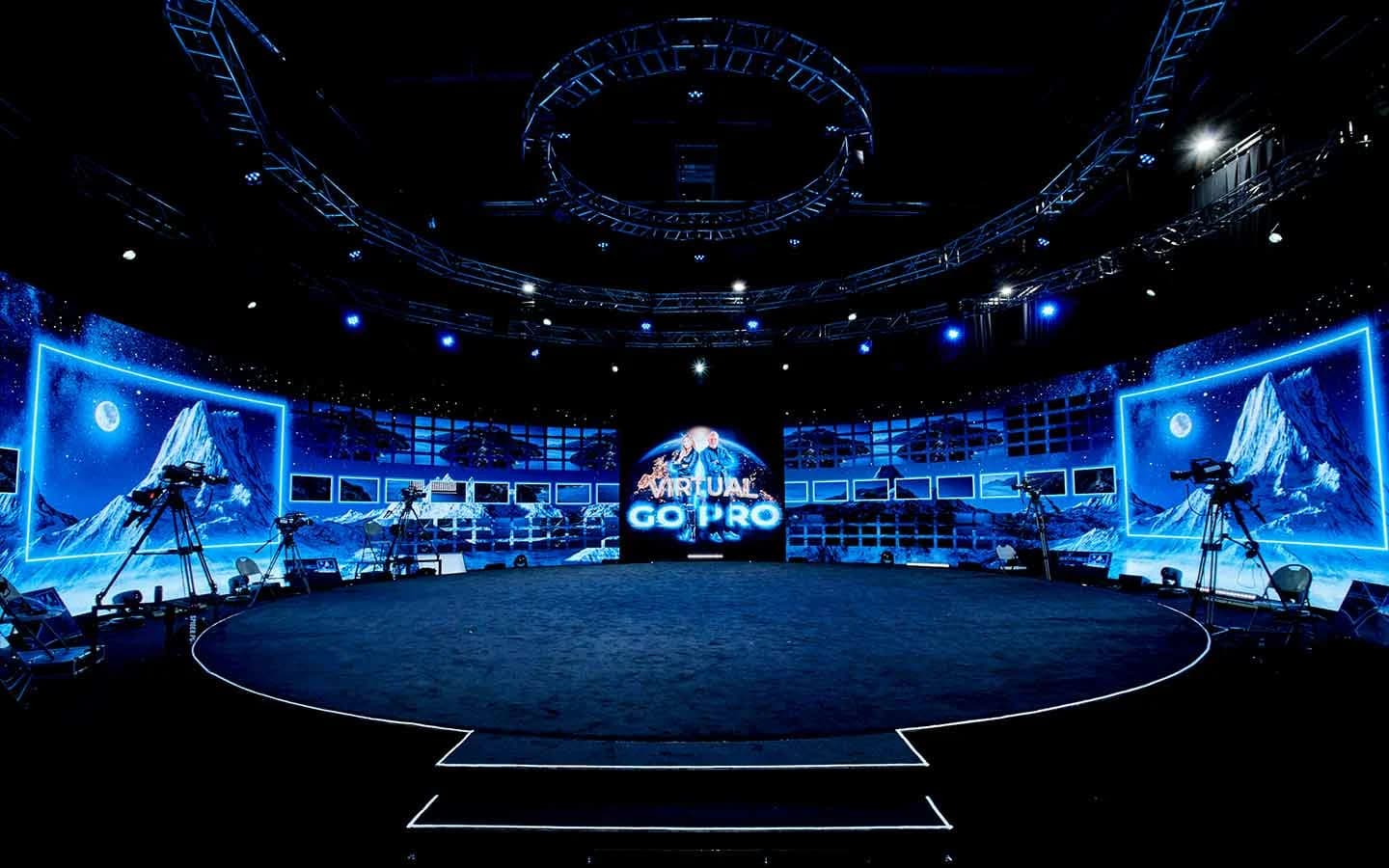
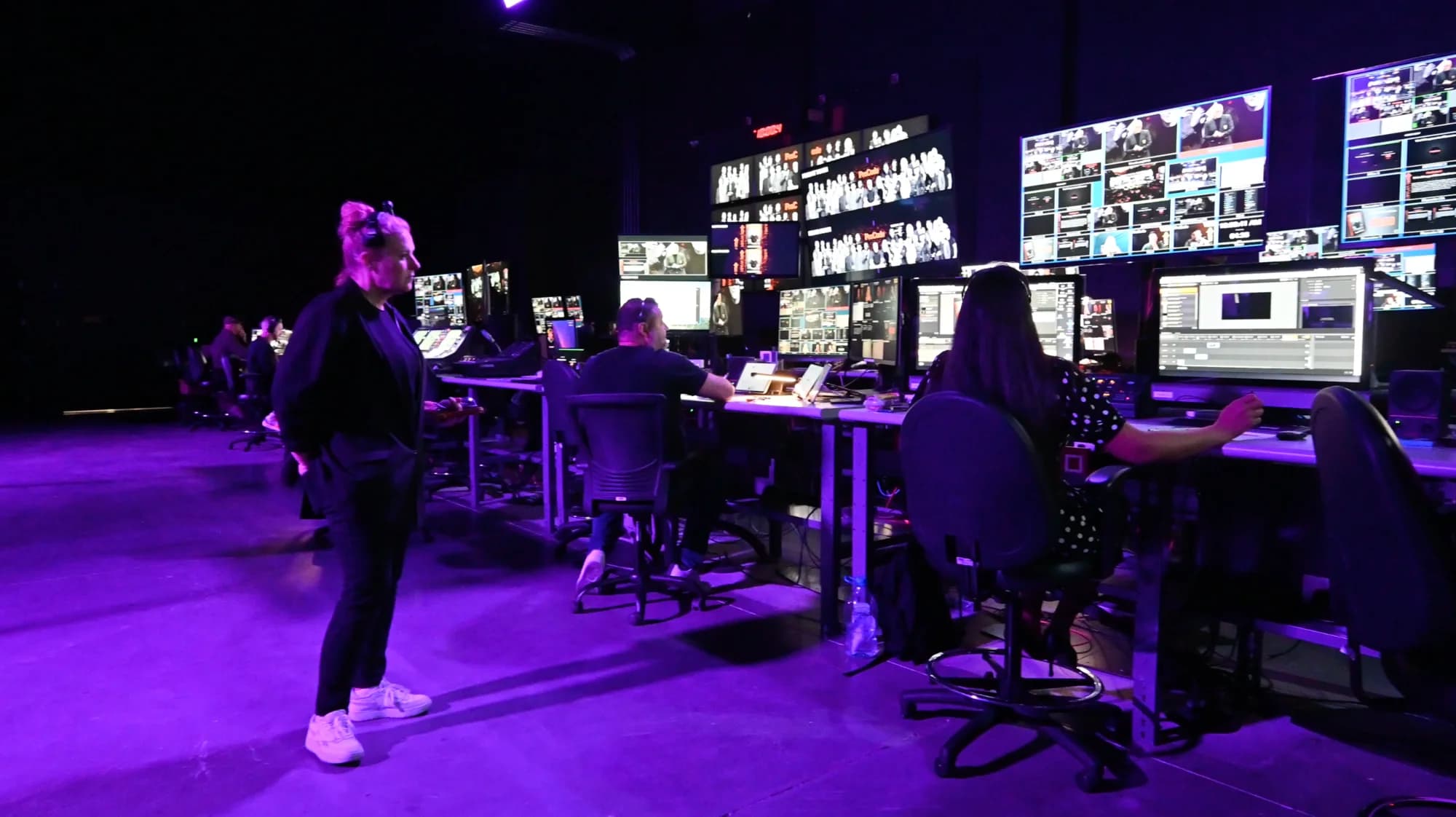
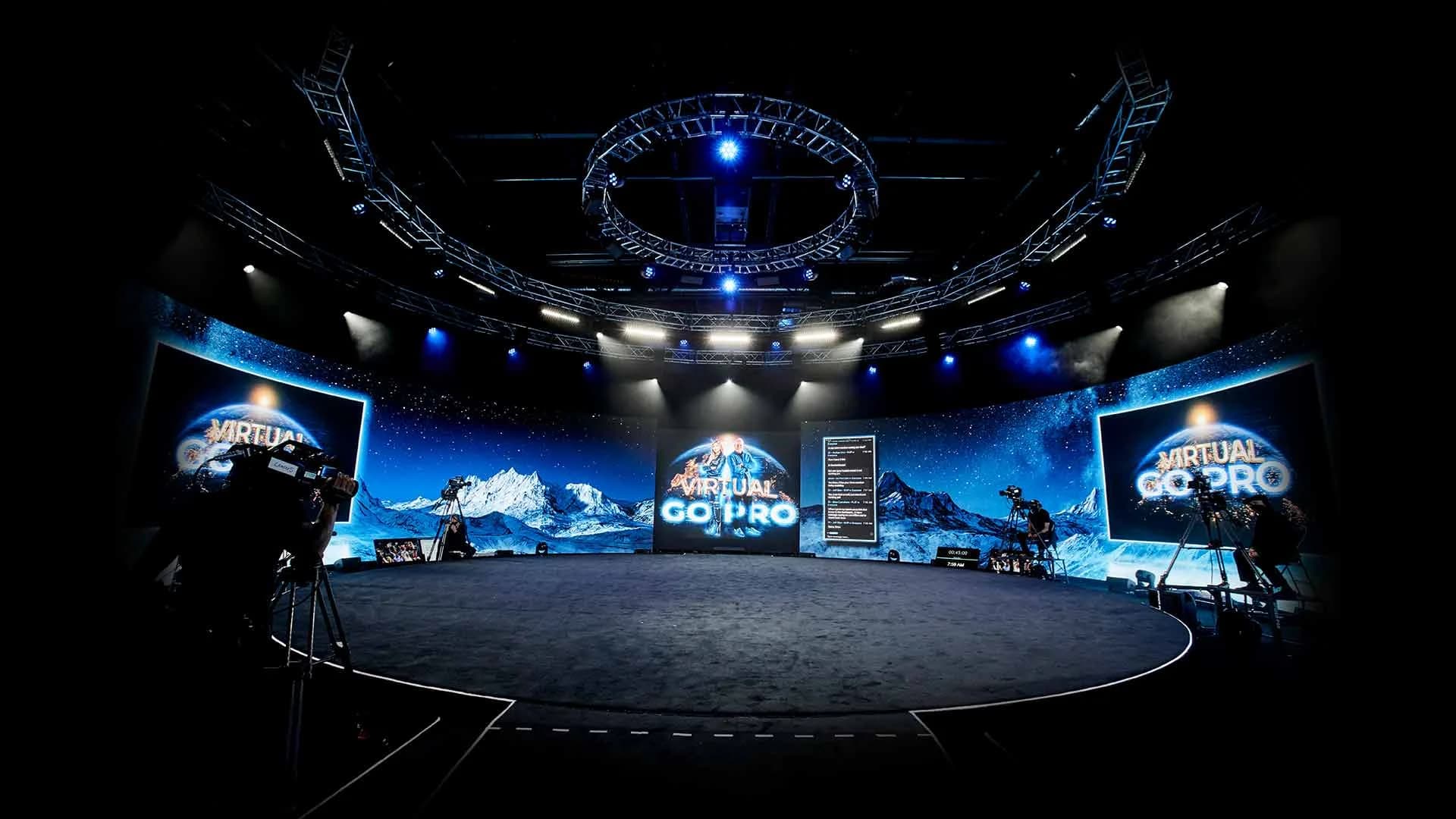
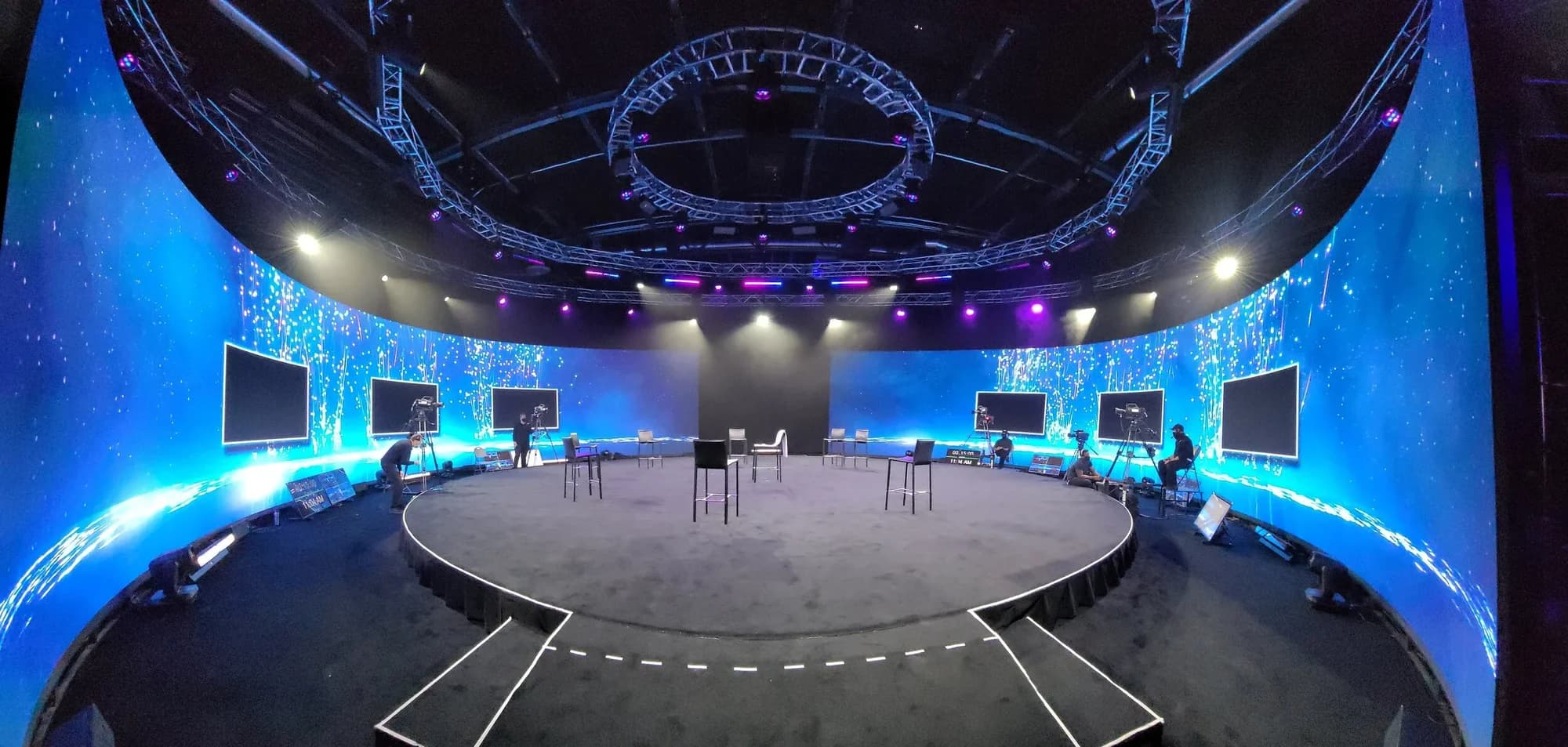
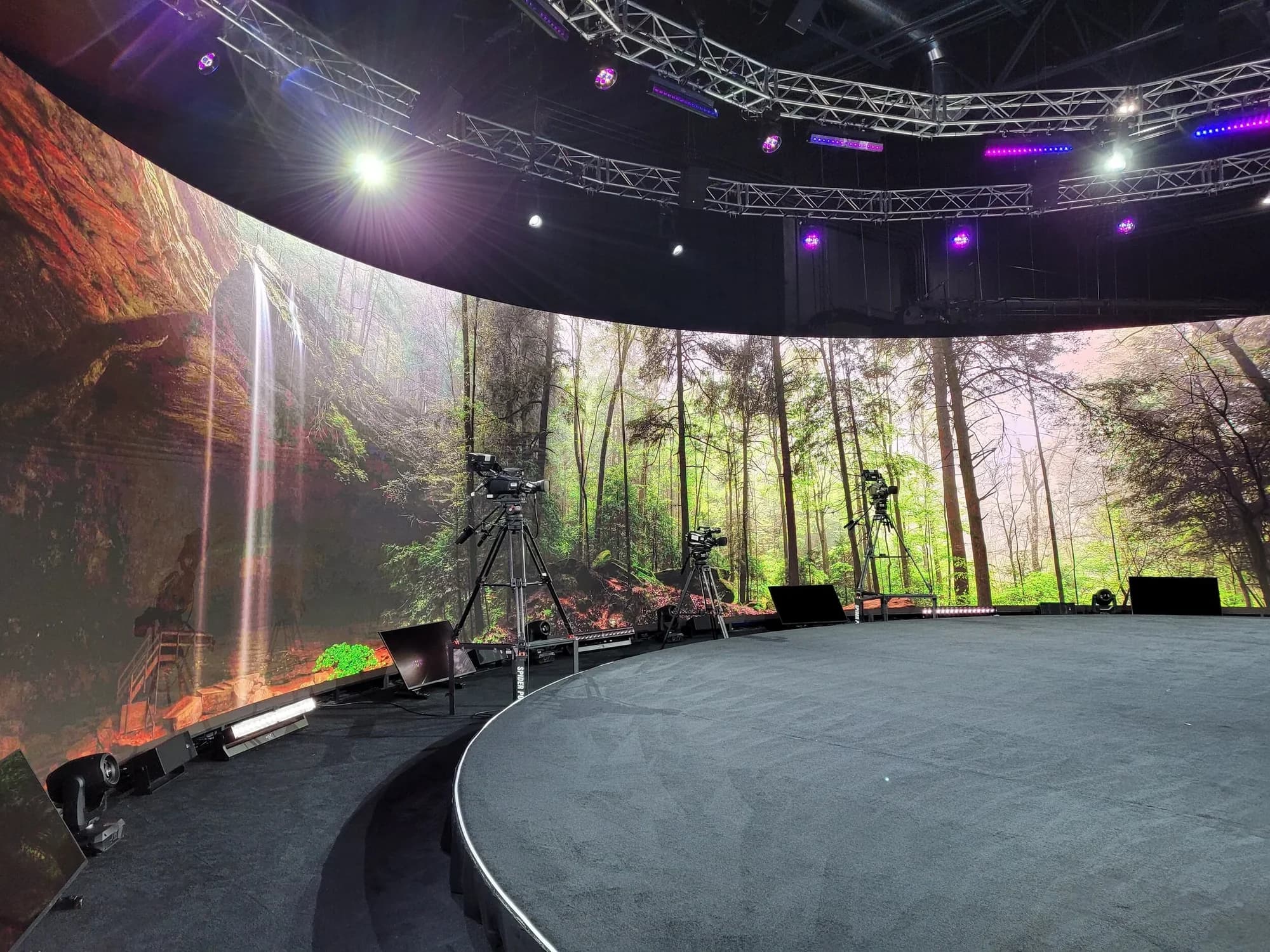
How we answer it at Worre Studios: built in and always on. The 360° 12K LED walls, audio, lighting and control room stand every day, with crew in-house, so every quote starts from a complete room and is built around your run of show. Teams that priced the ballroom route alongside ours have told us the same thing: once every plus-charge landed, it came in higher than the original studio quote.
What Happens If Something Fails Mid-Show?
A good venue answers with a backup plan, not a reassurance. Live broadcasts fail at single points (one encoder, one internet line, one power circuit), so ask where the redundancy sits and how quickly the backup takes over.
Bandwidth deserves its own question. For a single 1080p stream at 30 frames per second, YouTube's recommended H.264 bitrate is 14 Mbps, according to its live encoder settings guidance, and a broadcast pushing several outputs at once needs headroom beyond that. Ask whether the line is dedicated to your show or shared with the building, and when you can test it at show settings.
| Ask the venue | A strong answer | A red flag |
|---|---|---|
| Is there a backup signal path if the primary encoder or stream drops? | Named redundancy: a second path, ready to take over. | "We've never had a problem." |
| Is the internet line dedicated to our event, and can we test it? | A dedicated line, with test time scheduled before show day. | Shared venue Wi-Fi. |
| How much rehearsal time do we get in the room with full tech? | A rehearsal block in the schedule, on the actual equipment. | A quick check the morning of the show. |
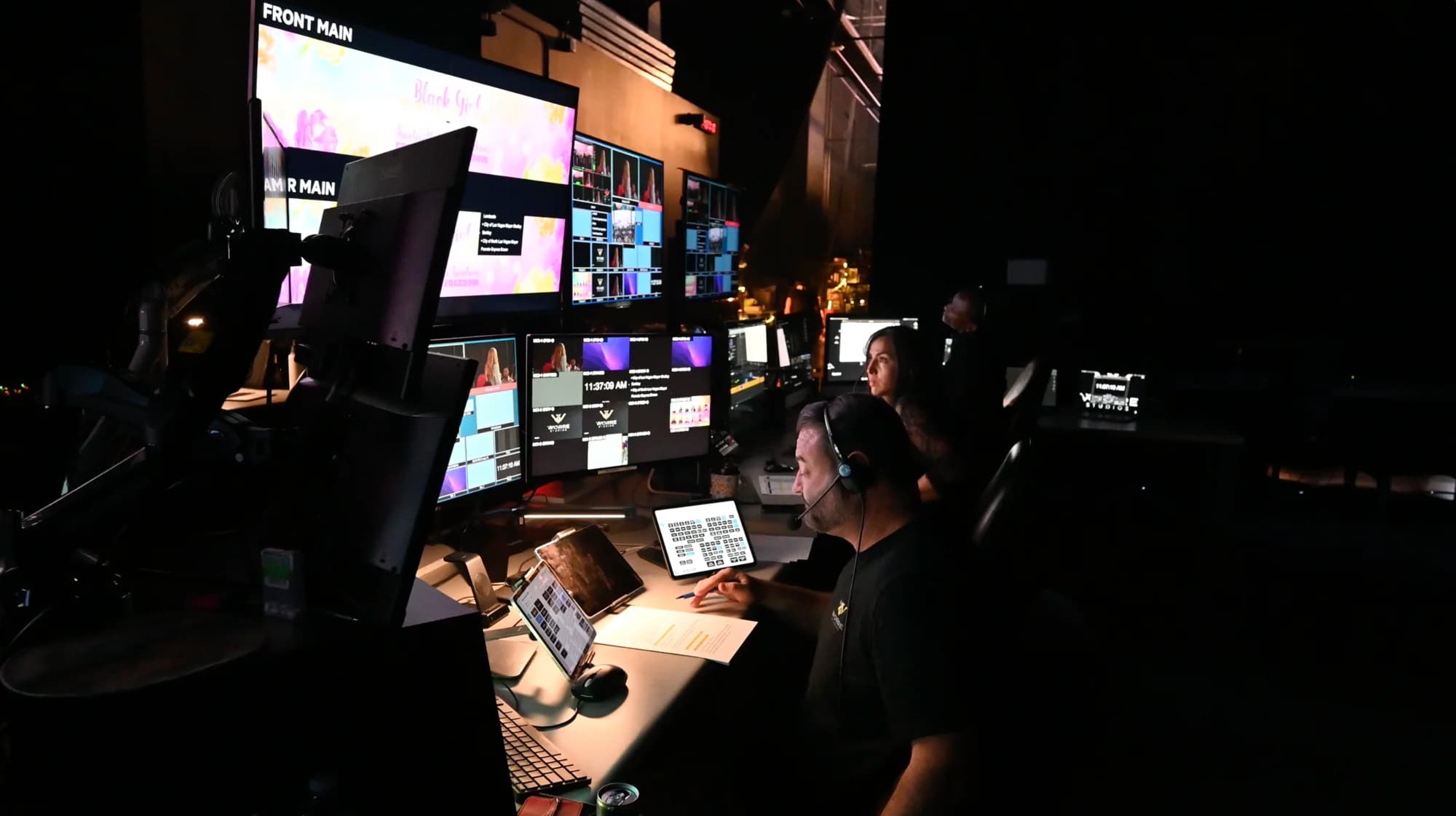
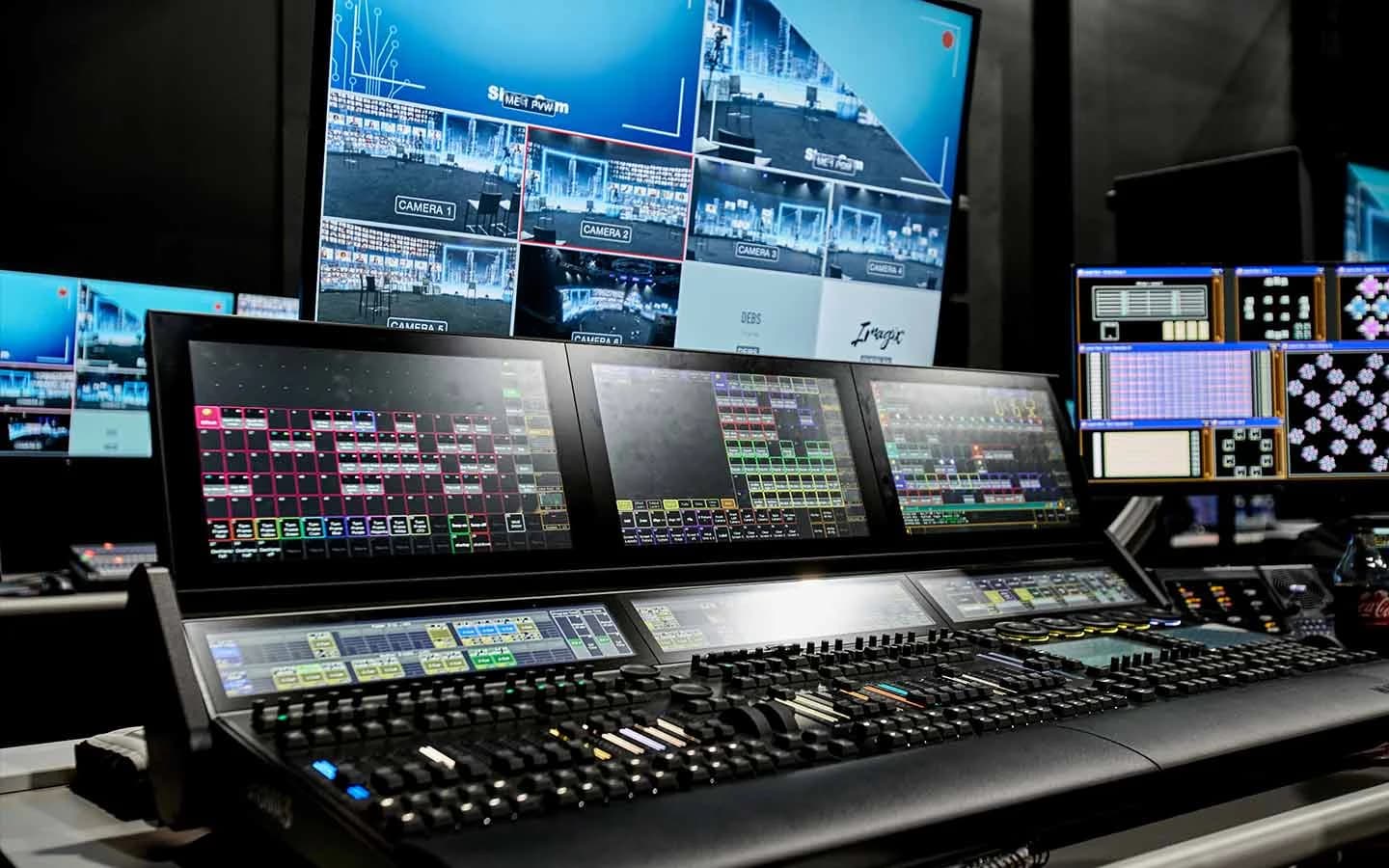
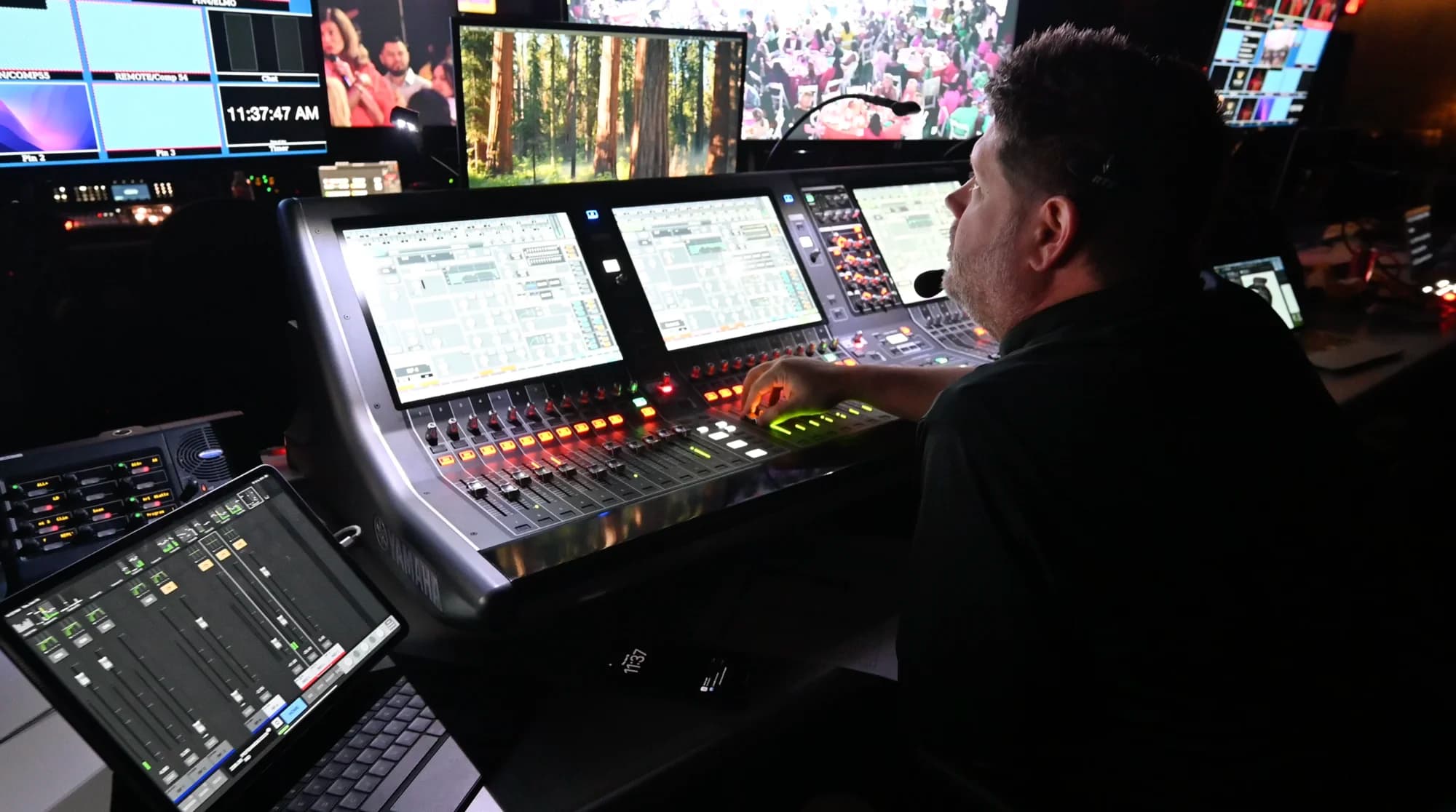
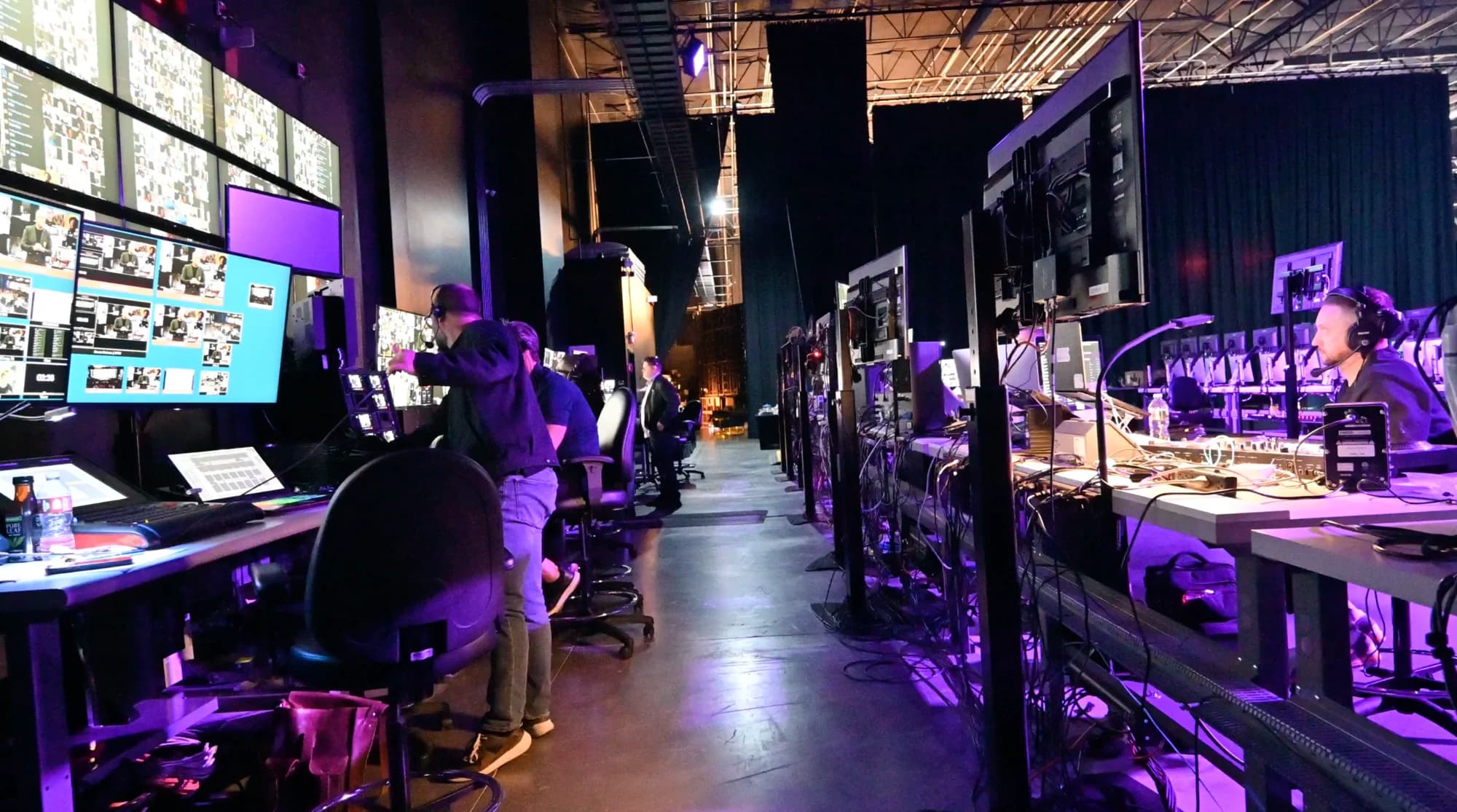
How we answer it at Worre Studios: the control room runs two AJA Bridge Live encoding units, so the outbound signal always has a backup path, and the building runs on dual 5G networks. The same chain pushes one production to up to 24 platforms at once. Every system is listed in the studio's full technology specification.
Will Remote Attendees Participate or Just Watch?
Ask what remote attendees can actually do. Almost any venue can push a stream out. Far fewer can bring a remote attendee live on stage, split the audience into breakout rooms, or put the whole event inside an environment branded as yours.
A stream and an interactive broadcast are different products. A stream produces viewers; an interactive broadcast produces attendees, people who ask questions face to face, join sessions, and buy or download inside the event. Hold every venue to the difference between a webinar and an interactive broadcast before you compare quotes, and ask to see what remote attendees do mid-session. Our ideas for engaging a remote audience beyond polls and chat make a useful benchmark.
| Ask the venue | A strong answer | A red flag |
|---|---|---|
| Can a remote attendee be brought live, face to face, with the host? | Yes, with latency low enough for a real conversation. | Questions by chat only, read aloud later. |
| Whose brand do remote attendees see? | Yours, inside an environment built for the event. | A third-party platform's interface. |
| Can the show go out to public platforms while the interactive event runs? | Yes, from one production, with platform views reported separately from attendees. | "Pick one: the public stream or the interactive event." |
| Can international attendees follow in their own language? | Live interpreters or AI translation, with captions. | "They can turn on auto-captions." |
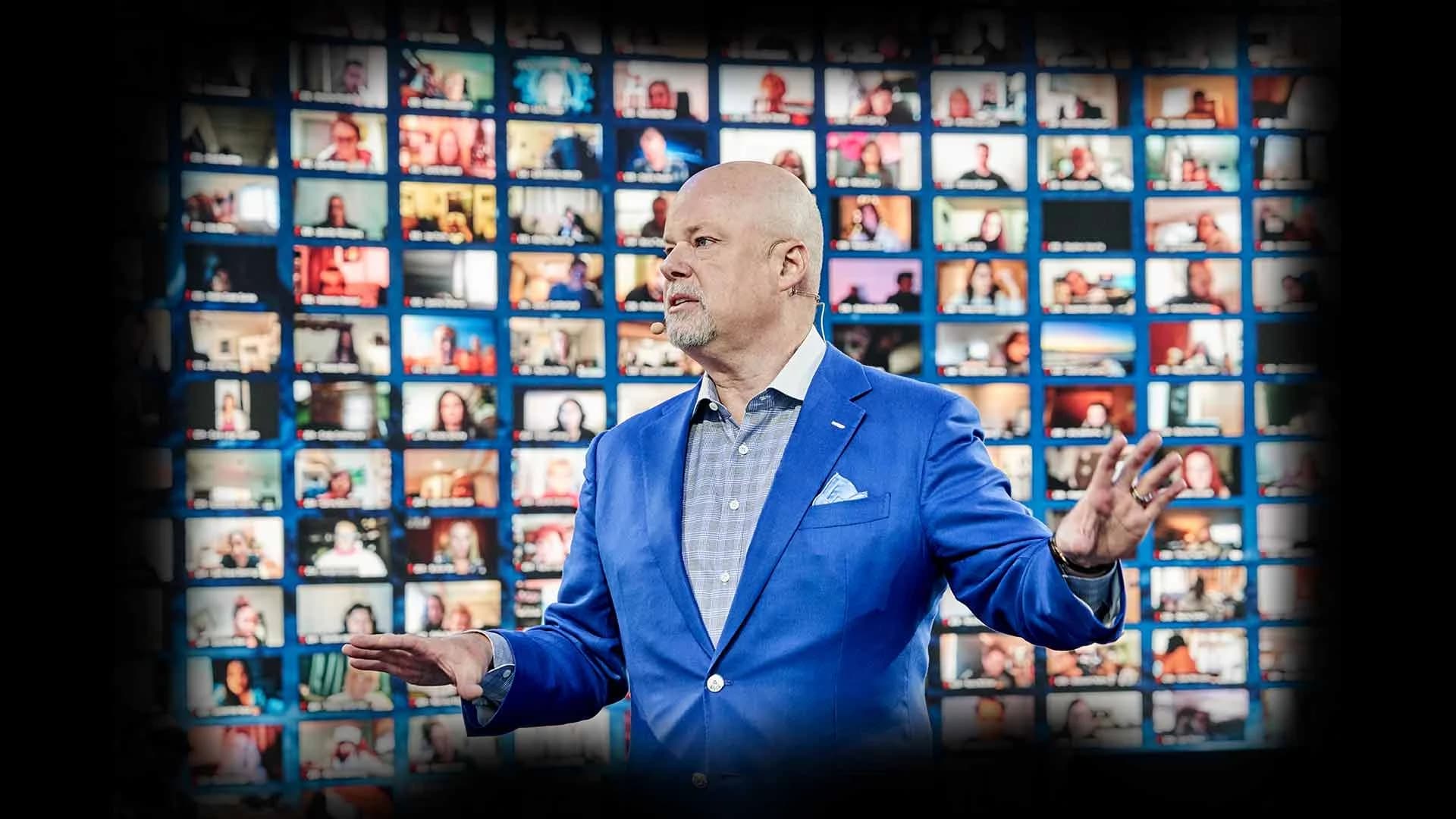
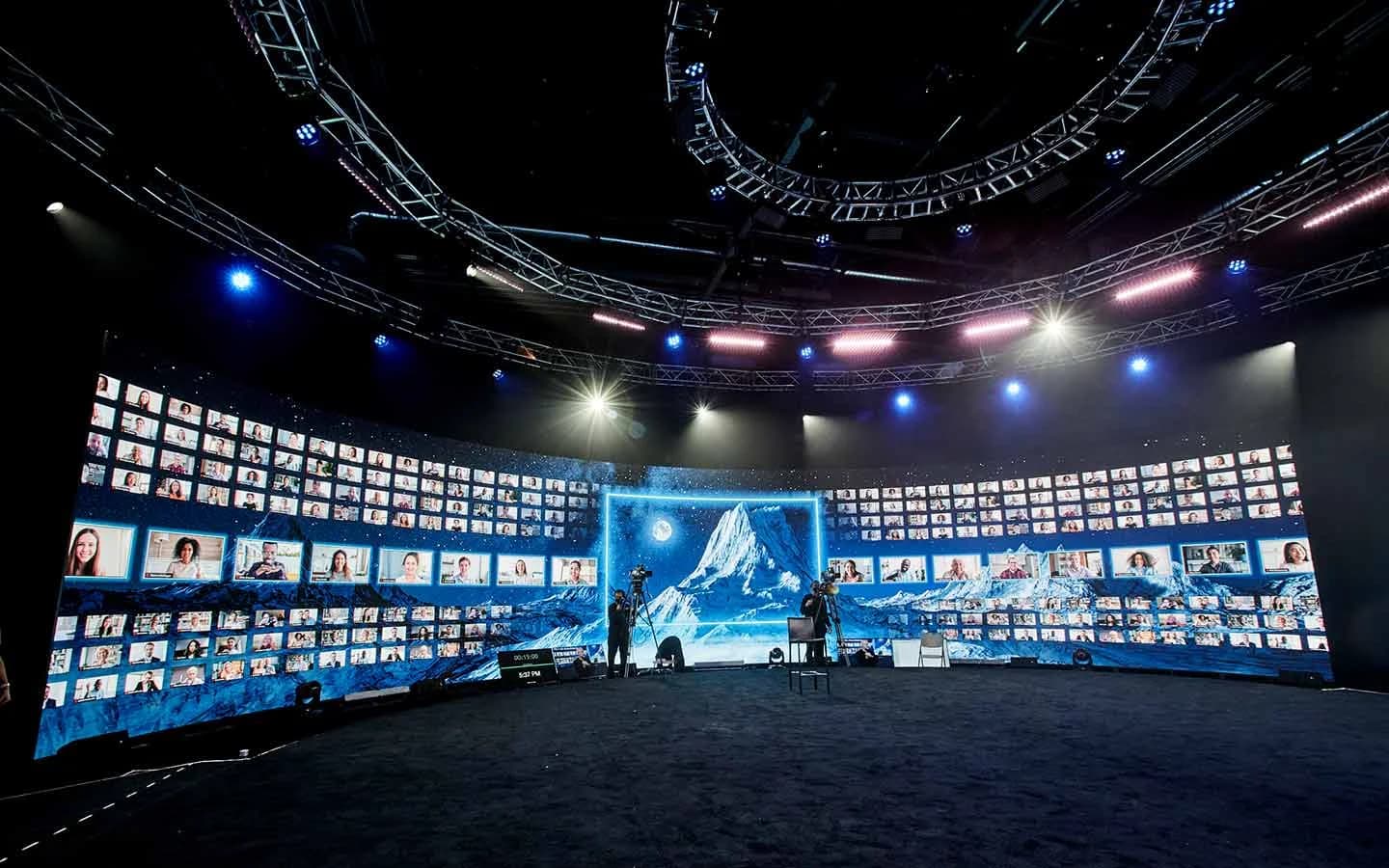
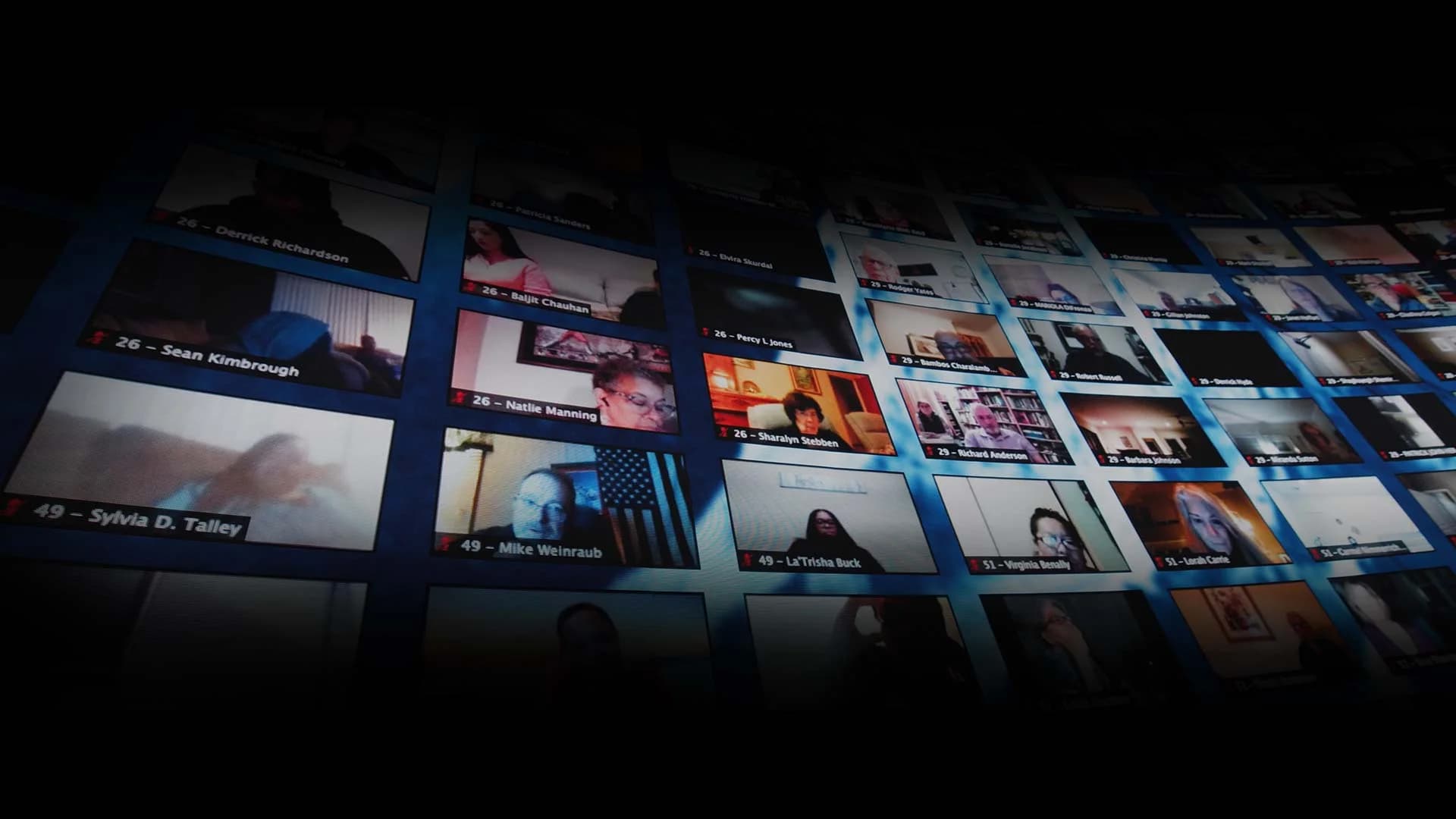
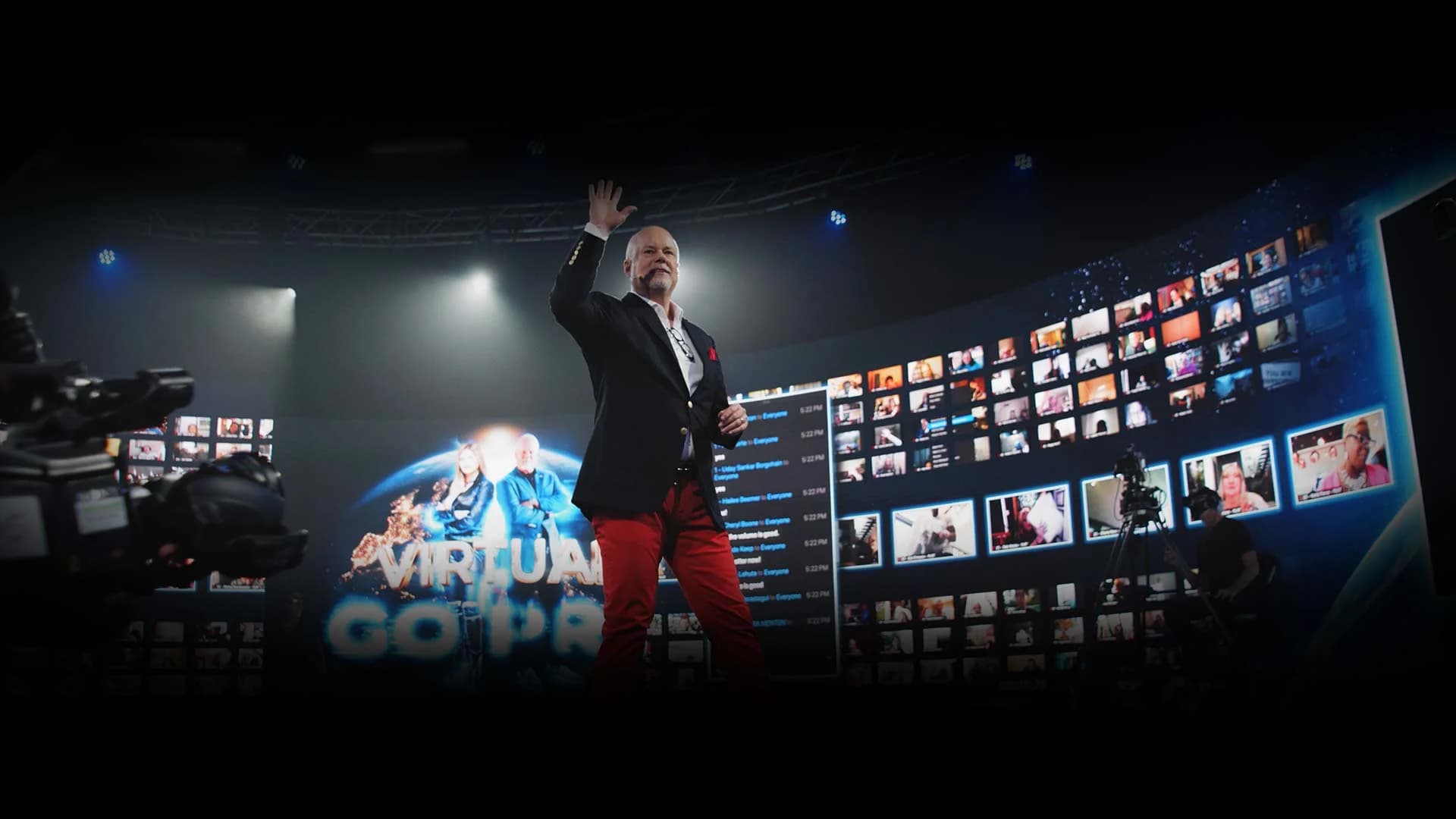
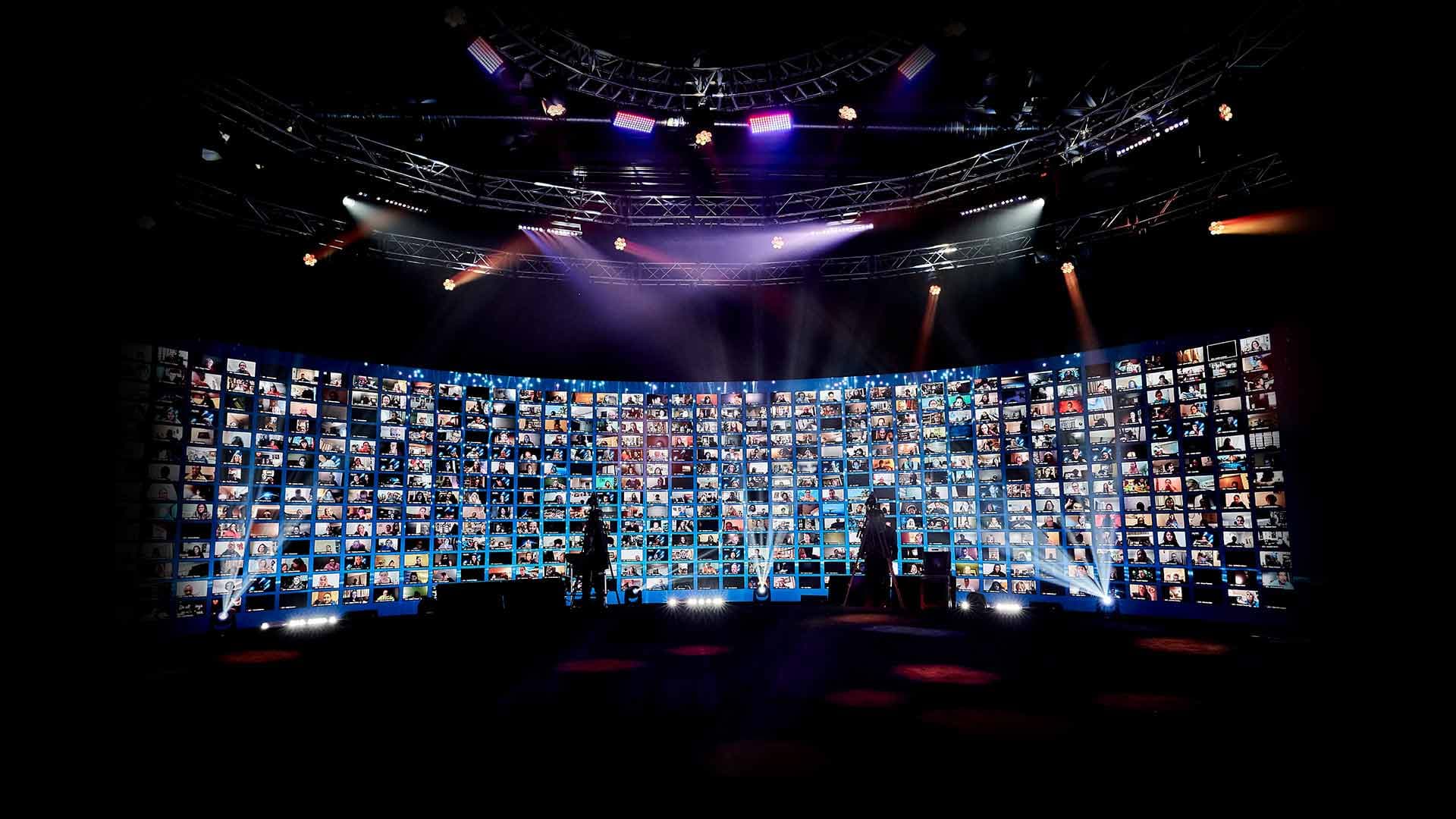
How we answer it at Worre Studios: remote attendees join live and face to face, up to 2,744 at once on the walls, inside a dashboard branded as yours. The host doesn't even have to be in our room. When Matthew McConaughey broadcast a multi-hour session for Tony Robbins from a private studio with no remote capability of its own, it ran through our Remote Virtual Stage service as a fully interactive broadcast of roughly 90,000 people, breakout rooms included. Here's how that broadcast came together.
You shouldn't have to choose between reach and participation. One production can push to public platforms for reach while the interactive event runs for the people attending. Our guide to streaming one event to multiple platforms at once covers how that works.
For a global audience, ask specifically about real-time translation. Captions alone aren't the same as hearing the event in your own language.
Can Your Own Team Run the Show?
Ask what your production team is allowed to touch. Policies range from fully open to fully locked, and the answer decides whether your creative team survives the venue change or gets replaced by the house crew.
| Ask the venue | A strong answer | A red flag |
|---|---|---|
| Can our crew bring their own gear and run the show? | Yes, with any house-held positions named up front. | "All production runs through our in-house team." |
| Is there a surcharge for outside crew? | A clear answer before the quote arrives. | A labor fee discovered on the invoice. |
| What does load-in look like? | Truck access, load-in windows and rigging limits, stated plainly. | Shared docks and freight elevators scheduled around other events. |
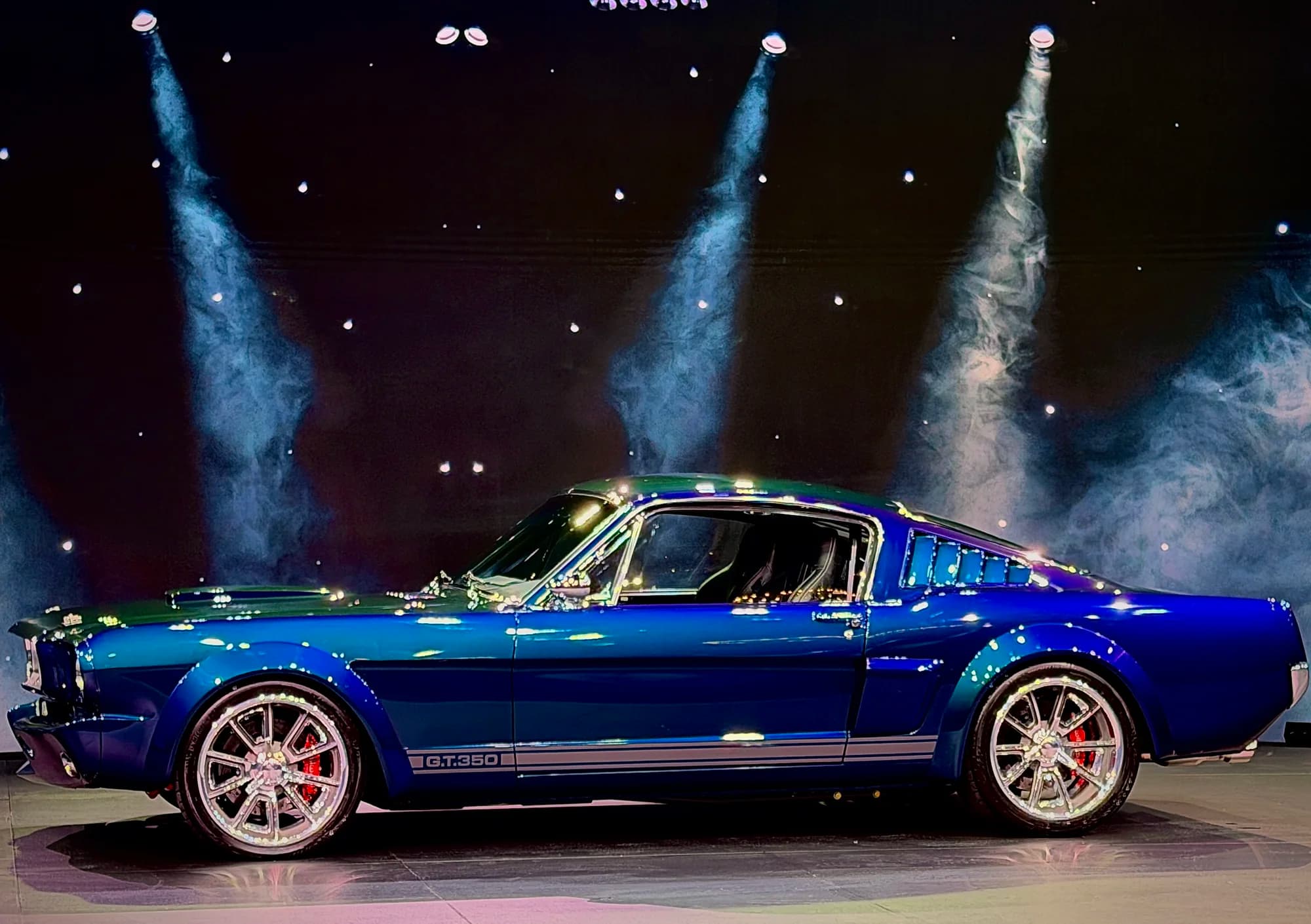
How we answer it at Worre Studios: outside teams bring their own crew and run their own show here at no extra charge. Our house is your house. Trucks load in straight to the floor, and the grid takes real builds: one production hung a three-ton steel set piece, fabricated in Texas, from a custom grid built above the house grid. Here's how that three-ton set was hung.
If your crew is union, or the venue sits in a union jurisdiction, ask how that affects who can work which positions before you build a crew plan.
Who Stays With You From Contract to Show Day?
Ask who your point of contact is after you sign, and how often you'll meet. At many venues the relationship effectively ends at the contract, and the production team you'll depend on is someone you meet the morning of the show.
| Ask the venue | A strong answer | A red flag |
|---|---|---|
| Who works with us between contract and show day? | A named production team and a standing meeting cadence. | "Your coordinator will reach out closer to the date." |
| Can we walk the room before committing? | A virtual walkthrough early, then an in-person site visit. | Photos and a floor plan only. |
| Will the people on the walkthrough run our show? | Yes, or a clear handoff to the team that will. | Sales on the tour, strangers on show day. |
How we answer it at Worre Studios: after you sign, you work directly with our production team through weekly or biweekly meetings, whether the event is two weeks or ninety days out. Most venues hand over the keys and wave; we stay with you the whole way in.
How Worre Studios Answers These Questions
Here are all of our answers in one place, so you can hold every venue on your shortlist to the same list.
| The question | Our answer |
|---|---|
| Built in or brought in? | Built in and always on for every Premium Event. The 360° 12K LED walls, audio, lighting and control room stand every day, with crew in-house. Cameras are sourced per project to fit your director of photography. |
| Backup if the signal drops? | The control room runs two encoding units for full redundancy, and the building runs on dual 5G networks. |
| Can remote attendees participate? | Yes. Remote attendees join live and face to face, up to 2,744 at once on the walls, inside a dashboard branded as yours, with breakout rooms. Reach runs to hundreds of thousands of hybrid attendees. |
| Public platforms at the same time? | Yes. One production can push to up to 24 platforms at once while the interactive event runs in its branded dashboard. We report platform views as reach, never as attendees. |
| Other languages? | More than 100 languages, live-interpreted or AI-driven, with captions and the event's music and ambiance layered under the translated voice. |
| Can our crew run the show? | Yes, at no extra charge. Our house is your house. We hold just two positions, both to protect the installed systems: the lighting and audio consoles stay with our crew, and nobody patches into the full production network unsupervised. |
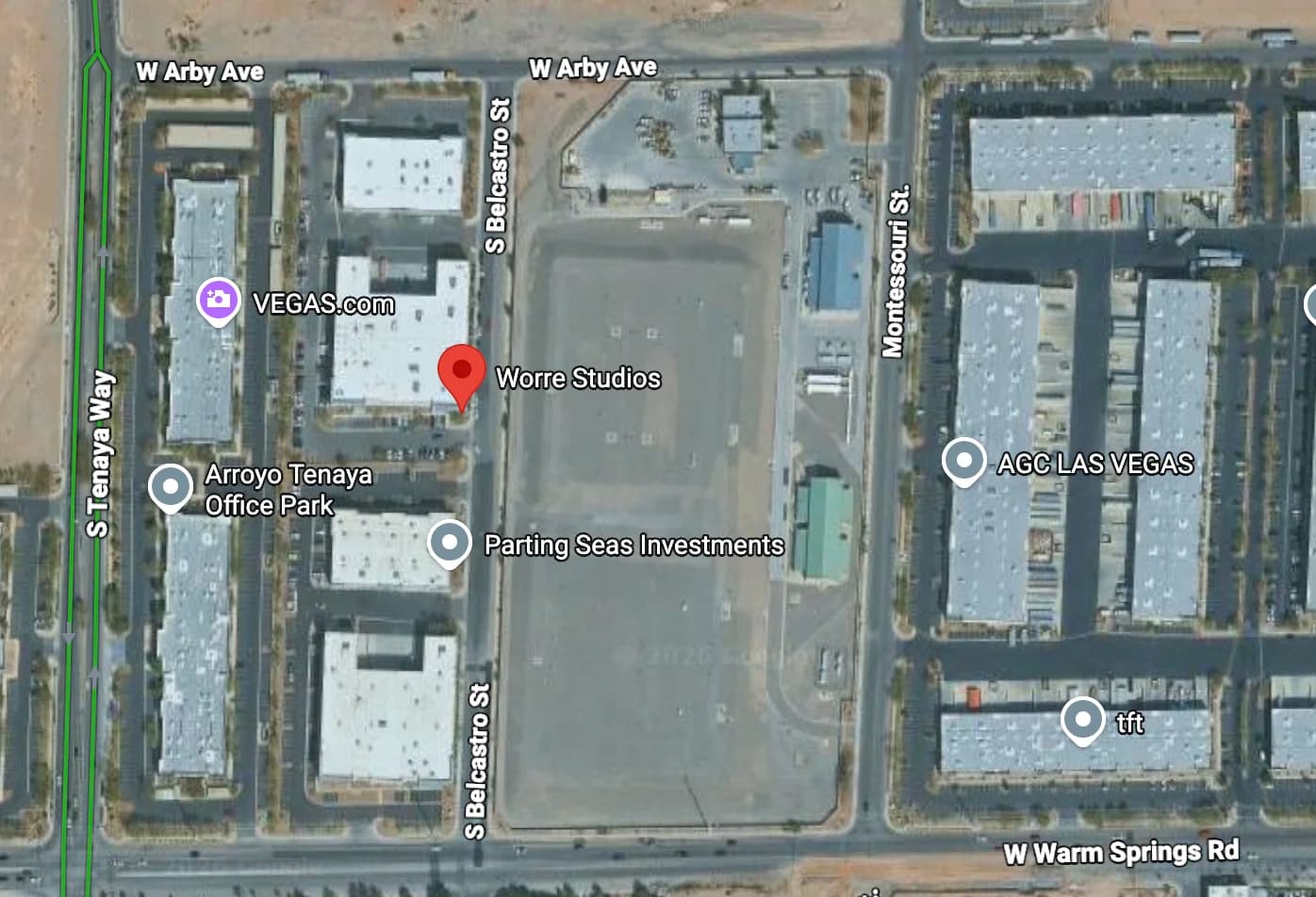
| Load-in? | Direct truck load-in through a garage door to the floor, off-Strip in southwest Las Vegas. |
| Host not in Las Vegas? | Our Remote Virtual Stage service broadcasts your host from wherever they are as a full interactive event. It's scoped separately and quoted per inquiry. |
| Contract to show day? | A dedicated production team meets with you weekly or biweekly, whether the event is two weeks or ninety days out. |
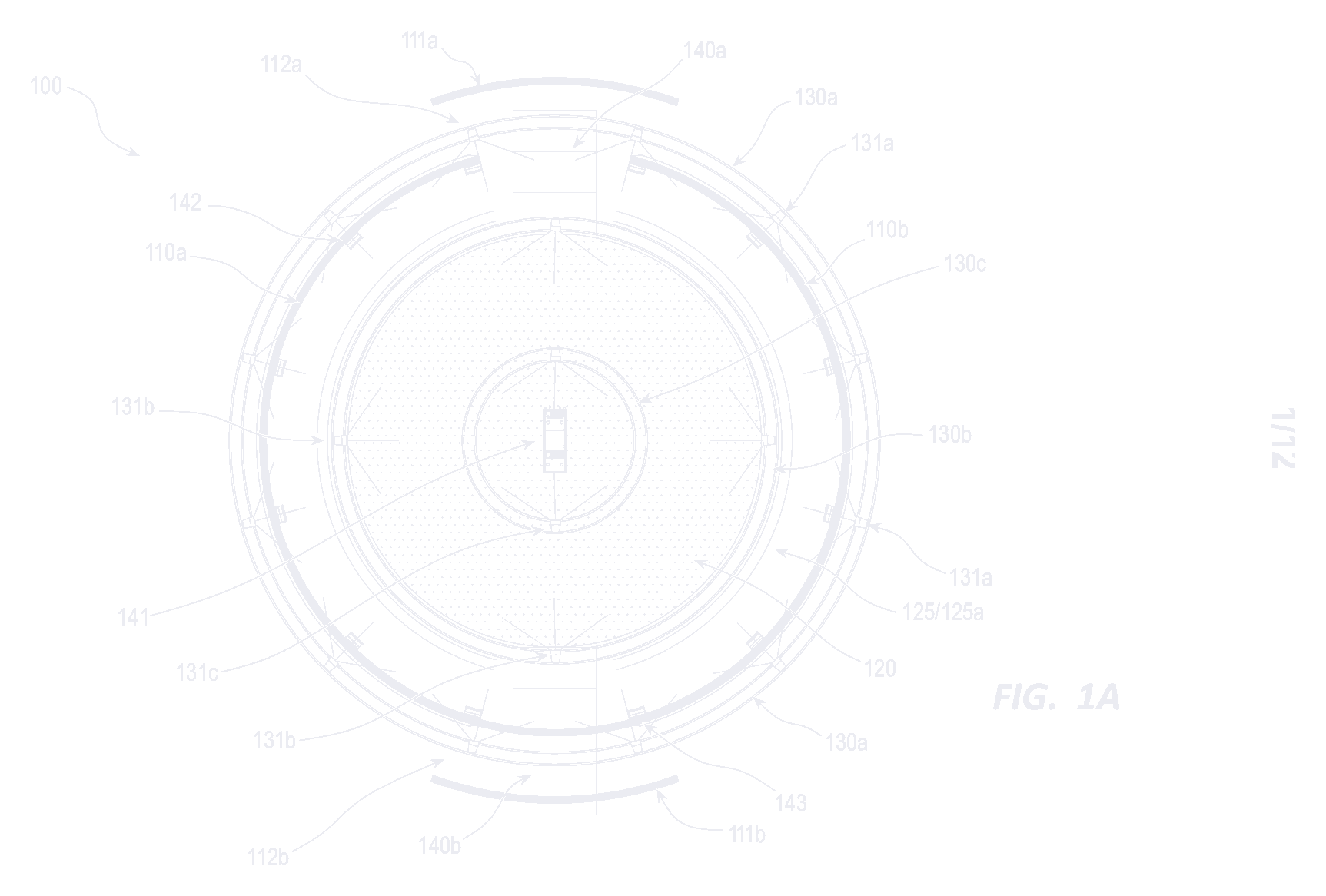
Our measured floor plan shows how the room fits together, from the stage to the load-in door. For how Premium Events and Remote Virtual Stage divide the work, see the two ways to work with Worre Studios.
Bring this list to every venue on your shortlist, including us. When you're ready to hear our answers in the room itself, start a studio inquiry and we'll begin with a walkthrough, virtual or in person.
Frequently Asked Questions
How Do I Know If a Venue Can Handle Full Production for a Keynote With Live Streaming?
Test four things: whether production is installed or trucked in, whether there's a backup signal path and a dedicated internet line, whether remote attendees can participate rather than just watch, and whether the venue quotes the finished event. Specific, demonstrable answers to all four are the clearest sign the room was built for broadcast.
Should Our AV or Production Company Tour the Venue With Us?
Yes, whenever possible. A production lead spots what a planner can miss on a tour: ceiling height, rigging points, power access, load-in routes and where the control position can sit. Bringing them early means the venue answers technical questions directly instead of through a chain of emails.
When Should We Do a Site Visit?
Before you sign anything. A virtual walkthrough works well while you're still building a shortlist; save in-person visits for your final two or three options. Bring your draft run of show, so the conversation stays on how your event would actually run in that room.
Can Any Venue Guarantee a Live Stream Won't Fail?
No, and be cautious of one that says it can. What a well-built venue can show you is redundancy: a second signal path, a dedicated line, tested settings, and rehearsal time on the real equipment. Ask how each failure point is covered, not whether failure is possible.
What If We Need More In-Person Seats Than a Studio Holds?
Split the job. A production studio's in-person capacity is deliberately intimate (350 seated, 500 standing or 600 concert-style at Worre Studios), while its reach is broadcast-scale. A large in-person gathering can stay at your venue while the broadcast runs through our Remote Virtual Stage service. Joel Osteen's first post-COVID tour split the job at Yankee Stadium: about 20,000 people in the stadium, with another 40,000 to 50,000 remote attendees pulled in through Worre Studios.
What Should We Have Ready Before the First Venue Call?
A rough sense of your in-person and remote audience, a draft run of show, the languages you need, and whether your own crew is coming. It also helps to list every deliverable you want from the day, since a single booking can produce extra deliverables from the same booking day.
Does Every Hybrid Event Need a Production Studio?
No. A small internal meeting with a handful of remote participants can run well in a conference room with a good camera and microphone. A studio earns its place when the broadcast is the event: a launch, a keynote, a kickoff, or an audience large enough that remote attendees outnumber the room. Our event studio vs. convention center guide covers when each model fits.

Written by the Worre Studios Content Team and reviewed by Ben Groen, Ticketing & Interactive Platform Lead. Studio capabilities reflect installed infrastructure; venue practices are described at the category level and vary by venue. Platform views are reported as reach, not attendance. Reach capability is not a guarantee of attendance or outcome for any specific event. Platform guidance referenced is current as of publication. Last reviewed November 9, 2026.
More from The Front Row
Bring Every Question on This List
We'll answer each one on a walkthrough, virtual or in person, then build a quote around exactly what your event needs.