No install window
LED volume, control room, and infrastructure standing and ready — no build day before you start.


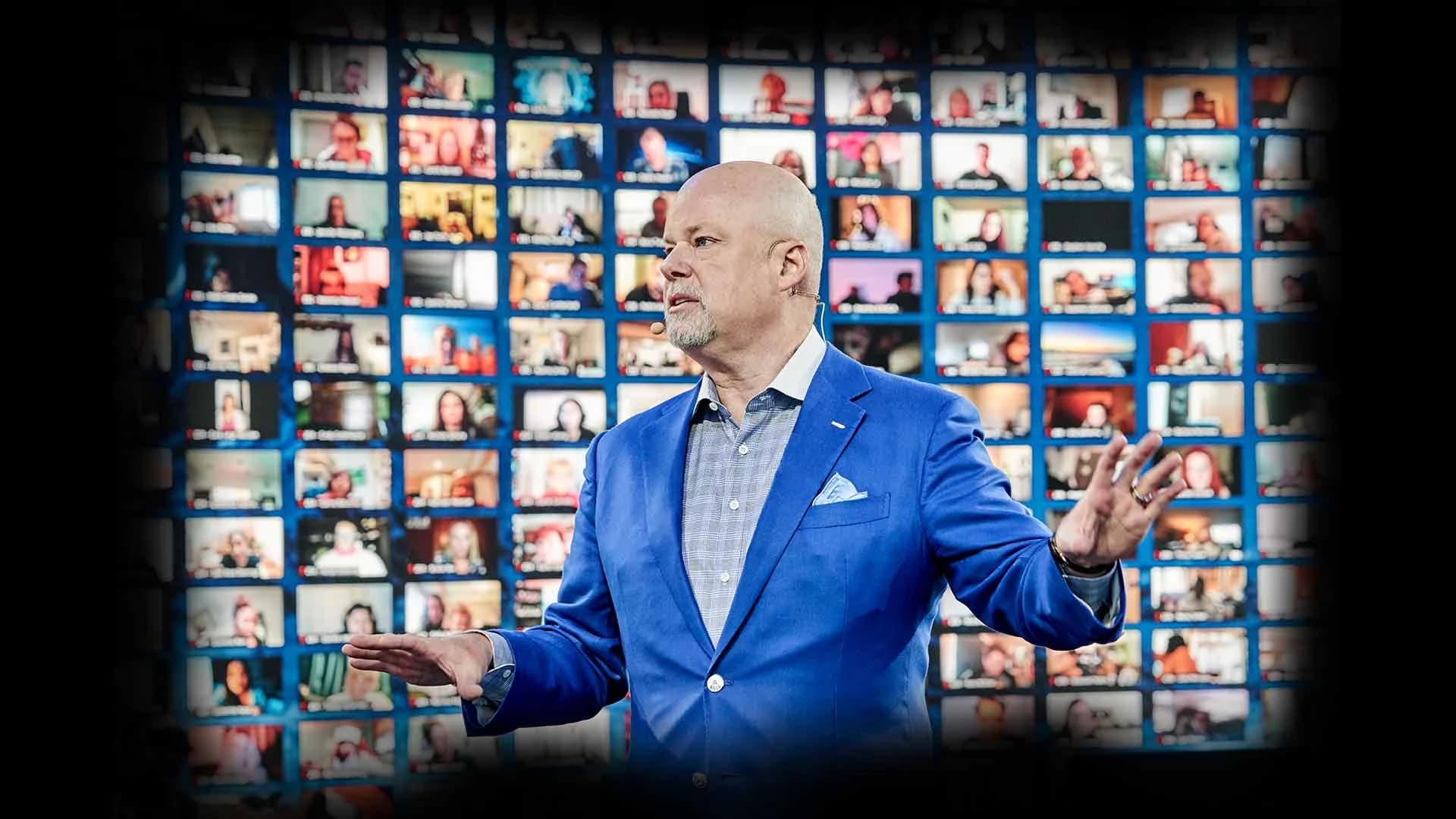
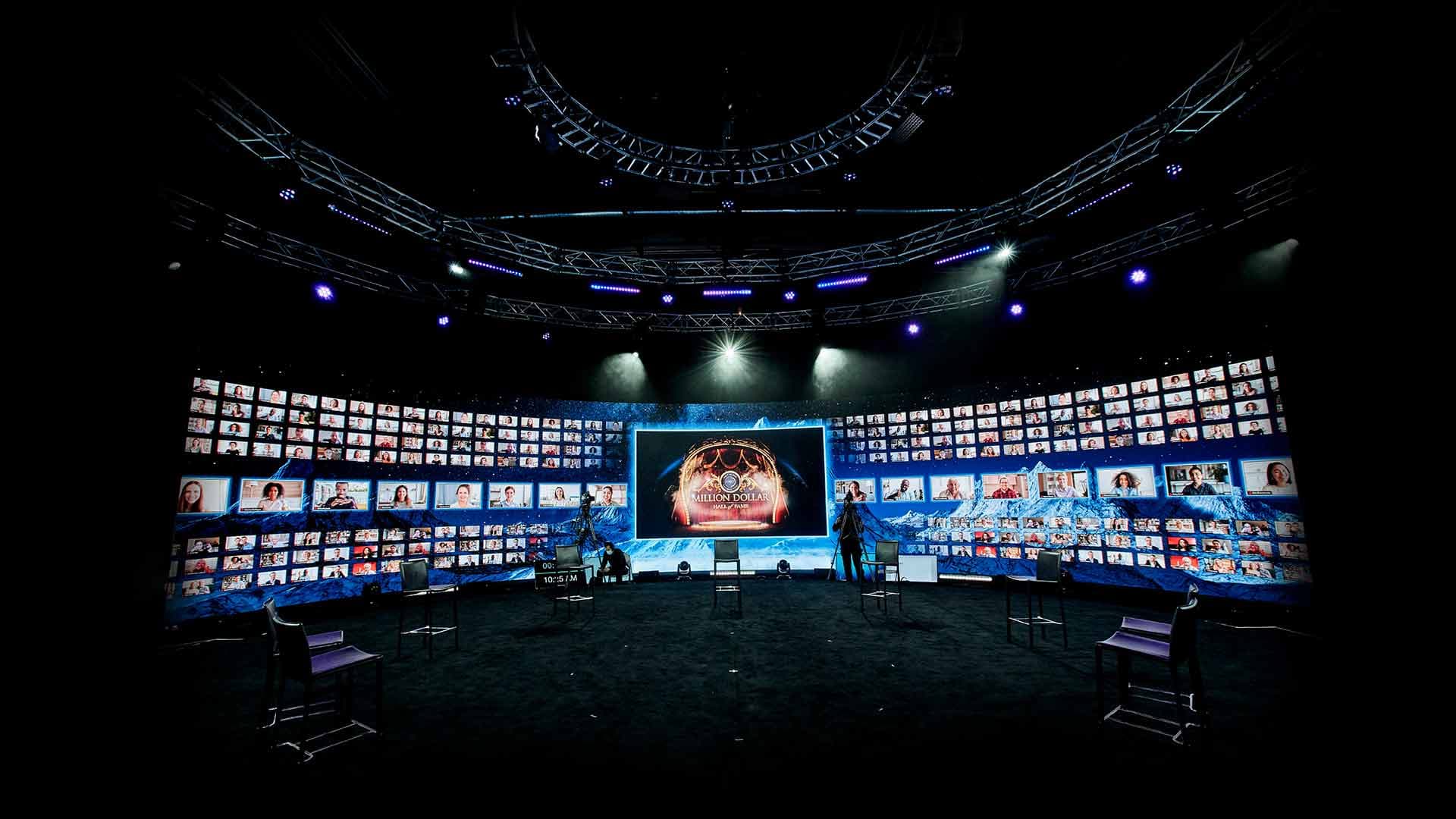
A virtual production studio in Las Vegas with 360° of 1.9mm 12K LED. 500,000+ hybrid attendees live. One stage engineered for broadcast-grade execution — and built to drive from an iPad.
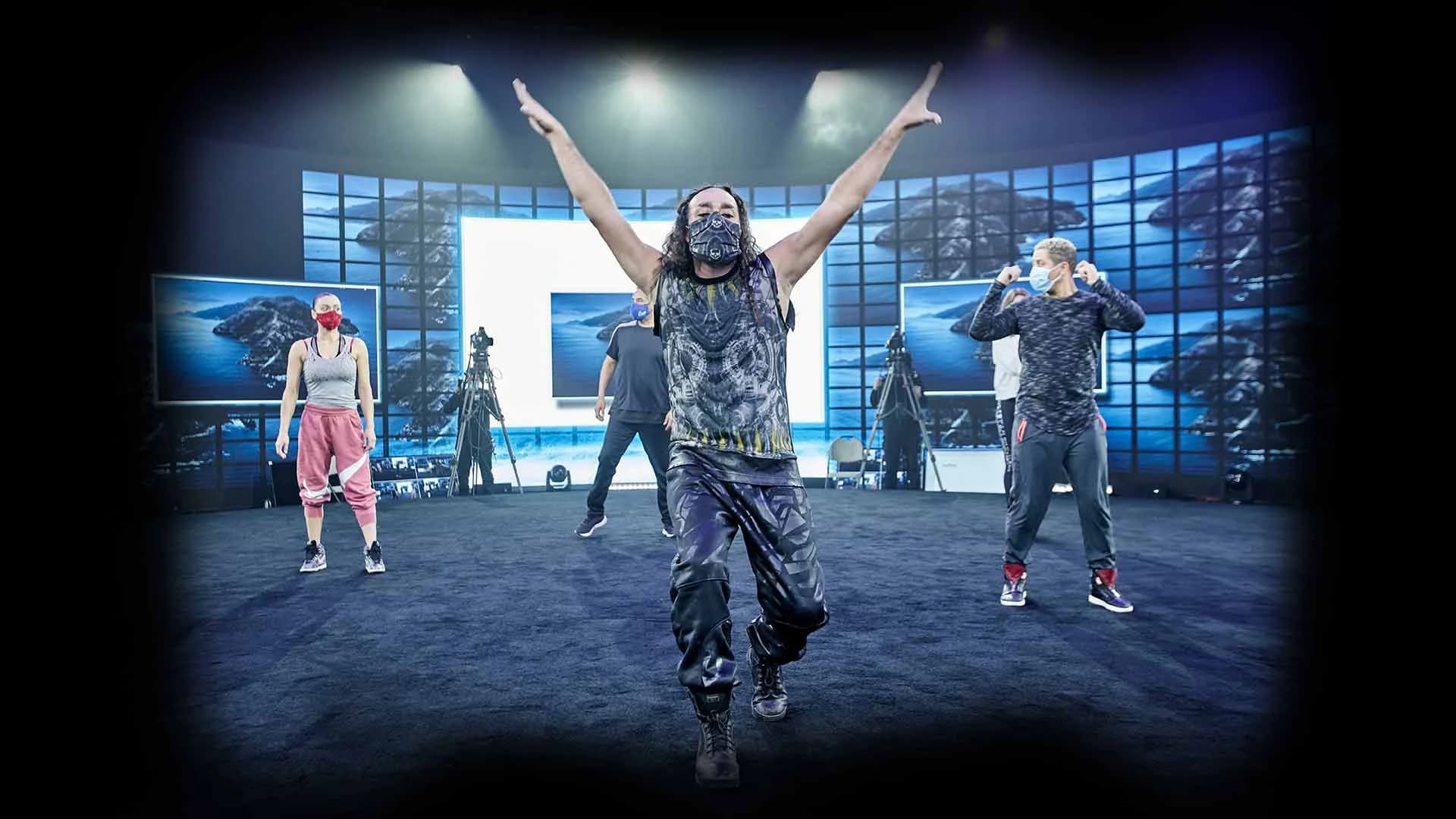
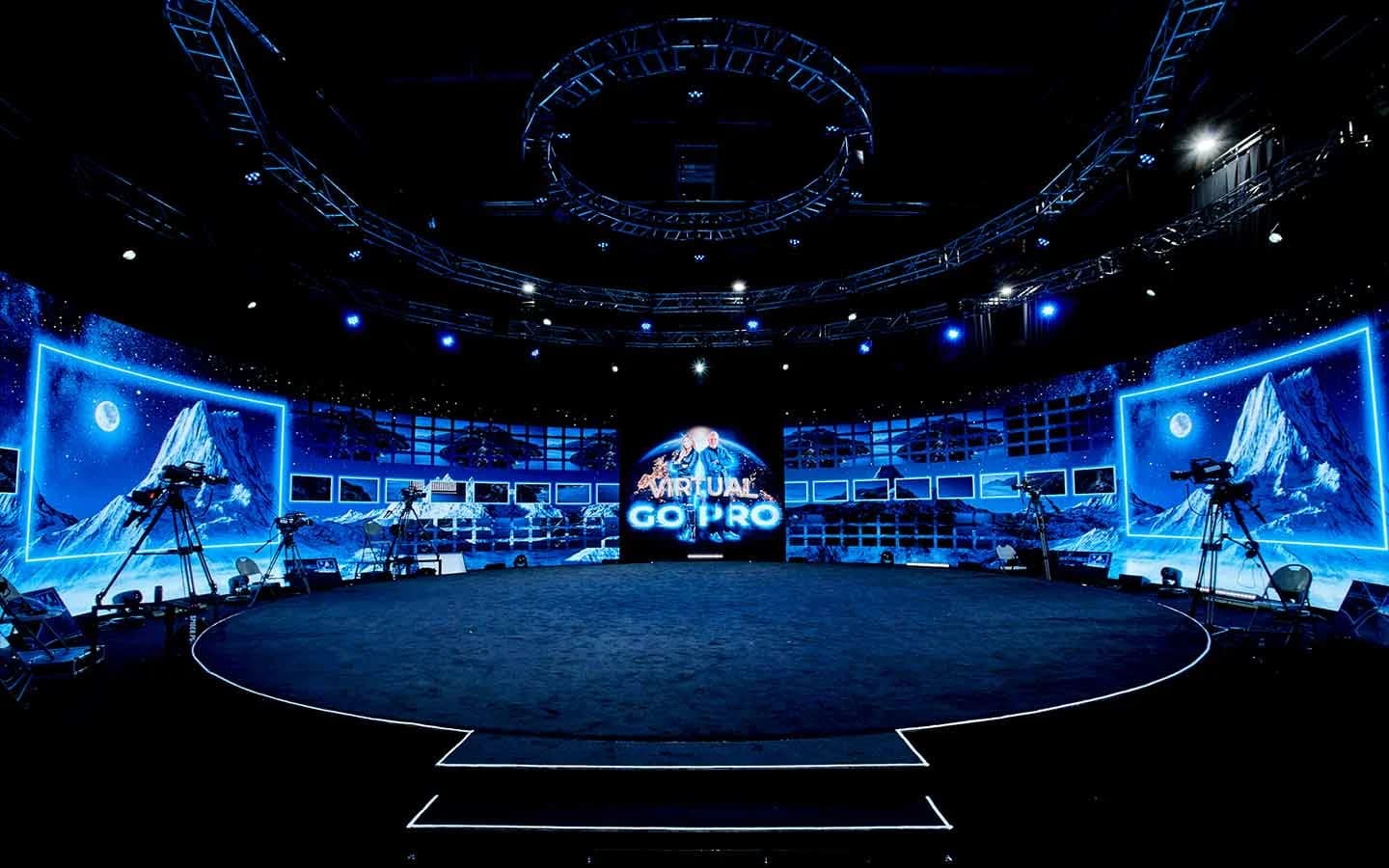
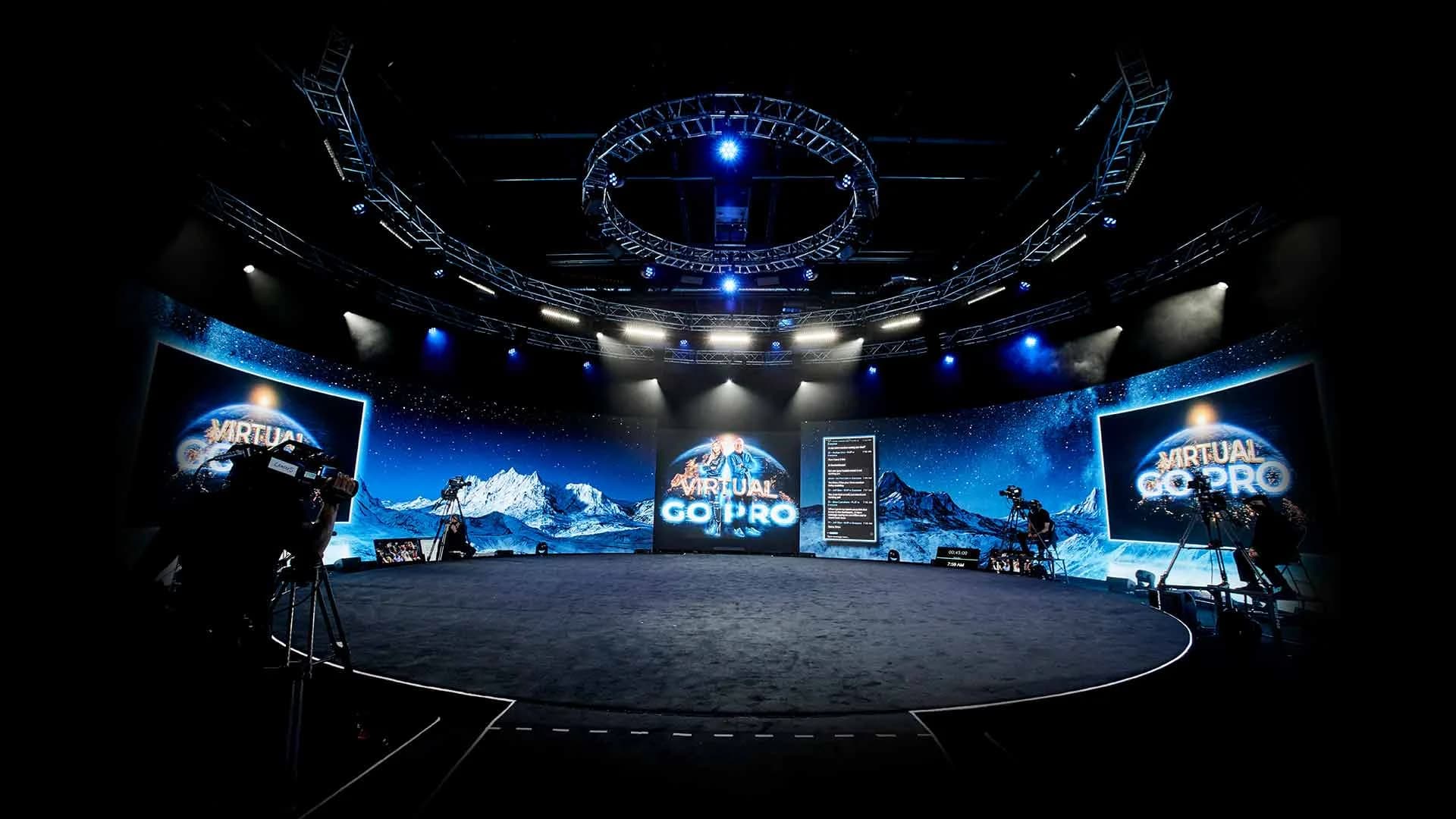
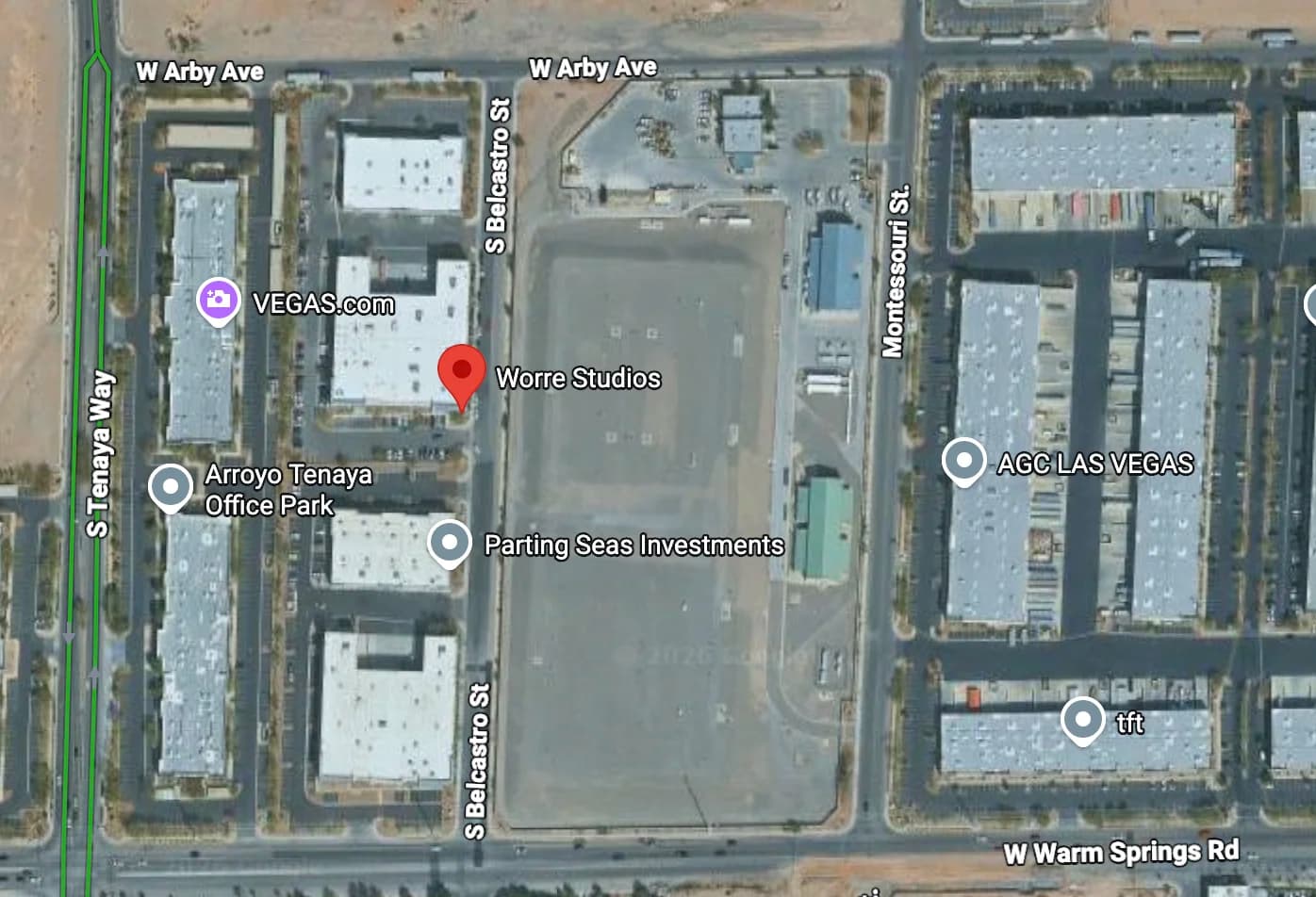
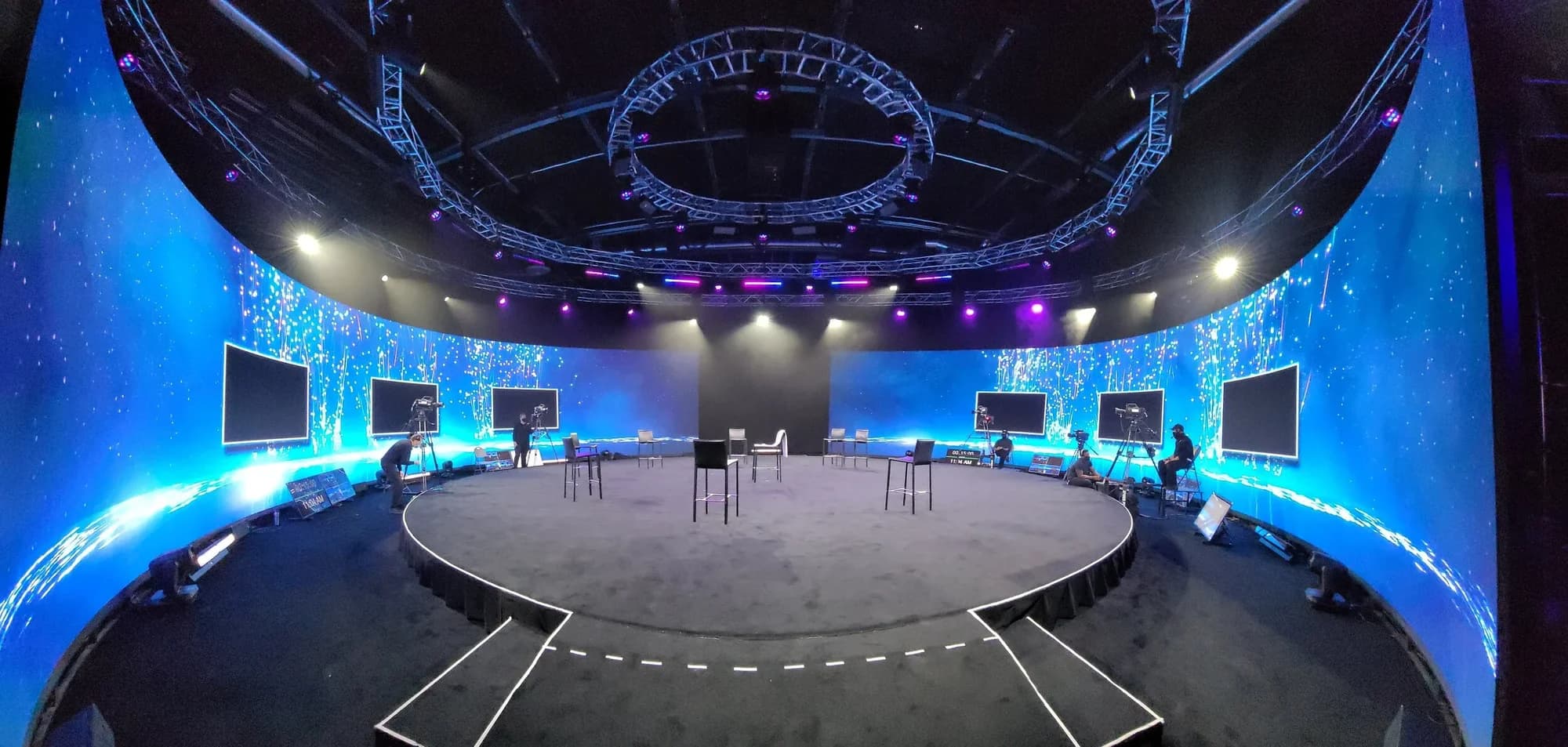
Worre Studios is an LED volume studio in Las Vegas: a 25,000 sq ft stage-in-the-round wrapped in a 360°, 1.9mm 12K LED volume — roughly 65 million pixels of interactive screen. It runs a full Unreal Engine 5 pipeline you can drive from a tablet without writing code, carries fully redundant broadcast infrastructure, and connects to 500,000+ hybrid attendees live with sub-satellite latency.
It's not a webinar setup. It's a broadcast facility you book complete — walls standing, crew on site, no six-figure LED rental on top.
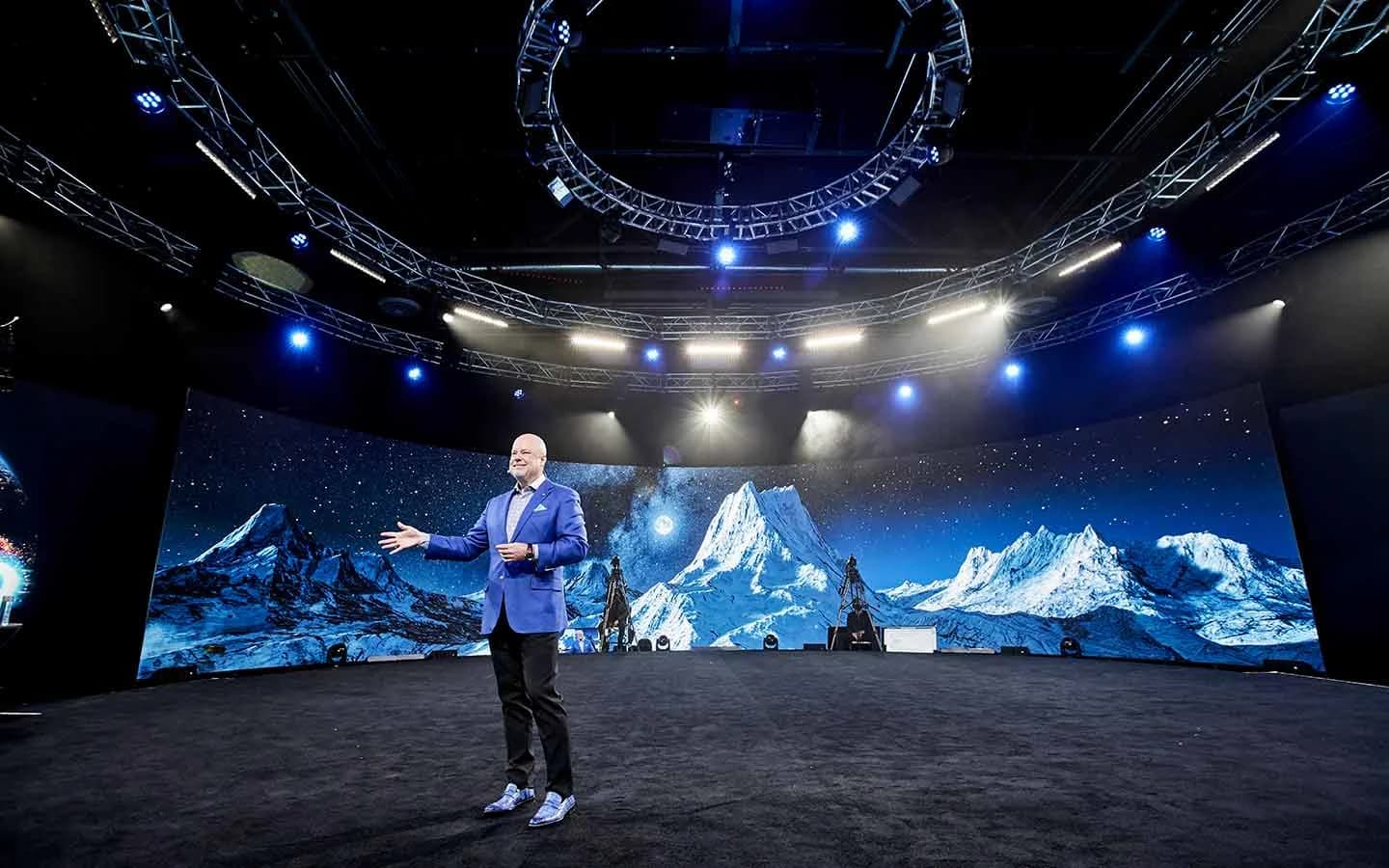
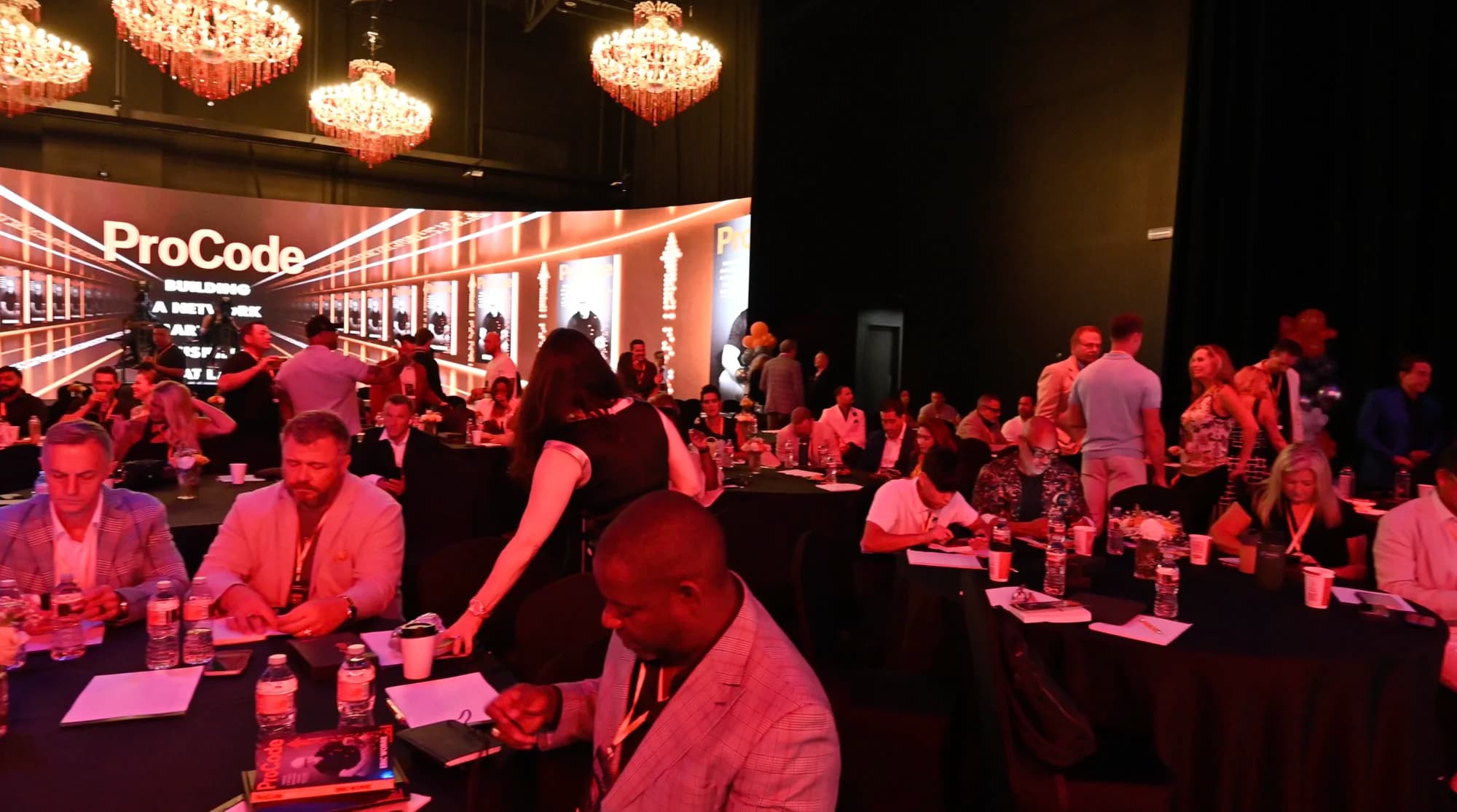
Most studios put a screen in front of you. Ours puts you inside one. The stage sits in the round, wrapped on all sides by curved 12K LED, so talent, audience, and content share a single immersive environment — front, behind, and all around.
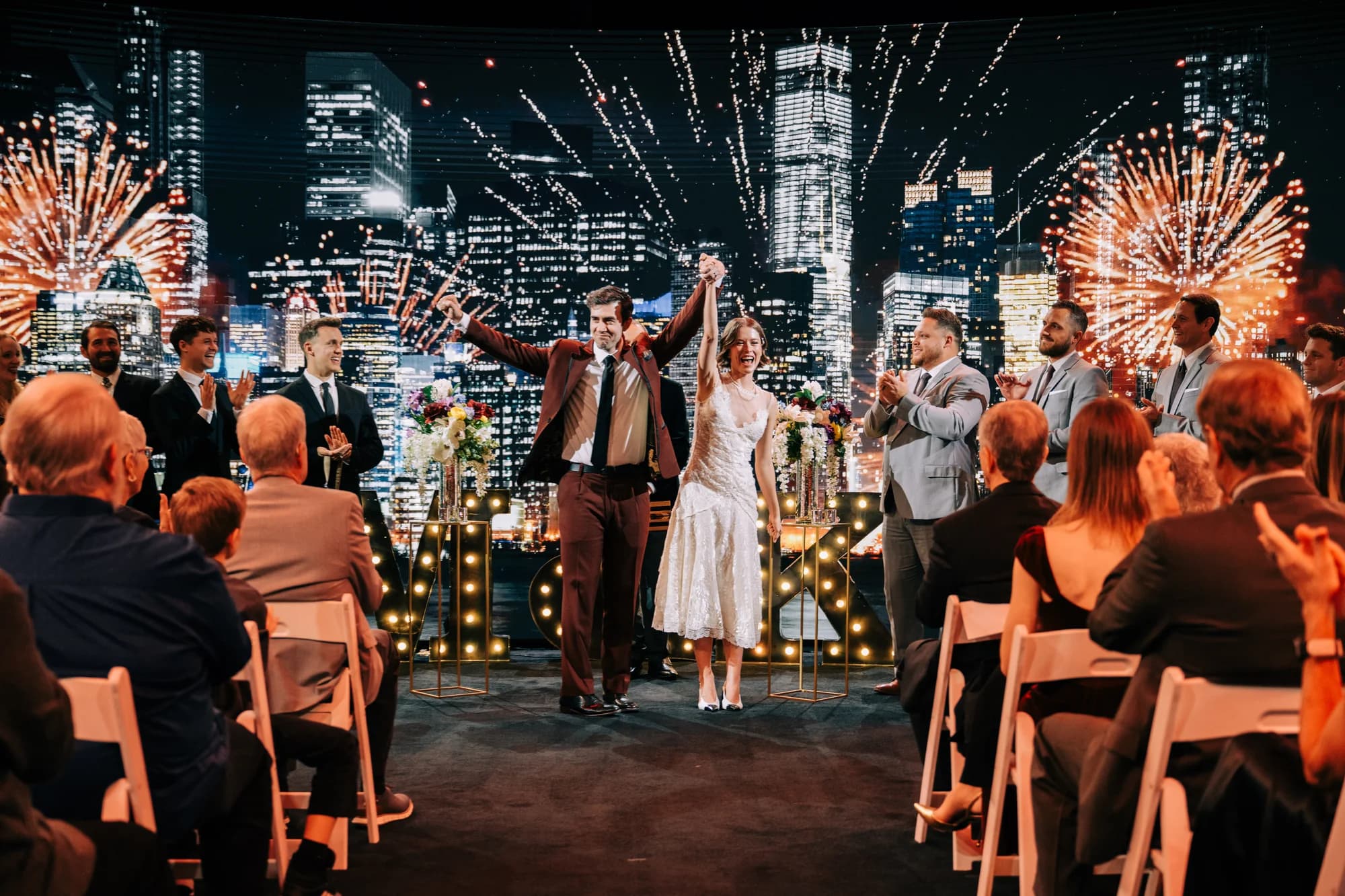
That wraparound is the thing people remember. A flat backdrop reads as "screen behind a presenter." A volume reads as "we are somewhere." Logos become full-360 connected motion graphics; a keynote becomes a UE5 world; a product reveal happens in an environment built for that one moment.
The 1.9mm pitch is tight enough to hold up on camera at close range and to the in-room audience at the same time — the spec that lets the volume read as a real place rather than a video wall.
Our real-time environments run on Unreal Engine 5 and CANVAS, driven by a custom-built system — a producer triggers scenes, reveals, and full environment changes live from an iPad, no code.
That's the part that surprises technical buyers. A fully programmable, render-quality environment usually means an engineering team at a console. Here the system is blended and pre-built so a producer — or the CEO themselves — can drive it live: change scenes, trigger reveals, reshape the room.
One booking, one operator, a fully programmable system. The pipeline is what turns "a screen with your logo on it" into an environment that can become 8–10 distinct worlds inside a single production.
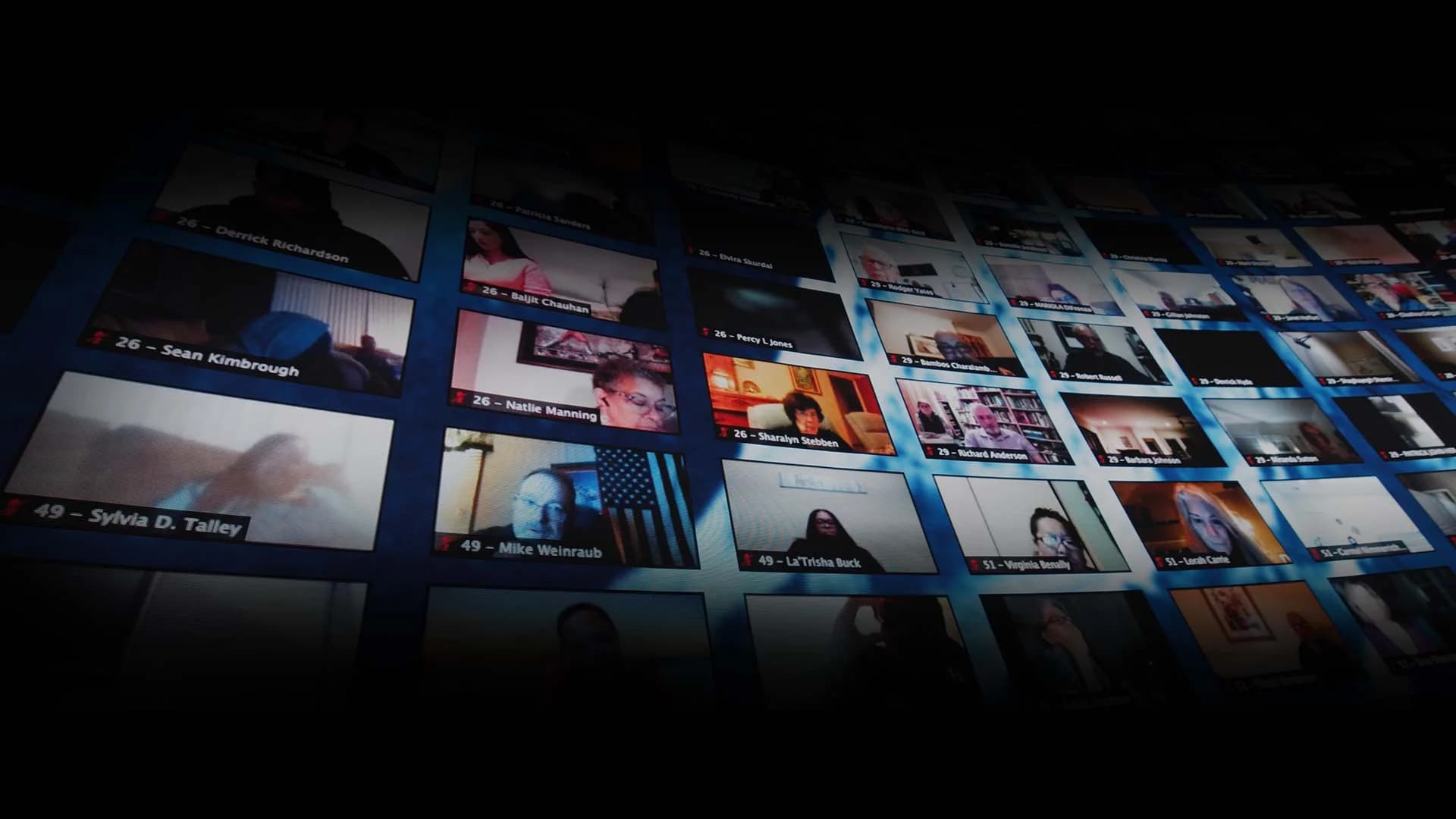
Remote guests don't watch from a grid of muted boxes — they come fully live on the wall, face to face with the host, with eye contact, in real time. And they do it without the satellite-interview delay everyone recognizes from a bad live cross.
This is the difference between an interactive broadcast and a webinar. The system is engineered for true one-on-one remote conversation: a host and a remote guest can actually talk — overlap, react, finish each other's sentences — because the latency is low enough to carry a normal back-and-forth. A remote audience member can be pulled up onto the screen and brought into the room as if they were standing on stage.
Underneath, the reach is stitched together from licensed conferencing infrastructure — but that's the plumbing, not the product. The product is interactivity at scale: live faces, live conversation, one shared environment.
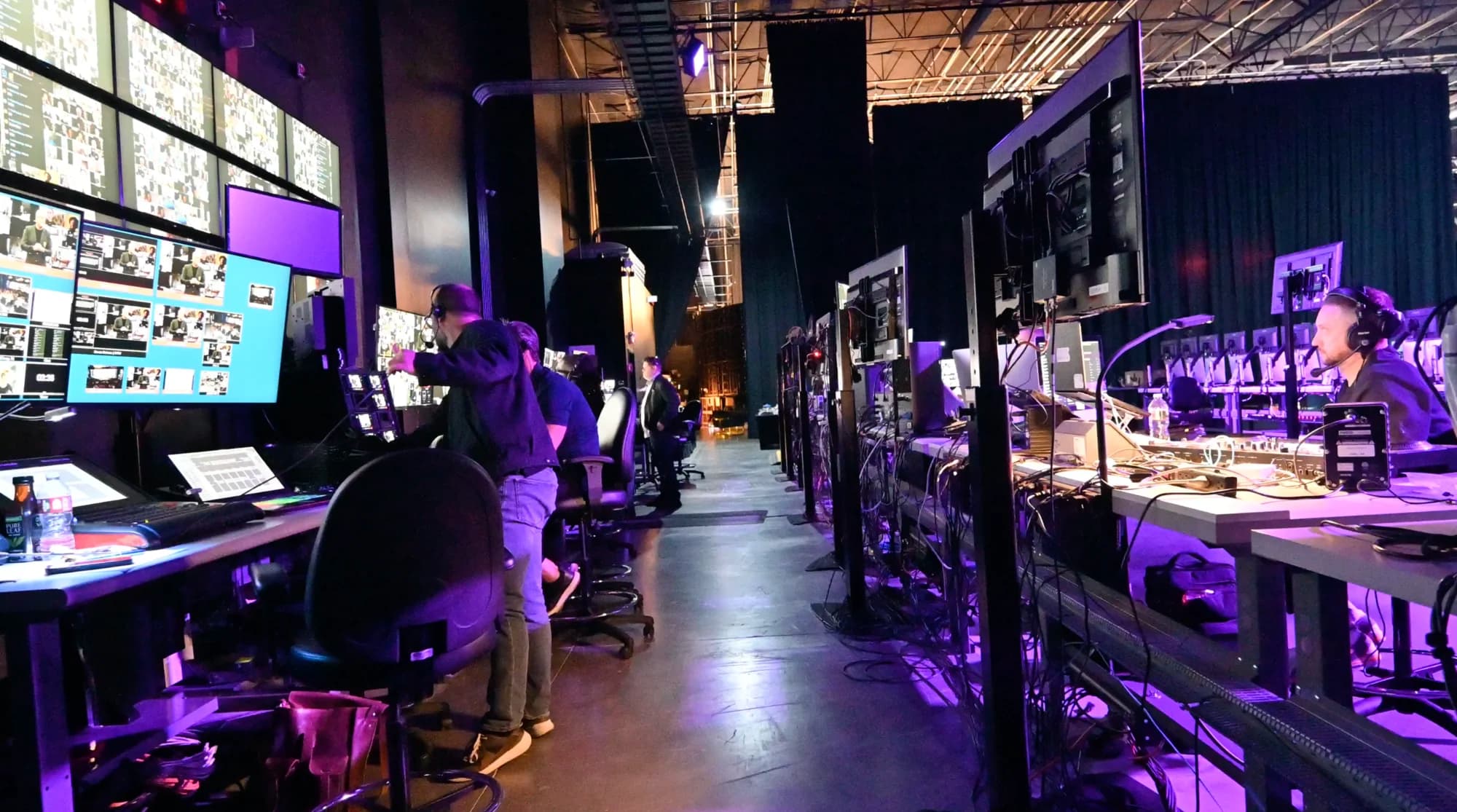
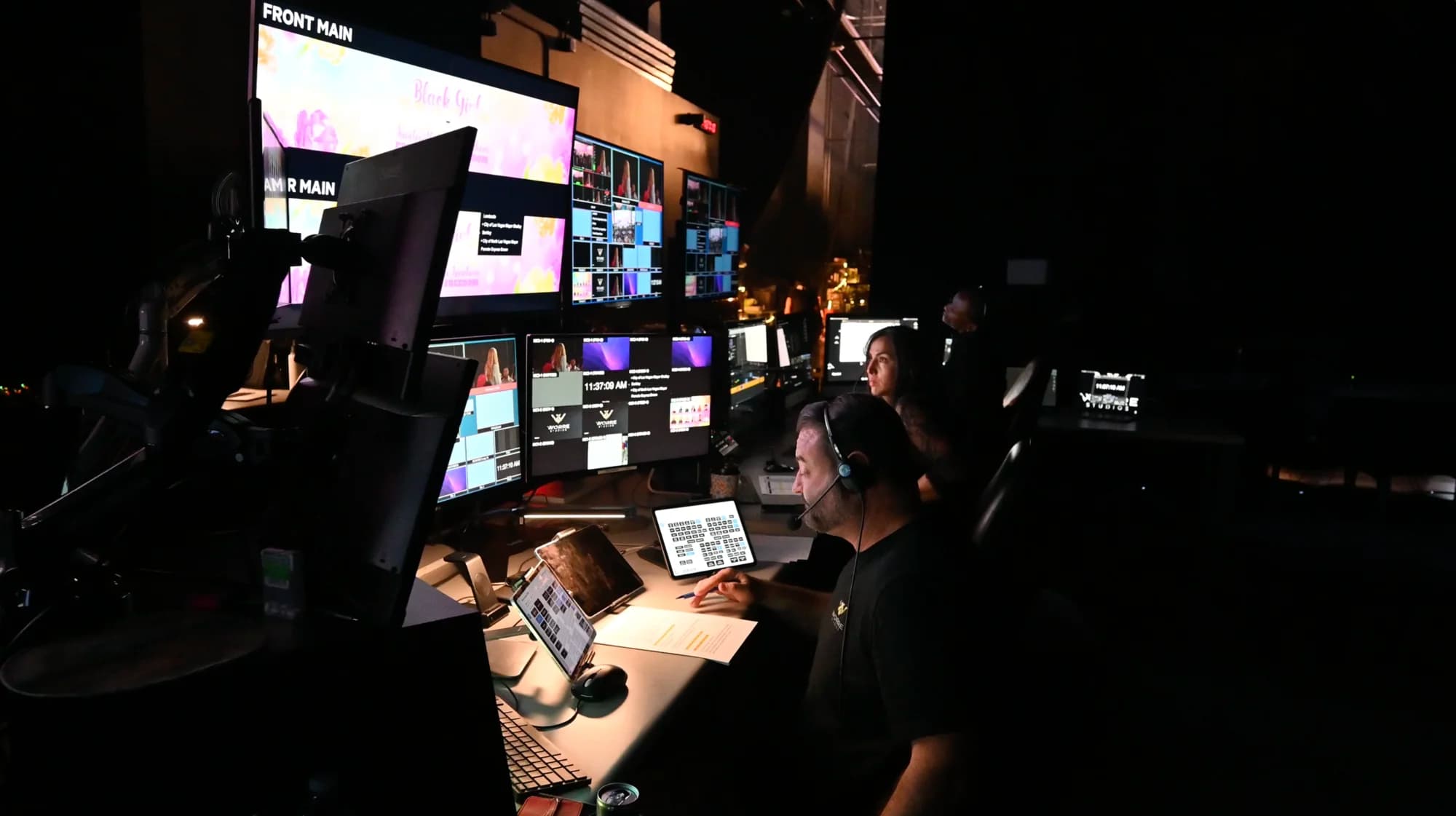
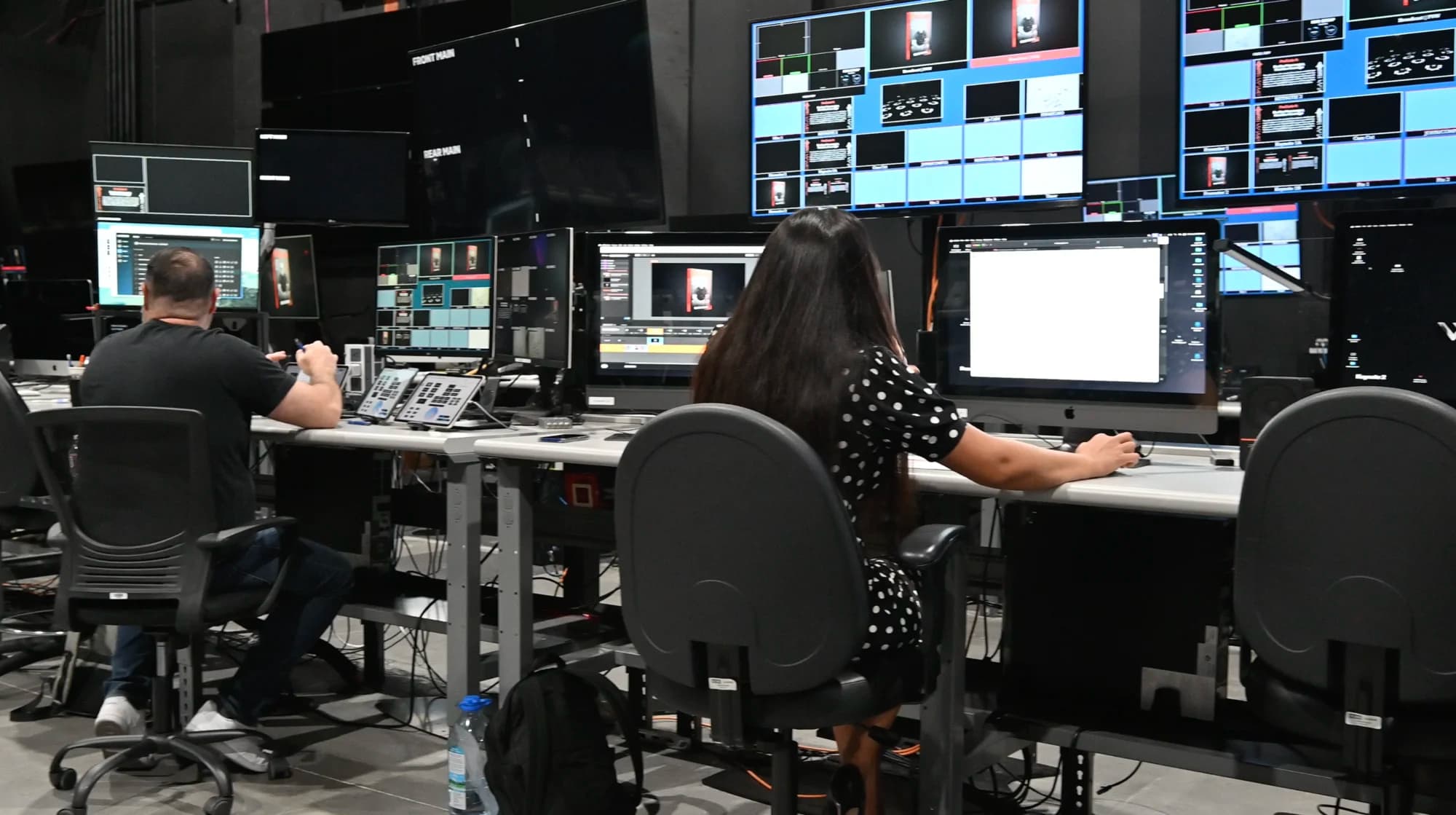
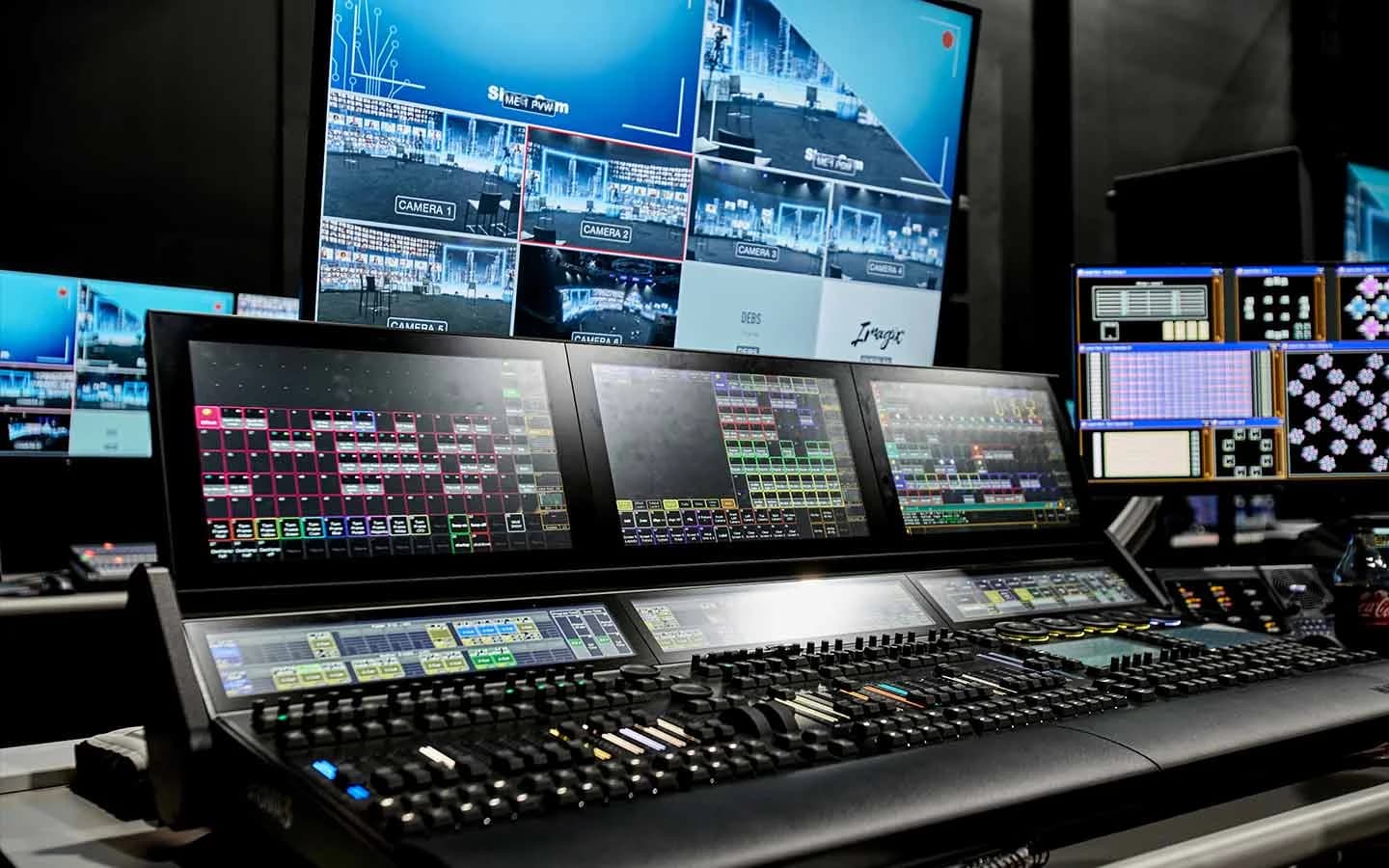
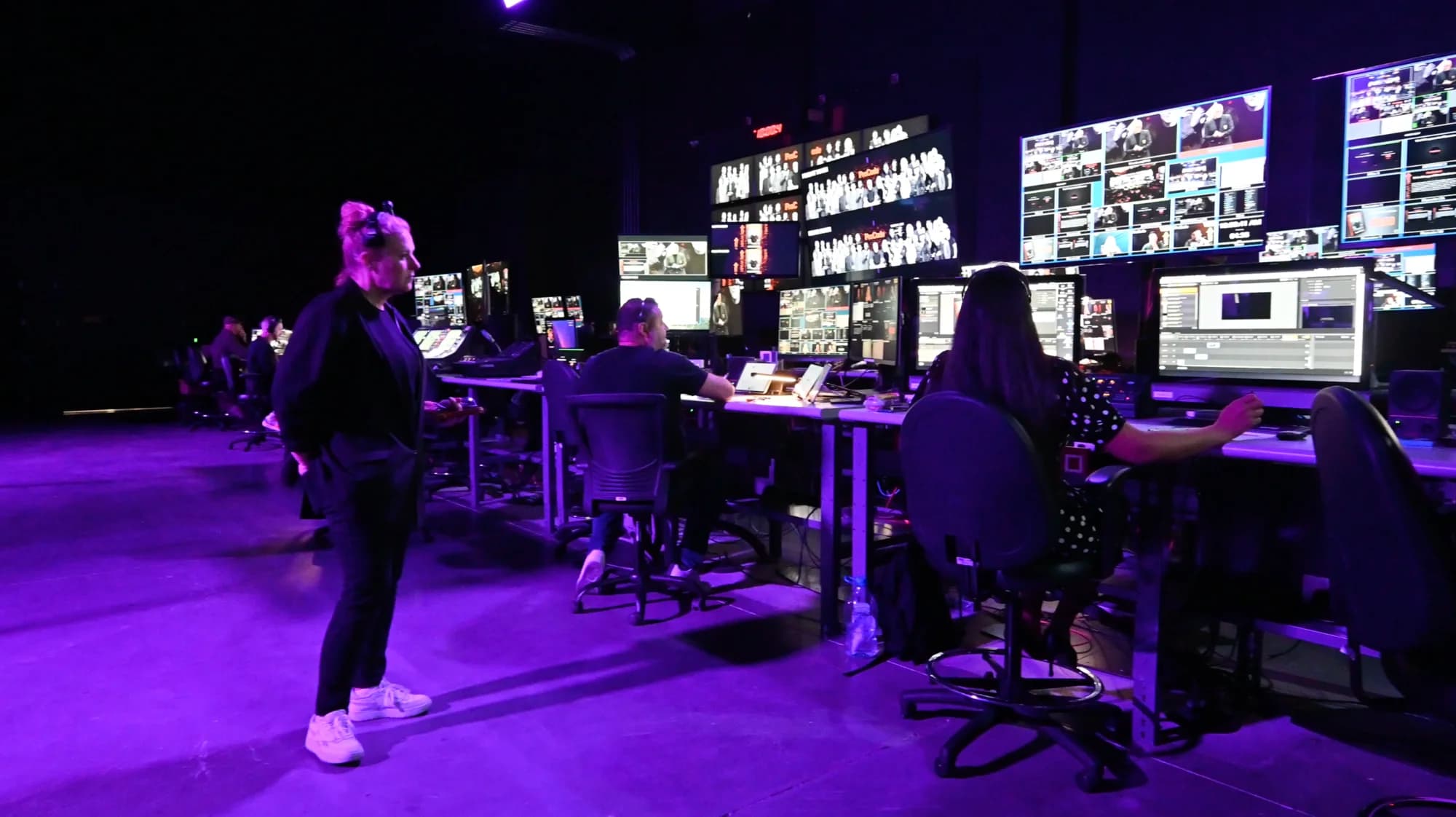
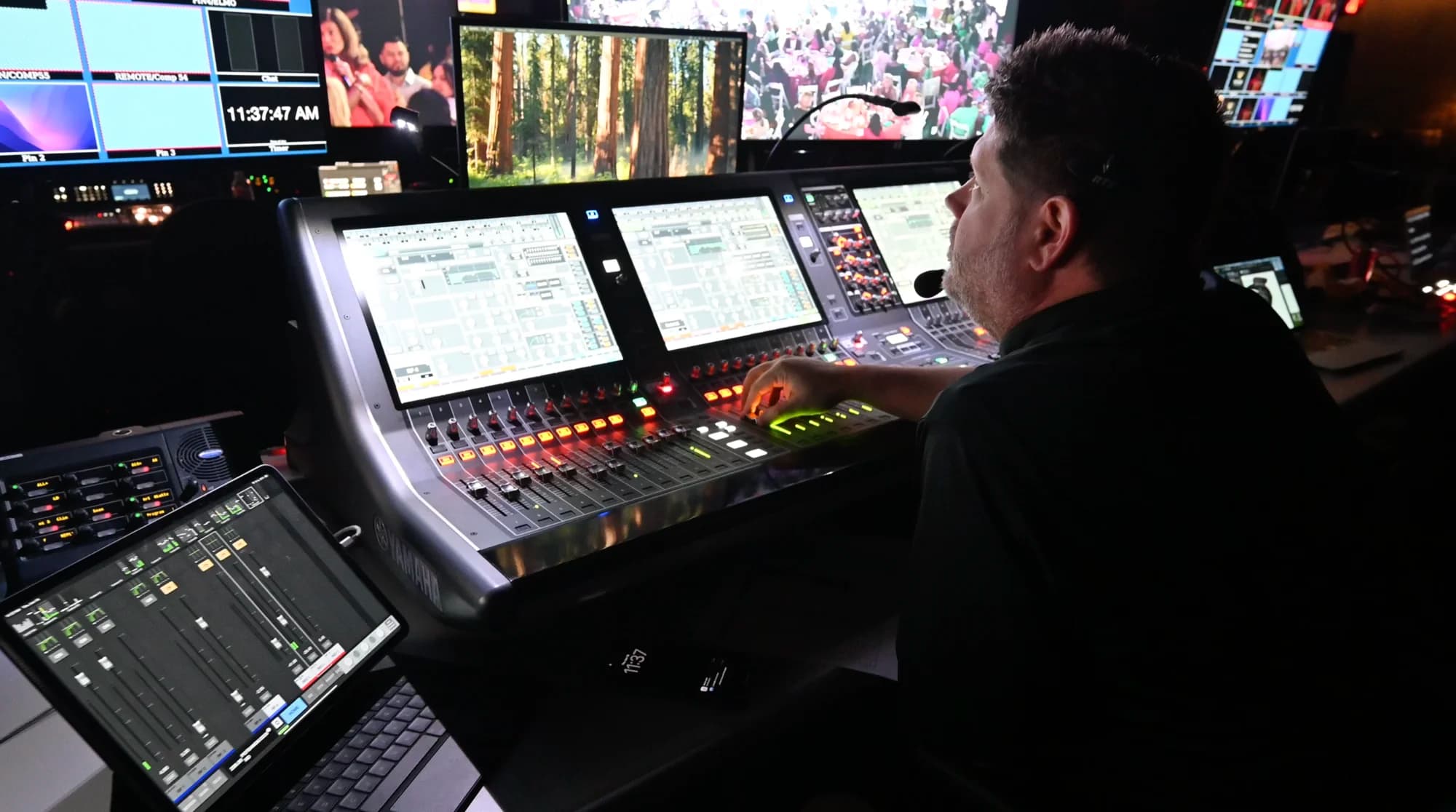
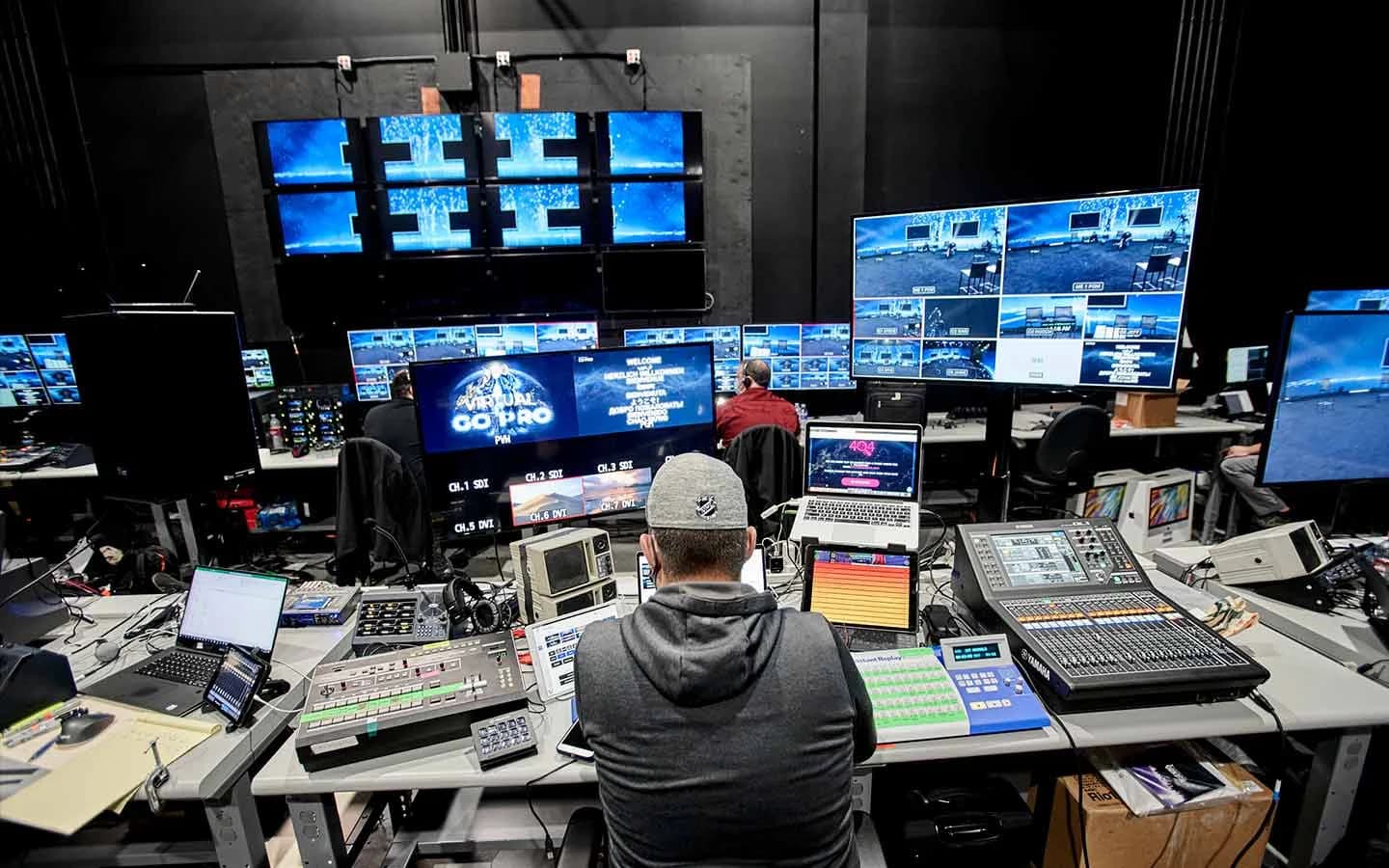
The control room runs on the same equipment a network television facility runs on — with full redundancy, so a single point of failure doesn't end your event. This is the layer that tells a technical buyer the studio is the real thing.
Worre Studios is fully camera-agnostic — we own everything except cameras and bring in whatever the shoot calls for.
Redundancy is the word that matters here. AJA Bridge Live carries a full backup path, and the signal chain is built so the show keeps going. For a flagship event with hundreds of thousands watching, that's not a luxury spec — it's the reason the booking is safe.
Behind the stage is a 50+ station production floor — the Media Village — that manages the remote audience: who's on screen, who's queued, who's interacting. It's how a half-million-person event stays organized instead of chaotic.
These are three distinct figures measuring three different things. They're never interchangeable — read them precisely.
Hybrid attendees live
Guests shown on the LED wall at any one time
350 seated · 500 standing · 600 concert
One message, delivered live to the whole world at once, in the language each person speaks — with the music, effects, and atmosphere of the event still playing underneath the translated voice.
Most live translation flattens everything: the original audio drops to a dead, muted bed under a single interpreter. Here the ambiance stays alive. An attendee gets closed captions plus a translated voice layered over the real soundscape of the room — so a launch still feels like a launch, not a conference call with a voice-over.
The single-source model also kills the game-of-telephone problem: instead of re-cutting and re-sending regional versions that drift apart, everyone receives the same moment simultaneously.
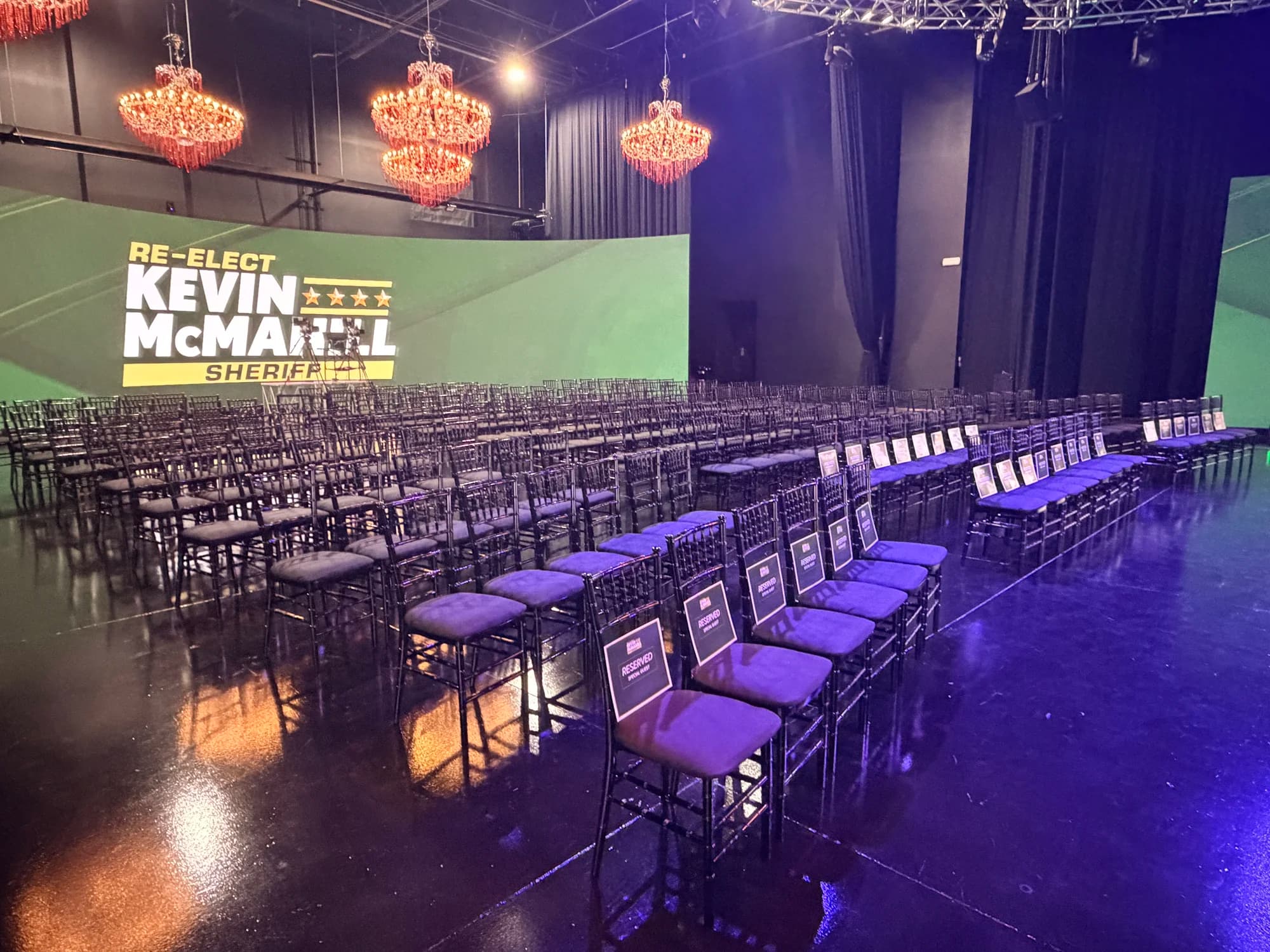
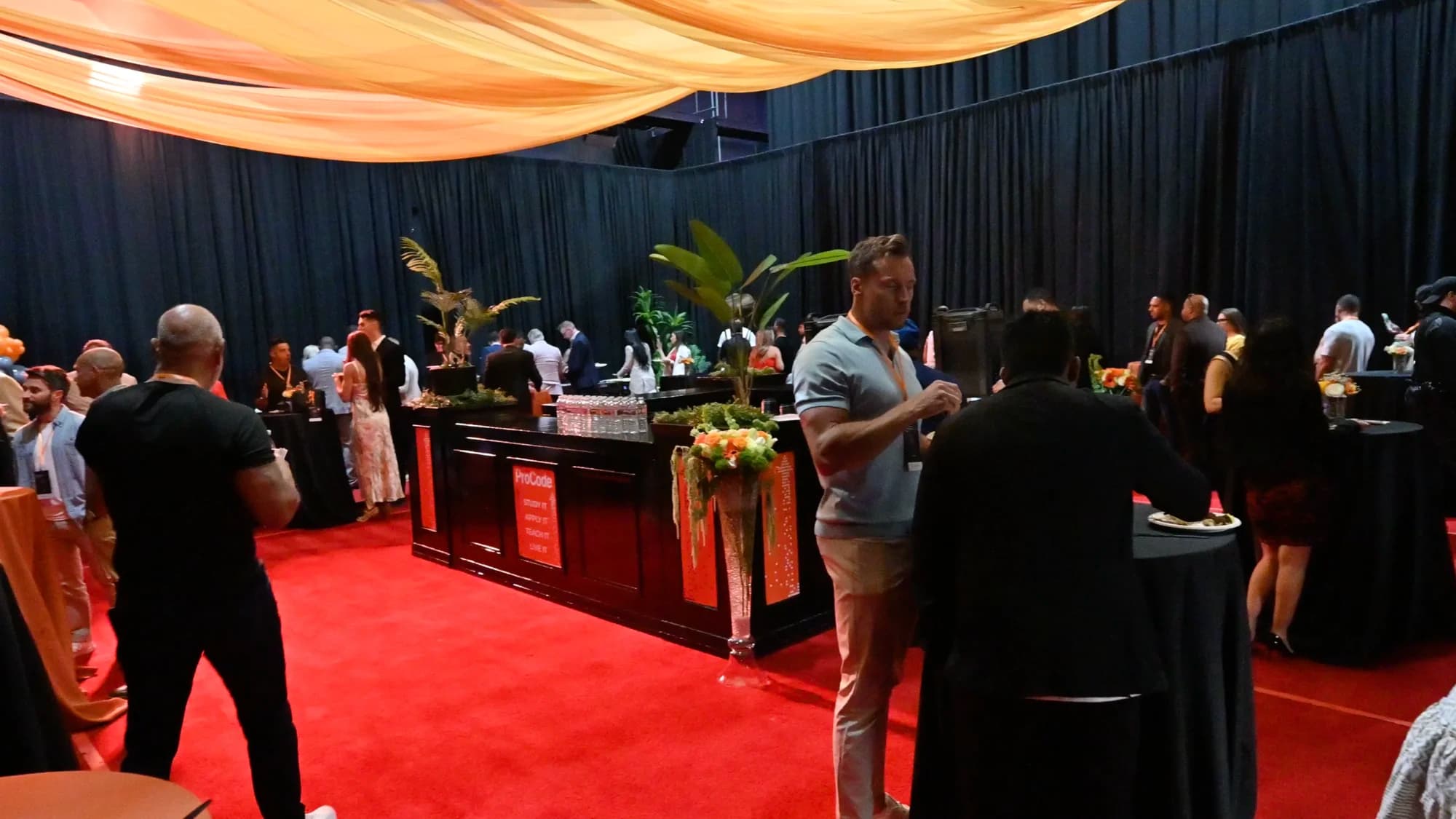
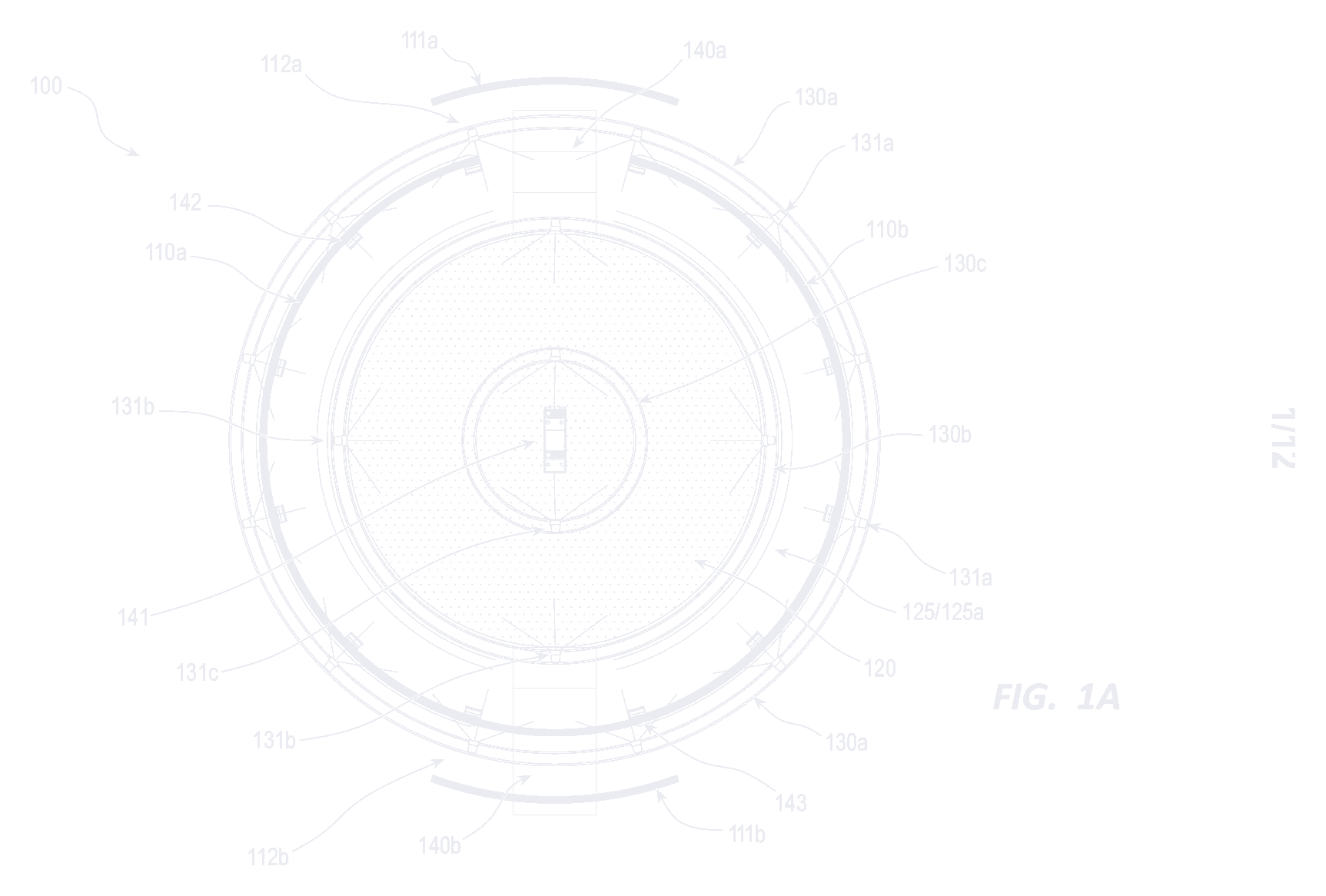
Half the LED wall moves. It rides a track system, so the same room reconfigures between a fully virtual broadcast, a hybrid event with a live audience, and a traditional in-person production — without rebuilding the space.
That mobility is what makes one venue serve virtual, hybrid, and traditional events. Open the volume up for a seated audience; close it down for an immersive broadcast; reshape it for a concert. The walls follow the format instead of the format being forced to fit fixed walls.
The walls are always standing and the crew is always here. You book a complete broadcast facility — not an empty room you then have to fill with rented gear.
Renting comparable LED walls into a hotel ballroom can run into the hundreds of thousands of dollars just for the walls — before lighting, audio, crew, or control. Here that infrastructure is built in and permanent. One booking covers the room, the technology, and the team that runs it.
What "built-in" means in practice
LED volume, control room, and infrastructure standing and ready — no build day before you start.
Engineering, camera, audio, and lighting — the team that runs the room is already here.
Shoot evergreen or training content in the same booking as the live event.
Outside teams run their own show, with only a couple of supervised exceptions on the board and network.
An LED volume is a stage surrounded by high-resolution LED walls that display a real-time, photorealistic environment around the talent — the same technique used in modern film virtual production. Instead of a green screen, the world is on the walls and visible to everyone in the room. At Worre Studios the volume is a 360° wrap of 1.9mm 12K LED, roughly 65 million pixels.
Pixel pitch is the distance between LED pixels — smaller numbers mean a sharper image at close range. For broadcast and close-up camera work you generally want a tight pitch; Worre Studios runs 1.9mm, which holds up both on camera and for the in-room audience. Looser pitches (4mm+) are fine for far-back arena screens but break down on close shots.
A webinar is mostly one-way: a presenter talks, an audience watches in muted boxes. An interactive broadcast brings remote guests fully live — face to face with the host on the wall, in real time — inside a designed environment rather than a video grid. The dividing line is interactivity and production quality, not the number of attendees.
Worre Studios can reach 500,000+ hybrid attendees live and display up to 2,744 remote faces on the LED wall at once, while 350 to 600 share the physical room.
Not here. Our Unreal Engine 5 and CANVAS environments run on a custom-built system that can be driven from an iPad without writing code. A producer can trigger scenes, reveals, and environment changes live during the show.
The system is engineered for true one-on-one remote conversation, without the satellite-style delay that forces awkward pauses. That low latency is what lets a host and a remote guest actually talk over and react to each other in real time.
Network-grade facilities typically run dedicated routing, lighting, audio, and redundant streaming. Worre Studios uses Evertz routing, GrandMA 3 lighting, Yamaha Rivage and Meyer audio, Shure Axient mics, ClearCom comms, and AJA Bridge Live with full redundancy, alongside a production-sourced, camera-agnostic camera package on a jib and 360° track.
Yes — and that's unusual. Most live translation mutes the original audio to a dead bed. Worre Studios layers the translated voice over the live effects, music, and ambiance, so attendees in 100+ languages get captions plus translated audio without losing the feel of the event.
You can bring your own crew and run your own show — "our house is their house" — with only a couple of supervised exceptions on the lighting board and the core network. Most venues won't allow outside teams to operate at all.
Pricing varies by project and event type, so it's quoted per inquiry. As context, renting comparable LED walls into a ballroom can run into the hundreds of thousands of dollars for the walls alone; a turn-key facility folds the walls, control room, and crew into one booking.
Pricing varies by project. Tell us what you're planning and we'll scope the build — walls, crew, and the full pipeline, in one booking.