

One Event. Every Seat in the World Is Front Row.
As a hybrid event venue in Las Vegas, Worre Studios puts your live audience in the room and your remote audience on the wall — live, face to face, in the same moment. Not a livestream bolted onto a meeting. One production, engineered from the ground up to reach up to hundreds of thousands of hybrid attendees.
The first reaction we get from planners is almost always the same: "I have to go back and rethink this — it's bigger than anything I've done."
You're not filling a venue. You're filling stadiums.
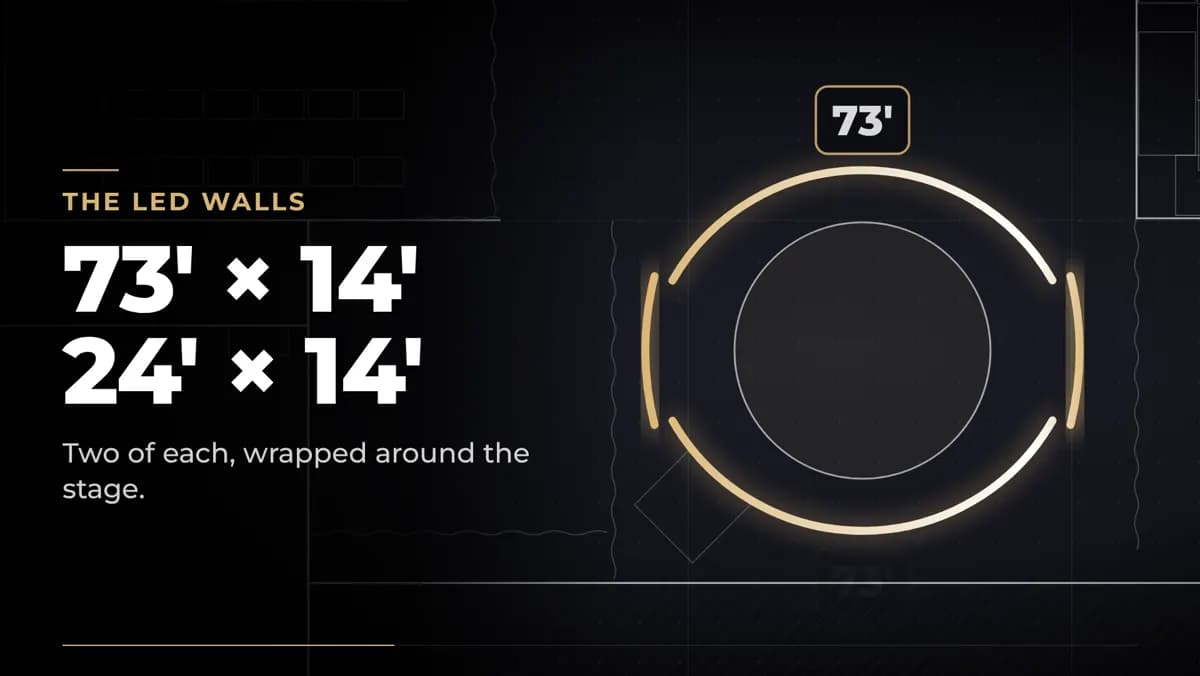
You're Not Filling a Venue. You're Filling Stadiums.
Planners walk in preparing a conference and walk out realizing the room out-scales the plan. More reach, more ticket revenue, remote and in-person at once. The studio's hybrid attendance capability tops out at 500,000+ — you're not marketing to fill a venue, you're marketing to fill eight stadiums.
Overwhelming? At first. Our team walks every client from that first "it's bigger than I thought" moment to a production plan sized to their actual audience — and a clear path to grow it.
Remote Doesn't Mean Removed
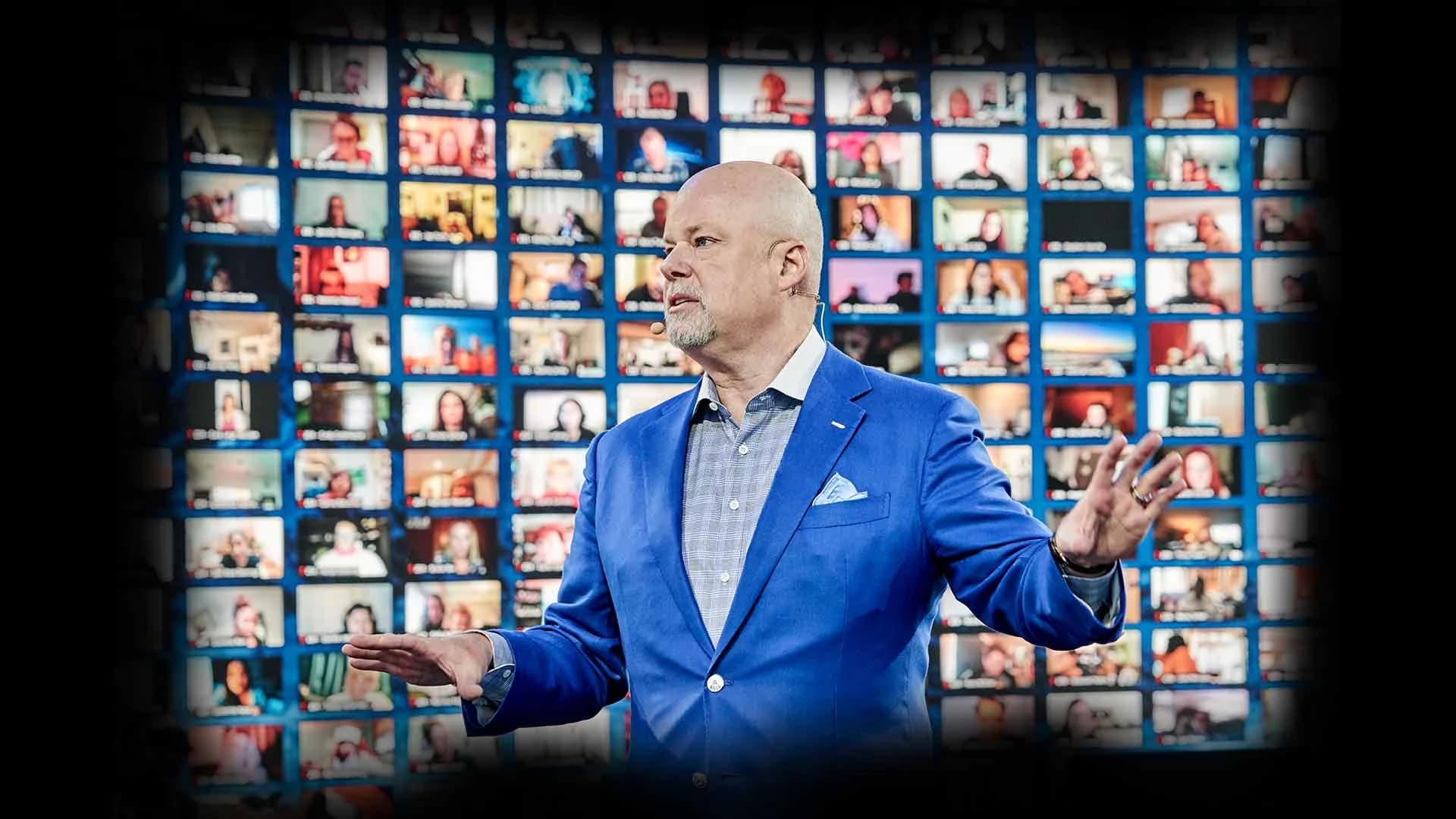
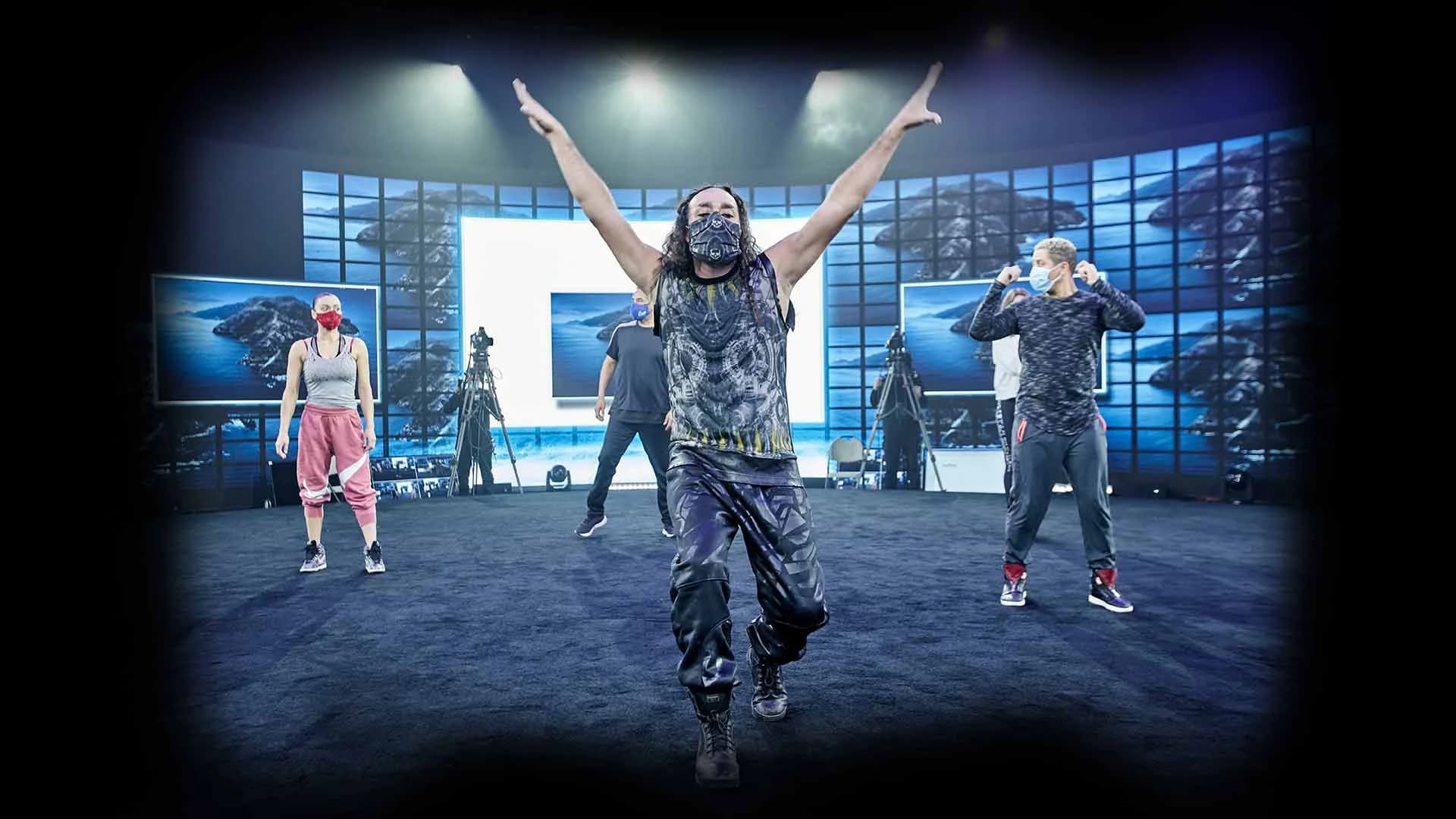
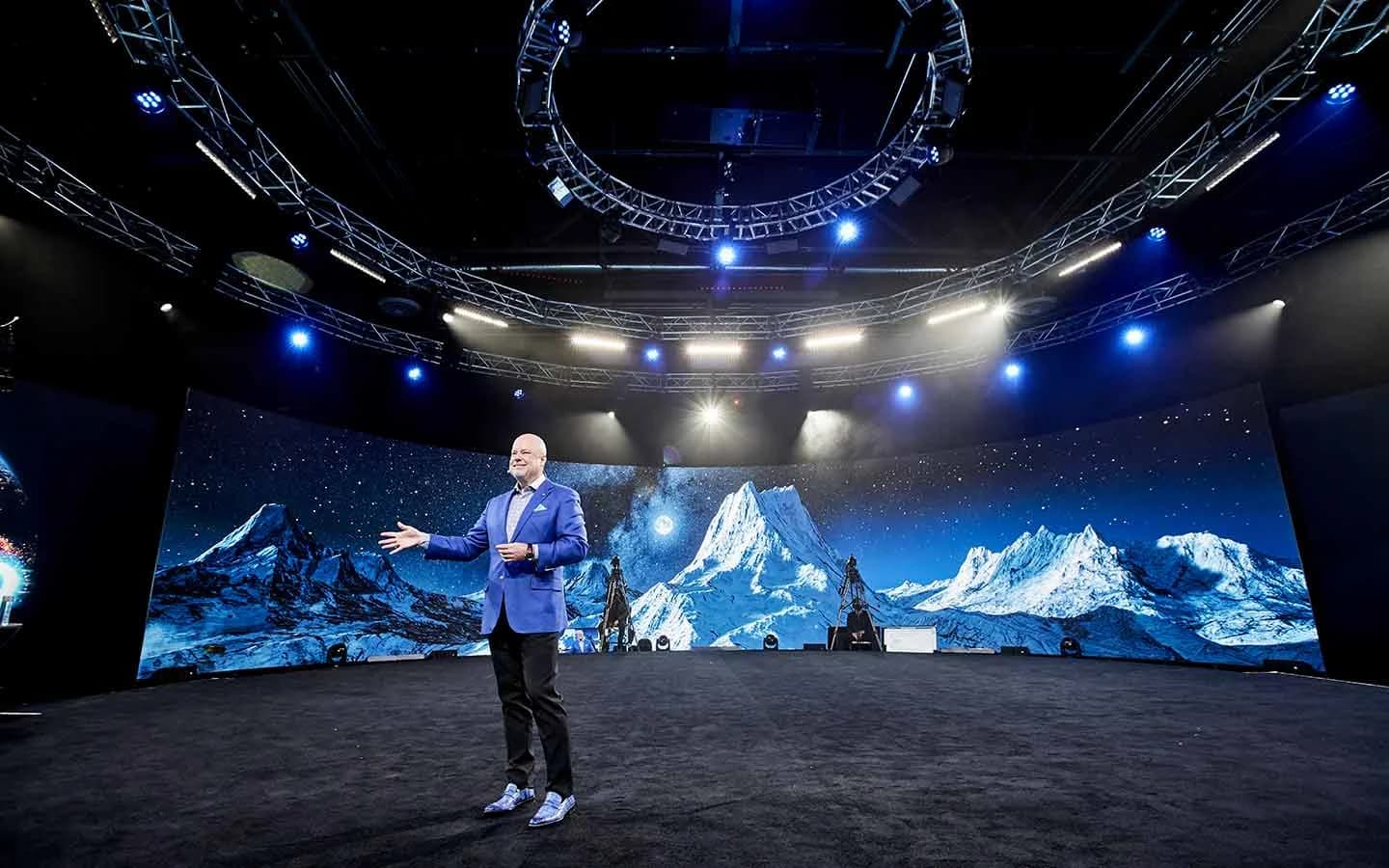
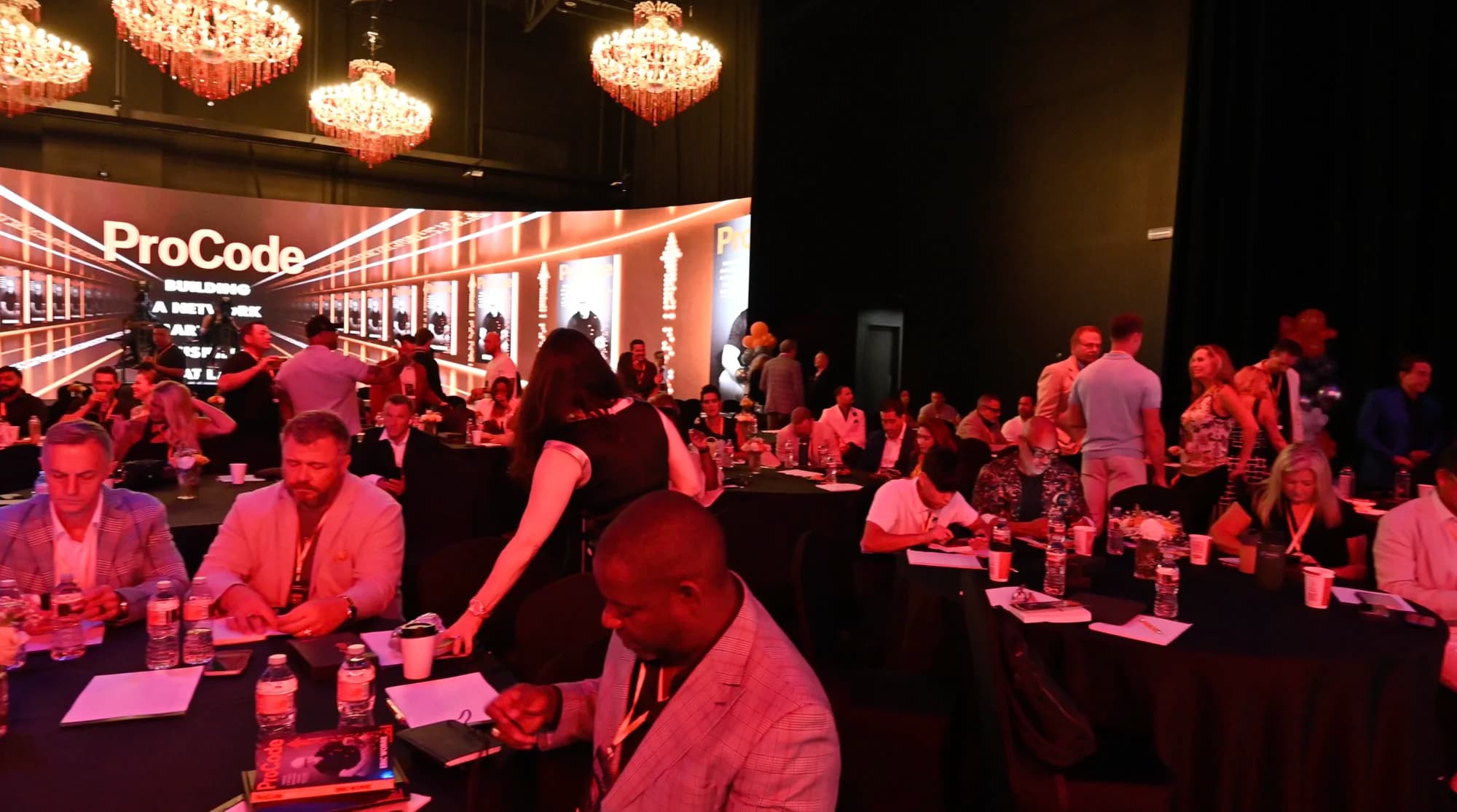
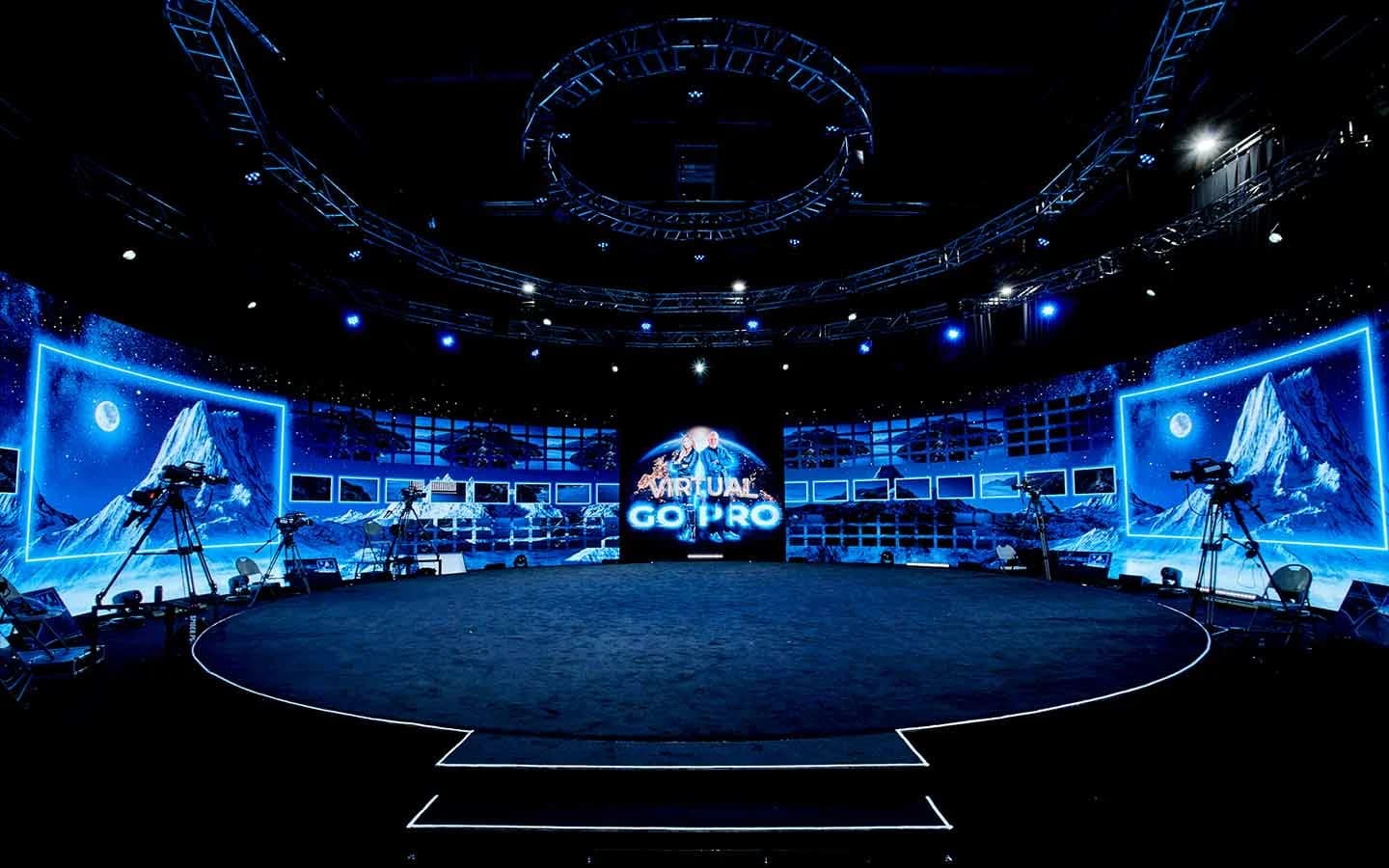
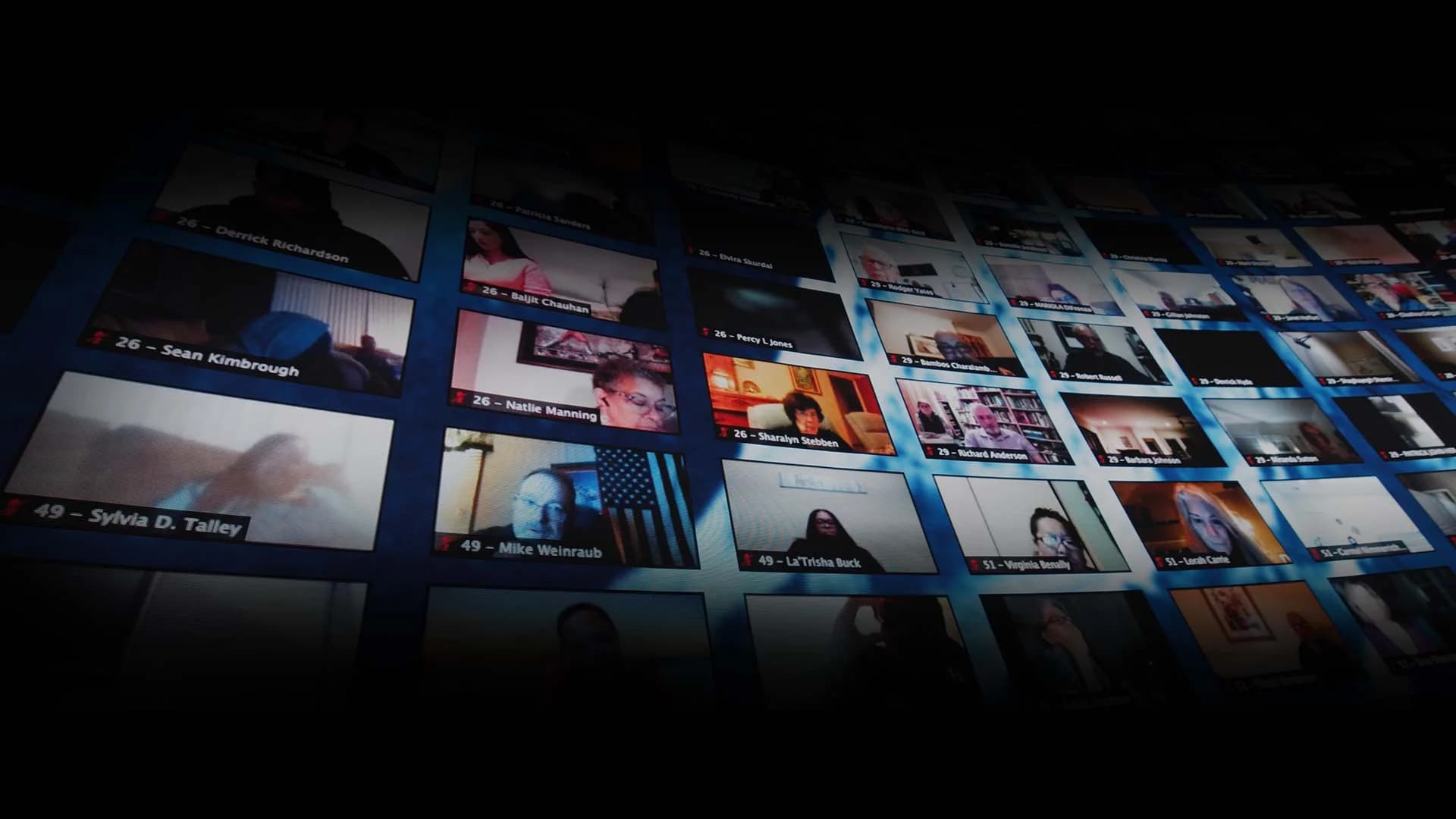
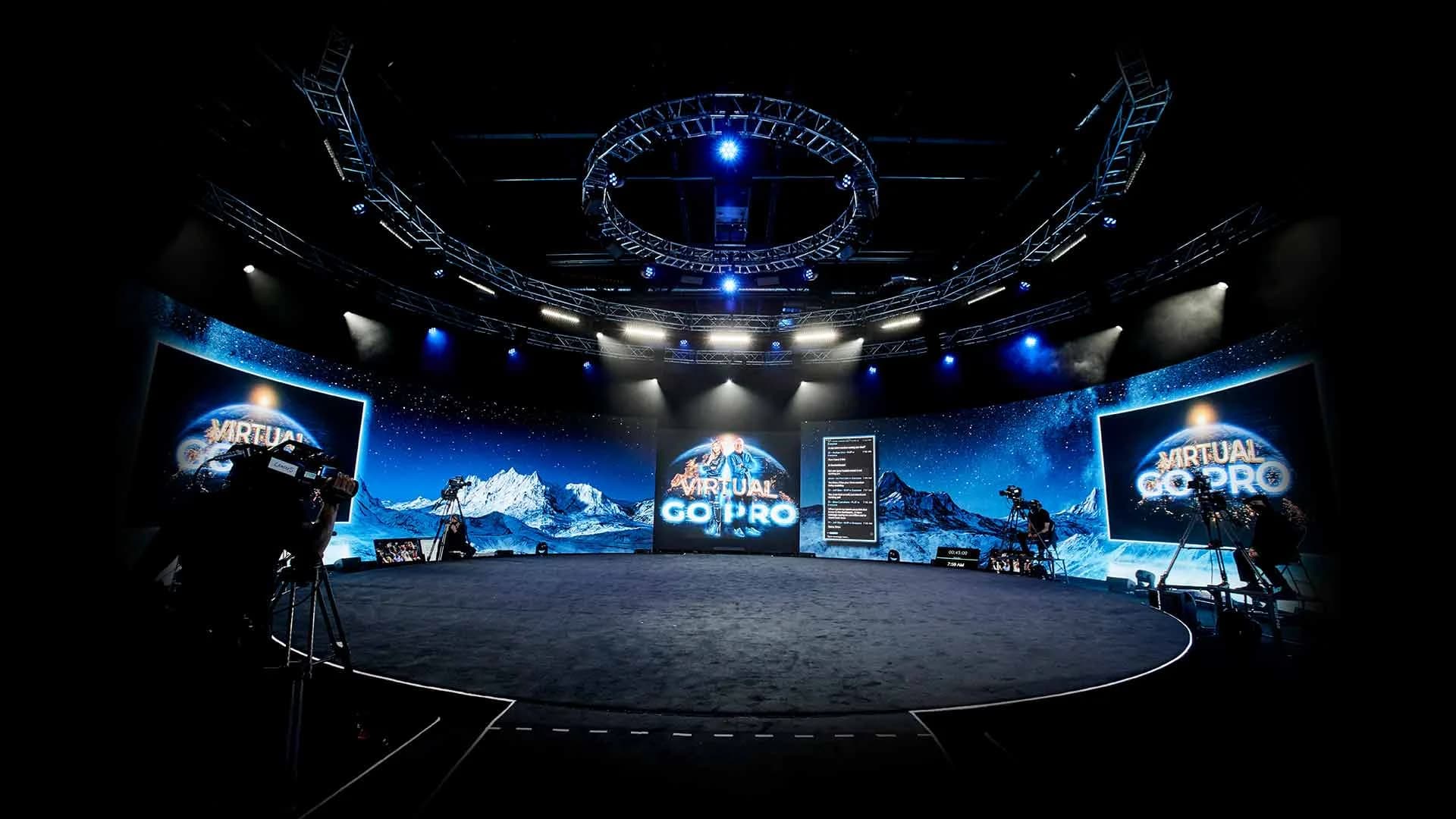
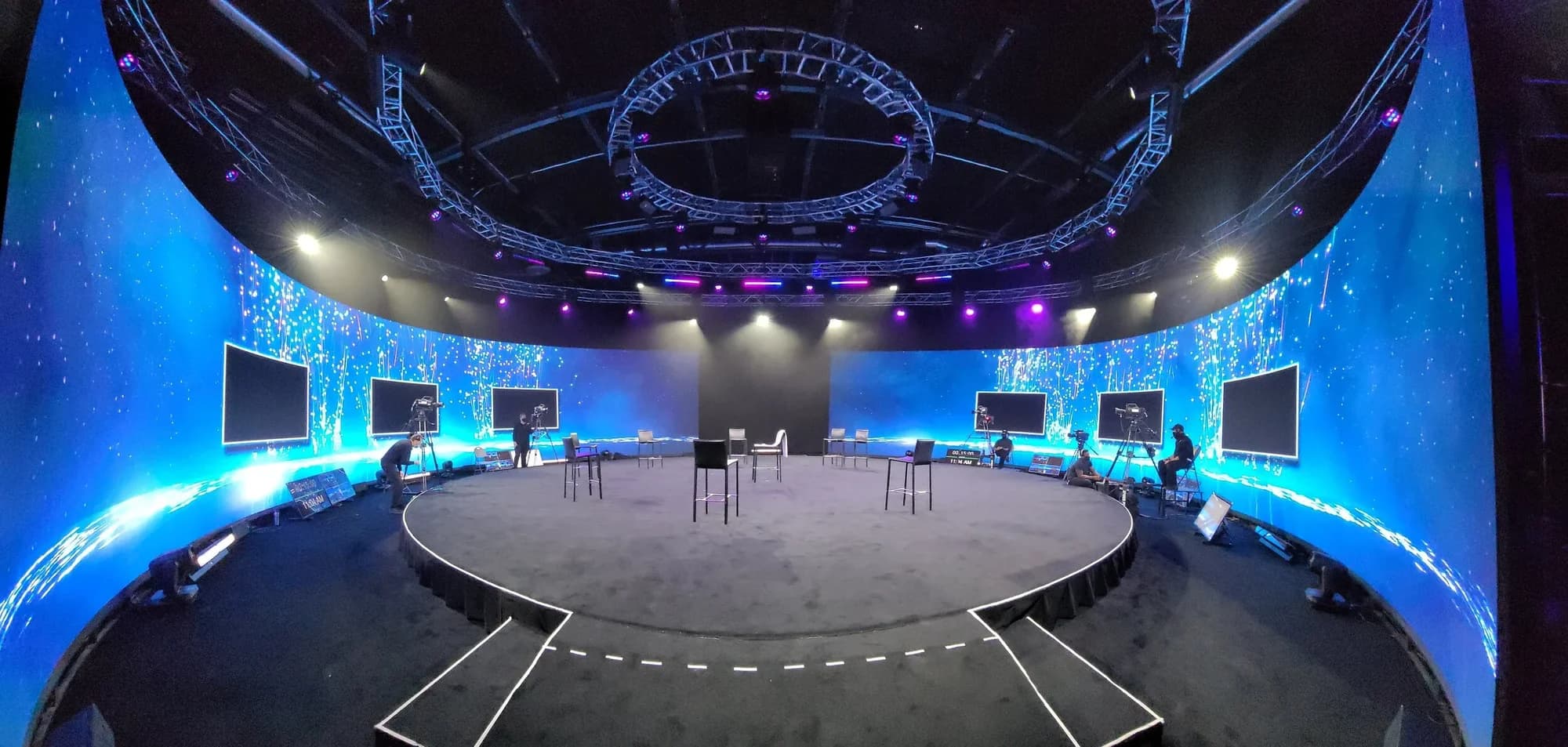
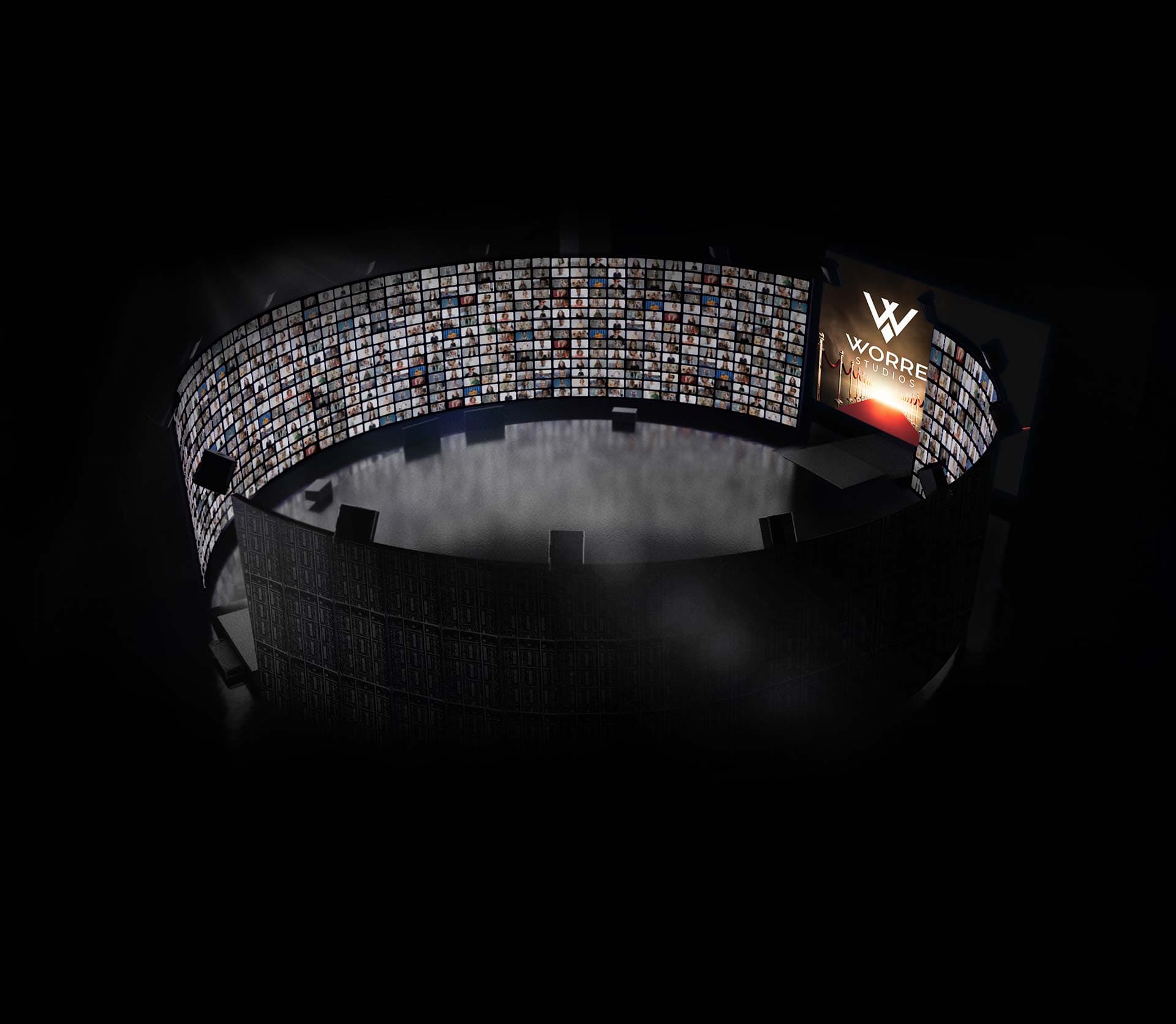
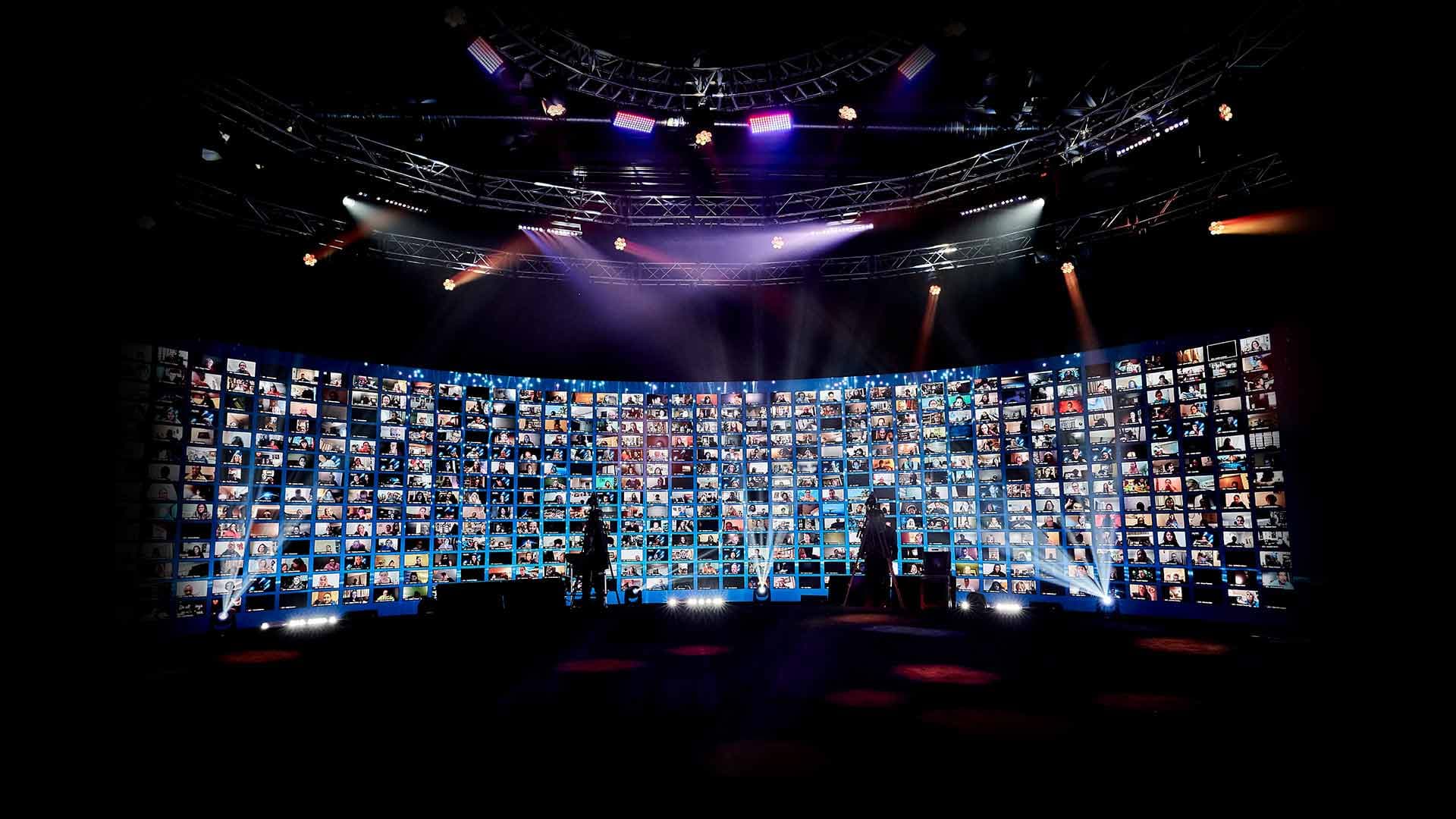
Half the 360° LED wall tracks back to seat your live audience. The wall that remains becomes your remote audience — up to 2,744 guests displayed at once, live and reactive, not a mosaic of frozen thumbnails. Remote attendees go fully live: pulled up with the host in real time, actual eye contact, real conversation without the satellite-interview delay. Your speaker takes a question from row three, and the next one from three time zones away, and the room can't tell the difference in energy.
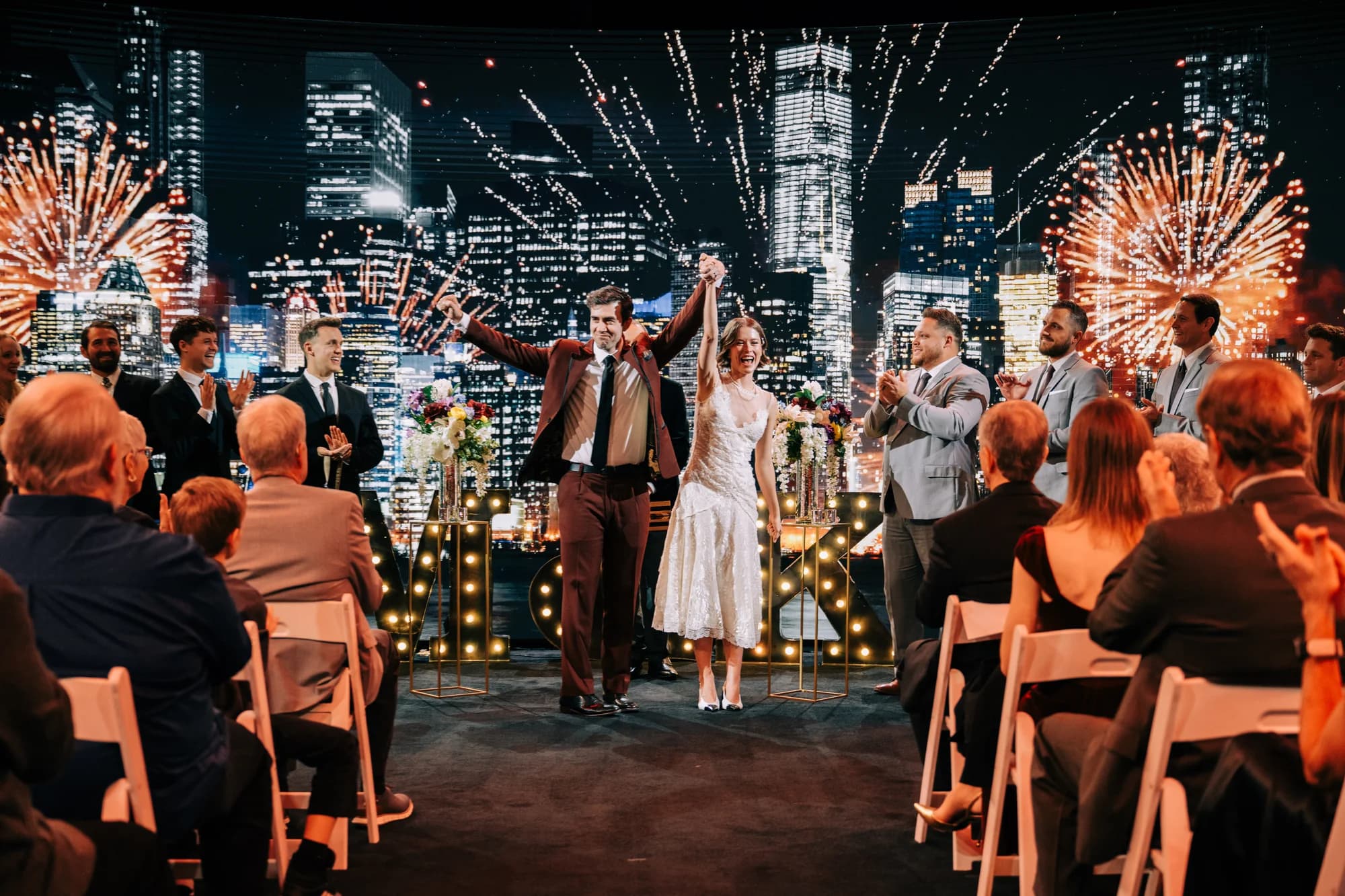
Every attendee — in the room or on the wall — shares one branded environment, one program, one moment. One message, one time, across the world. No re-cut regional versions, no game of telephone. That makes Worre an LED wall event venue in Las Vegas, not a room with a screen rented in for the day.
Live in 100+ Languages
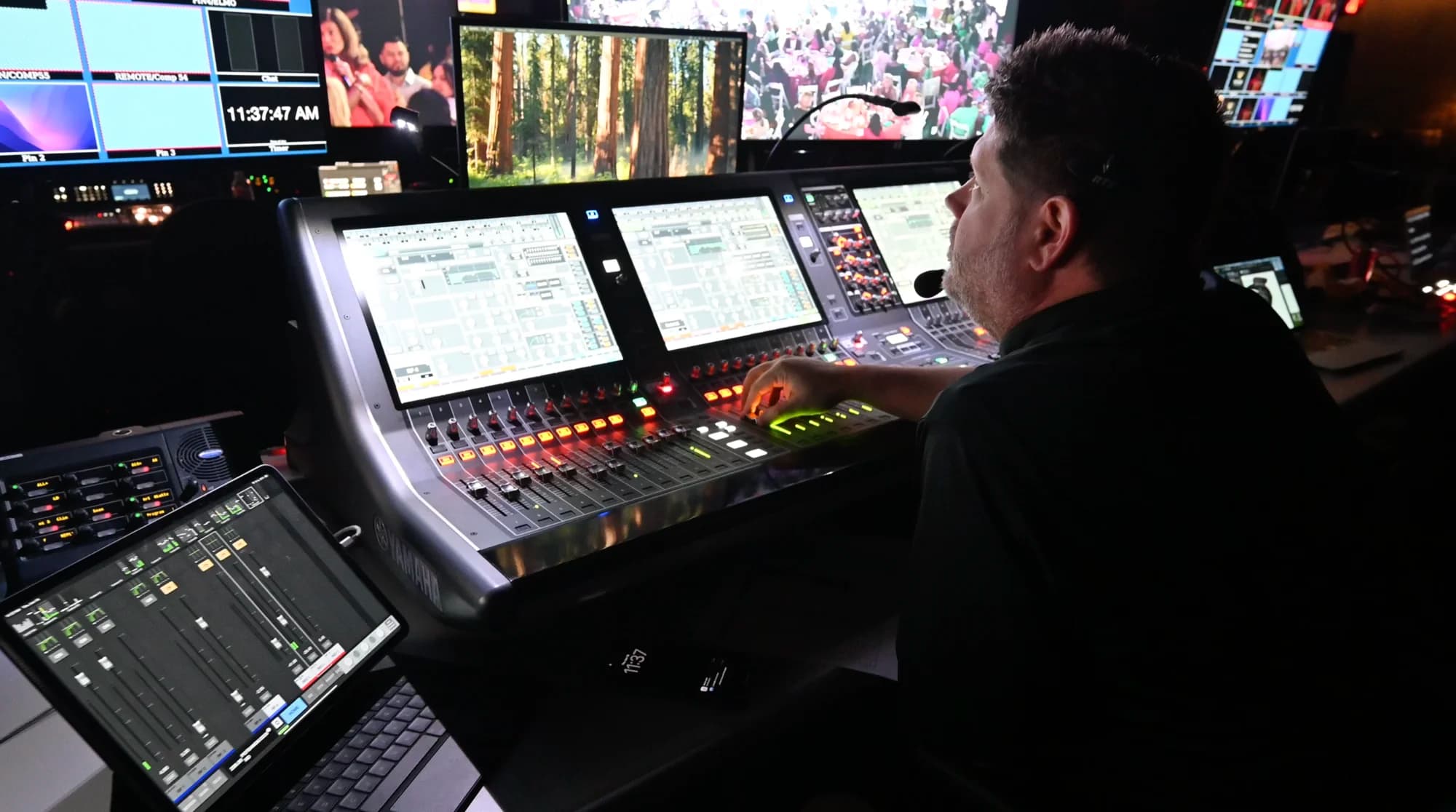
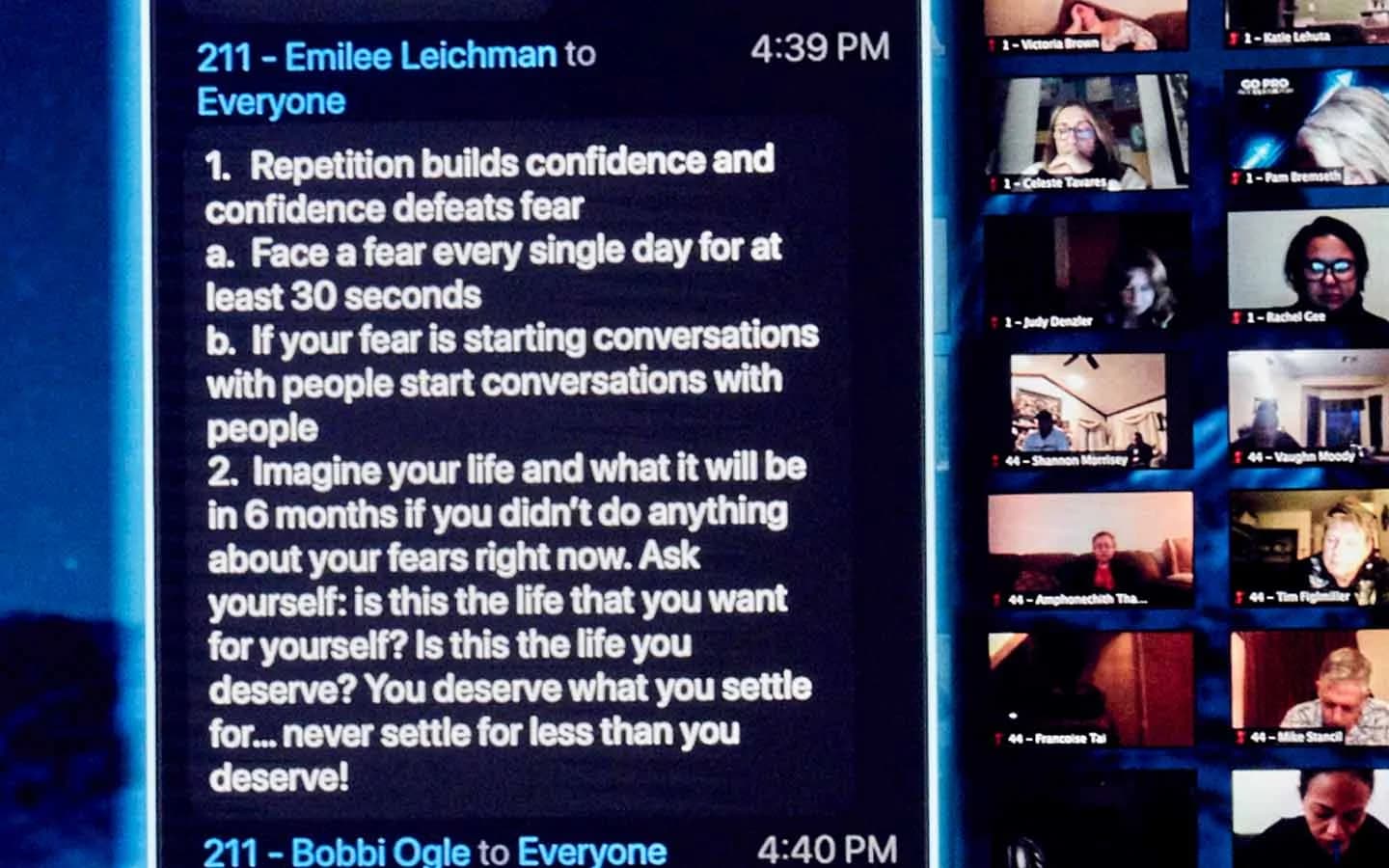
Real-time translation covers more than 100 languages, live-interpreted or AI-driven. Here's the part attendees notice: the music, effects, and room ambiance stay layered under the translated voice. Your guest in São Paulo hears the show — not a muted feed with a voice over dead air. Closed captions ride alongside in their language.
Built on Broadcast, Not on Hope
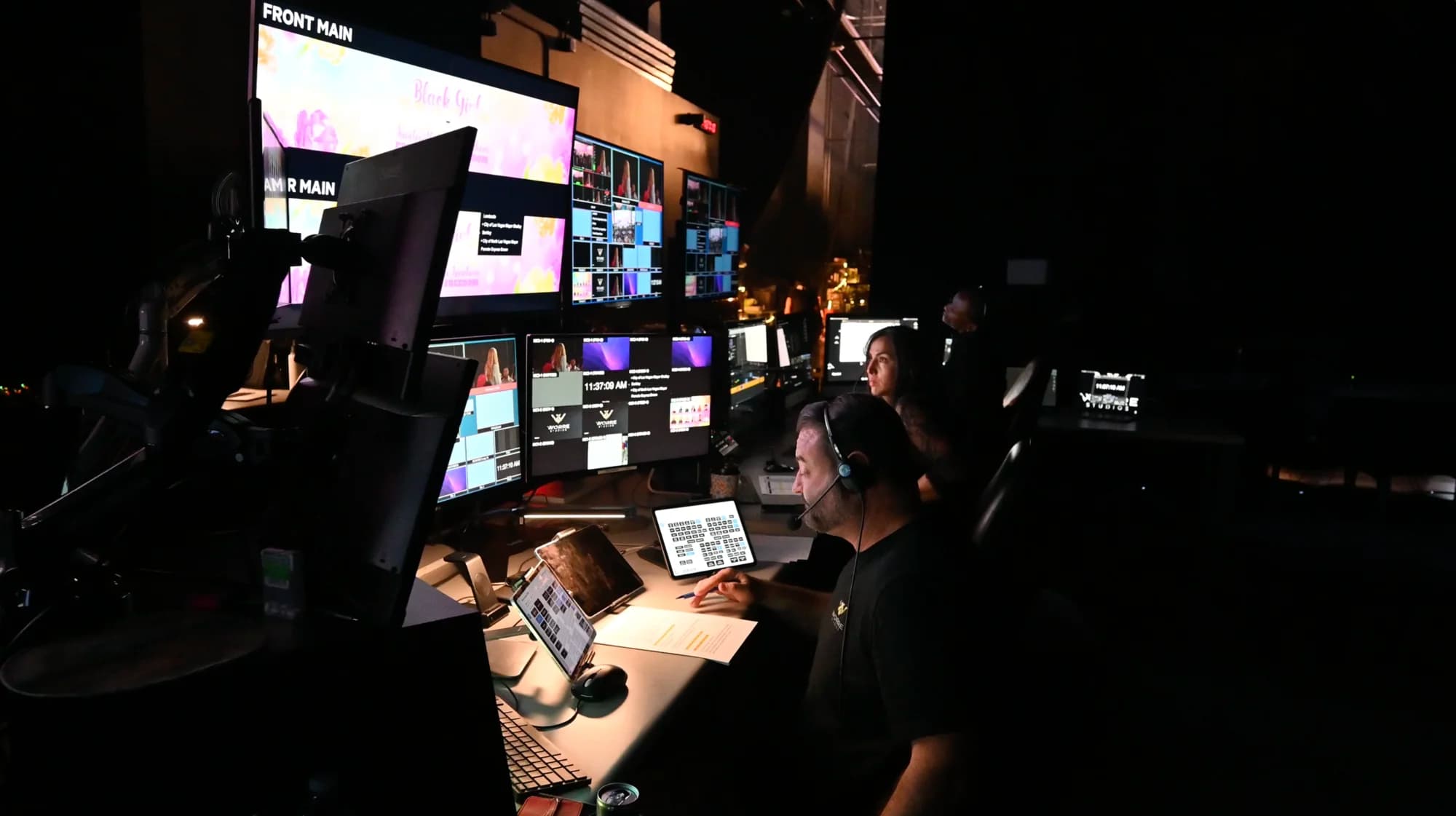
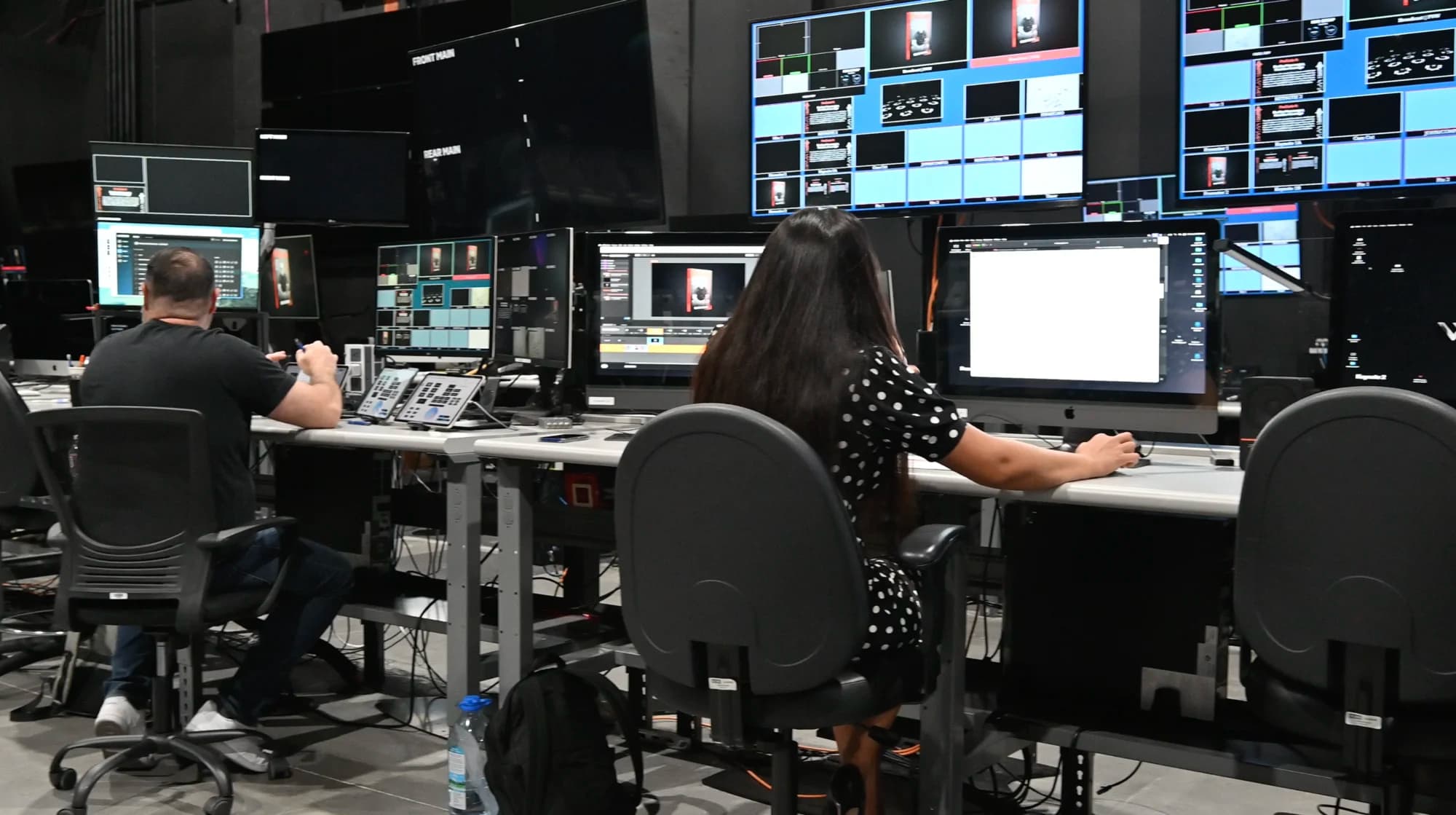
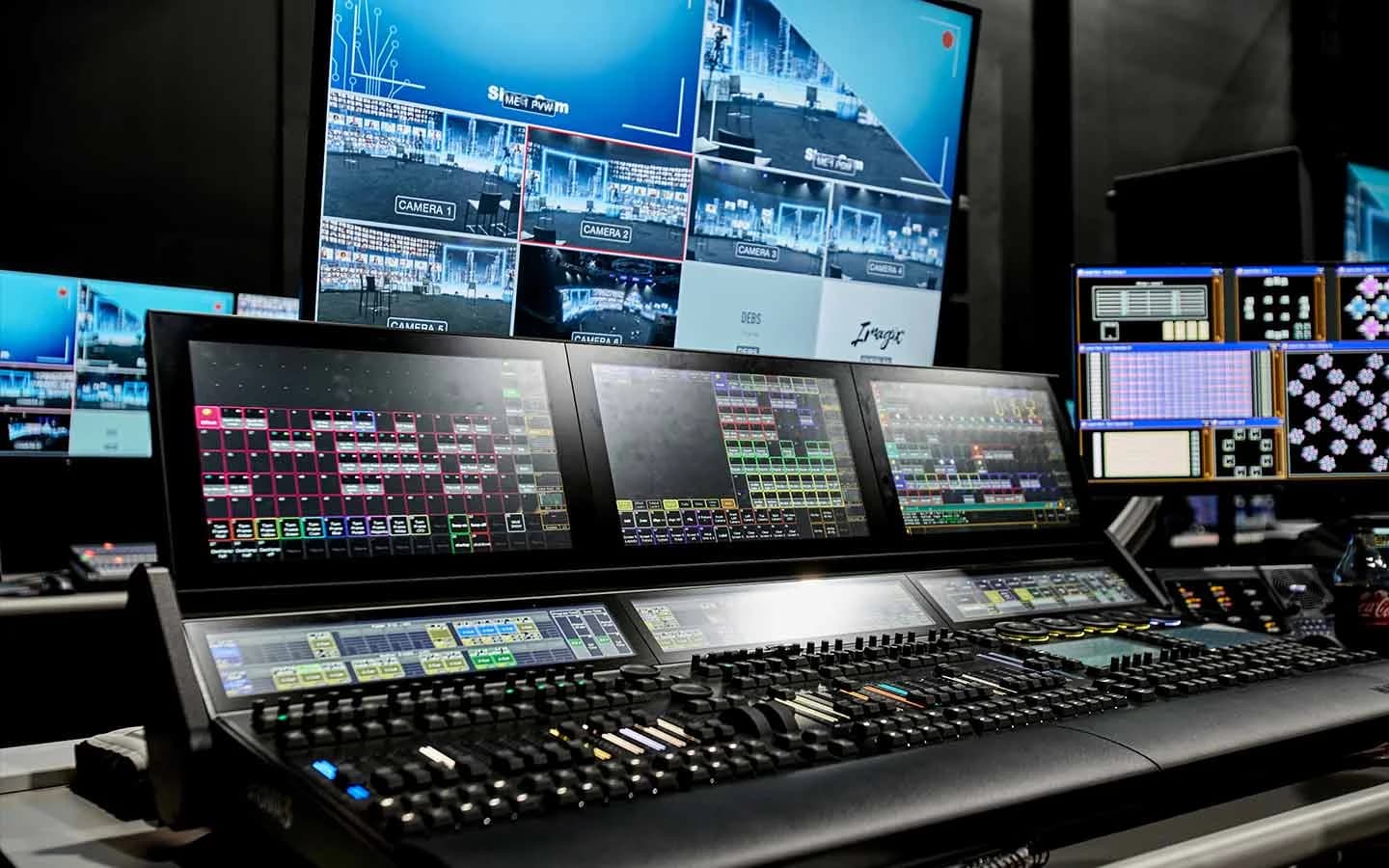
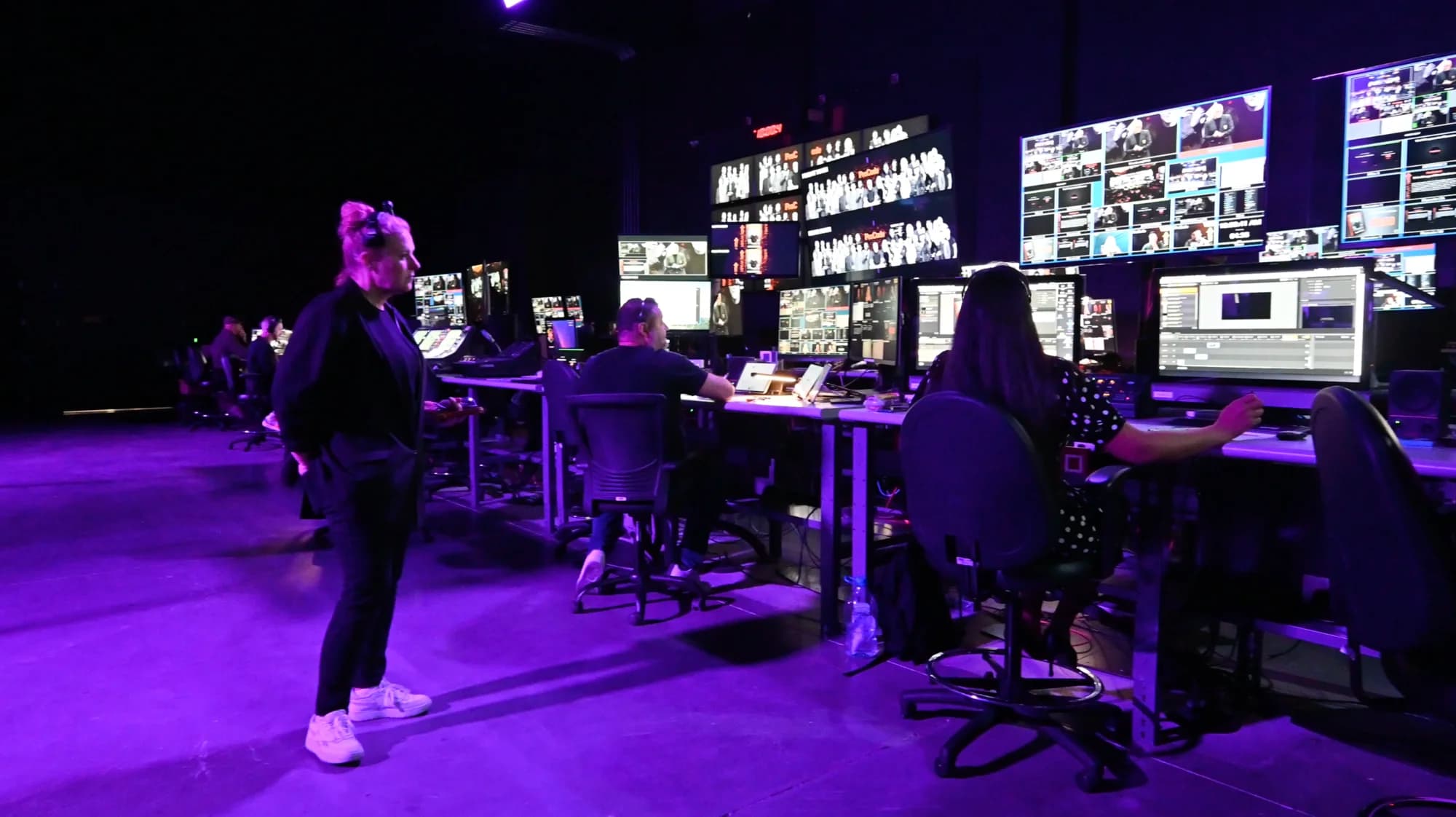
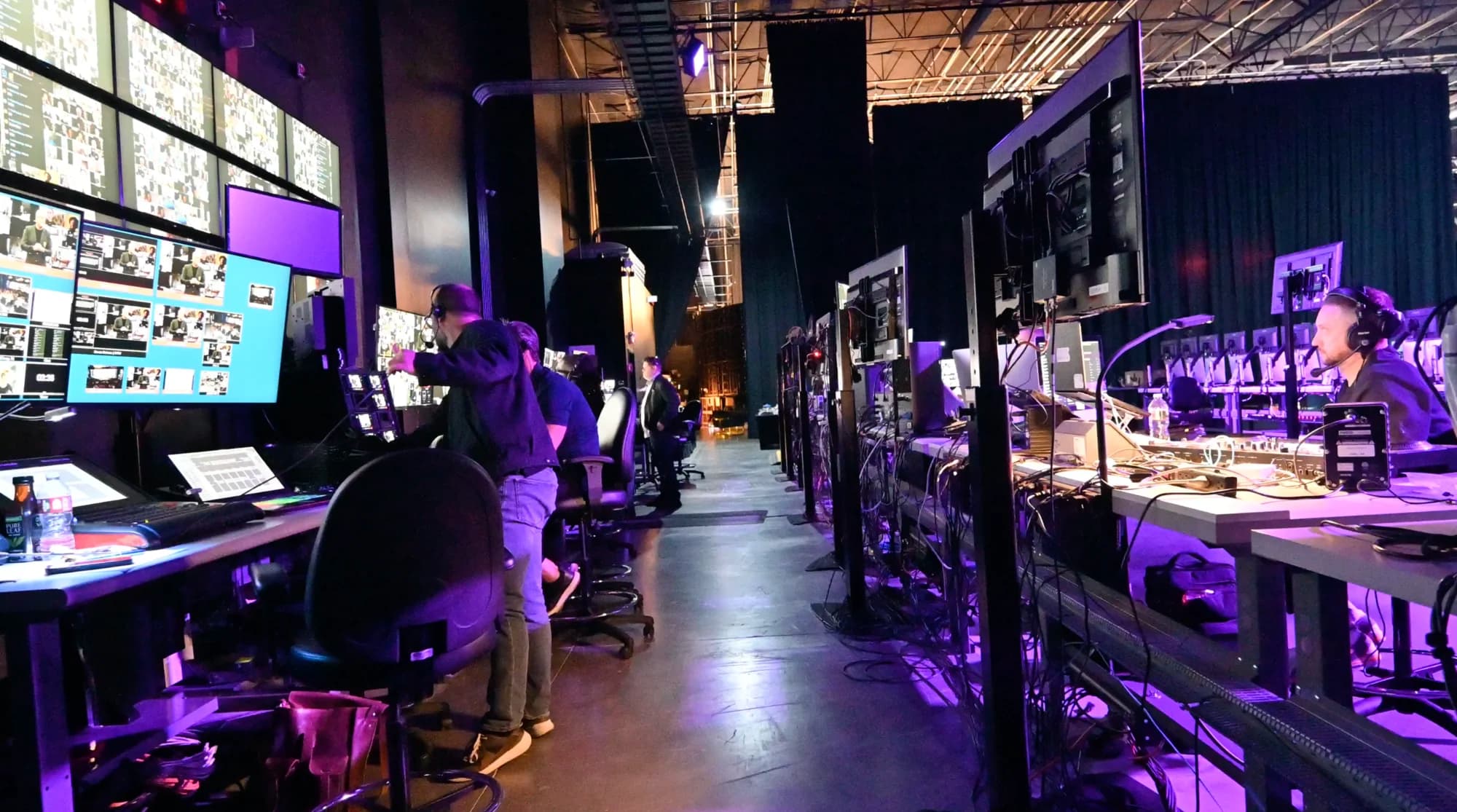
Hybrid fails when the technology is an afterthought — a camera in the back of a ballroom and a prayer. Ours is the foundation: broadcast-grade video routing, fully redundant streaming that can push to 24 platforms simultaneously, dual 5G networks, and a Media Village of 50+ workstations managing the remote audience in real time. The full specification lives on the Technology page.
Other Event Formats
Hybrid Event Questions
A stream is one-directional — remote viewers watch. Here, remote attendees participate: they appear live on the wall, join breakouts, and get pulled up face to face with the host. The remote audience is part of the show, not an audience for it.
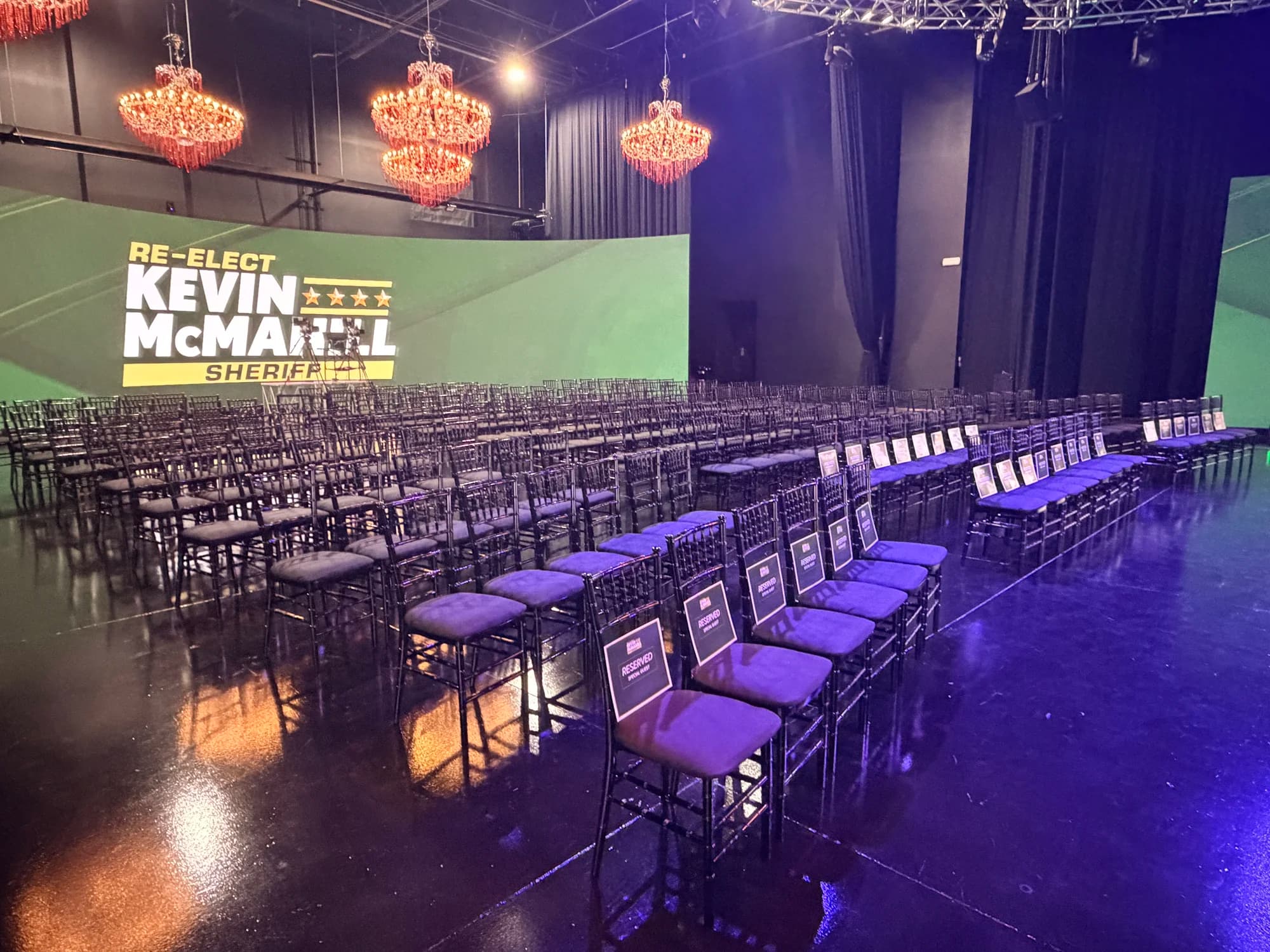
Up to 350 seated, 500 standing, or 600 concert-style, with half the LED wall tracked back to open the room.
The studio reaches up to hundreds of thousands of hybrid attendees, with up to 2,744 guests displayed live on the wall at any one time.
Yes — real-time translation in more than 100 languages, live-interpreted or AI-driven, with the event's music and ambiance layered under the translated voice.
Plan for the Audience You Actually Have
Let's size the event to it — in the room and around the world at once.