

Hybrid Event Examples: Six Real Productions and What to Copy From Each
On this page
Hybrid isn't one format. A stadium event can add a global audience without changing its stage. A speaker can headline from a room with nothing but a camera. A company can run the same hybrid model every time it gathers. In every example that worked, the remote audience outnumbered the room, and it was treated like an audience, not a feed.
Key Takeaways
- Hybrid comes in several models. A venue event with a reach layer, a remote host, a recurring company model, a studio-hosted conference, a launch built as a broadcast, and a live global stream.
- The room is usually the smallest number. Joel Osteen's stadium held about 20,000; another 40,000 to 50,000 attended remotely, live.
- Your venue doesn't have to move. The studio can act as the reach layer for an event happening somewhere else.
- Remote attendees should be seen and heard. Live call-ups, breakout rooms and real-time translation turn viewers into attendees.
- Views aren't attendees. Multistreaming widens reach; the branded event environment is where attendance happens.
The best hybrid event examples aren't the ones with the biggest in-room crowd. They're the ones where the remote audience is part of the event instead of watching it through a window. Below are six productions the studio delivered, from a stadium tour to a product launch, each with the numbers on both sides of the screen and the one idea worth borrowing for your own hybrid event.
What Counts as a Hybrid Event?
A hybrid event brings an in-person audience and a remote audience into the same live program. The difference between a good one and a forgettable one is what the remote side gets to do. If remote attendees can only watch, the event is a livestream with a room attached. If they can be seen, heard, called on and grouped into live sessions, it's one event with two ways in.
The six examples below show how many shapes that can take. Here they are side by side.
| Example | In the room | The remote audience | The model |
|---|---|---|---|
| Joel Osteen at Yankee Stadium | About 20,000 in the stadium | 40,000–50,000 attending live through the studio | A venue event with a reach layer |
| Matthew McConaughey's session | One host and one camera in a private studio | An interactive audience at roughly 90,000-attendee scale | The remote host |
| A recurring enterprise client | About 7,000 at the client's own venue | 10,000–20,000 remote attendees per event | A repeatable company model |
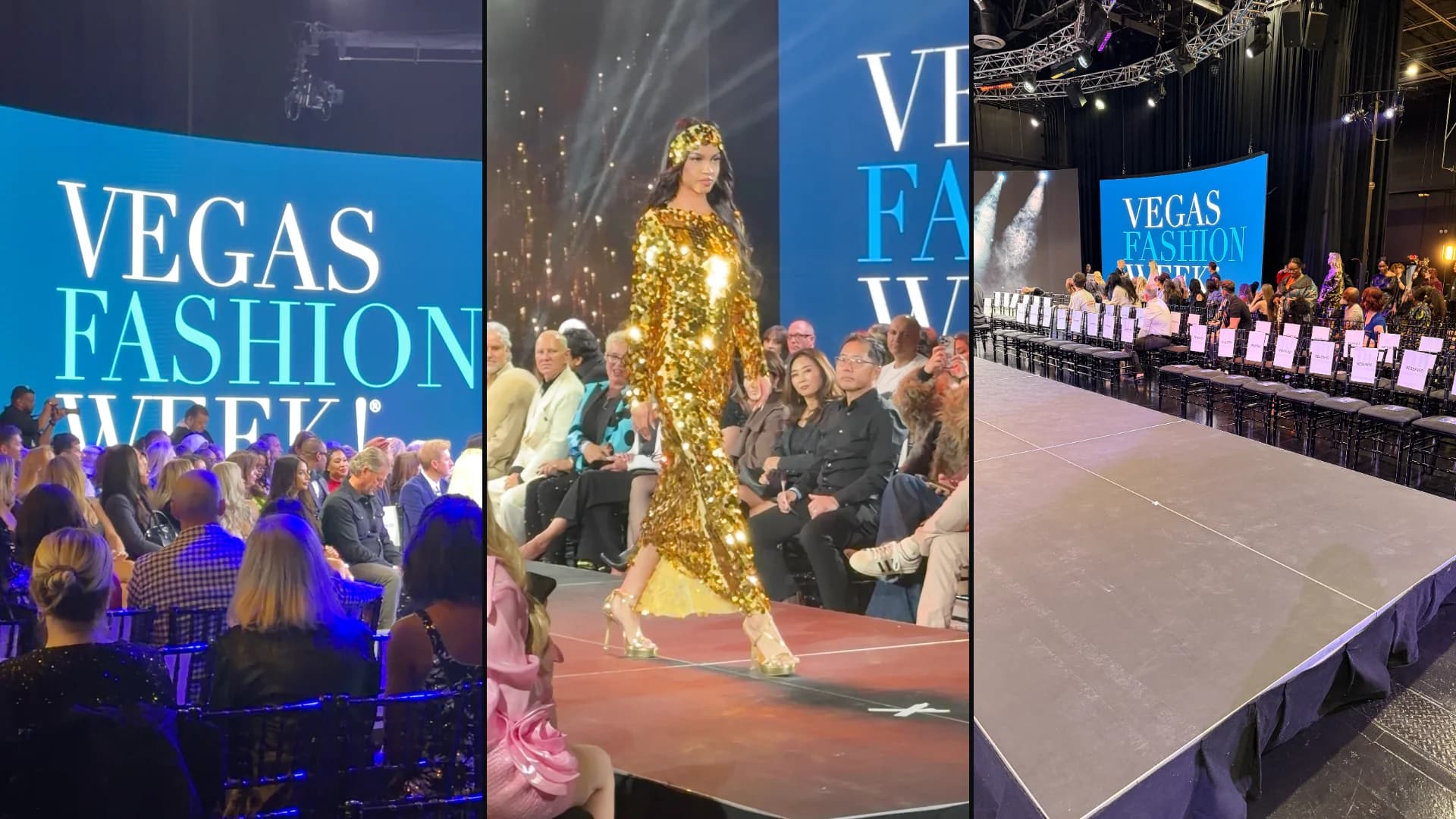
| IndyFest | In-person attendees at the studio | Virtual attendees across a multi-day program | A studio-hosted hybrid conference |
| Dell's Alienware launch | Hosts live in the round at the studio | A guest streamed in live; 17.2 million views across 24 platforms | A launch built as a broadcast |
| World's Hottest Menopause Party | Run live from the studio, every guest live | Streamed free to women around the world | Live talent, global stream |
1. Joel Osteen at Yankee Stadium: The Stadium Plus the World
What happened. Joel Osteen's first post-COVID "back to the world" tour filled Yankee Stadium with roughly 20,000 people. The event didn't stop at the outfield wall. Another 40,000 to 50,000 remote attendees were pulled into the event live through the studio, so the remote audience was about twice the size of the crowd in the seats. The tour's own production stayed exactly as planned in the Bronx, while the broadcast infrastructure in Las Vegas carried it to everyone else.
What to copy. You don't have to move your event to make it hybrid. If the venue is booked and the production is set, the studio can act as the reach layer and extend live attendance beyond the room without changing your stage. Here's the full story of the Yankee Stadium broadcast.
2. Matthew McConaughey's Session: The Remote Host
What happened. Matthew McConaughey had a multi-hour session on his book and road trip to deliver, and a private studio with a camera and no broadcast capability of its own. His feed came to Worre Studios through our Remote Virtual Stage service, and the studio sent it out as a fully interactive event, breakout rooms included, to an audience at roughly 90,000-attendee scale. He never left his own studio, and attendees took part rather than watched.
What to copy. When the speaker can't travel, bring the stage to their feed. With a Remote Virtual Stage, a host anywhere sends one camera feed, and the studio supplies everything between that camera and the audience: the branded event environment, live interaction and breakouts. The studio can run multiple virtual stages at the same time. Here's how the McConaughey broadcast was built.
3. A Recurring Enterprise Client: The Hybrid Model You Run Every Time
What happened. One enterprise client holds its big events at its own venue, with around 7,000 people in the room. Each time, the feed is sent to the studio, which broadcasts it at scale to another 10,000 to 20,000 remote attendees. The room and the broadcast run as one event, and the model repeats from one gathering to the next.
What to copy. Treat hybrid as infrastructure, not a one-off experiment. Once the reach layer is built around your event, every all-hands, kickoff or annual meeting can use it, and the remote side stops being an afterthought. Our guides to running a global company town hall and putting your whole company in one hybrid sales kickoff show how the same approach works for internal events.
4. IndyFest: The Multi-Day Hybrid Conference
What happened. IndyFest, The Nevada Independent's multi-day politics and policy conference, was hosted at the studio as a hybrid event, with in-person and virtual attendance running together across the program. The Nevada Independent also hosted the 2022 Nevada gubernatorial debate at the studio, carried on television statewide and nationally on C-SPAN.
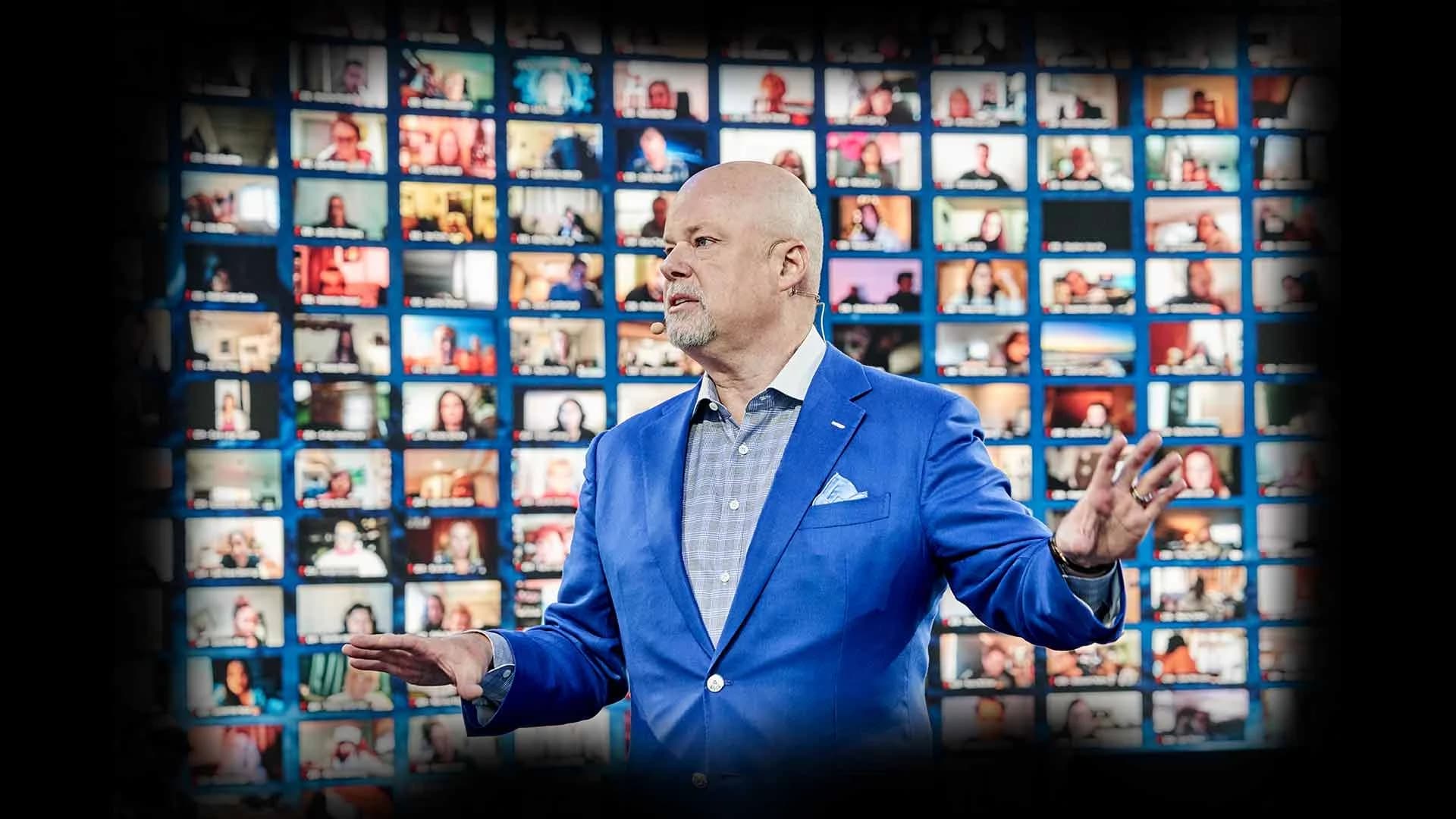
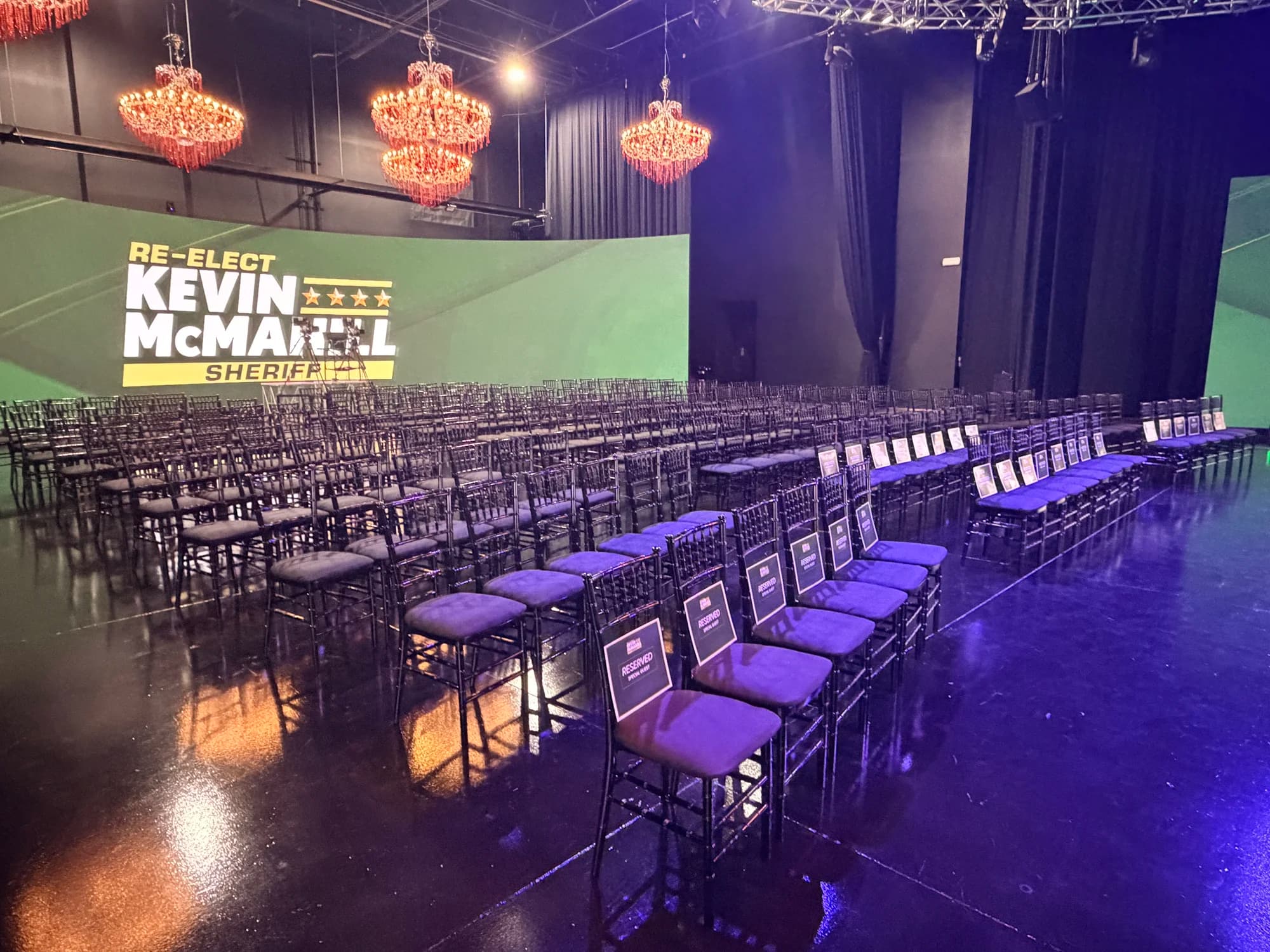
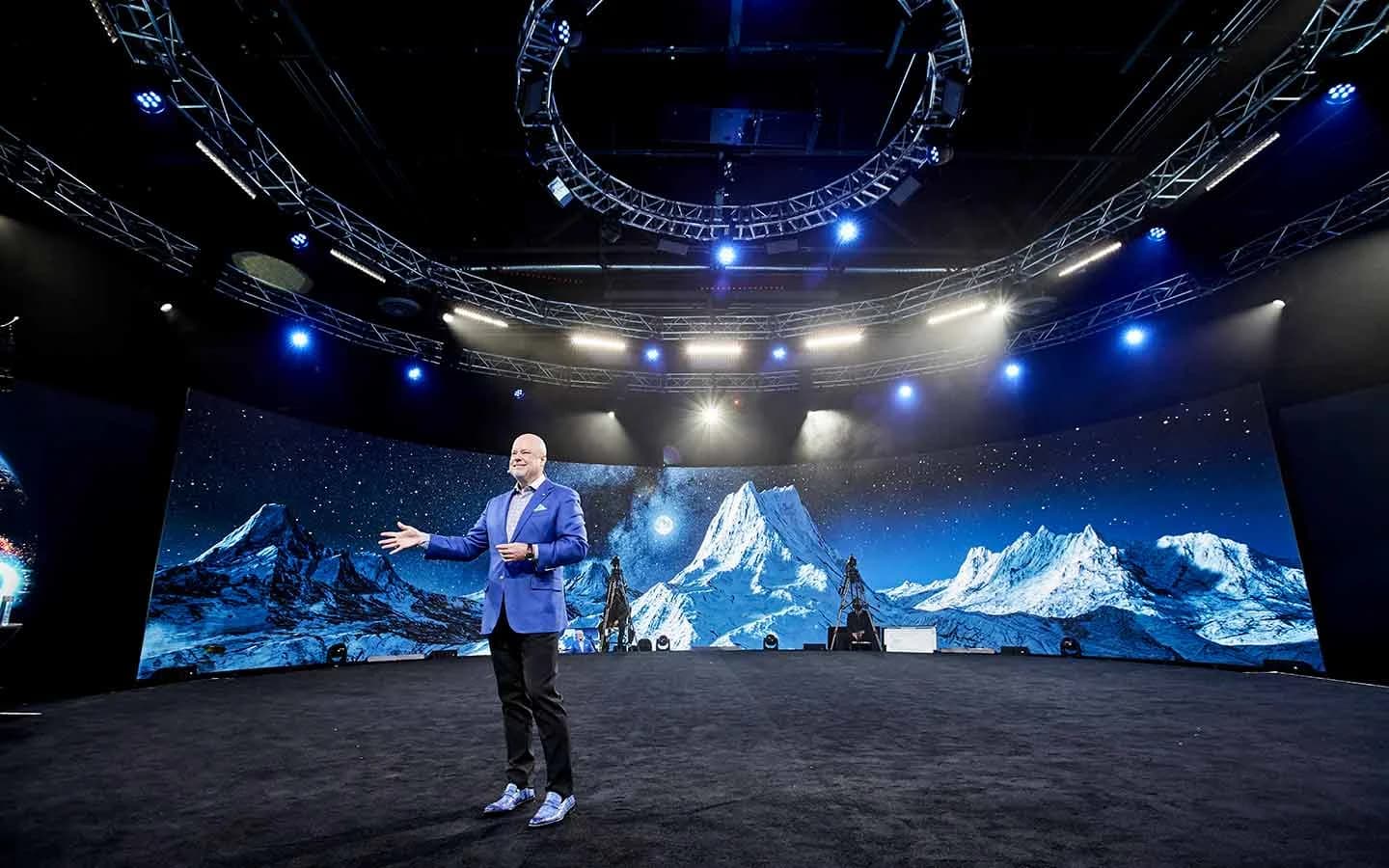
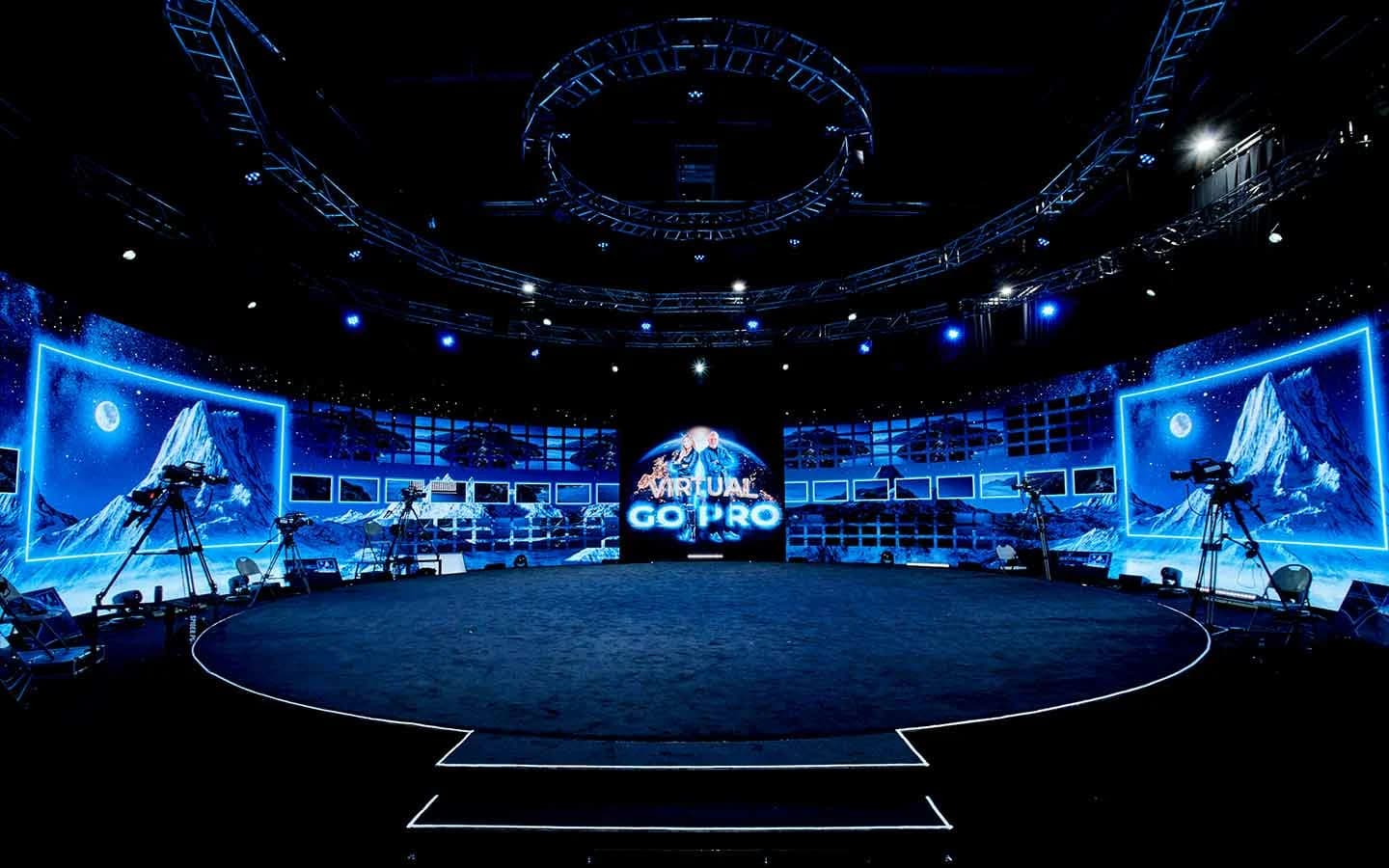
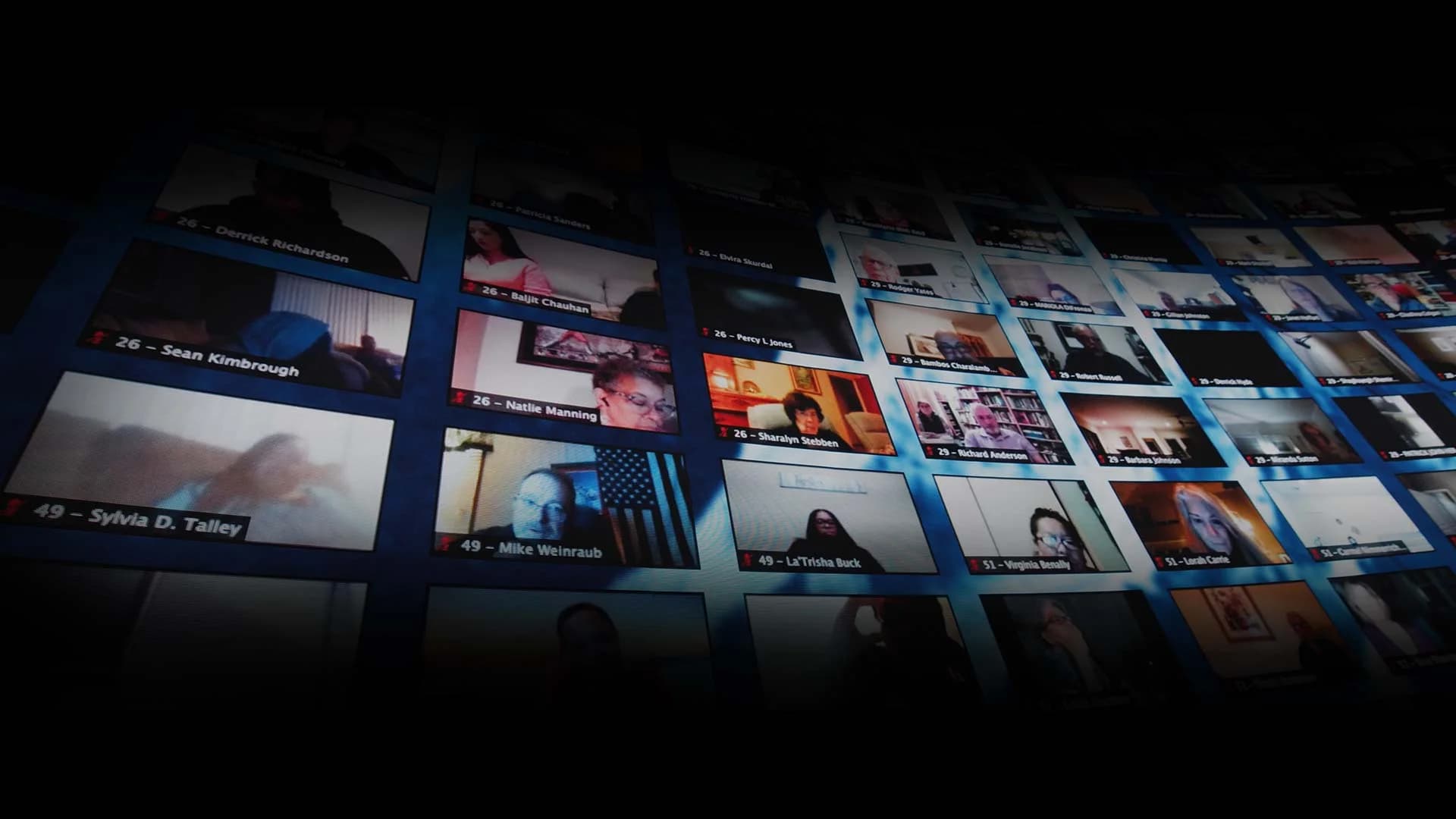
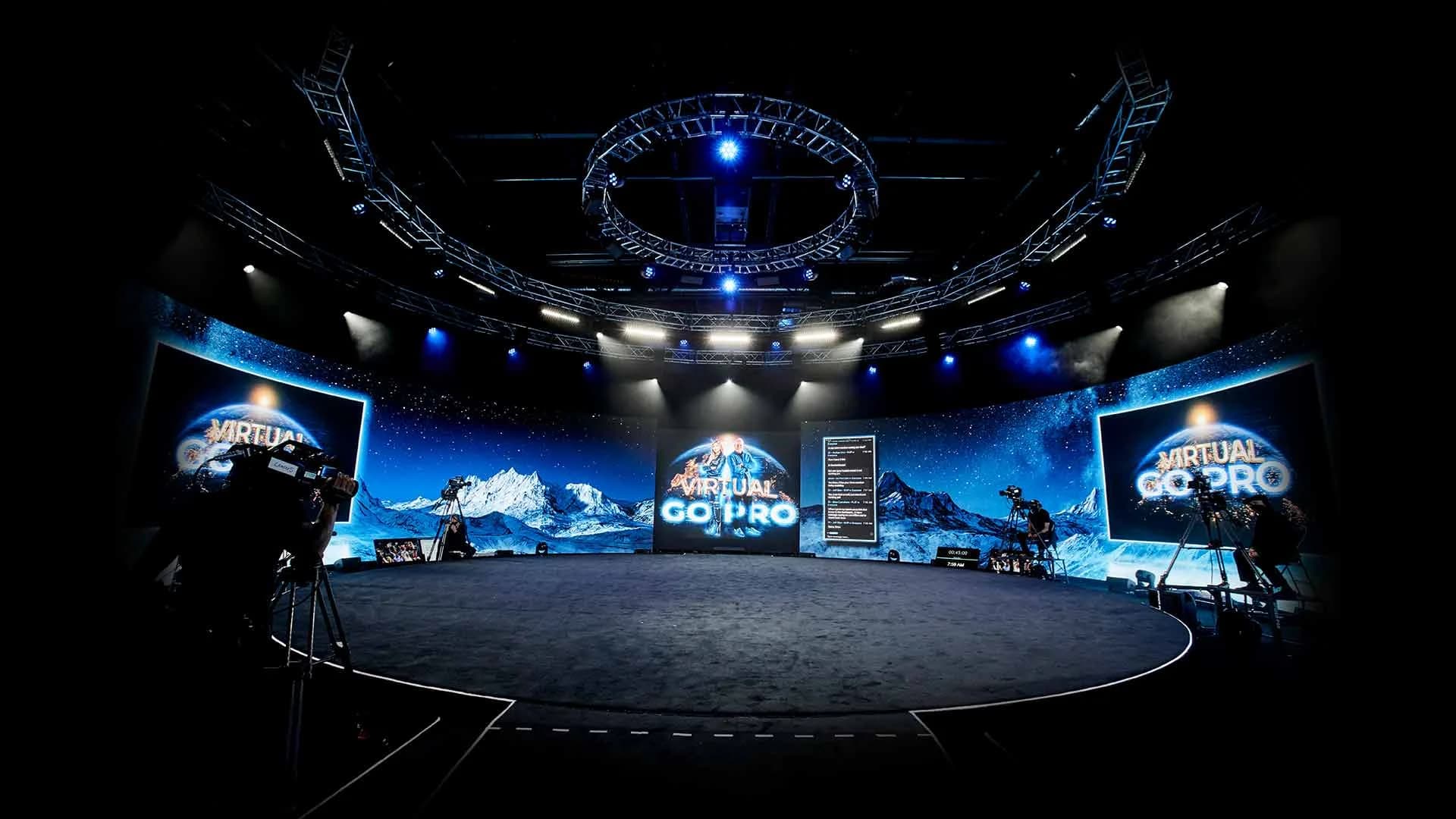
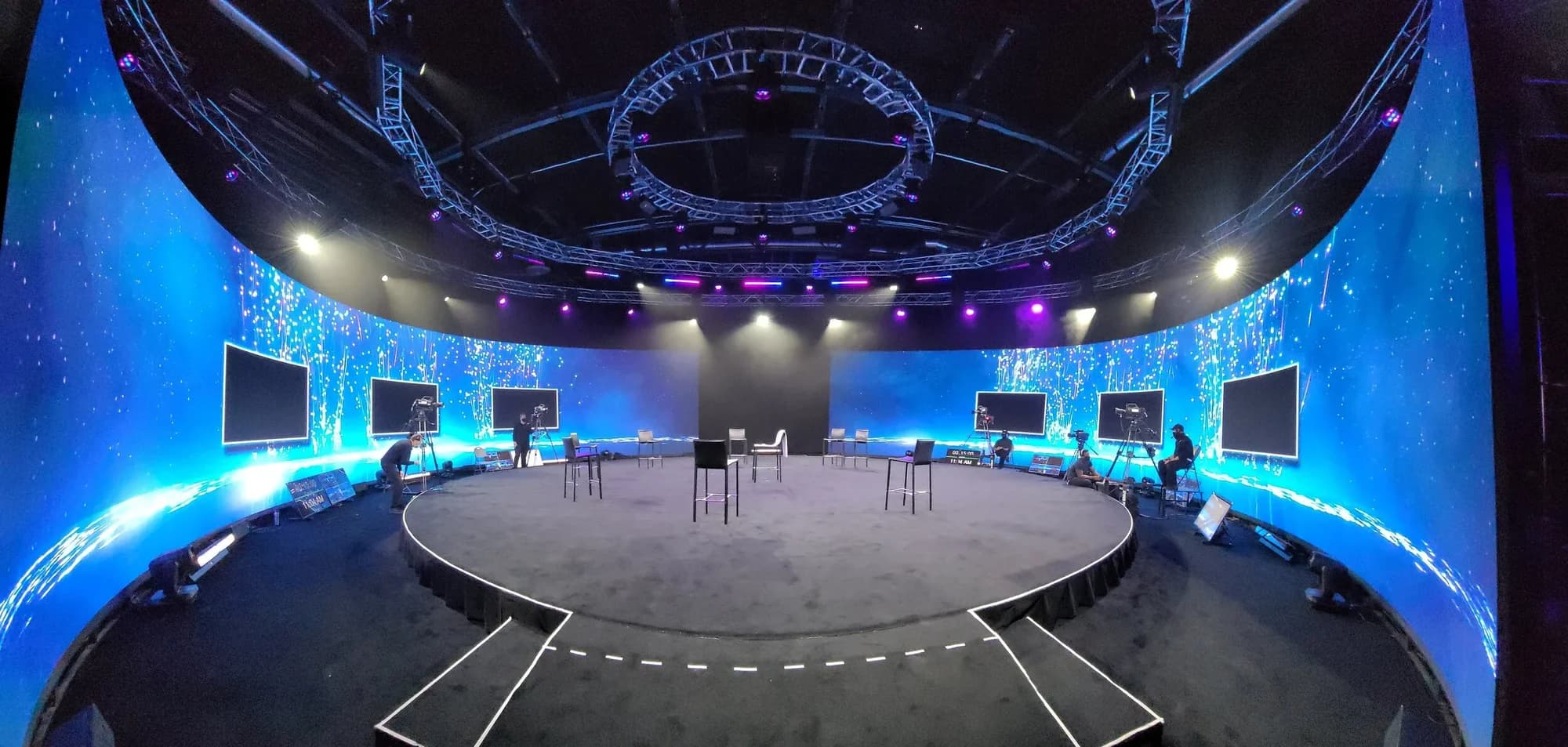
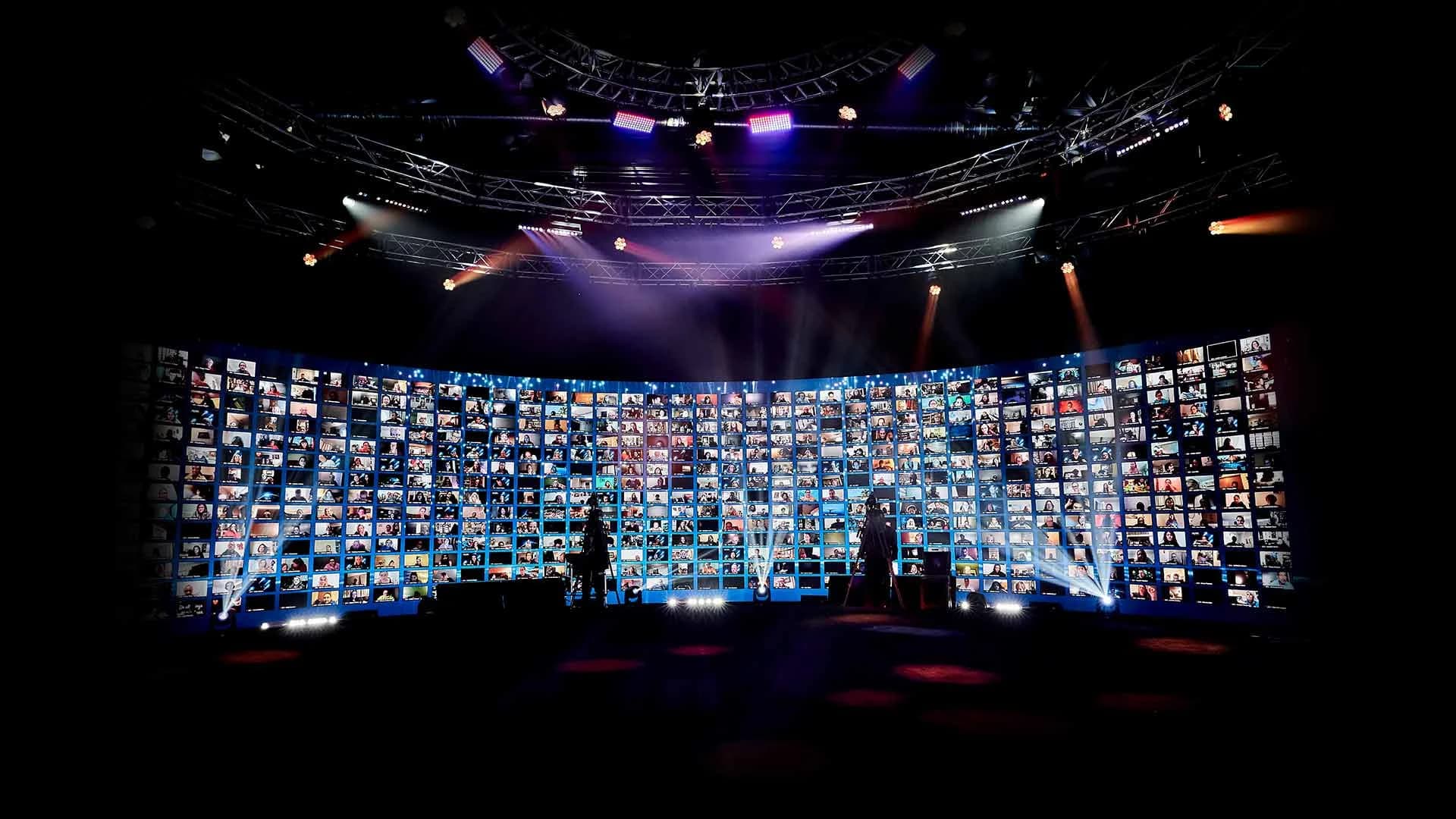
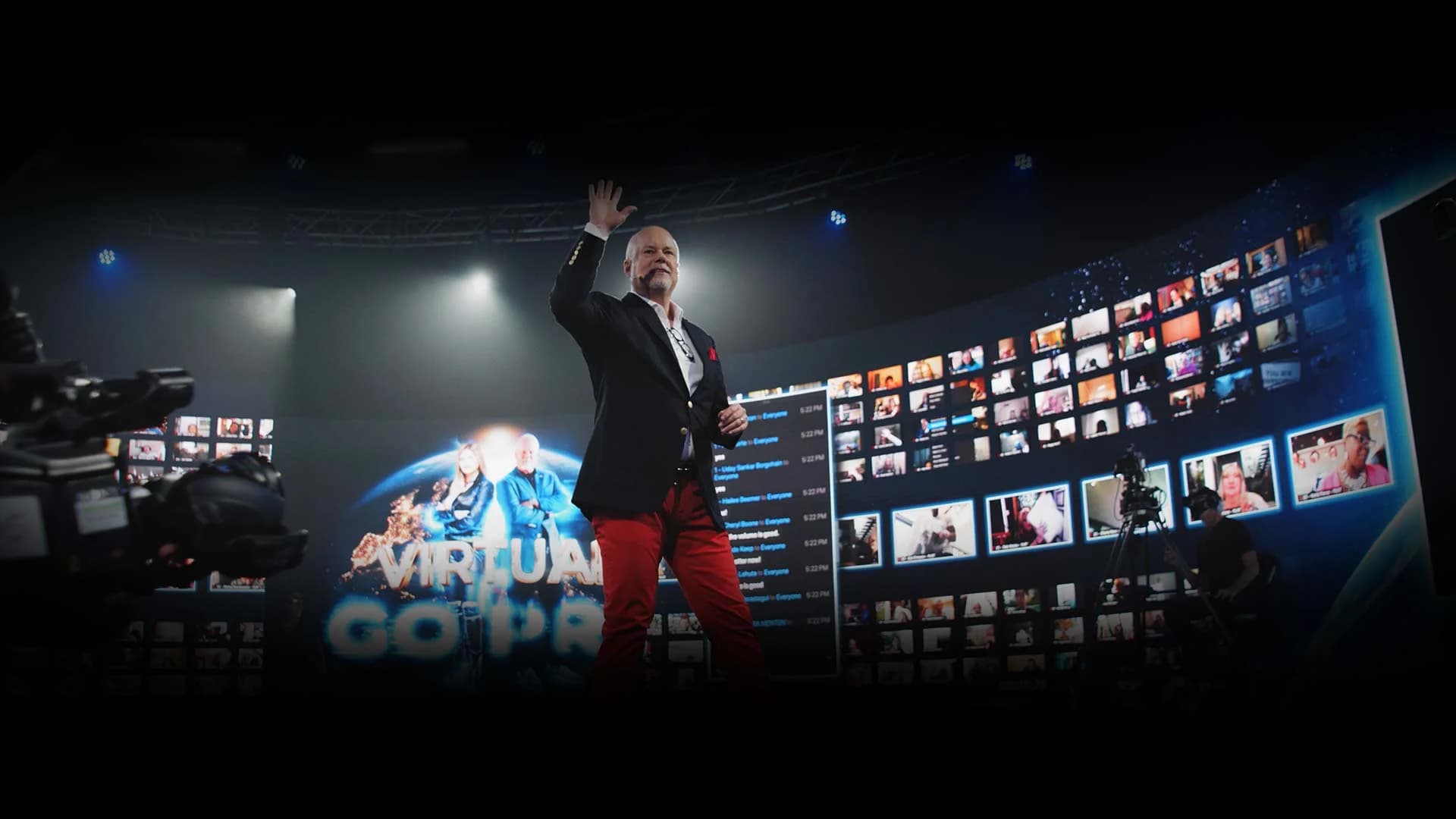
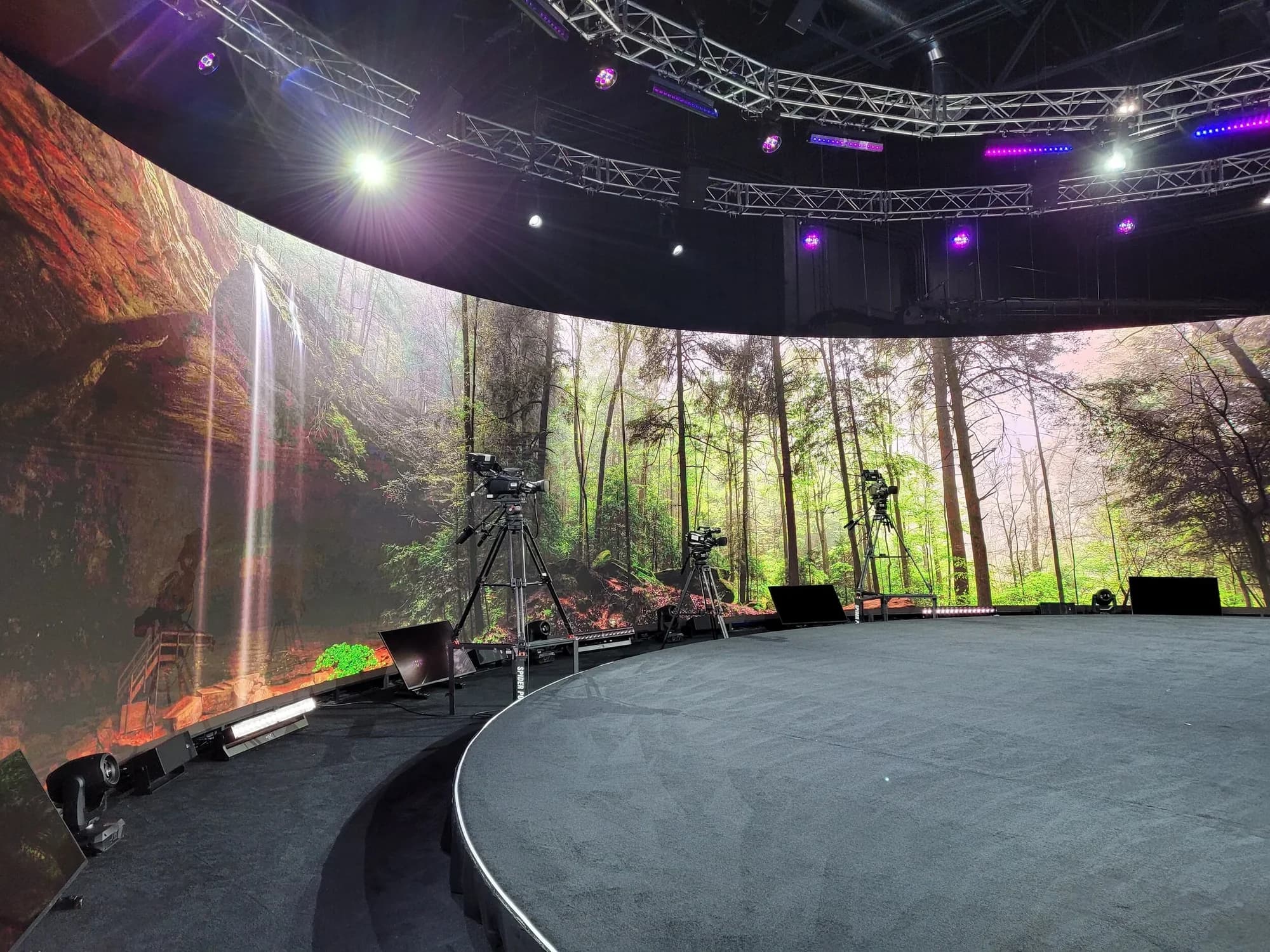
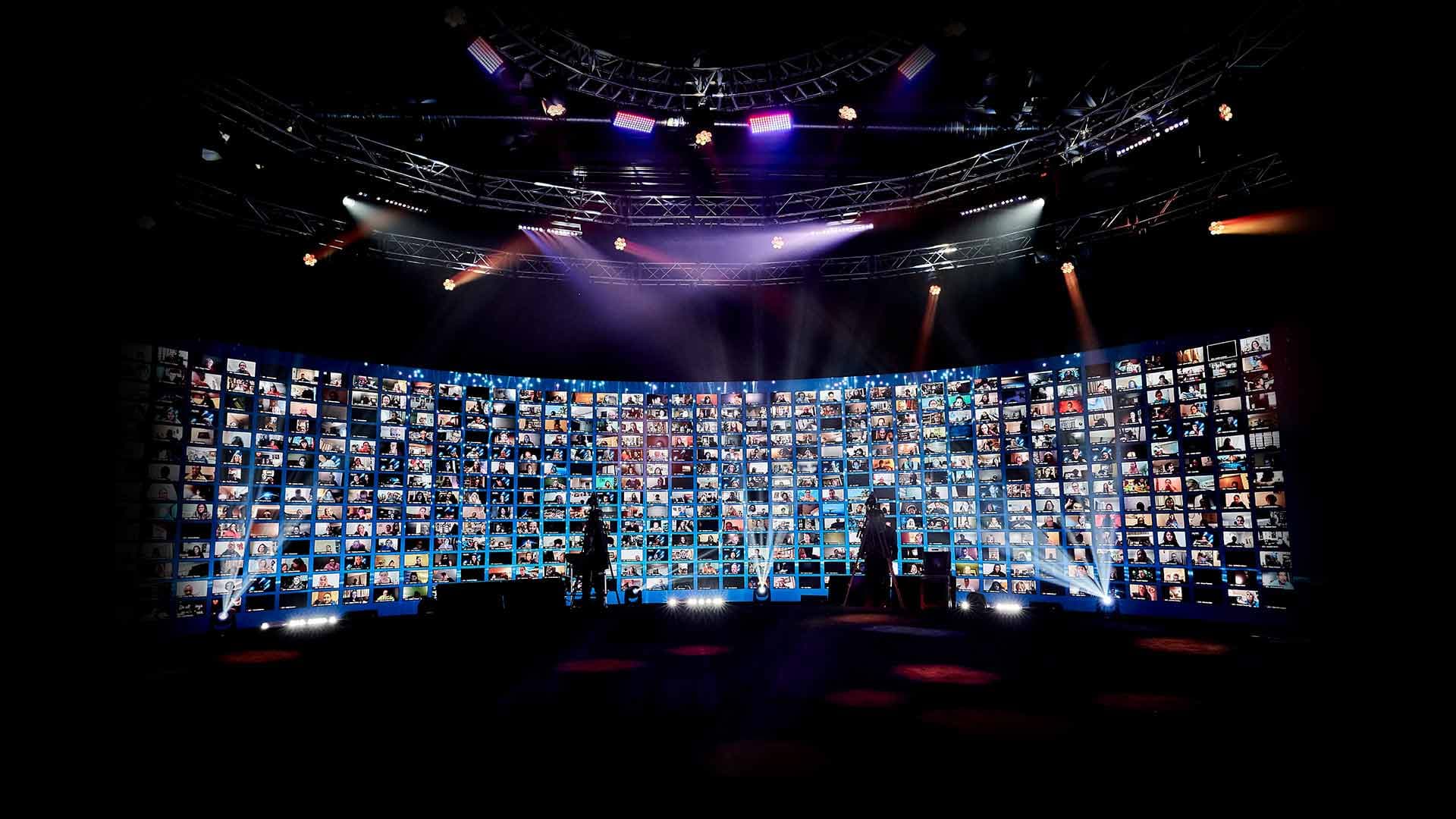
What to copy. A conference doesn't have to choose between a room and a reach. At the studio, half of the 360° LED wall tracks back to open the room for a live audience of up to 350 seated, 500 standing or 600 in a concert setup. The wall that stays becomes the remote audience: up to 2,744 remote attendees displayed live at once, so speakers see both crowds. Plan the program for both from the first draft, not as a stream added in the final week. For civic events, here's how to host a candidate forum or political debate.
5. Dell's Alienware Launch: A Launch Built Like a Broadcast
What happened. Dell launched the Alienware 15 and 17 gaming laptops from the studio floor, with hosts live in the round. Chance the Rapper streamed into the broadcast live, playing Fortnite on the laptops being launched, so the celebrity moment and the product demo were the same moment. The launch went out to 24 platforms at once, Twitch and X among them, and totaled 17.2 million views across live and social. It was the biggest stage Dell had used for a computer launch.
What to copy. Make the remote guest part of the reveal, not a taped greeting. And count carefully: 17.2 million is views, not attendees. One production can push to up to 24 platforms while the interactive event runs in its own branded dashboard; the platforms widen reach, and the dashboard is where attendance happens. Read the Dell Alienware launch case study, or our guide to streaming an event to multiple platforms at once.
6. The World's Hottest Menopause Party: Live Talent, Global Reach
What happened. The World's Hottest Menopause Party ran live from the studio with Halle Berry, Jenny McCarthy and Naomi Watts, all appearing live rather than pre-recorded, alongside leading menopause doctors from around the world. The event streamed free to women everywhere.
What to copy. Keep the headliners live. Our rule on the studio floor is simple: live is live, and recorded is recorded. If a guest can't join live, say so ("she couldn't be here, so she recorded this for you") and the moment still lands. Presenting a recording as live is the fastest way to lose an audience's trust in front of everyone watching.
For how to split a program between the two, see live vs. pre-recorded virtual events.
What Do the Best Hybrid Events Have in Common?
Look across all six and the same five habits show up.
- The remote audience is bigger than the room, and the plan says so. In every example, the remote side outnumbered the in-person side. Size the marketing, ticketing and content to the whole audience, not the seat count. Our guide to how many people a hybrid event can reach walks through the math.
- Remote attendees are seen and heard. In an interactive broadcast, a remote attendee can be pulled up live, face to face with the host, to ask a question in their own voice. Our latency is engineered for true one-on-one conversation, without satellite-style delay. Here are more virtual event engagement ideas that go beyond polls and chat.
- One message reaches everyone at once. A single live program replaces re-cut regional versions, so every attendee hears the same thing at the same time.
- Language isn't a wall. Real-time translation in 100+ languages gives remote attendees closed captions plus a translated voice track, with the event's music and ambiance layered underneath. Here's how real-time translation works at global events.
- Every attendee is inside your brand. Each event at the studio gets its own virtual dashboard, branded as yours, with breakout rooms, audience segmentation and shopping carts for in-event offers. Here's why an interactive broadcast isn't a webinar.
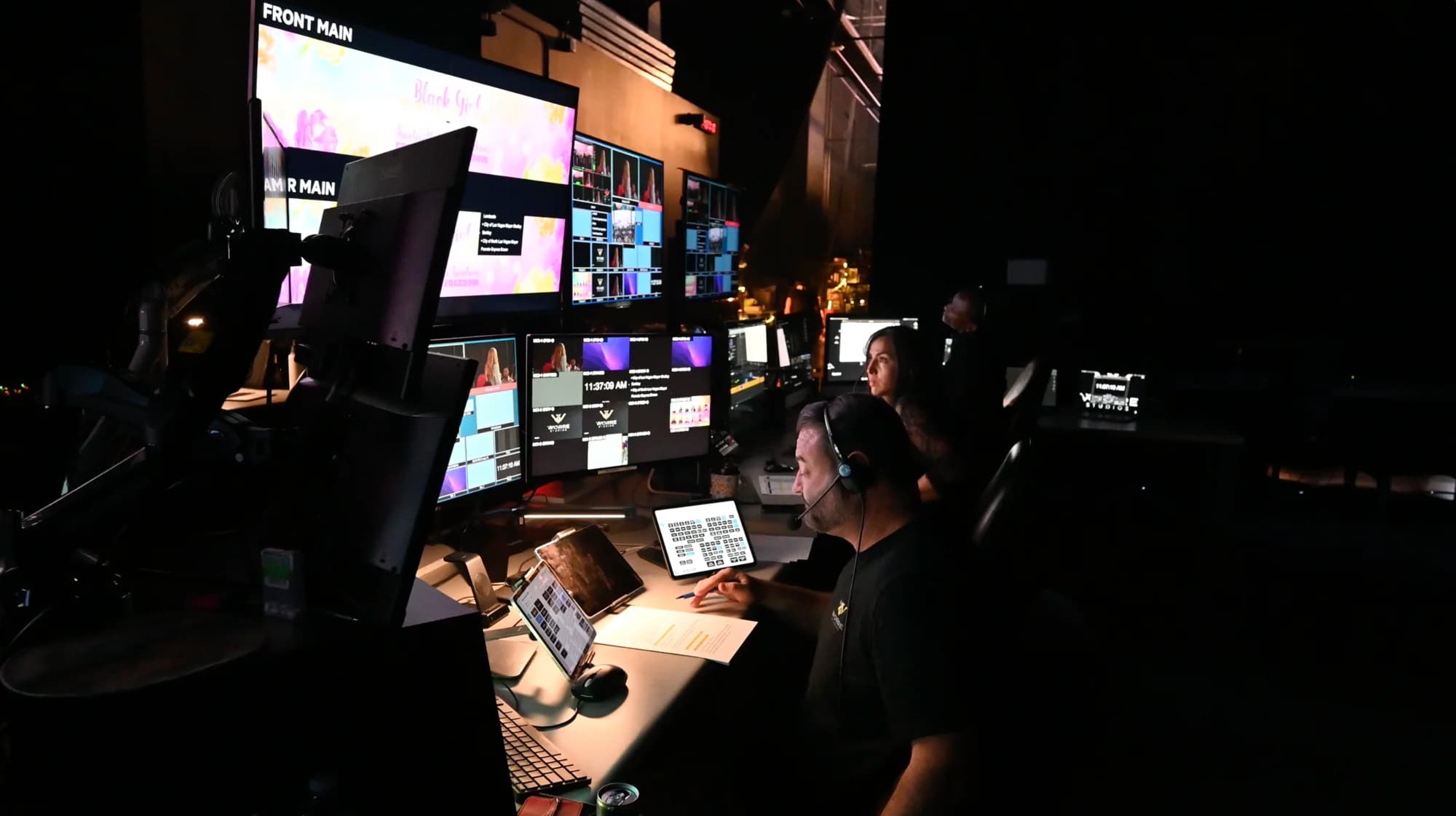
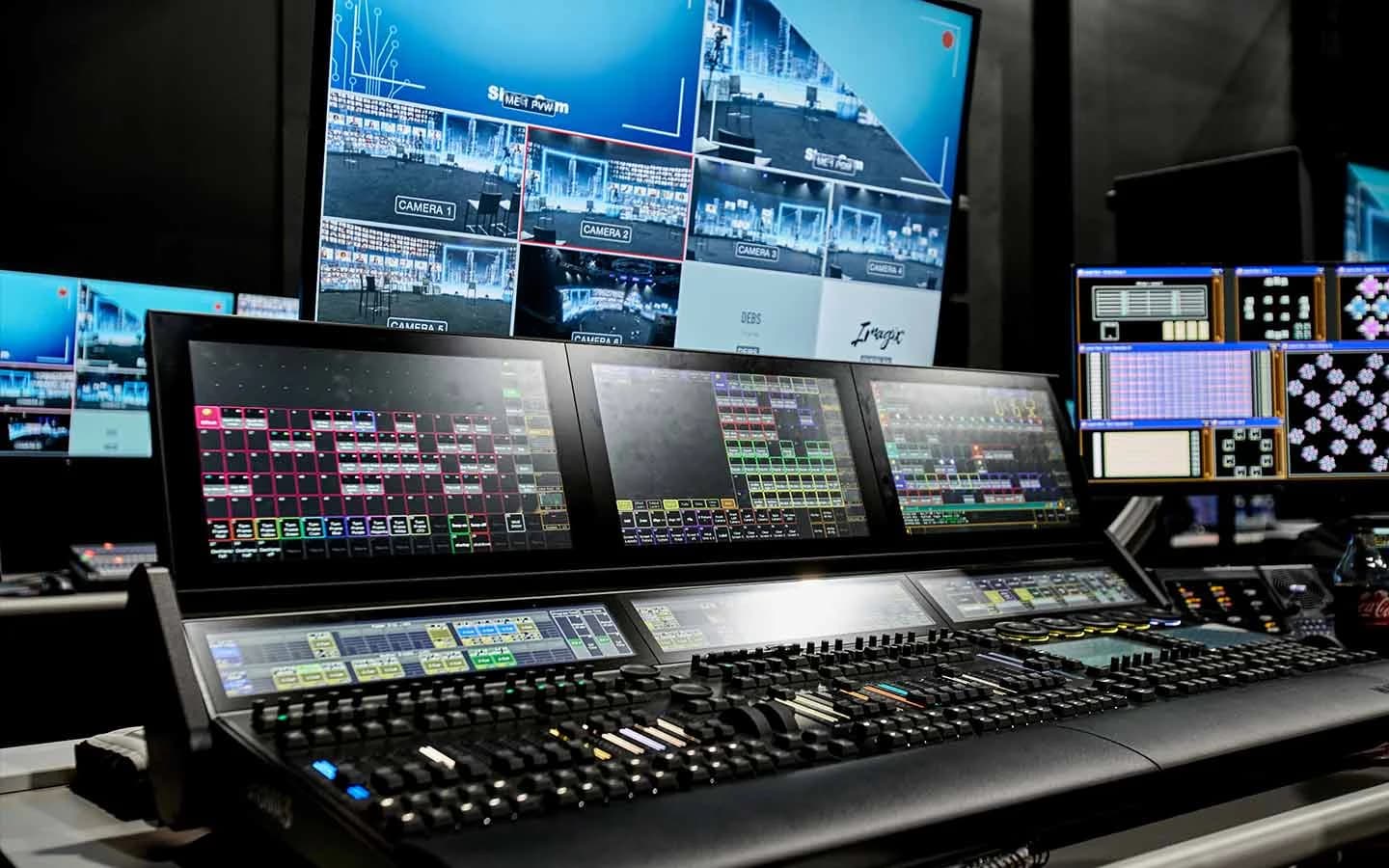
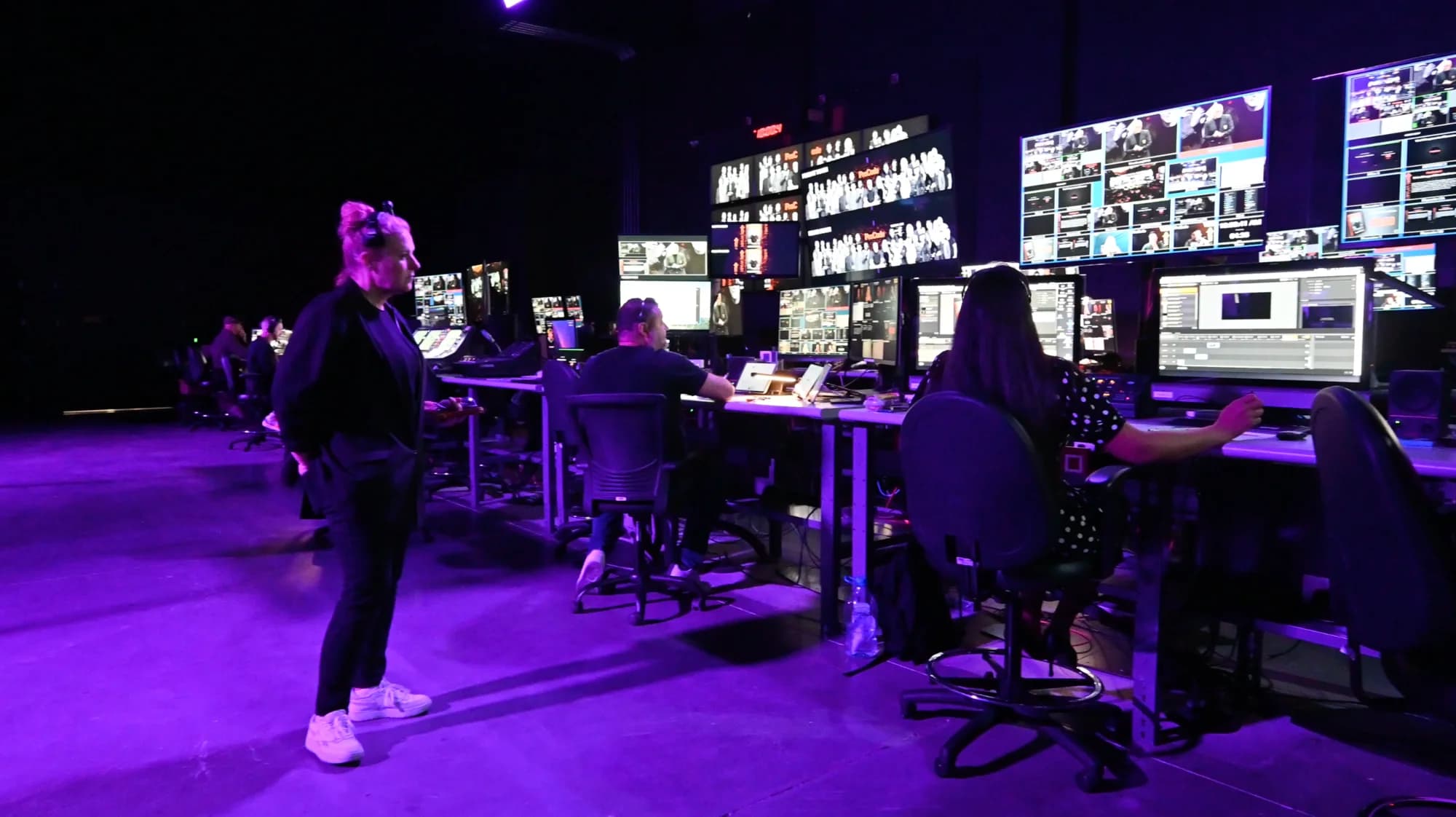
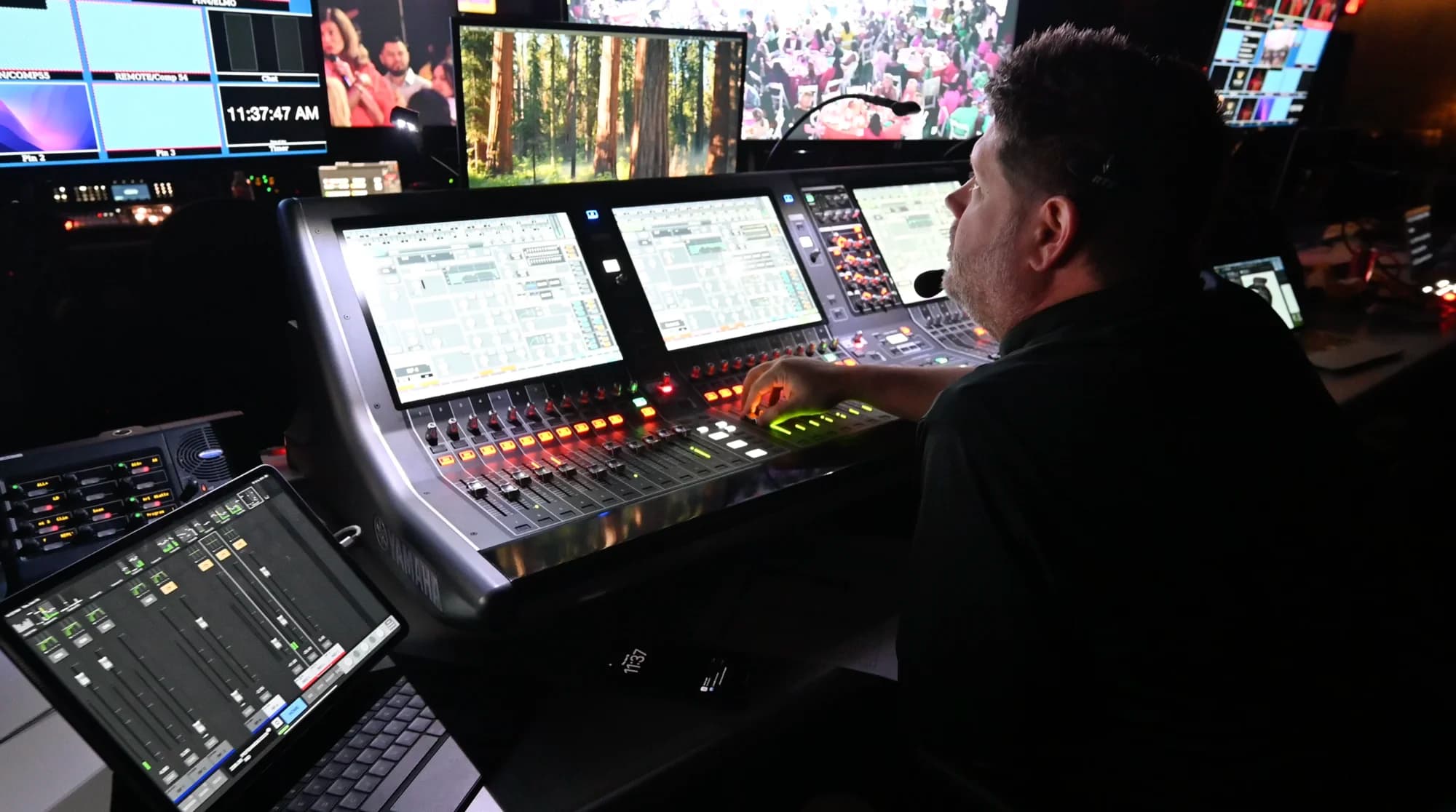
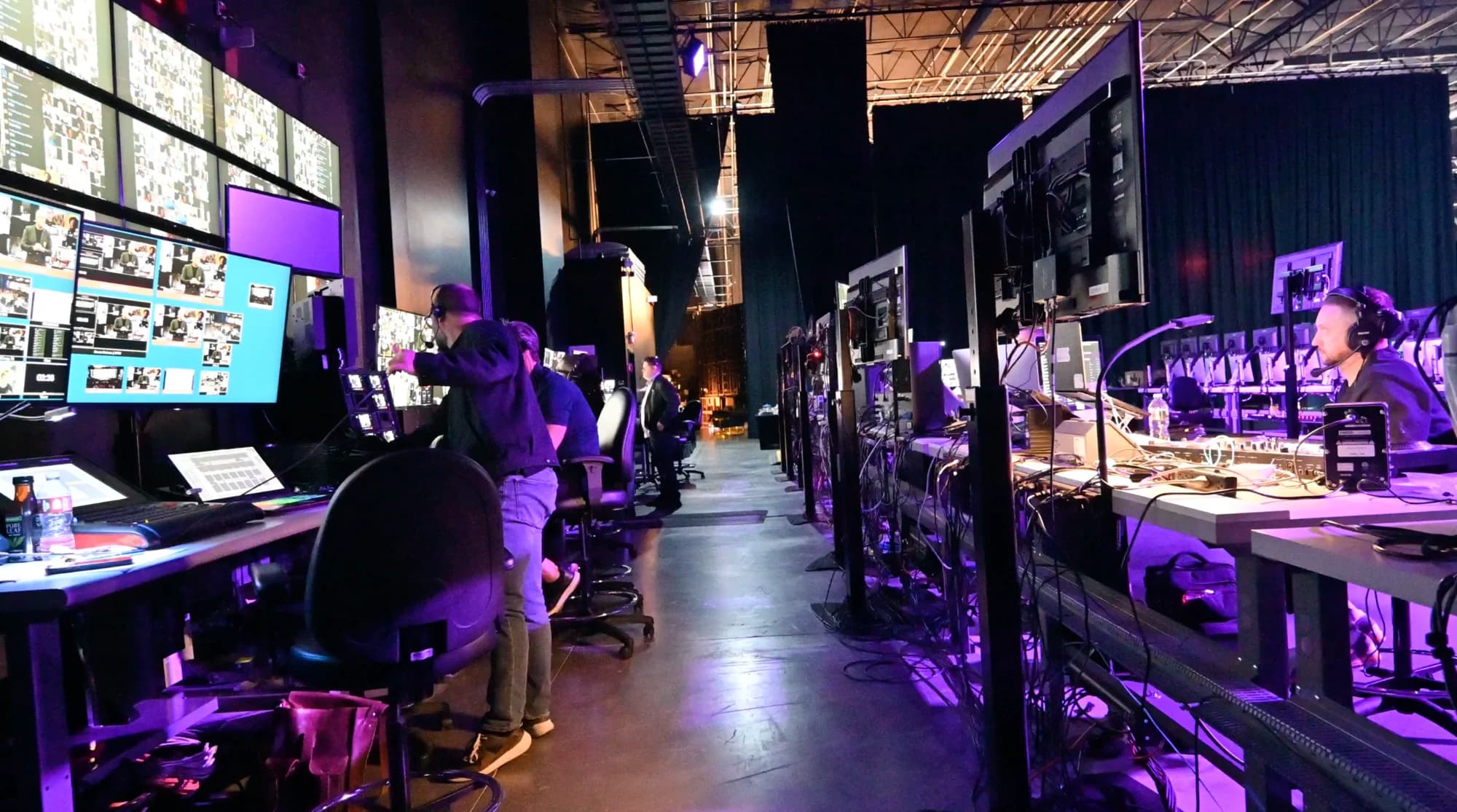
Behind the screen, our Media Village of 50+ workstations manages the remote audience in real time while the show runs. Every system behind it is listed in the studio's full technology specification.
Which Hybrid Model Fits Your Event?
Start with where your event already is and what's fixed.
| If your situation is… | Start with this model | Example to study |
|---|---|---|
| Your venue is booked and the production is set | A reach layer for your venue event | Yankee Stadium |
| Your speaker can't travel, or has no broadcast setup | The remote host | Matthew McConaughey |
| You gather your company or community several times a year | A repeatable company model | The recurring enterprise client |
| You need a room and a remote audience in one place | A studio-hosted hybrid event | IndyFest |
| You're revealing a product to an audience spread across platforms | A launch built as a broadcast | Dell Alienware |
| Your headliners are the draw and the audience is global | Live talent, global stream | The menopause party |
Many events combine two models. A launch can pair a studio stage with a remote guest; a conference can stream its keynote publicly while breakouts stay inside the branded dashboard. For launches, our guide to planning a product launch event goes deeper.
Where Do You Start?
With the event you'd plan if the room weren't the limit. From contract to event day, our production team meets with clients weekly or every other week, whether the event is two weeks or ninety days out, so the hybrid side is planned alongside the stage instead of bolted on at the end. Custom environments for the 360° LED stage take months of lead time, so brief those early.
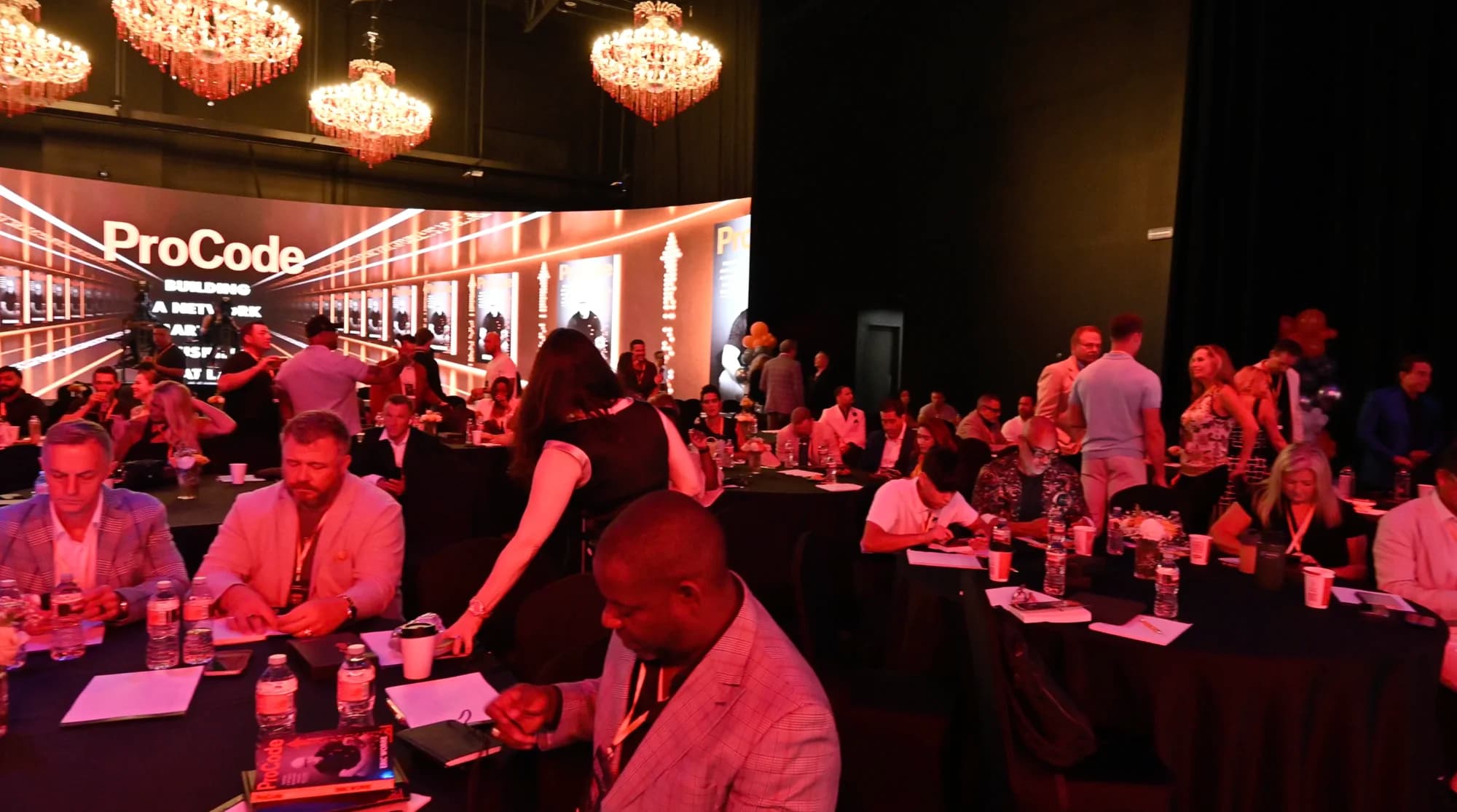
We work two ways. A Premium Event stages your event in the studio: a room of up to 350 seated guests at the center of the 360° stage, with a remote audience that can reach up to hundreds of thousands. If your event or your host is somewhere else, our Remote Virtual Stage takes the camera feed from wherever you are and broadcasts it as a full interactive event. Here's how the two ways to work with Worre Studios compare.
If you're comparing rooms, start with the questions to ask any venue before you book. When you're ready to plan yours, start a studio inquiry and we'll help you choose the model that fits.
Frequently Asked Questions
What is an example of a hybrid event?
Joel Osteen's first post-COVID tour stop at Yankee Stadium is one. About 20,000 people attended in the stadium, and another 40,000 to 50,000 attended remotely, live, through Worre Studios. The stadium production stayed the same while the broadcast extended it to everyone else.
What are the main types of hybrid events?
Common models include a venue event with a broadcast reach layer, a remote host broadcasting from their own location, a recurring company event run the same way each time, a studio-hosted hybrid conference, a product launch built as a broadcast, and a live event streamed to a global audience.
Does a hybrid event have to take place at the studio?
No. If your event is already planned at another venue, the studio can act as its reach layer, extending live attendance beyond the room without changing your production. Joel Osteen's tour stop took place at Yankee Stadium, with remote attendees brought in through the studio.
How many remote attendees can a hybrid event have?
At the studio, a hybrid event can reach up to hundreds of thousands of attendees, with up to 2,744 remote attendees displayed live on the LED wall at once. In the room, the studio holds up to 350 seated, 500 standing or 600 in a concert setup.
Do livestream views count as hybrid event attendees?
No. Views on public platforms measure reach. Attendance happens inside the event itself, where remote attendees can be pulled up live, join breakout rooms and take part in their own language. Dell's Alienware launch reached 17.2 million views across live and social, and those are views, not attendees.
How do remote attendees take part in a hybrid event?
In an interactive broadcast, remote attendees can appear on the LED wall, be called up live to speak with the host, join face-to-face breakout rooms, and follow along with real-time translation in 100+ languages, all inside a virtual dashboard branded as the client's own.
Can a speaker join a hybrid event remotely?
Yes. With Remote Virtual Stage, a speaker sends a camera feed from wherever they are, and the studio broadcasts it as a full interactive event. Matthew McConaughey led a multi-hour session this way from a private studio, to an audience at roughly 90,000-attendee scale. Remote Virtual Stage is scoped separately and quoted per inquiry.
How long does it take to plan a hybrid event at the studio?
Clients work with the production team through weekly or every-other-week meetings from contract to event day, whether the event is two weeks or ninety days away. Custom environments for the LED stage take months of lead time, so plan those first.

Written by the Worre Studios Content Team and reviewed by Ben Groen, Ticketing & Interactive Platform Lead. The productions described come from the studio's delivered-event record, and attendance and view figures are reported as confirmed; views are reported as reach, not attendance. Reach capability is not a guarantee of attendance for any specific event. Last reviewed November 10, 2026.
More from The Front Row
Pick Your Model. We'll Build the Rest.
Tell us where your event is, who's speaking and who's tuning in. We'll walk you through the studio, virtually or in person, and plan a hybrid event where the remote audience is part of the show.