


How to Run a Global Company Town Hall
On this page
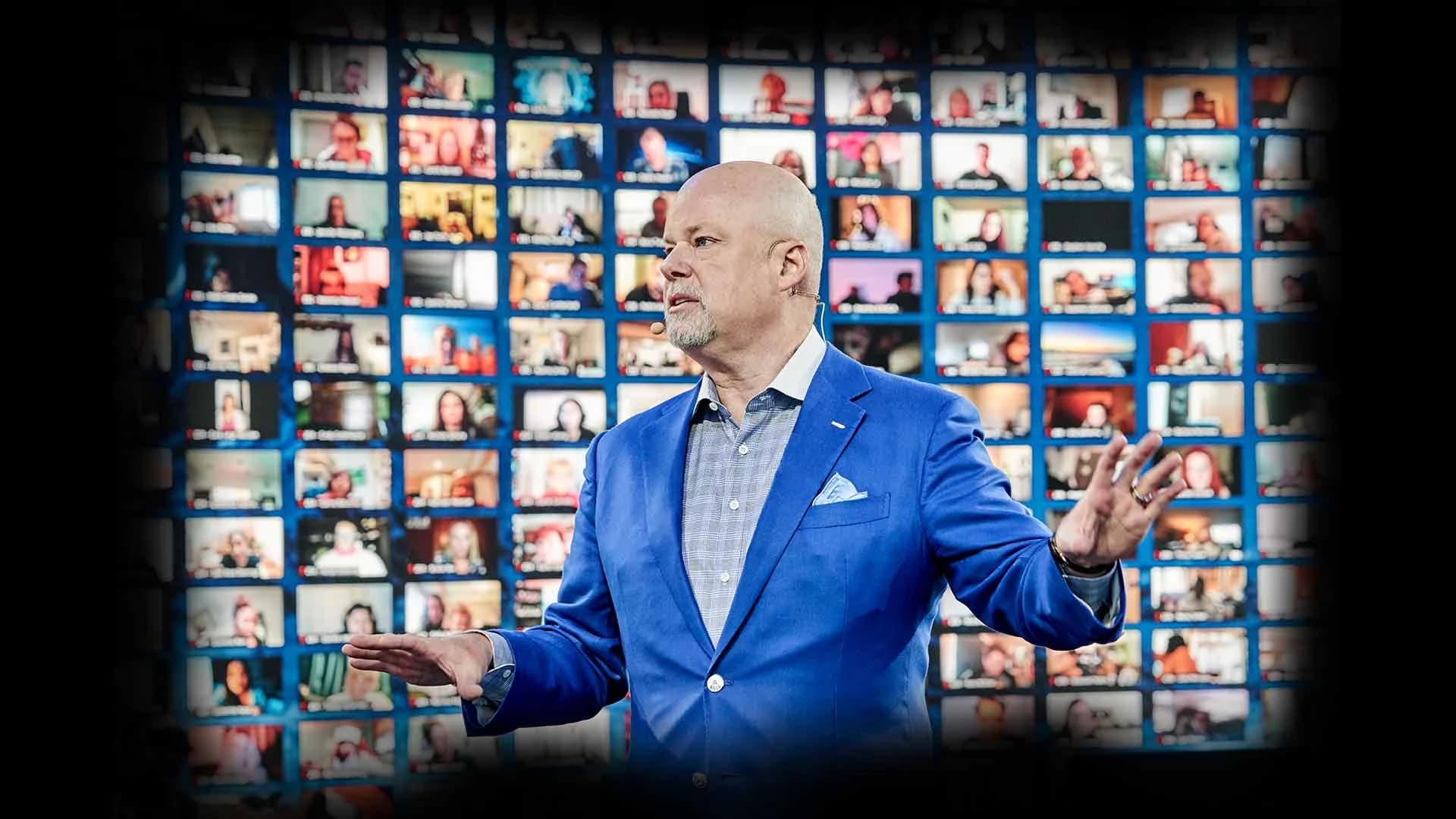
A global company town hall works when you run it as a live broadcast instead of a very large video call: one message, delivered once, to every employee at the same moment, in their own language, with a real way to talk back. It's the model we use for company-wide town halls and all-hands meetings at our studio in Las Vegas, and it holds whether your people sit on one continent or six.
Run your town hall as a broadcast: one live message, every language, real two-way Q&A, and a stated plan for time zones. Get those four right and distance stops diluting what leadership says.
Key Takeaways
- Treat it as a broadcast, not a meeting. One message, delivered once, so no region hears a re-cut version.
- Pick the format first: fully virtual, hybrid with a headquarters audience, or leadership broadcasting from its own location.
- Time zones need a stated plan. One live session with labeled regional replays, or a live session per region, and never a replay passed off as live.
- Language is part of the message. Live interpreters for your largest audiences, AI translation for the rest, with the event's own sound kept under the translated voice.
- Make the Q&A real. Questions collected ahead, employees brought on screen live, and breakouts so every region gets a voice.
Why Do Global Town Halls Lose the Message?
Most global town halls lose the message on the way down, not on the day. Leadership speaks once, regional leaders re-cut it for their teams, and by the third retelling the company has heard three slightly different versions of the same news.
The fix is structural. Everyone hears the same words, from the same people, at the same time. When leadership speaks to the whole company at once, nothing sits between the CEO and the newest hire on the other side of the world.
The stakes are real. Gallup reports that only 20% of employees worldwide were engaged at work in 2025 (State of the Global Workplace 2026). With engagement that low, the few moments when leadership addresses everyone directly carry weight, and a town hall that feels like a muted webinar spends one of them.
Which Town Hall Format Fits Your Company?
The right format depends on where your leadership will be and where your people are. Three models cover almost every global town hall.
| Format | How it works | Best when | Watch for |
|---|---|---|---|
| Fully virtual | Leadership presents from a studio; every employee joins remotely | The workforce is distributed with no natural hub | Remote employees drifting into a passive audience |
| Hybrid | A headquarters audience in the room, the rest of the company joined live | You want the energy of a live room and full reach | Remote employees feeling like they're watching someone else's event |
| Remote stage | Leadership speaks from its own location; a studio turns the camera feed into the full interactive broadcast | Executives can't travel, or the CEO is speaking from a regional office | Camera, audio and connection quality at the speaker's end |
Hybrid gives you a room full of people reacting in real time and the whole company watching it happen. Our hybrid event format shows how the in-room and remote audiences share one show. The third model is our Remote Virtual Stage: you send the camera feed, and we broadcast it at scale as a full interactive experience.
How Do You Handle Time Zones?
Decide whether the live moment matters more than live attendance, then say so in the invitation. Every global company trades one for the other, and three approaches cover the options.
| Approach | How it works | Trade-off |
|---|---|---|
| One live session, regional replays | Run live at the slot that suits the largest share of employees; schedule replays for other regions | One clean message; some regions watch it recorded |
| One live address, regional live Q&A | Deliver the address once, then hold live Q&A sessions at local-friendly hours | The message stays single-source and every region still gets live questions |
| A live session per region | Repeat the whole town hall live for each major region | Everyone gets it live; leadership presents several times and versions can drift |
Whatever you choose, label replays as replays. "Recorded for our Asia-Pacific teams earlier today" lands far better than a recording dressed up as live, and nothing undermines a leadership message faster than a "live" broadcast that obviously isn't.
A few habits make any approach work better:
- Write every time in local time. List the start time for each major region in the invitation, not just headquarters time.
- Rotate the live slot. Move it each quarter so the same region isn't always on the late shift.
- Open questions early. Publish the agenda and question form ahead, so replay regions still shape the Q&A.
How Do You Deliver One Message in Every Language?
Combine live interpreters for your largest language groups with AI translation for everyone else, and keep the event's own sound under the translated voice.
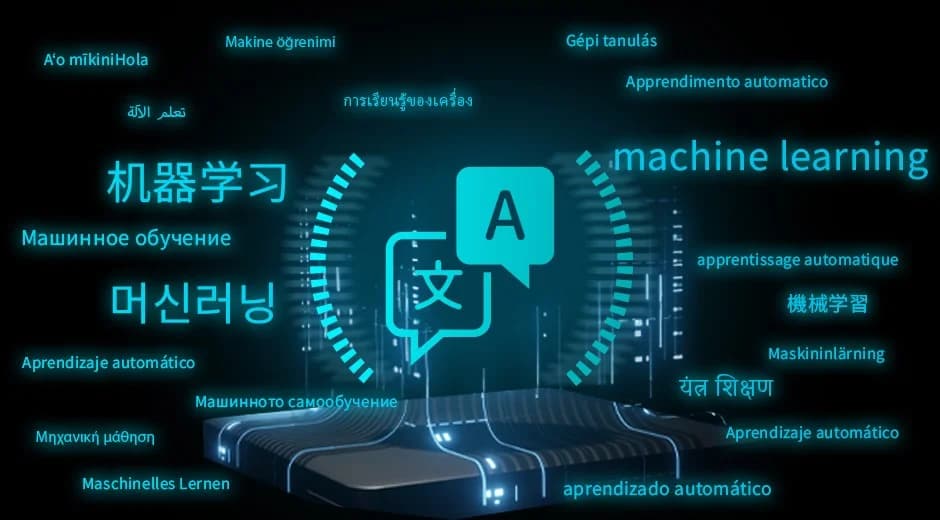
Our studio runs four simultaneous live-interpreter channels, expandable to two sessions of 10 (about 20 in total), and AI translation extends coverage to more than 100 languages. Employees get closed captions plus a translated voice in their language, with music, applause and room sound still underneath, instead of a flat interpreter track over silence. Our guide to how real-time translation works at global events covers the setup in detail.
Three things help interpreters do their best work:
- Share scripts and slides early. A few days ahead gives interpreters time to prepare names, product terms and figures.
- Slow the pace slightly. Speakers who leave a beat between key points get cleaner translation.
- Cut the idioms. Phrases that land at headquarters often don't survive translation.
How Do You Make a Town Hall Two-Way at Scale?
Collect questions before the event, bring employees on screen live during it, and give each region its own space to talk afterward.
- Before: open a question form a week ahead, allow anonymous submissions, and have the moderator group questions by theme.
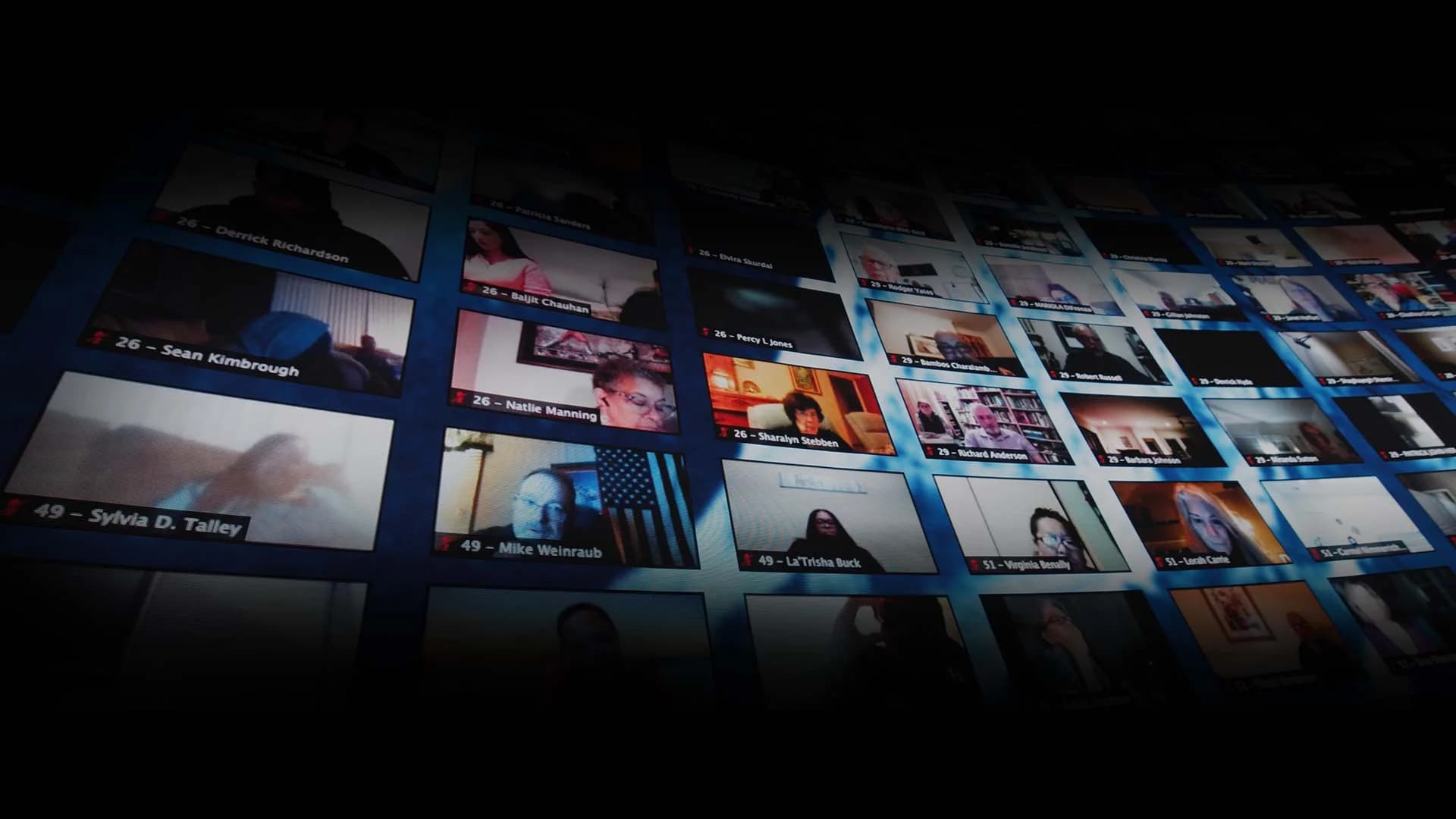
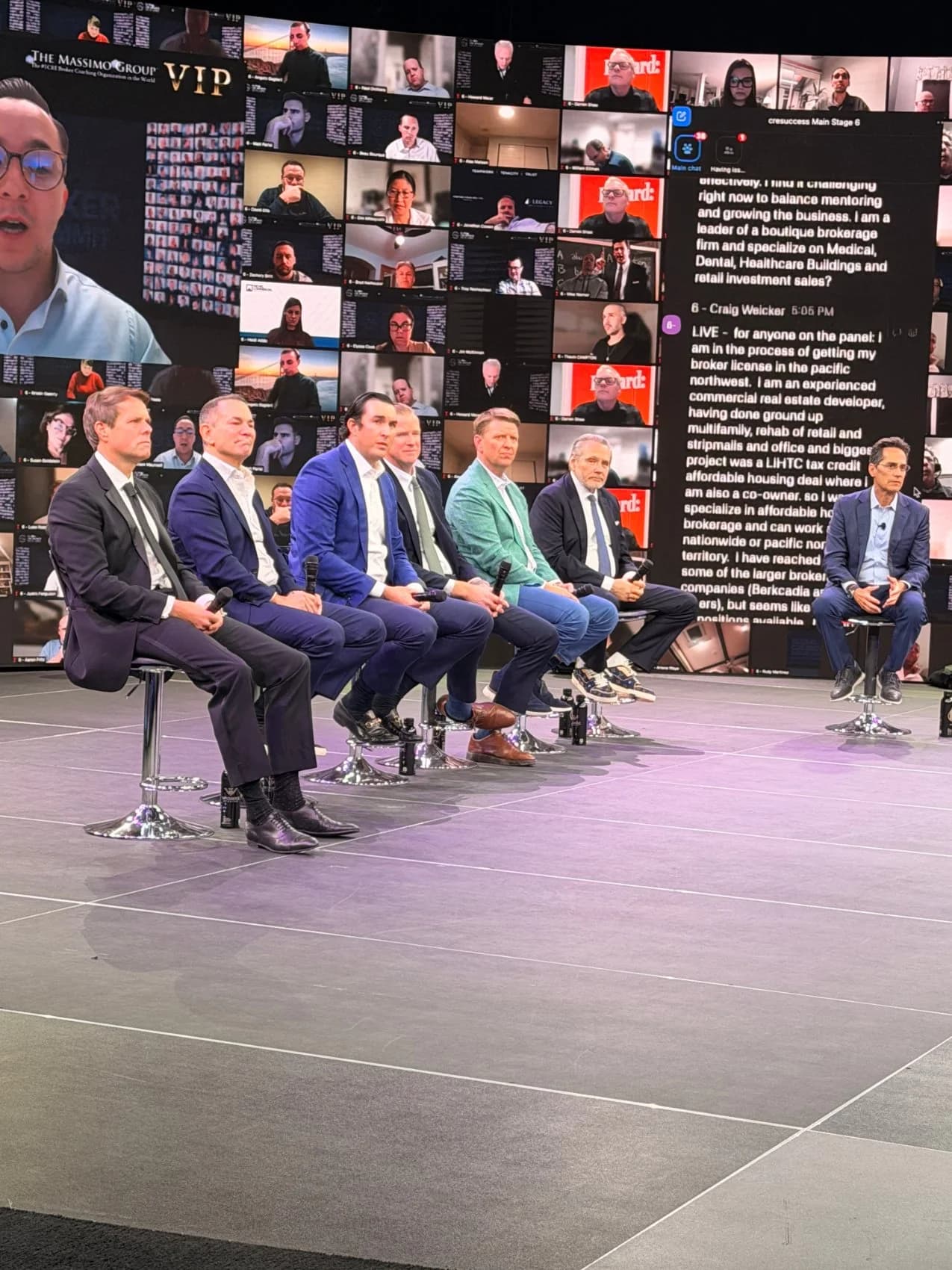
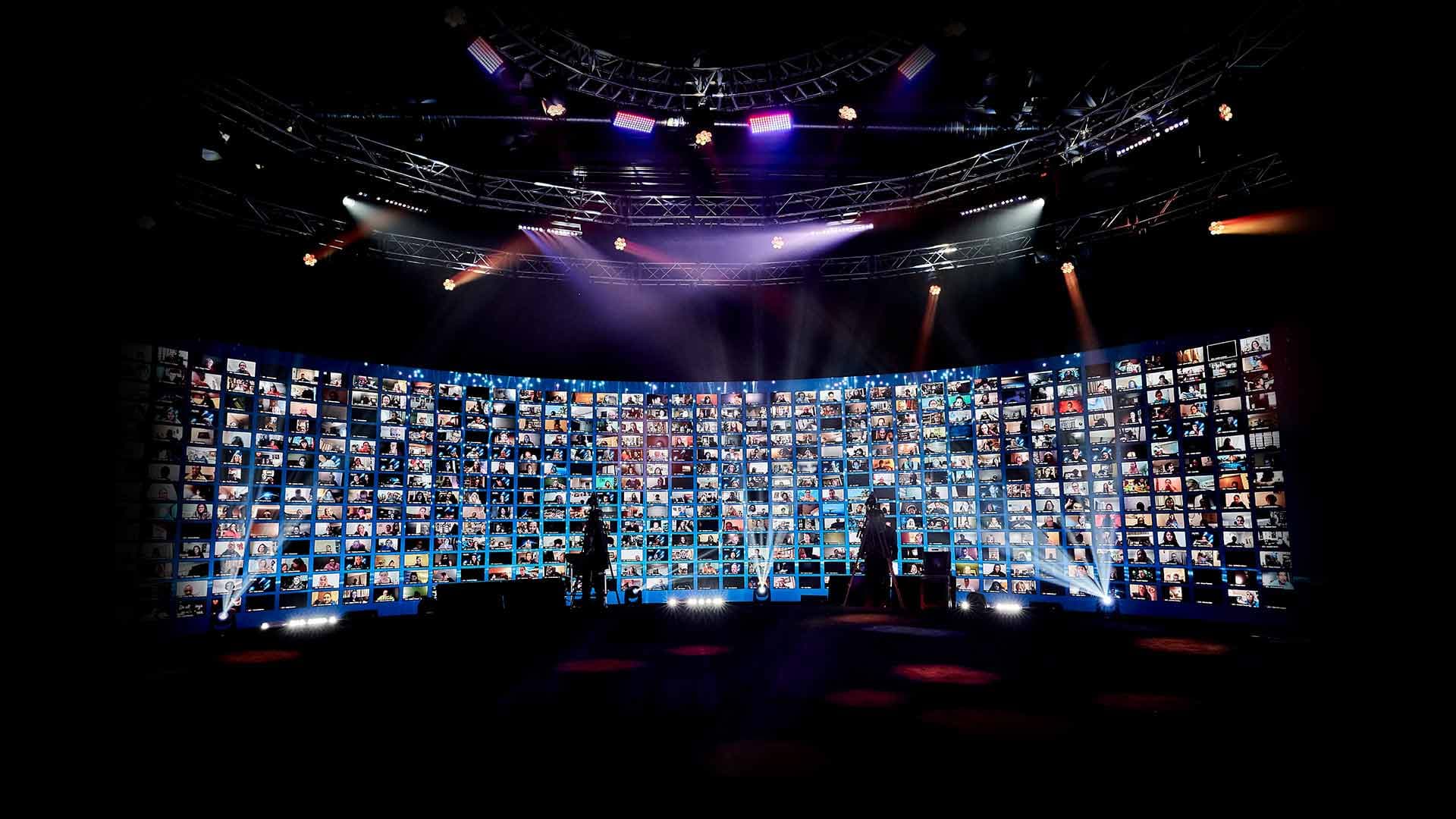
- During: bring employees up live, face to face with leadership, rather than reading questions out of a chat. In an interactive broadcast, remote attendees appear on the LED wall with the host in real time, with latency engineered for true one-on-one conversation, so a question from Singapore lands like it was asked from the front row.
- Breakouts: every event gets its own virtual dashboard, branded as your company's, with breakout rooms and audience segmentation. Regions or teams can split into live face-to-face sessions right after the main address.
- After: answer the questions you didn't reach, publicly, within a week.
The difference between a town hall people watch and one they take part in comes down to that interactivity. Here's why an interactive broadcast isn't a webinar, plus 12 virtual event engagement ideas that go beyond polls and chat.
What Should a Global Town Hall Run of Show Look Like?
Keep it to about an hour of live time, put the news up front, and give the Q&A the largest block.
| Segment | Length | Purpose |
|---|---|---|
| Walk-in and countdown | 5 min | Music and visuals while every region connects |
| Opening and framing | 5 min | Why we're here and what employees will leave knowing |
| Business update | 15 min | The news, delivered once by the people accountable for it |
| Recognition | 5–10 min | Teams from every region, ideally live on screen |
| Live Q&A | 20–25 min | Pre-submitted and live questions, with employees on screen |
| Close | 5 min | What happens next and where open answers will be posted |
Regional breakouts can follow for 20 to 30 minutes. Keep them on the same platform, so nobody has to find a new link.
What Production Does a Global Town Hall Need?
A global town hall needs broadcast-grade redundancy, a full technical rehearsal, and an honest plan for anything pre-recorded.
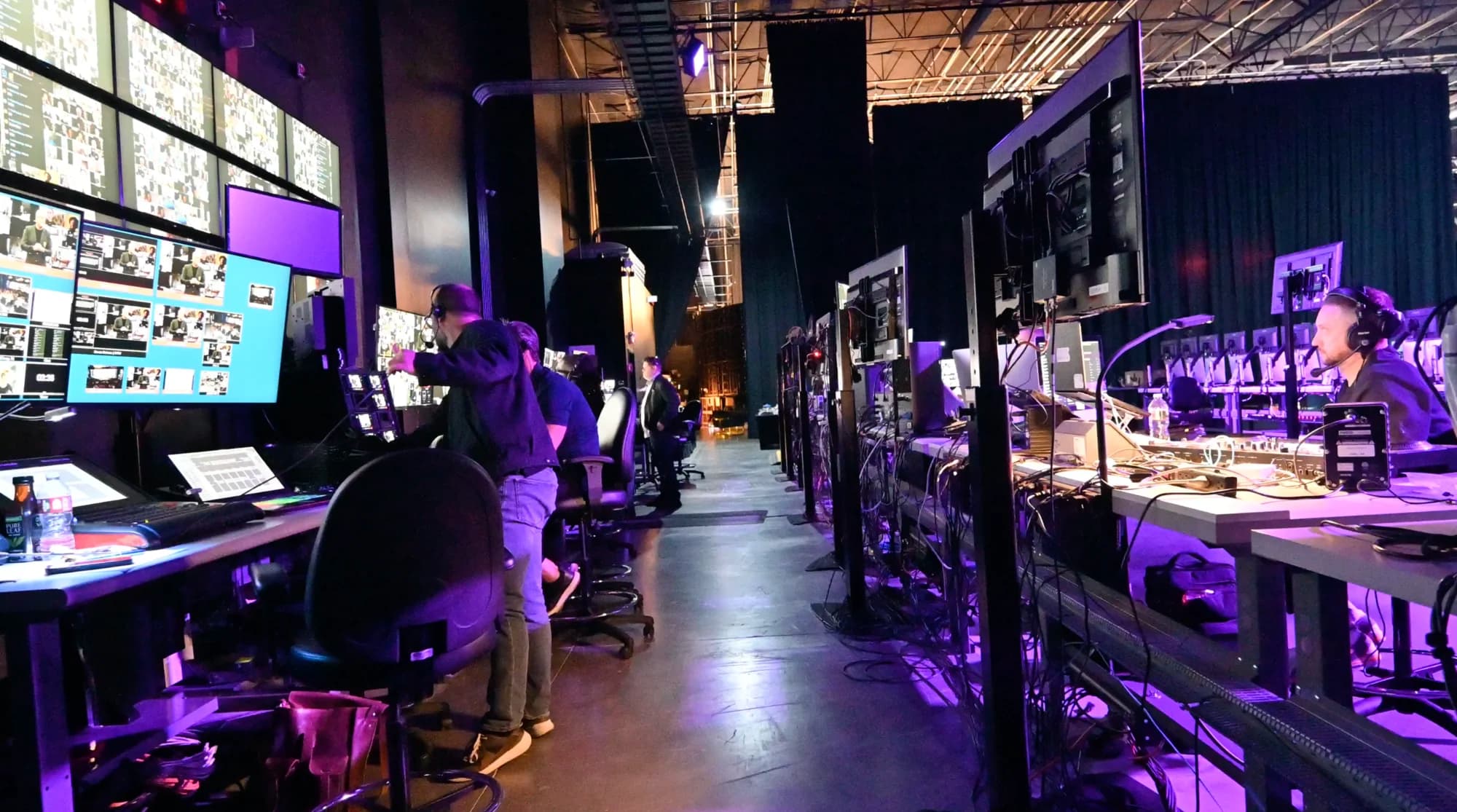
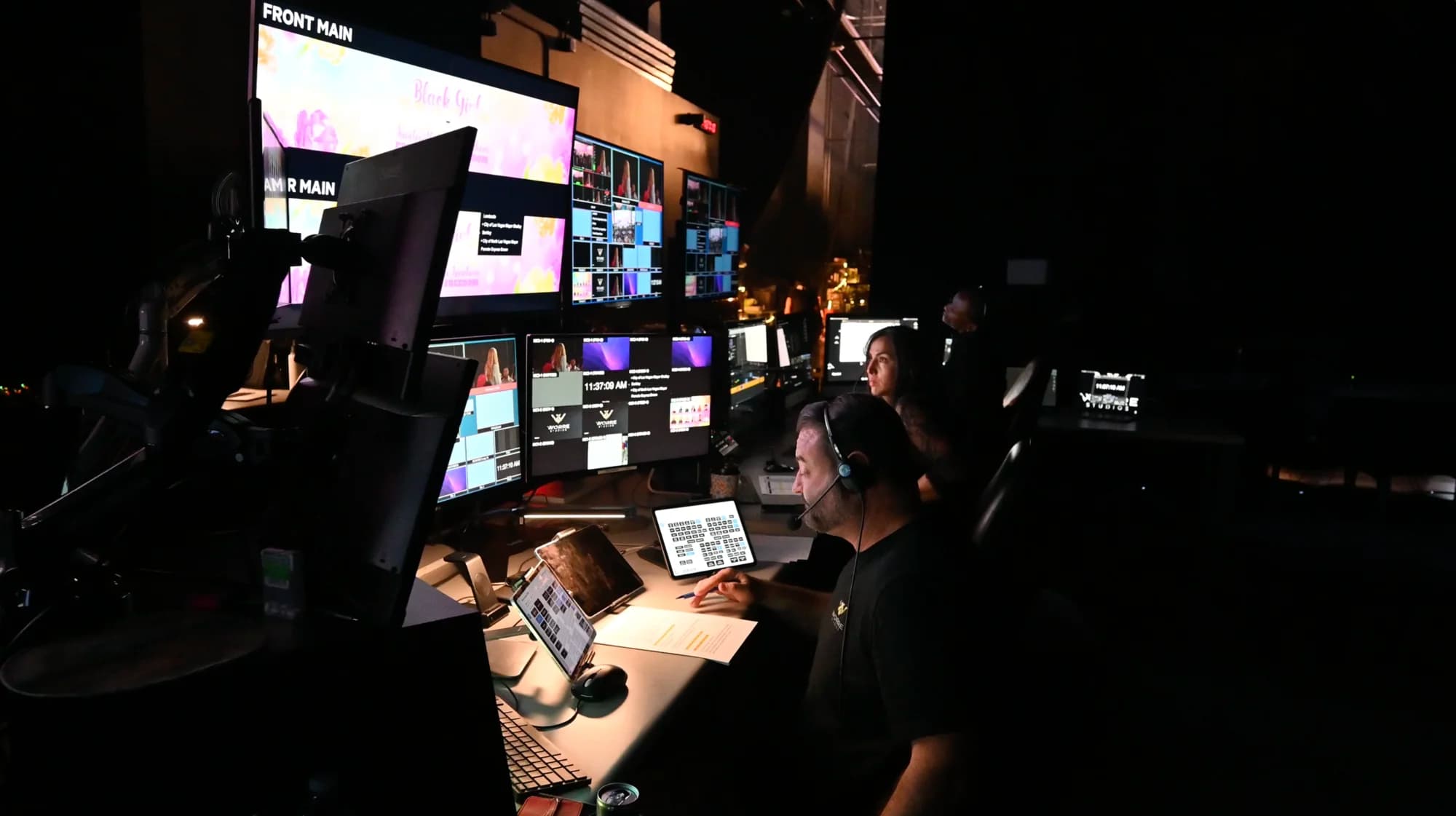
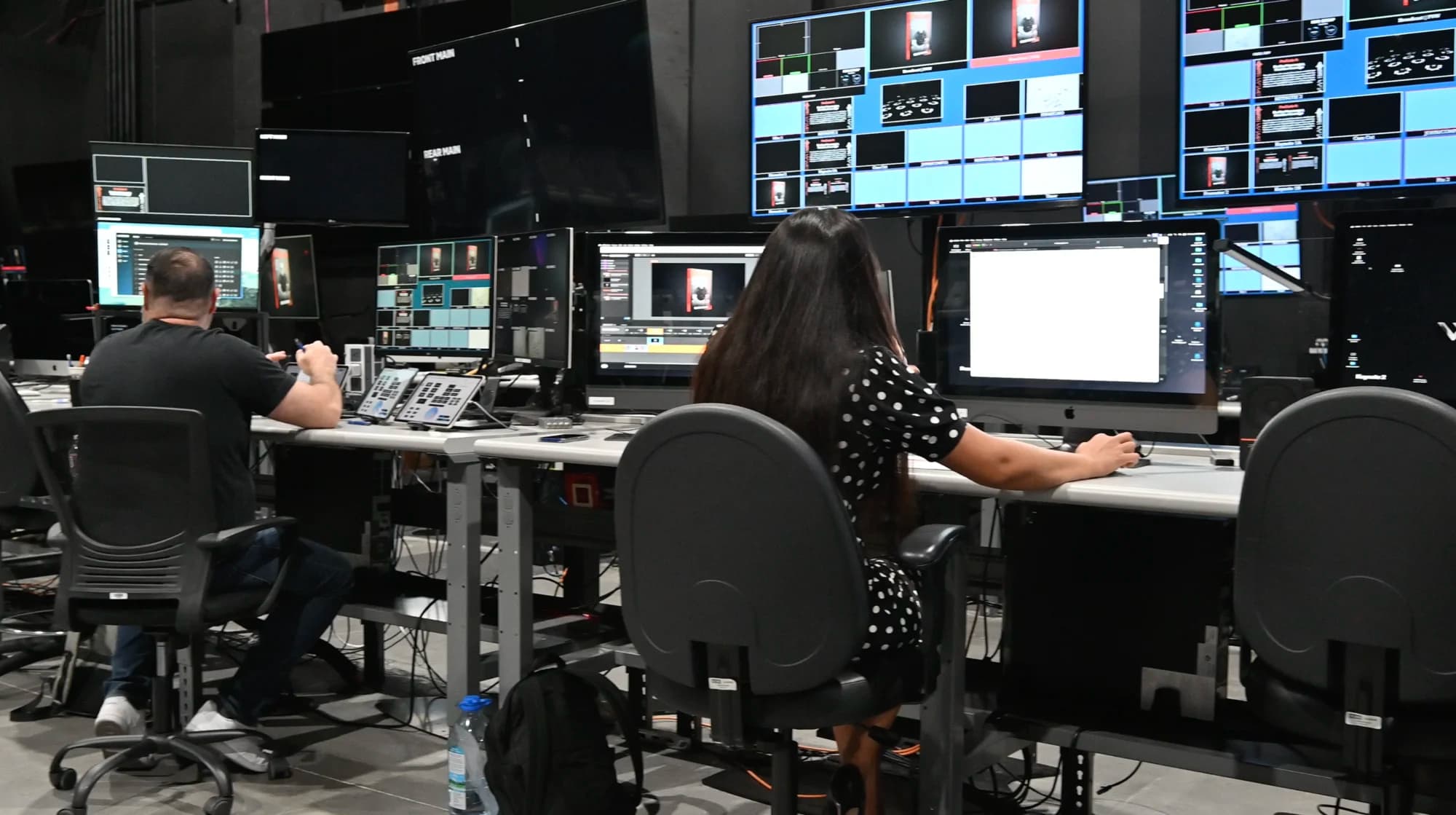
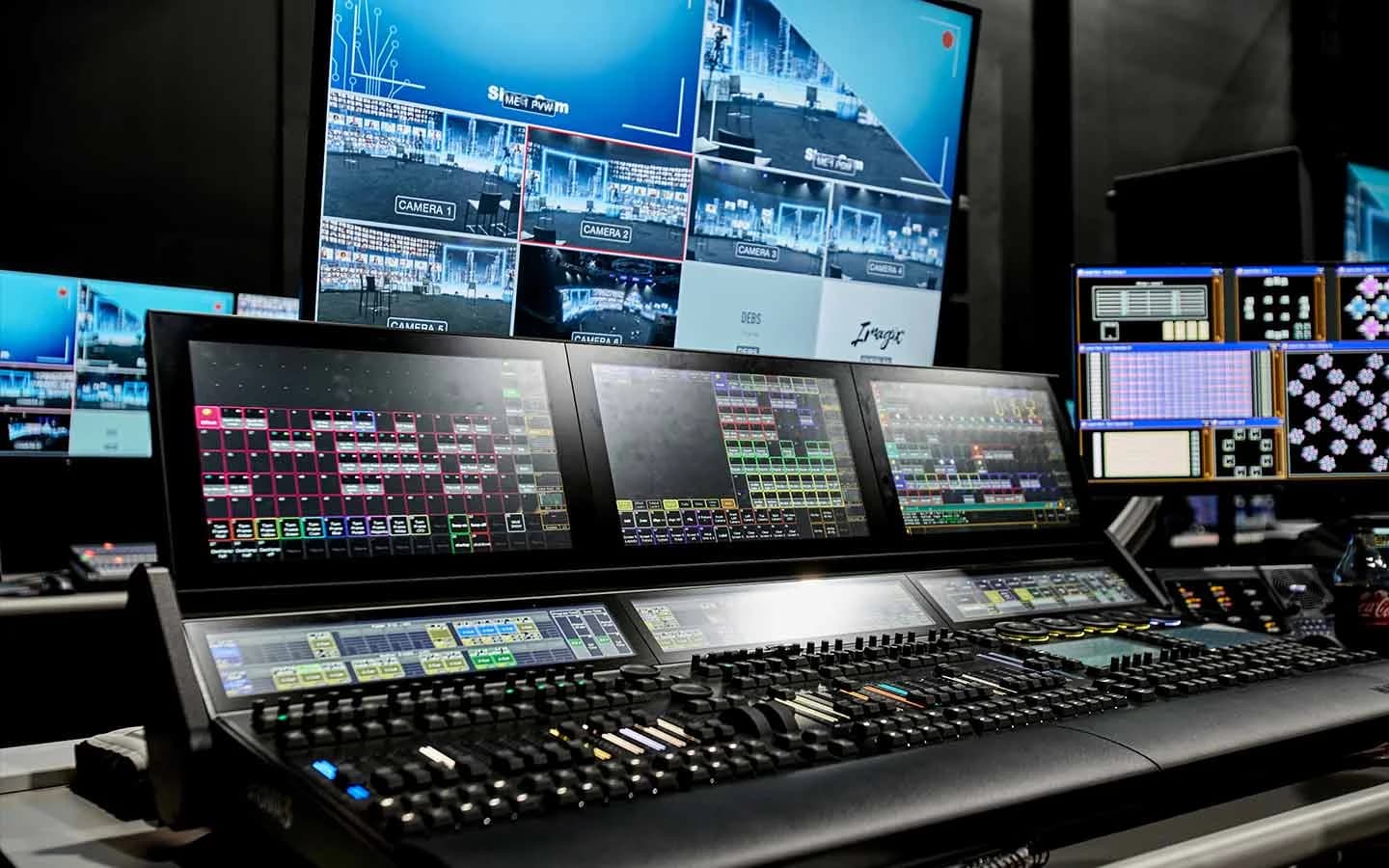
- Every platform and the interactive room, at once. Two AJA Bridge Live units give full redundancy and can push to up to 24 platforms at once while the interactive town hall runs inside your branded dashboard. Platform streams widen reach; the dashboard is where employees actually take part. Our guide to streaming an event to multiple platforms at once covers when that makes sense.
- Connectivity. Dual 5G networks back the broadcast.
- A real rehearsal. Run the whole show once with interpreters, remote presenters and the Q&A flow live.
- Honest recorded segments. If an executive can't be there live, introduce the video as recorded. Live is live; recorded is recorded.
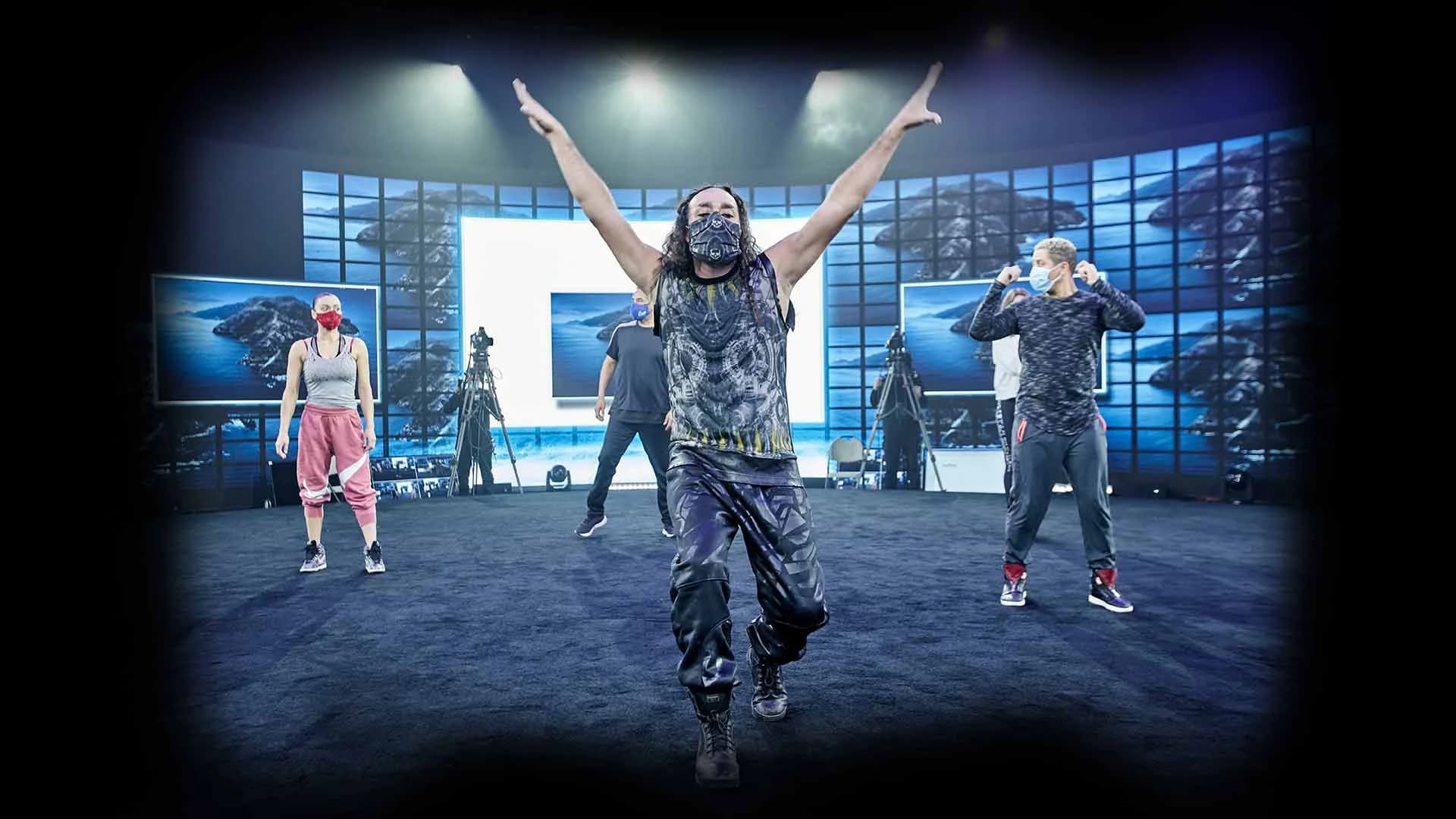
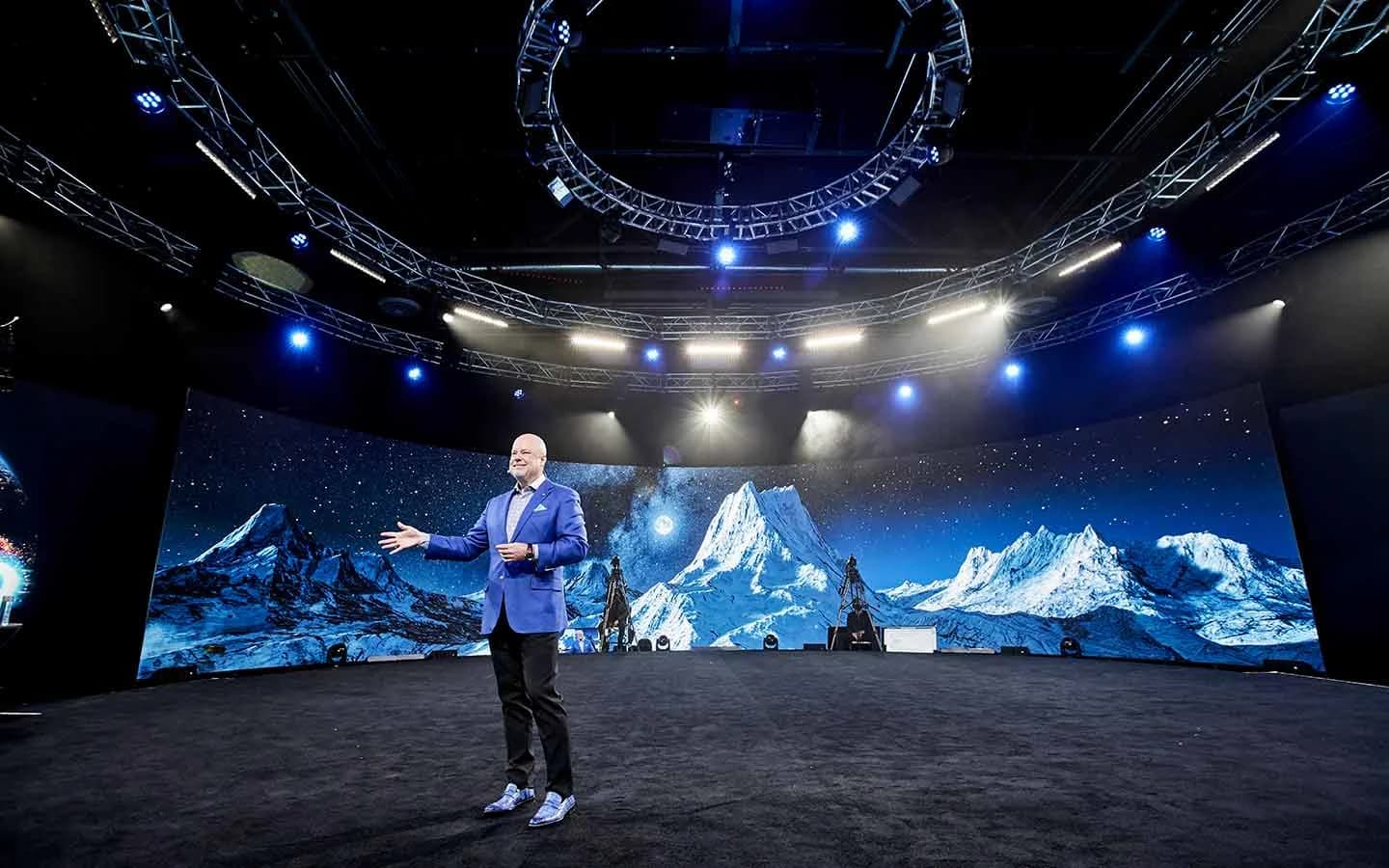
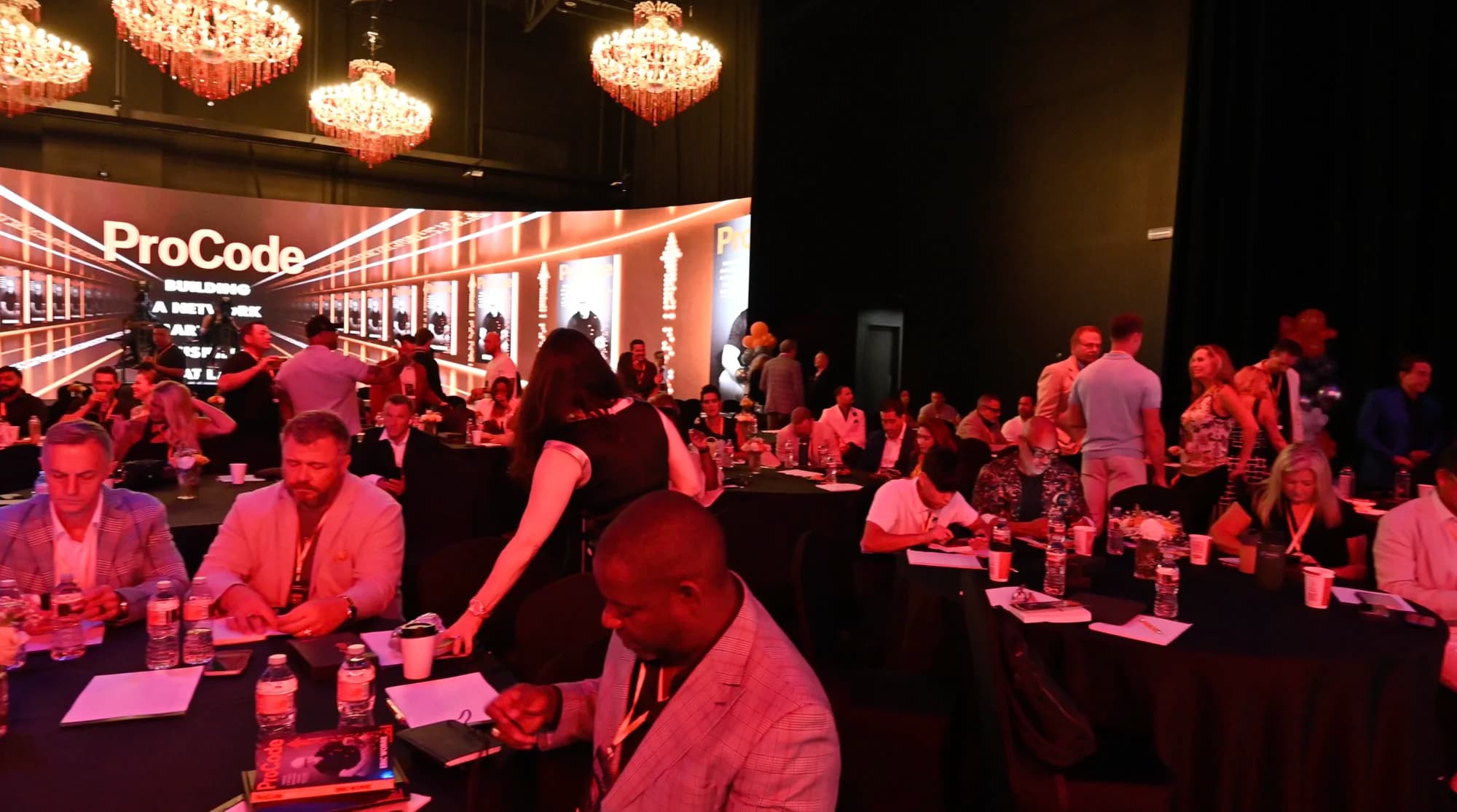
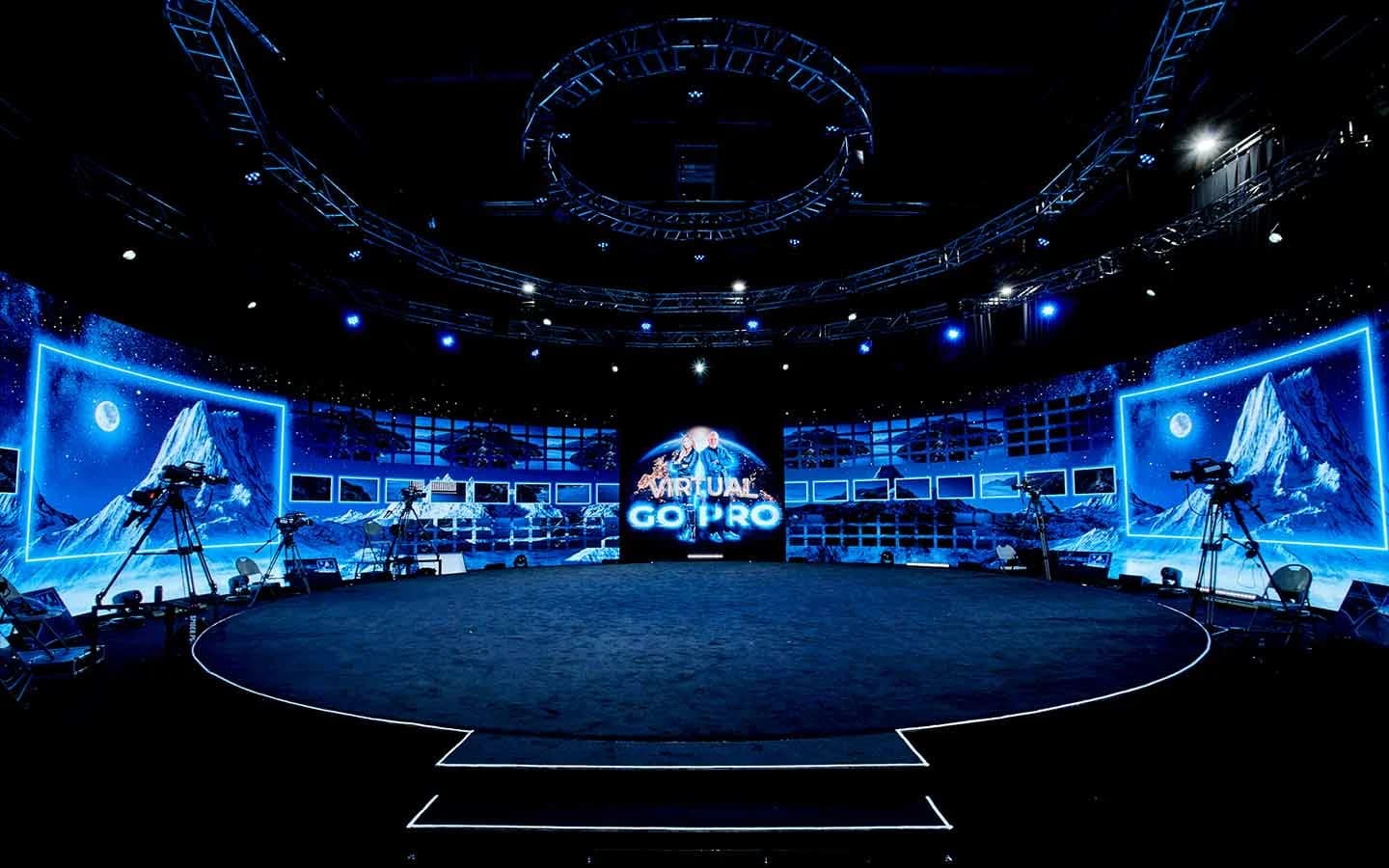
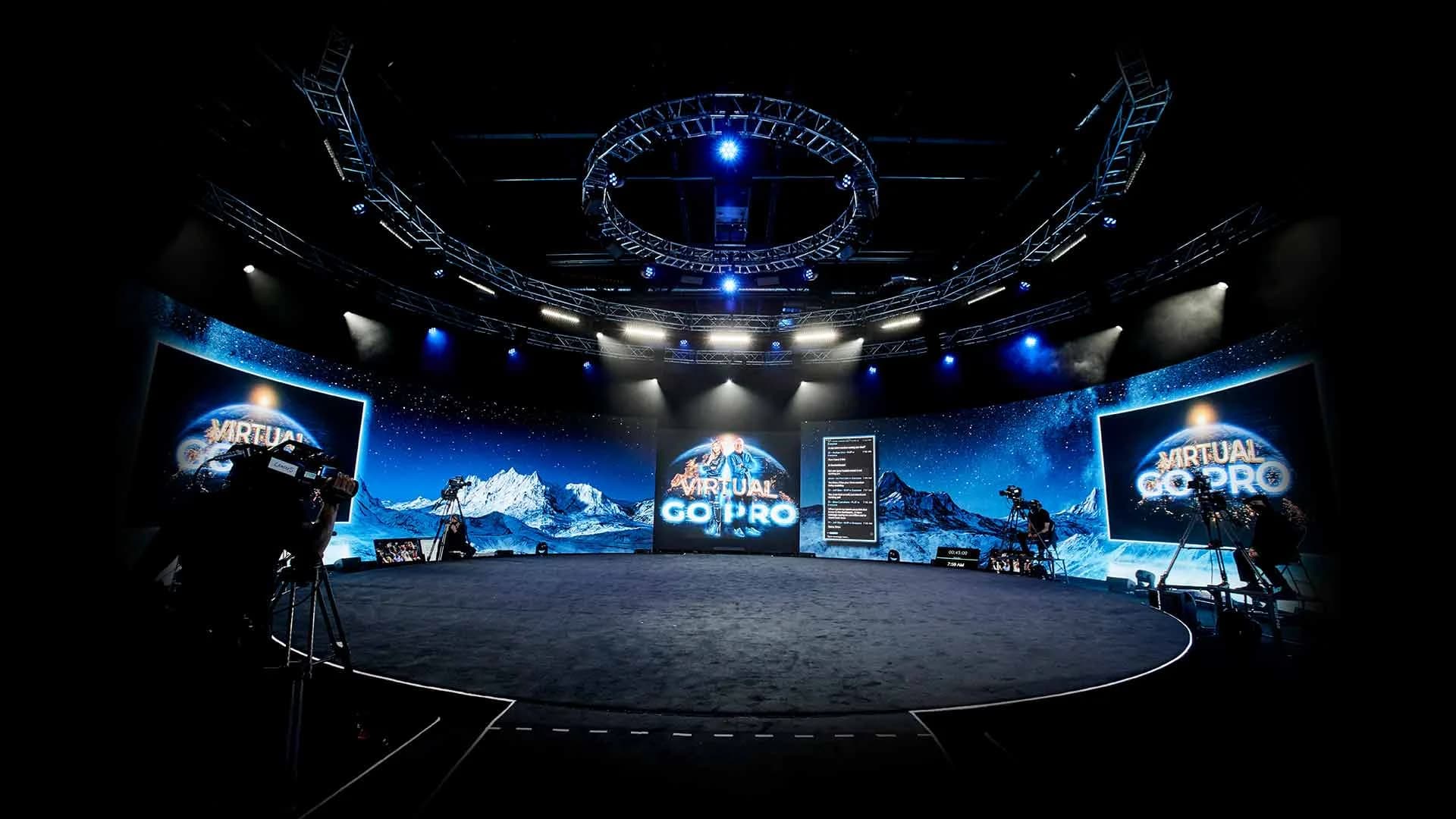
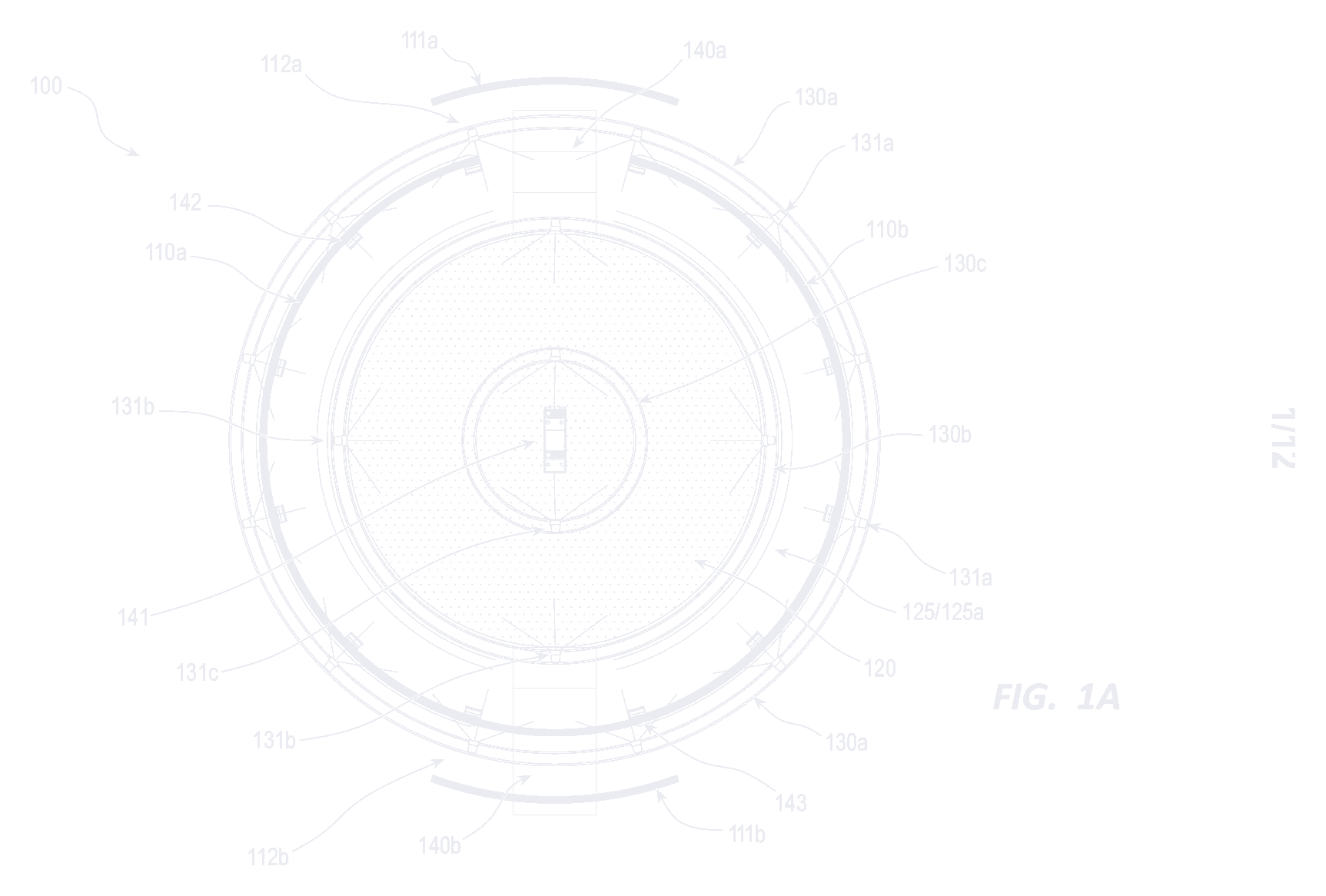
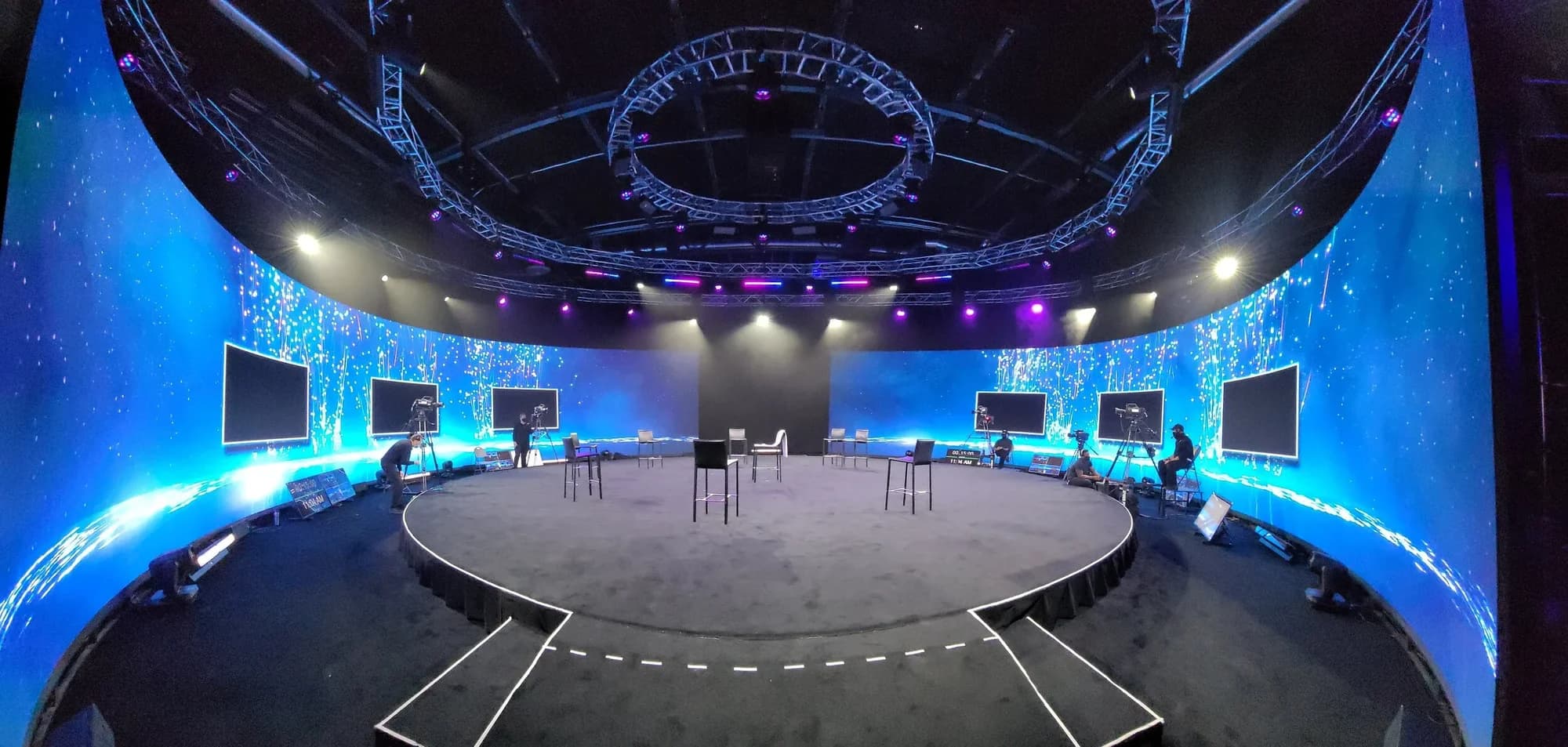
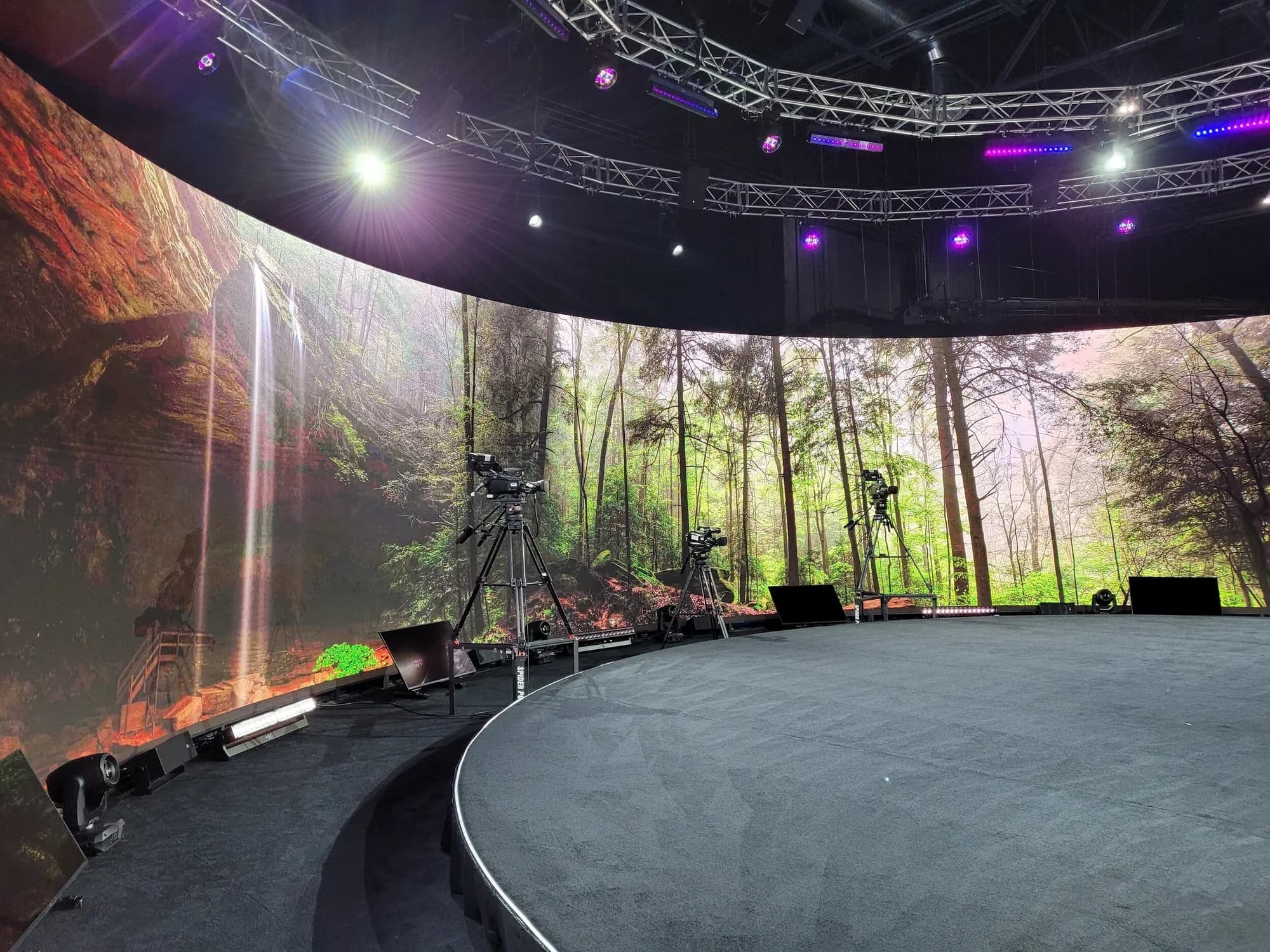
- A room that signals the moment. A town hall in the round, inside a 360° stage of 12K LED, looks like an event leadership chose to invest in rather than a conference room.
When Should a Town Hall Move Out of the Conference Room?
When the audience is large, the company speaks many languages, or the message is one people will remember. Strategy shifts, leadership changes, mergers and the first all-hands of the year all qualify.
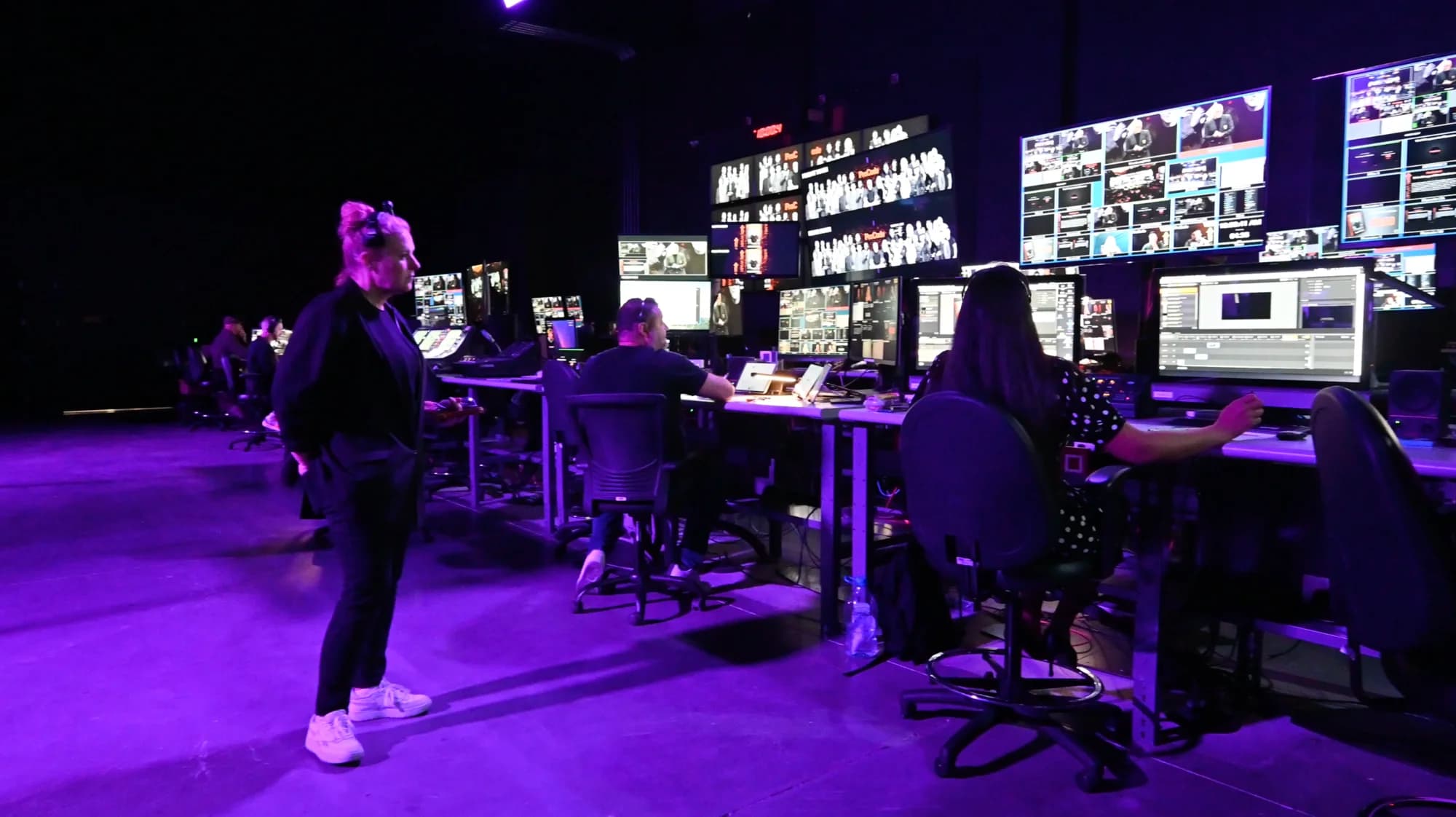
A studio removes the build. The walls are standing, the crew is in house, and reach runs up to hundreds of thousands of attendees. Translation and the branded dashboard are part of the same show rather than extra vendors.
Leadership doesn't have to fly in, either. A recurring enterprise client runs its own large events, with around 7,000 people in the room and 10,000 to 20,000 joining remotely, and sends the feed to us to broadcast at scale. The same remote-stage model carried a multi-hour, fully interactive broadcast for Matthew McConaughey, sent from a private studio with no remote capability of its own.
One booking can also cover more than the town hall. Rehearsal and the show rarely fill a full studio day, so teams use the remaining hours to record training and evergreen content. If your town hall doubles as the annual kickoff, our guide to the hybrid sales kickoff covers that format.
Frequently Asked Questions
What's the difference between a town hall and an all-hands meeting?
Many companies use the terms interchangeably. A town hall usually leans on open questions to leadership, while an all-hands leans on company updates. A global version works best as a blend: the news delivered once to everyone, followed by real, live Q&A.
How long should a global town hall be?
About an hour of live time works for most companies: a short opening, a 15-minute update, recognition, and 20 to 25 minutes of Q&A. Regional breakouts can add 20 to 30 minutes after the main address without asking everyone to stay on.
How often should a company hold a global town hall?
A quarterly rhythm works well for most global companies, with an extra session when major news can't wait. Rotating the live time slot each quarter keeps the late shift from always landing on the same region.
Should town hall questions be anonymous?
Offer both. Anonymous submissions surface the questions people won't ask with their name attached, and live, on-camera questions show leadership answering in real time. A moderator can group anonymous questions by theme, so the hard ones get answered rather than skipped.
Can executives present from different cities?
Yes. Leadership can present from the studio, from their own offices, or both. With a remote virtual stage, a presenter sends a camera feed and the studio turns it into the full interactive broadcast, so employees get the same experience wherever the speaker is.
How many employees can join a studio-produced town hall?
Up to hundreds of thousands of attendees can join one broadcast, with remote employees able to take part live rather than only watch. Breakout rooms and a branded dashboard keep a large audience organized by region or team.
Can our internal comms or AV team run the show?
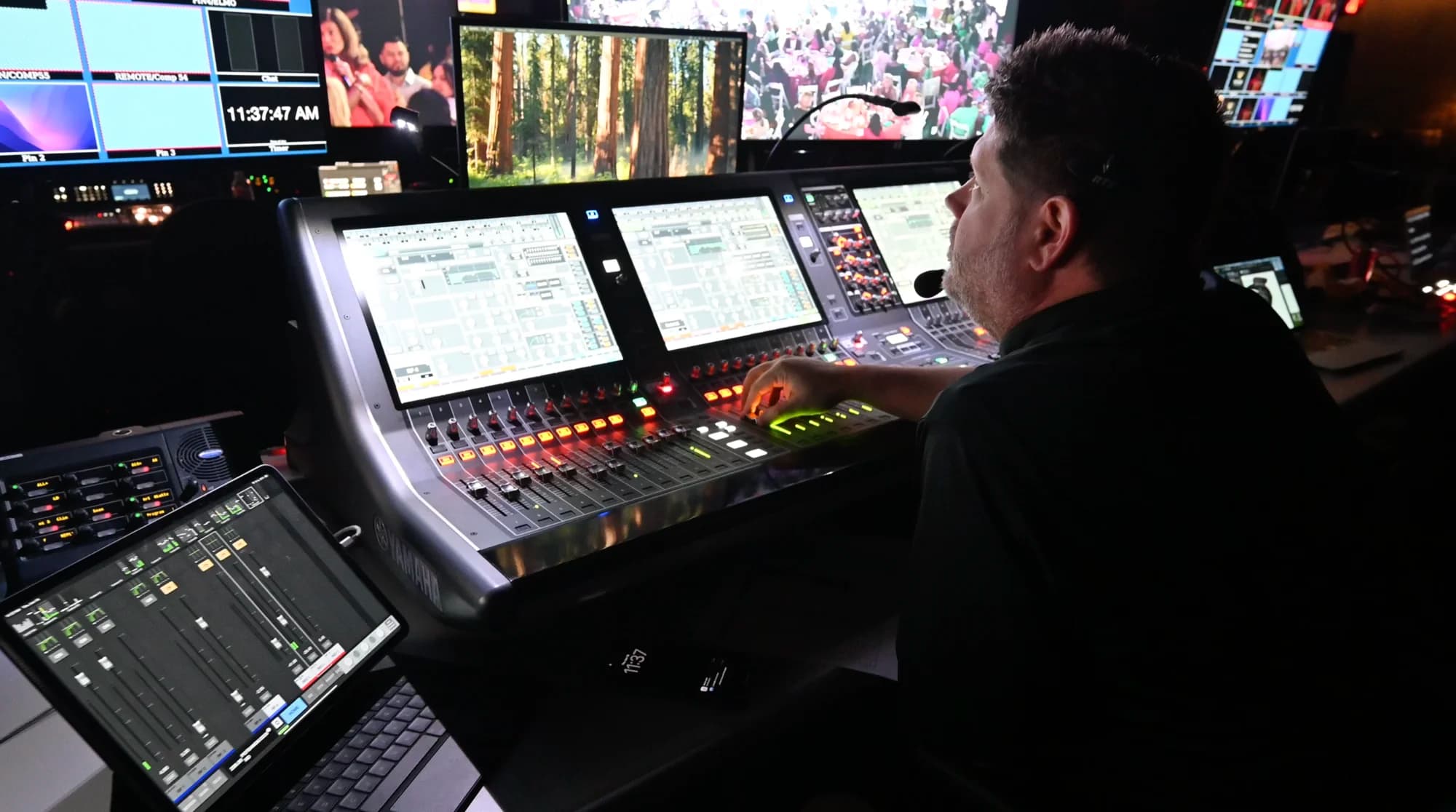
Yes. Outside teams bring their own crew and run their own show at no extra charge. A couple of positions stay with the studio for safety and continuity: the audio console, and supervised access to the full network. Everything else is yours to run.
Can we record the town hall for employees who miss it?
Yes. The broadcast is captured as it runs, so replays are ready for other regions and for anyone who missed it. Label them clearly as recordings, and publish written answers to any questions the live session didn't reach.

Written by the Worre Studios Content Team and reviewed by Ben Groen, Ticketing & Interactive Platform Lead. The translation, interactive broadcast, multistreaming and remote-stage capabilities described reflect the studio's installed infrastructure and delivered productions. Engagement data comes from Gallup's State of the Global Workplace report (April 2026). Last reviewed October 10, 2026.
More from The Front Row
One Message. Every Employee. The Same Moment.
Tell us where your people are and what leadership needs to say. We'll walk you through the studio, virtually or in person, and build the town hall around your company.