

What Is a Remote Virtual Stage?
On this page
A remote virtual stage is a broadcast studio you use without traveling to it. You send a camera feed from wherever you are; the studio wraps it in full interactive-broadcast infrastructure — a branded per-event dashboard, breakout rooms, live audience interaction, real-time translation — and broadcasts it out at scale. Your location provides the picture. The studio provides everything that makes it an event.
Key Takeaways
- The model is simple: your camera feed in, a fully interactive broadcast out — no studio, crew, or streaming capability required on your end.
- Attendees experience a branded environment with live interaction and breakout rooms, not a webinar viewer.
- Reach scales to hundreds of thousands of hybrid attendees, with real-time translation in 100+ languages.
- The service is proven at scale — including a multi-hour broadcast for Matthew McConaughey at roughly 90,000 attendees.
- Worre Studios runs up to ~10 simultaneous virtual stages, so the service operates as standing capacity, not a special arrangement.
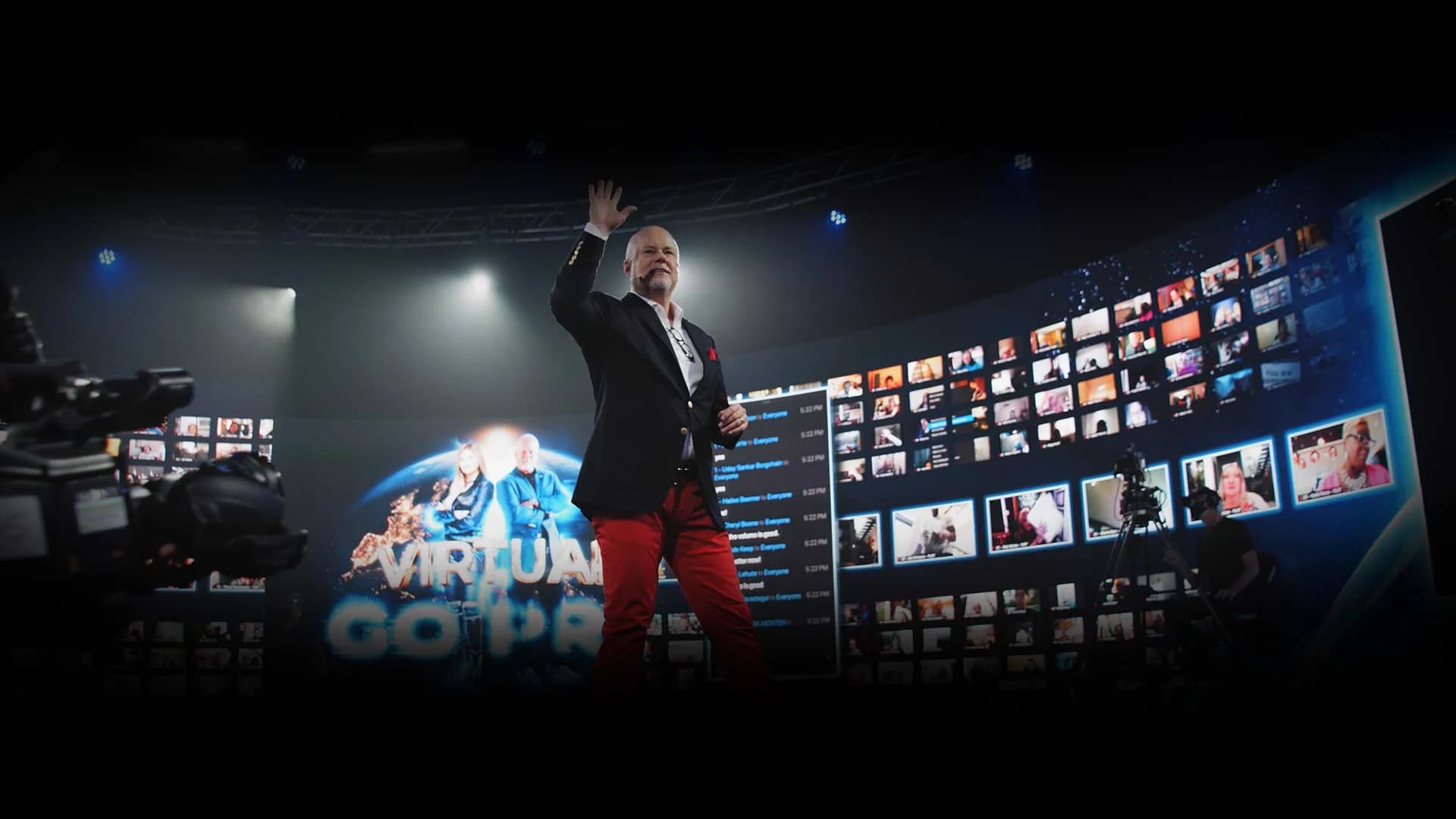
Some of the biggest broadcasts we've delivered happened while the studio's own stage sat quiet. The host was somewhere else entirely — a private recording space, a home studio, a location shoot — and the event still reached tens of thousands of live, interacting attendees.
A remote virtual stage is what makes that work, and it answers a question more teams have than you'd think: we have a person and a camera — how do we turn that into a real event?
The Model, in One Pass
Strip it to the mechanics and there are two halves:
- You provide the feed. A camera pointed at your host, speaker, or stage, wherever that is. No broadcast infrastructure, no streaming stack, no production crew required at your location beyond the camera itself.
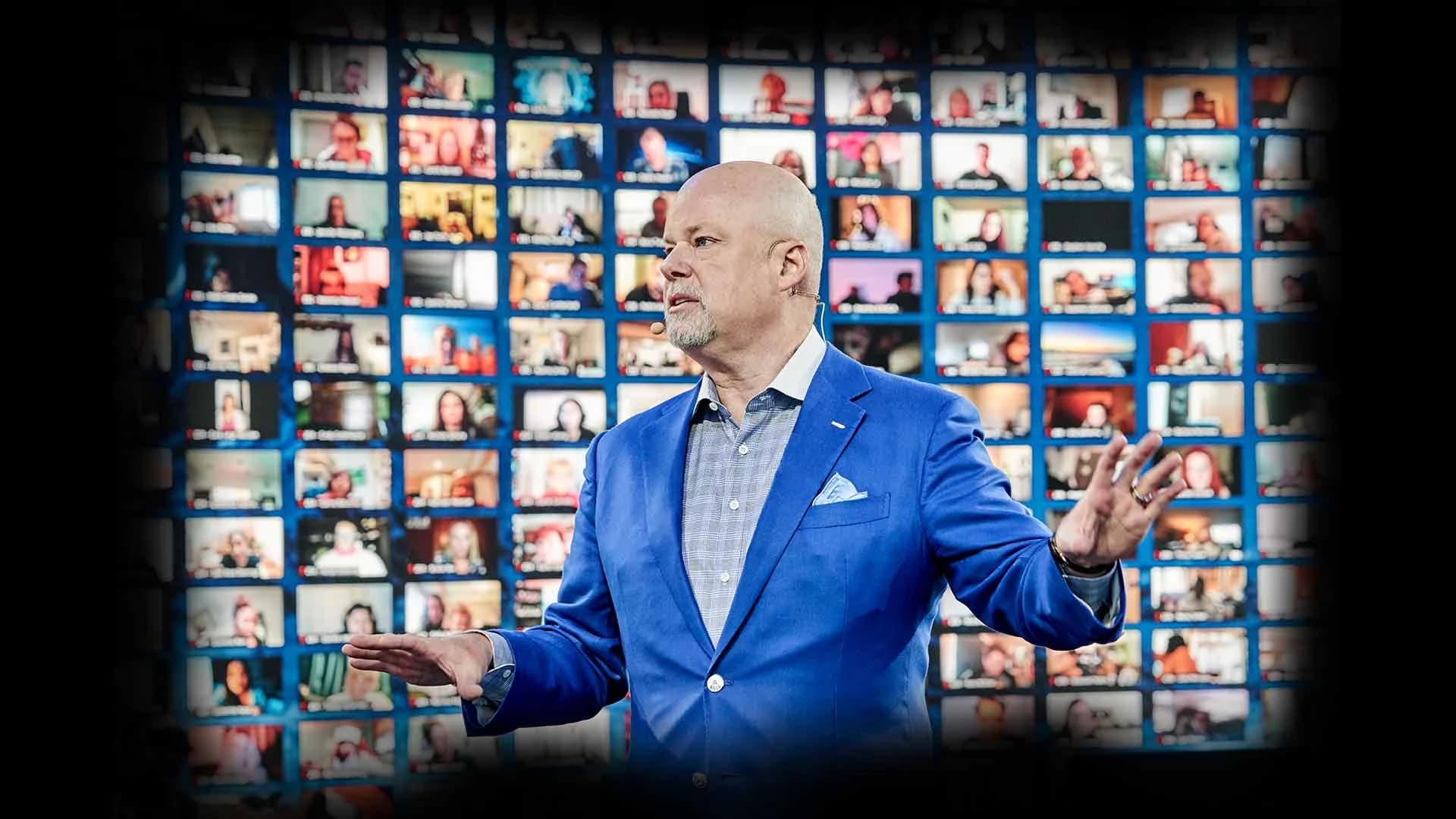
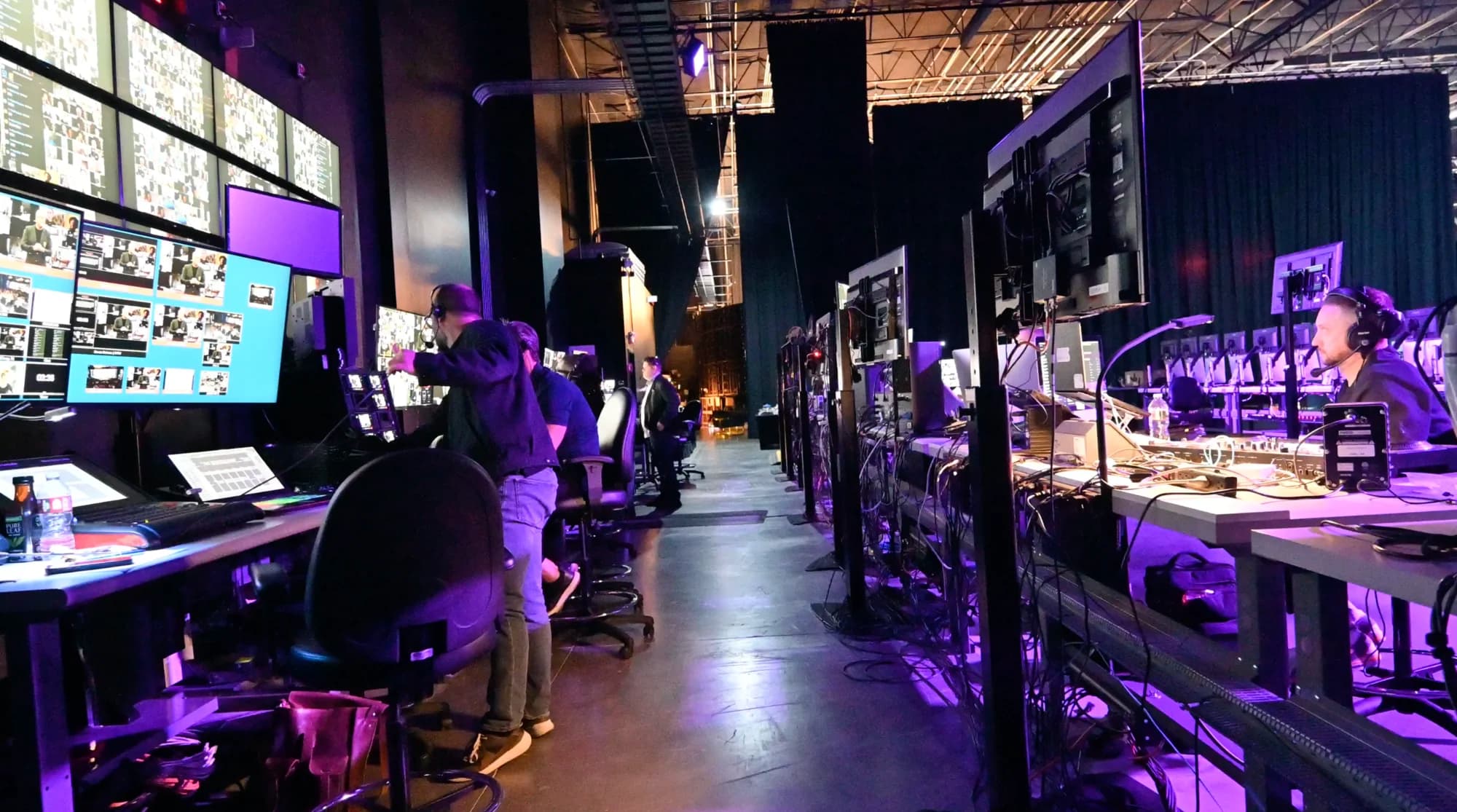
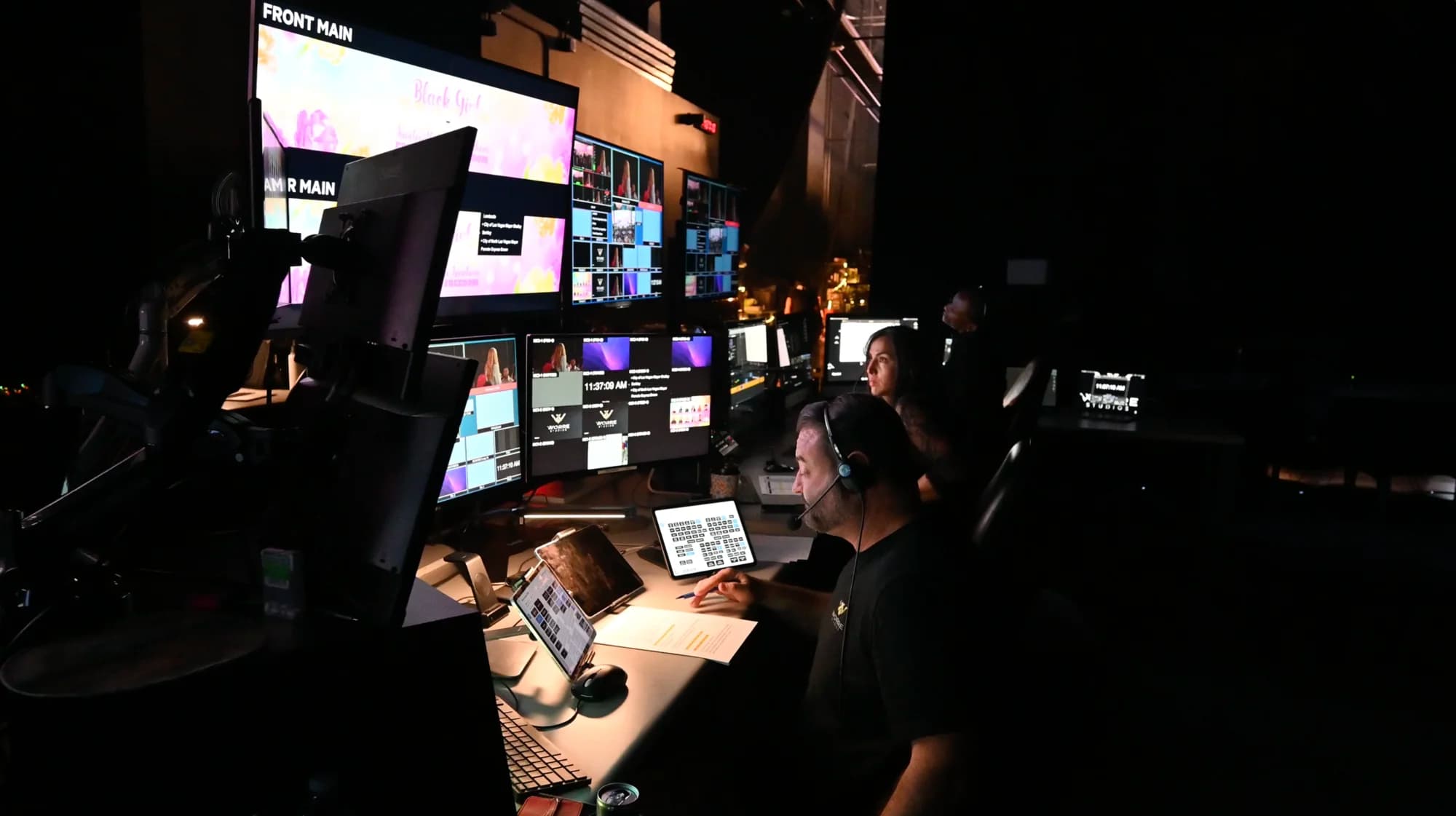
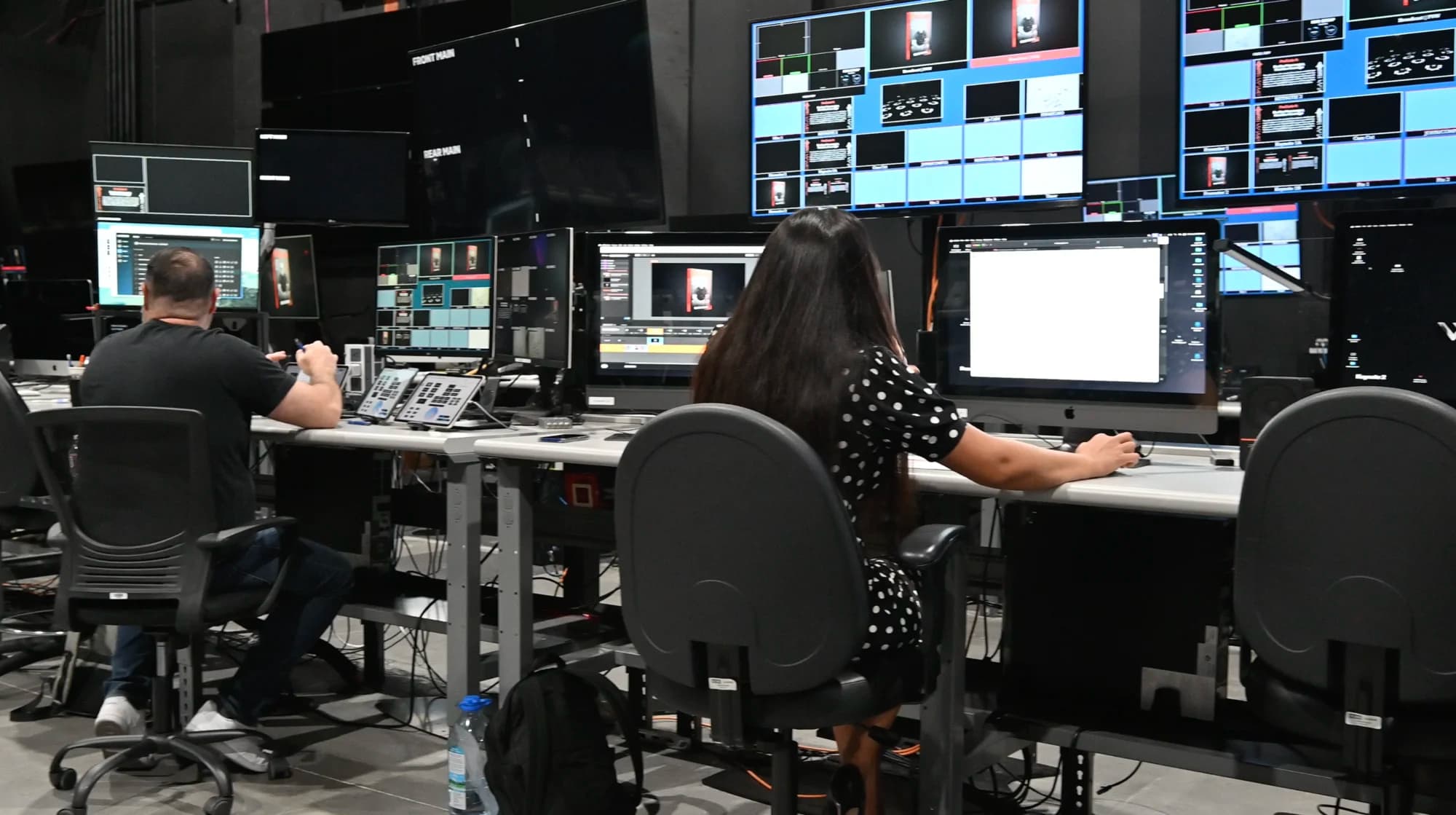
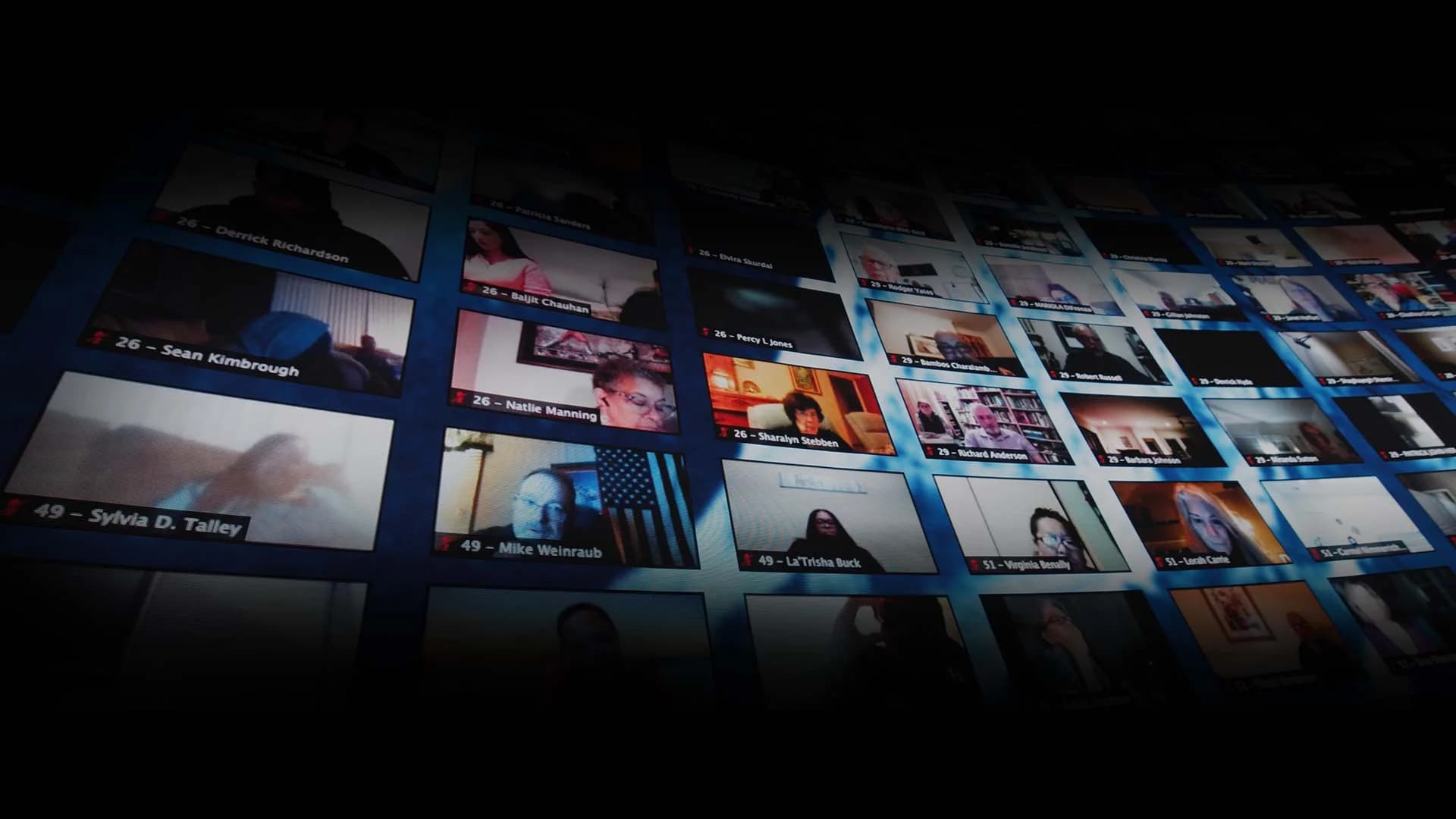
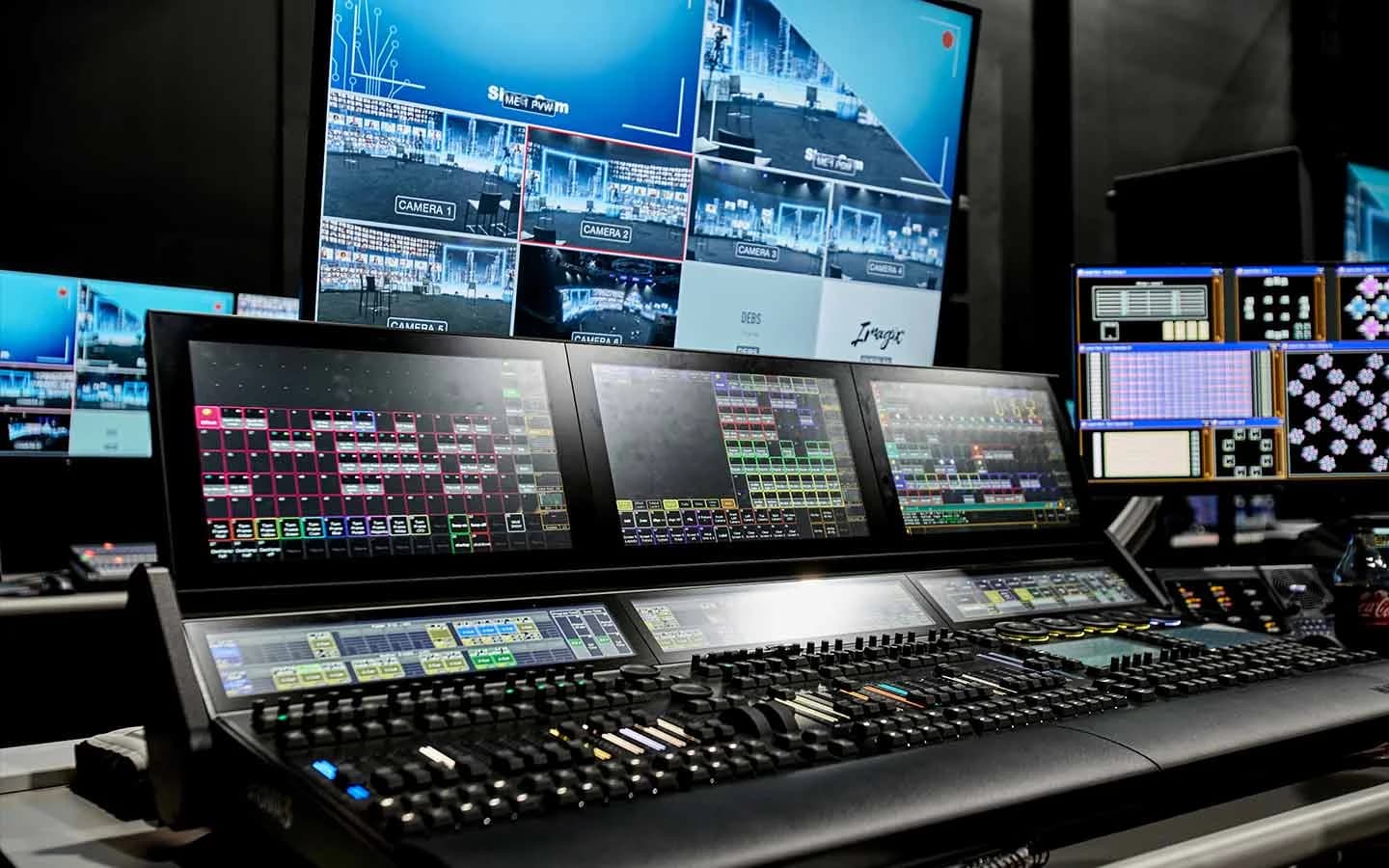
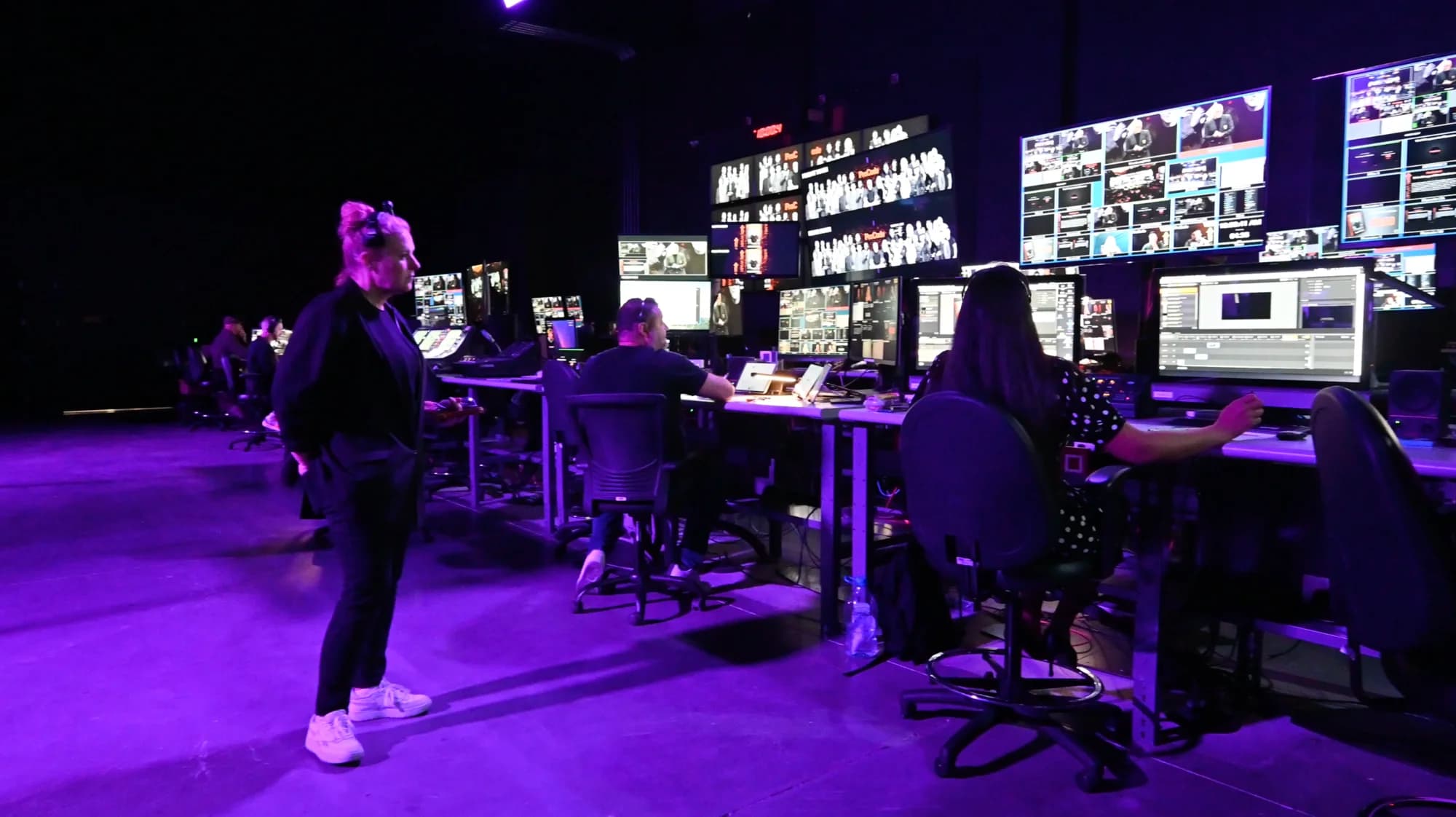
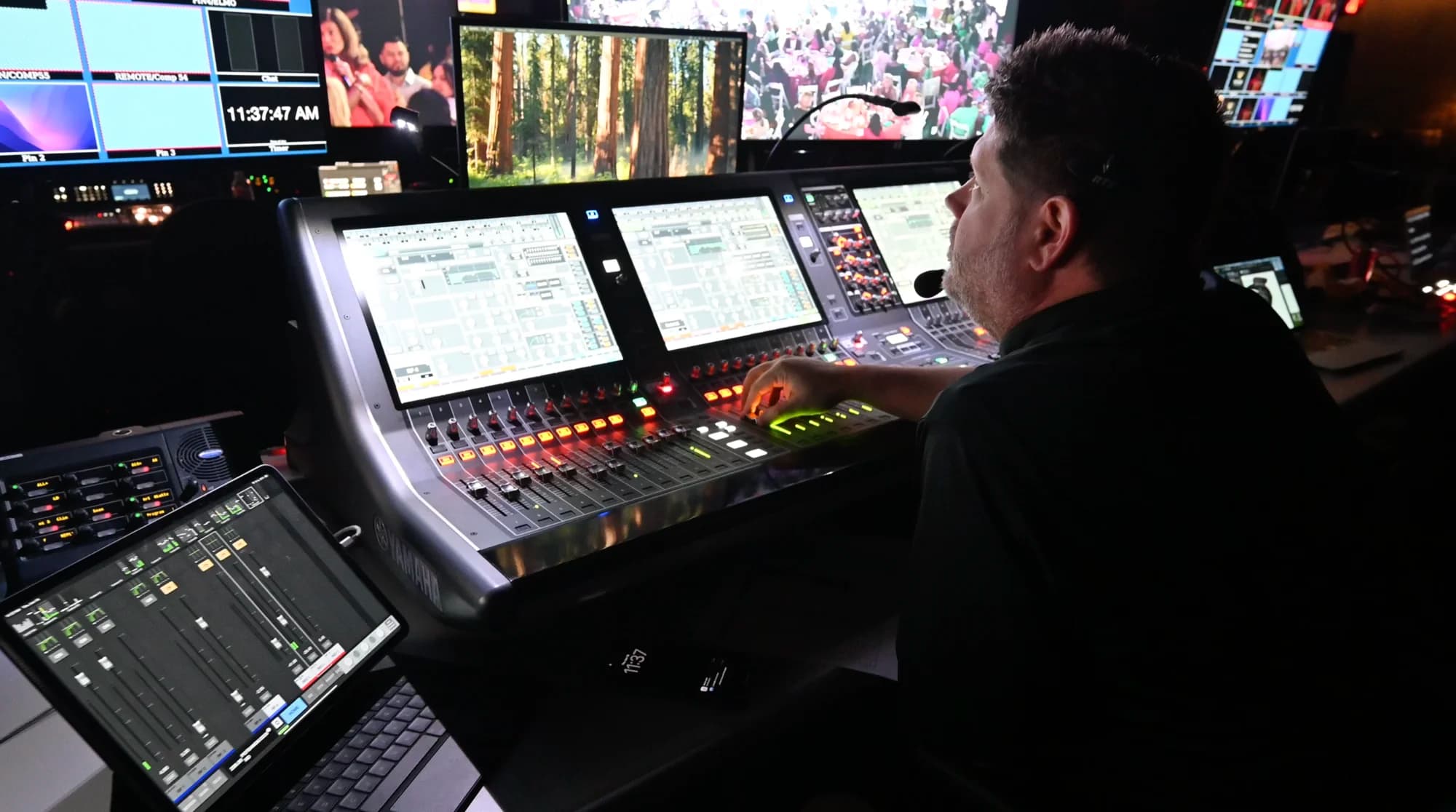
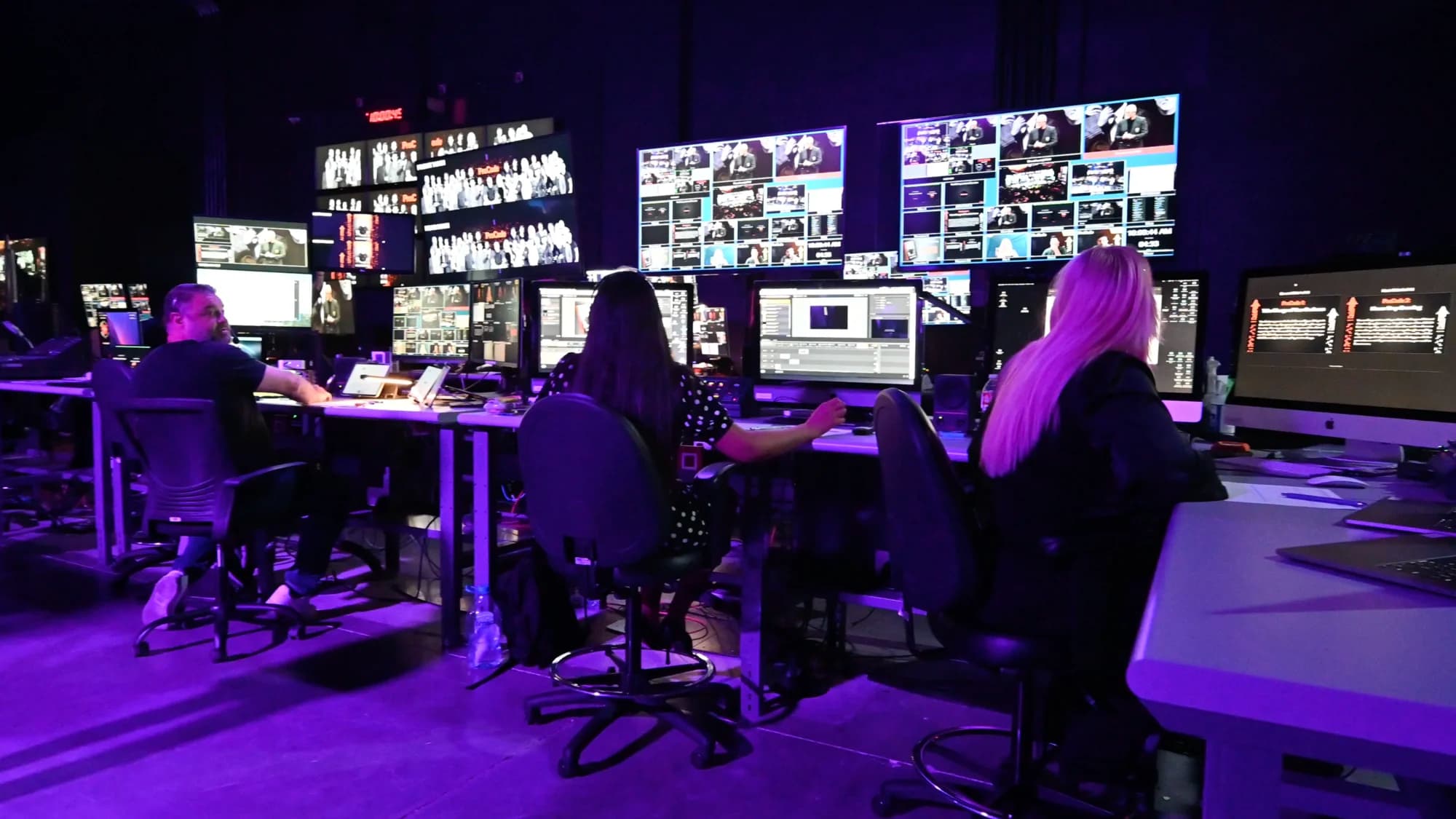
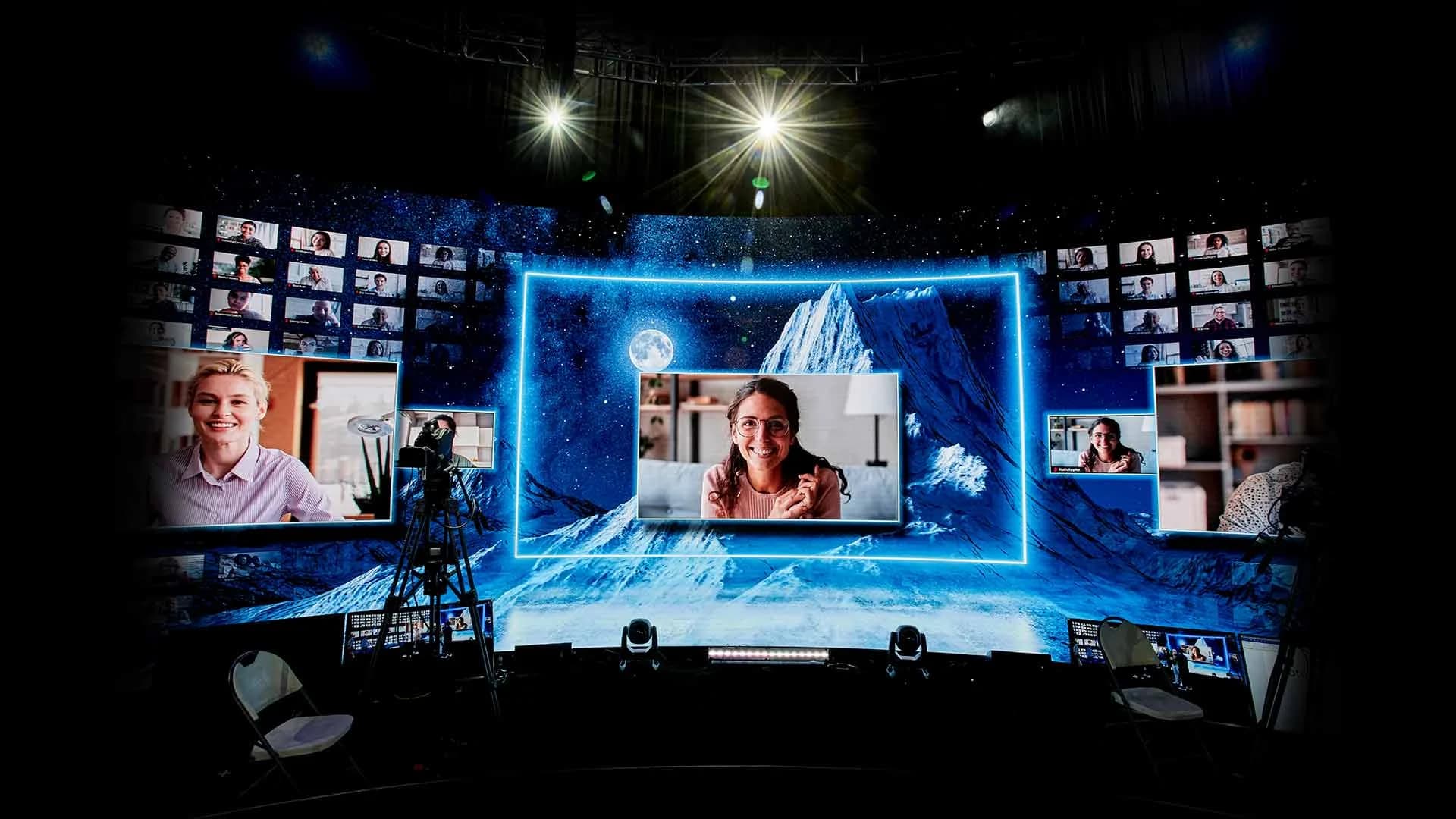
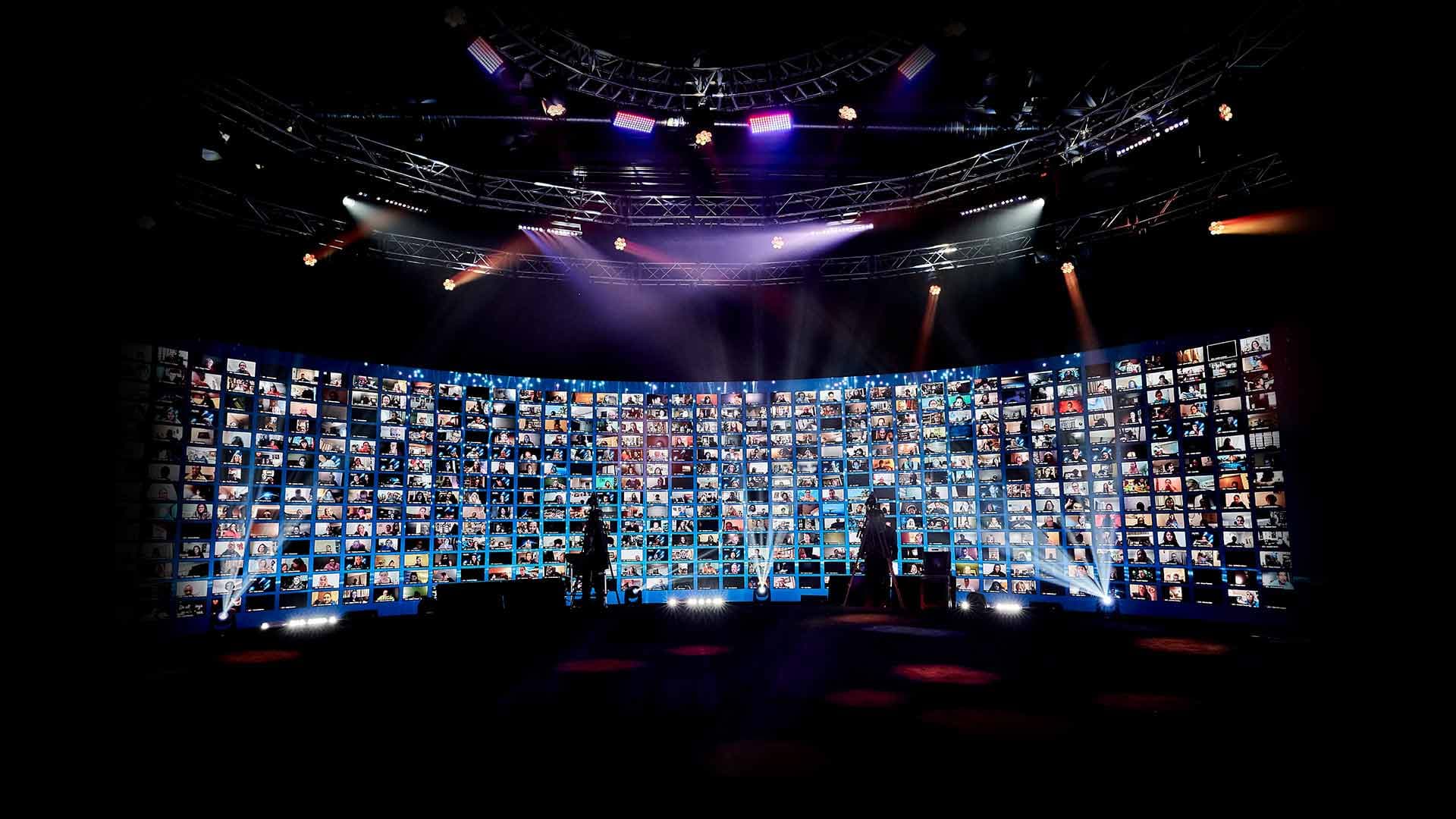
- The studio provides the event. Your feed lands in a broadcast-grade control room and goes out inside full interactive-broadcast infrastructure: a virtual dashboard branded entirely as yours, live face-to-face audience interaction, breakout rooms, audience segmentation, and real-time translation in 100+ languages.
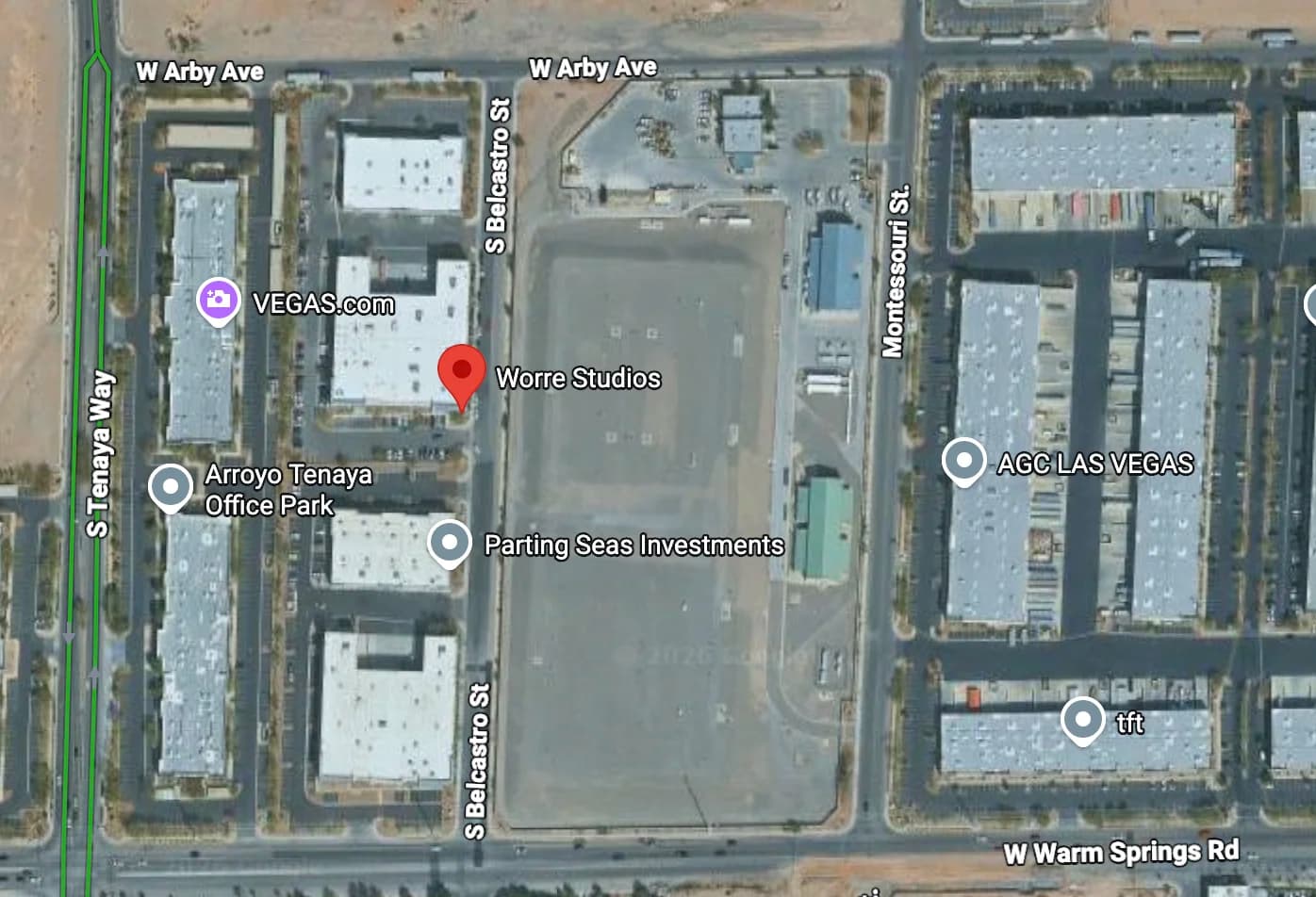
Attendees never see the seam. From their side, they've logged into your branded event — they can be pulled up live with the host, split into rooms, and participate in their own language. From your side, you pointed a camera and the rest happened in Las Vegas.
The difference between a remote virtual stage and simply streaming your feed is the difference between an interactive broadcast and a webinar — we've written that comparison in full. The short version: a stream delivers your picture to viewers; a remote virtual stage puts your picture inside an environment where the audience participates.
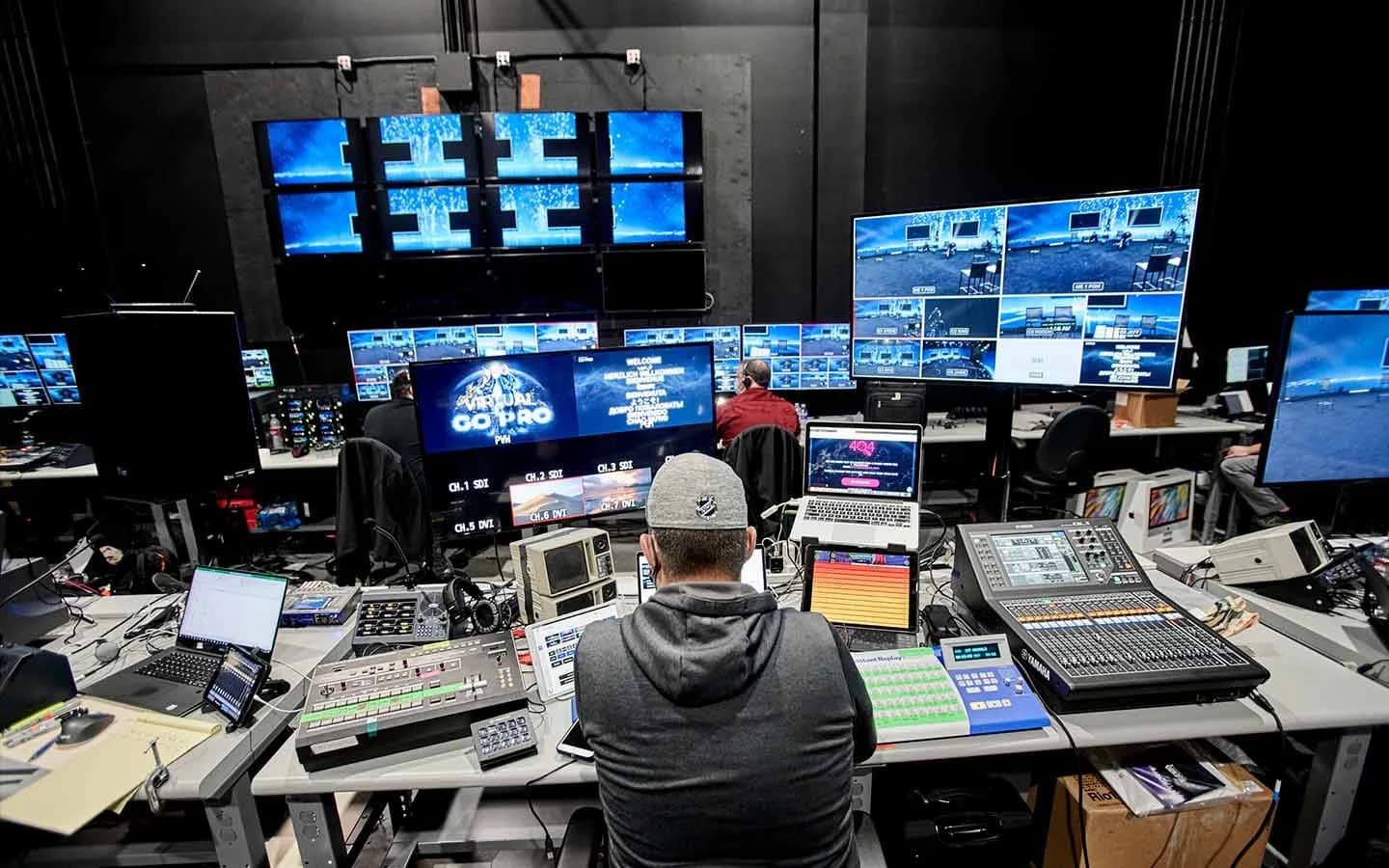
A stream delivers your picture to viewers. A remote virtual stage puts your picture inside an environment where the audience participates.
Proven at Scale, Not in Theory
The clearest demonstration: Matthew McConaughey needed to broadcast a multi-hour interactive session, and the private studio he was recording from had no remote capability at all. His feed came to Worre Studios, and a fully interactive broadcast went out at roughly 90,000-attendee scale — breakout rooms included. The audience got an event. The host never left his studio. The full story is in Behind the Broadcast.
The same model runs as standing capacity, not a one-off: the studio comfortably operates up to ten simultaneous virtual stages. A recurring enterprise client sends its feed in for large events combining thousands in-person on their end with tens of thousands of remote attendees pulled in through the studio.
When a Remote Virtual Stage Fits
The service earns its place whenever the host can't come to the room but the event still needs to be an event:
- A speaker, author, or executive broadcasting from their own space to a global audience.
- A company with an in-person gathering at their own venue that wants true interactive reach beyond the walls.
- A recurring broadcast series where flying a team to Las Vegas every session isn't practical.
- Any team with strong content and a camera — and nothing else a broadcast requires.
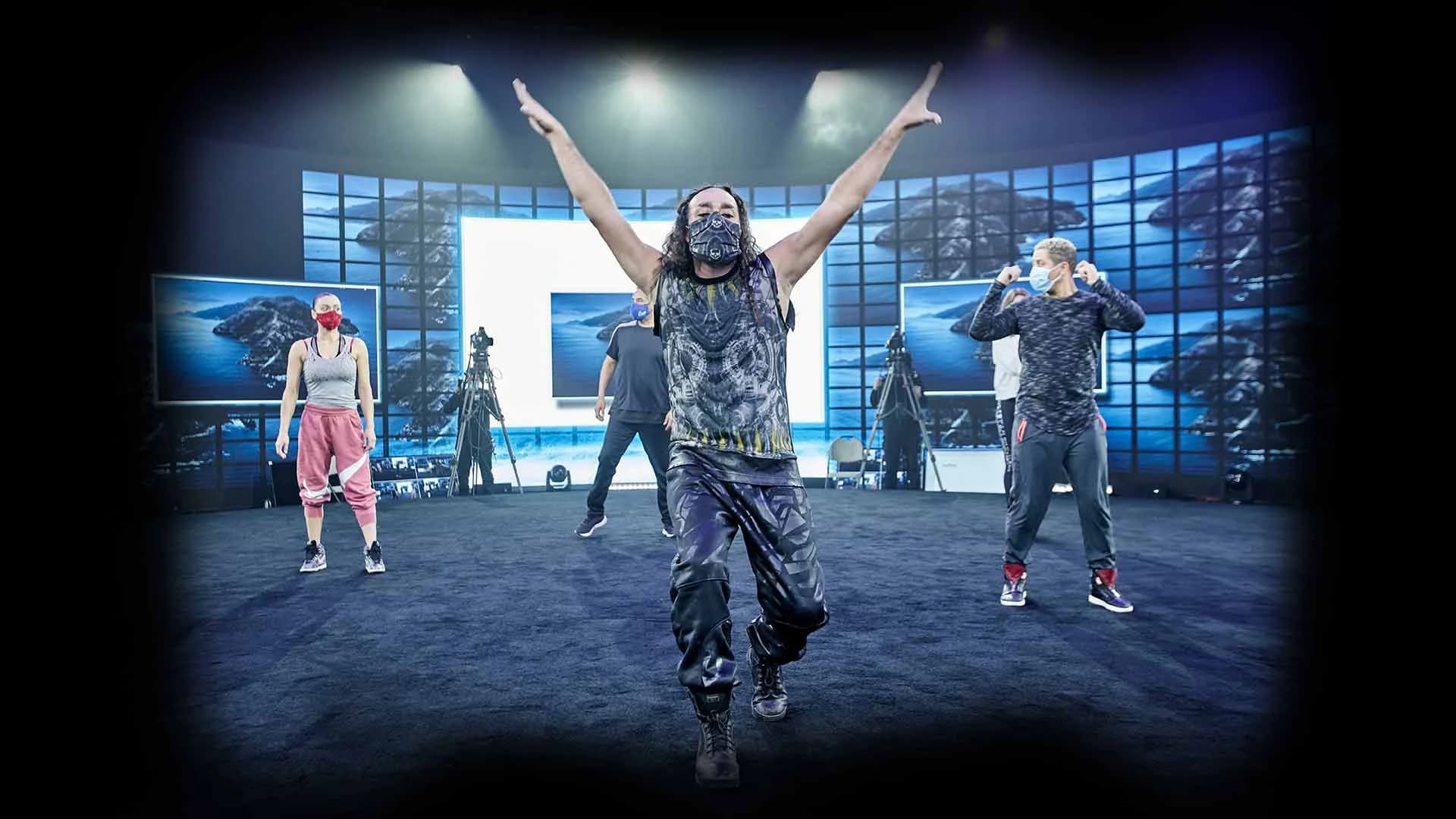
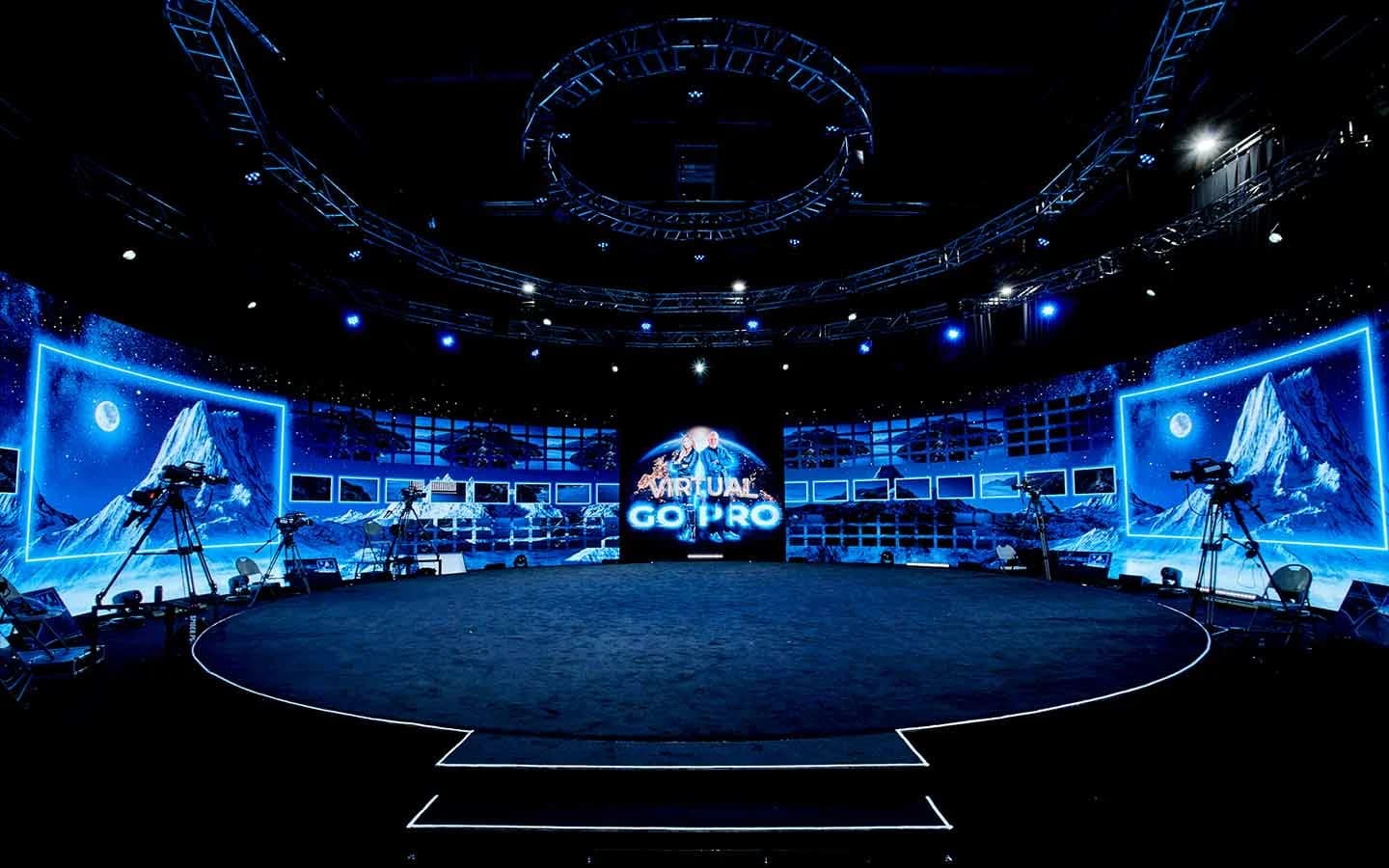
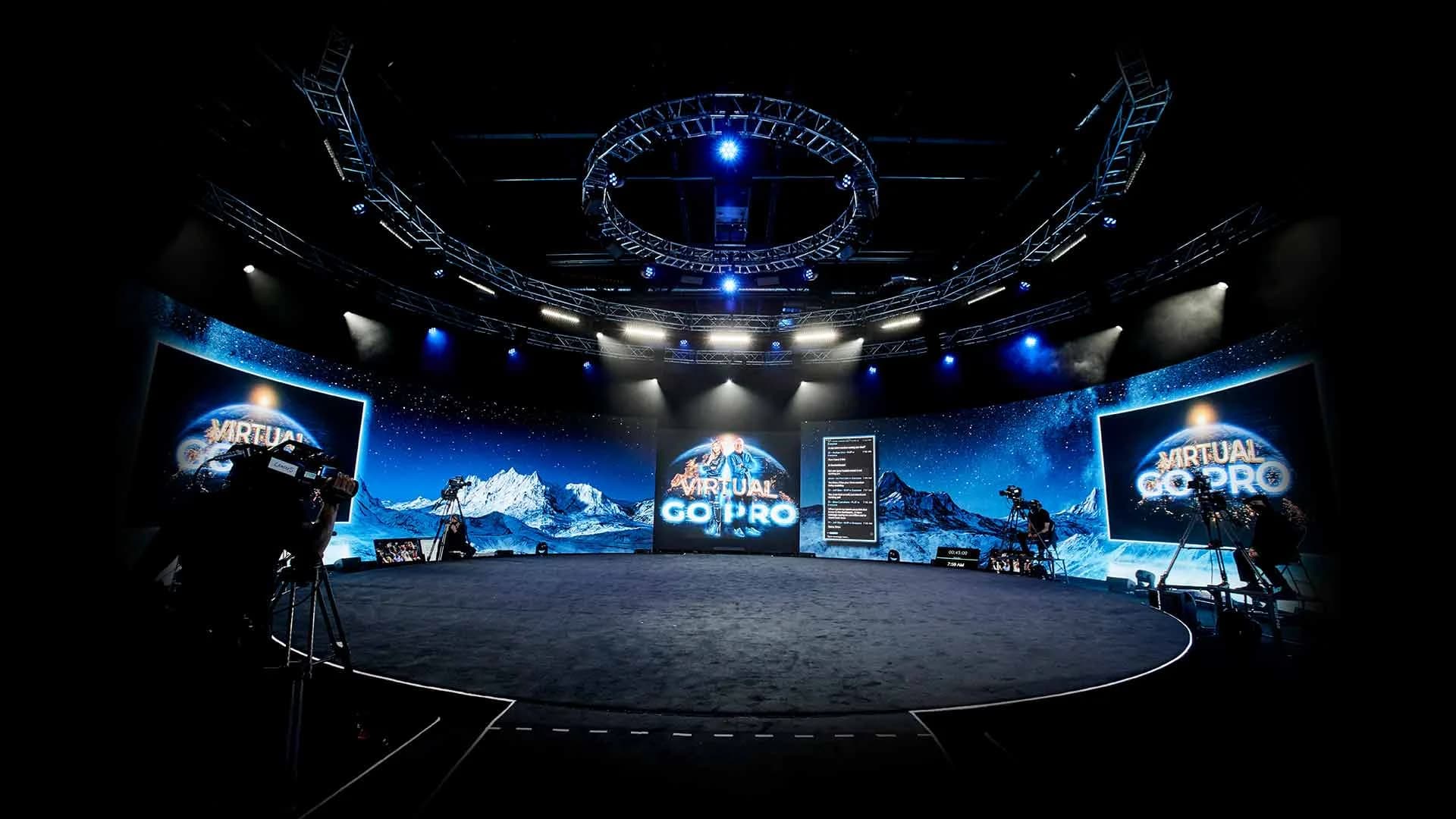
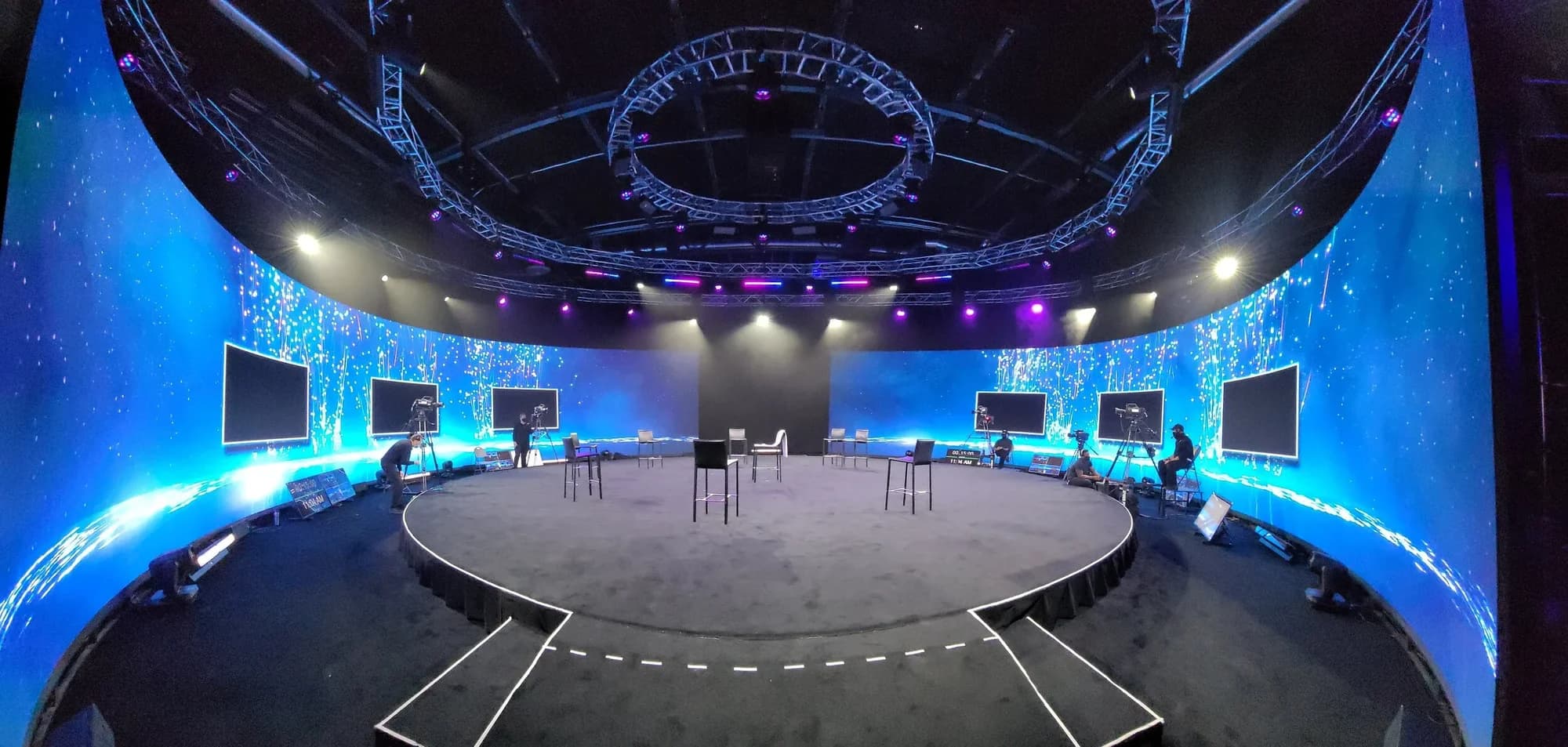
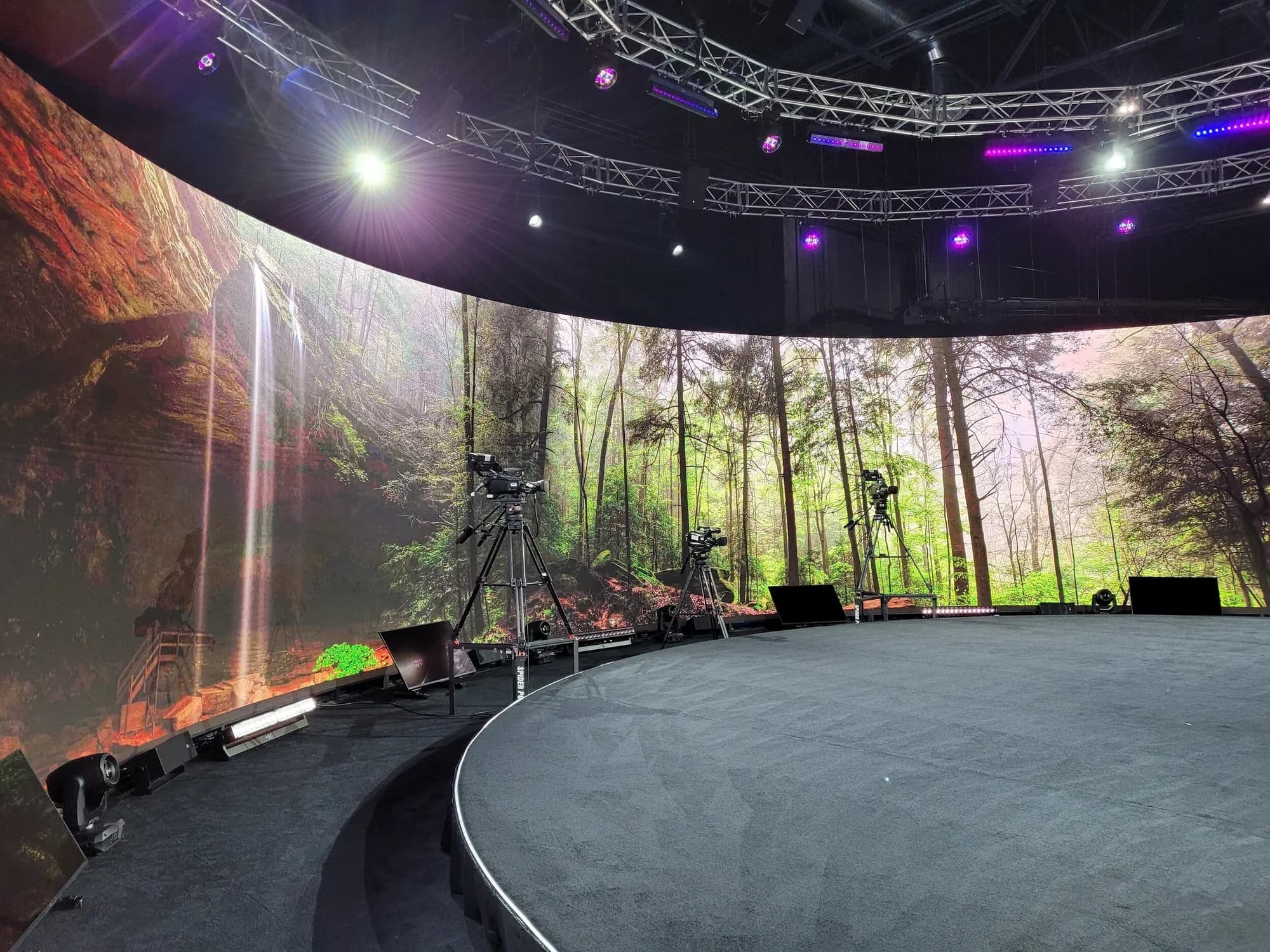
If your event is coming to Las Vegas, the full studio — the 360° LED environment, the stage, the room — is the deeper experience. The remote virtual stage exists for everyone the room can't reach. Either way, the booking path is the same: start a studio inquiry and select Remote Virtual Stage as your service type. The model also suits leadership town halls broadcast from anywhere.
Frequently Asked Questions
A camera feed of your host or stage, from any location. The studio handles everything else — broadcast infrastructure, the branded attendee dashboard, interaction, breakout rooms, translation, and distribution.
The infrastructure is built to reach hundreds of thousands of hybrid attendees — total capability tops 500,000+. The McConaughey broadcast ran at roughly 90,000-attendee scale, fully interactive.
No. A webinar delivers a one-way feed inside a generic platform. A remote virtual stage delivers your feed inside a branded interactive environment — attendees join live face-to-face, break into rooms, and participate in their own language.
Yes — that's the point of the model. Remote attendees can be brought up live with the host regardless of where the host is broadcasting from, with latency engineered for real conversation.
Pricing varies by project and is quoted à la carte around your event's scope. Start a studio inquiry, select Remote Virtual Stage as the service type, and we'll build a quote around it.

Written by the Worre Studios Content Team and reviewed by Ben Groen, Ticketing & Interactive Platform Lead. The remote virtual stage is one of the studio's three core service lines; the capabilities and engagements described reflect delivered productions, including the broadcast referenced above. Last reviewed July 5, 2026.
More from The Front Row
Your Camera. Our Stage. Everyone's Event.
Tell us where you're broadcasting from and who needs to be there. We'll handle everything between your camera and your audience.