


How Unreal Engine 5 Powers Live Events
On this page
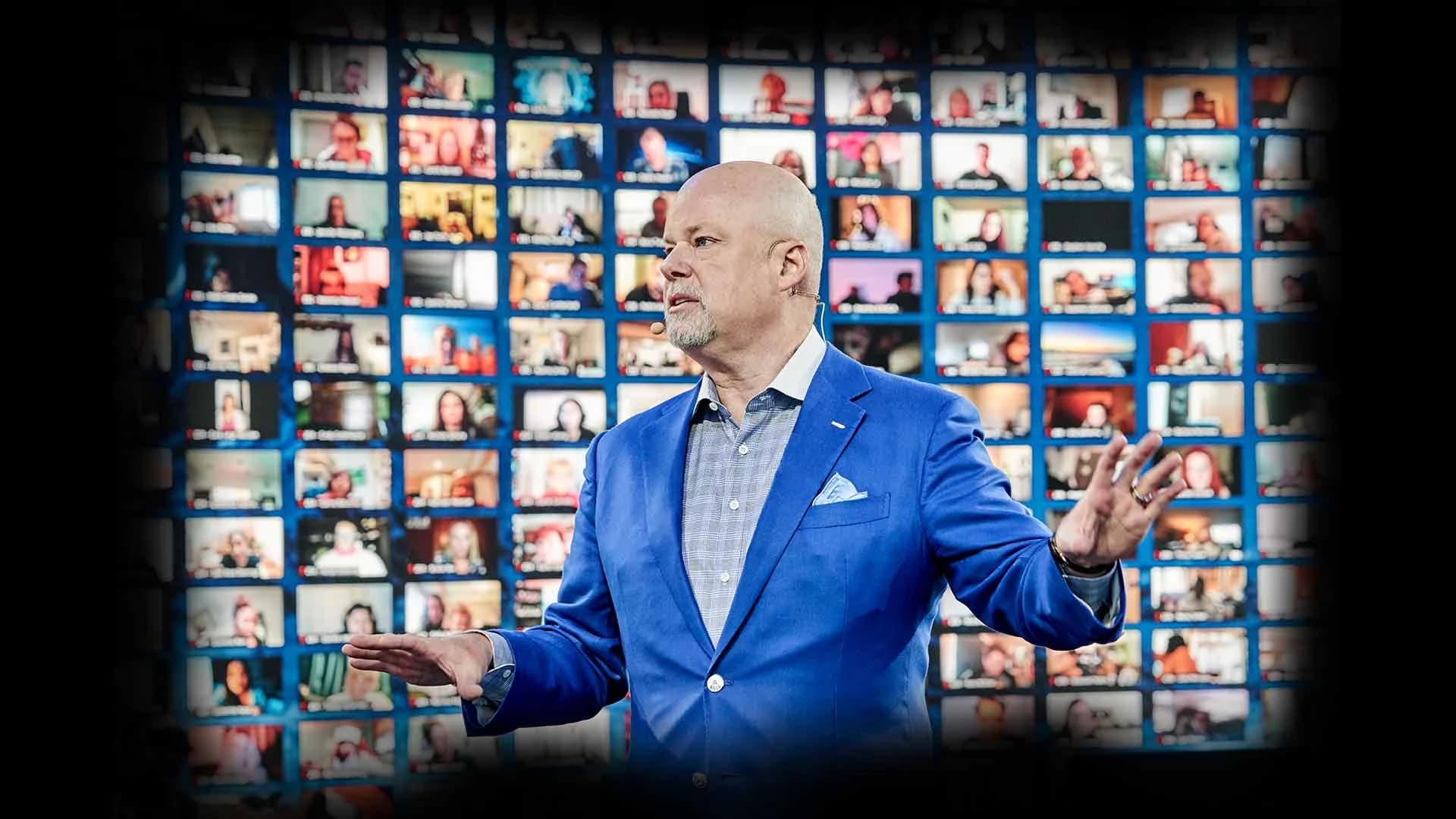
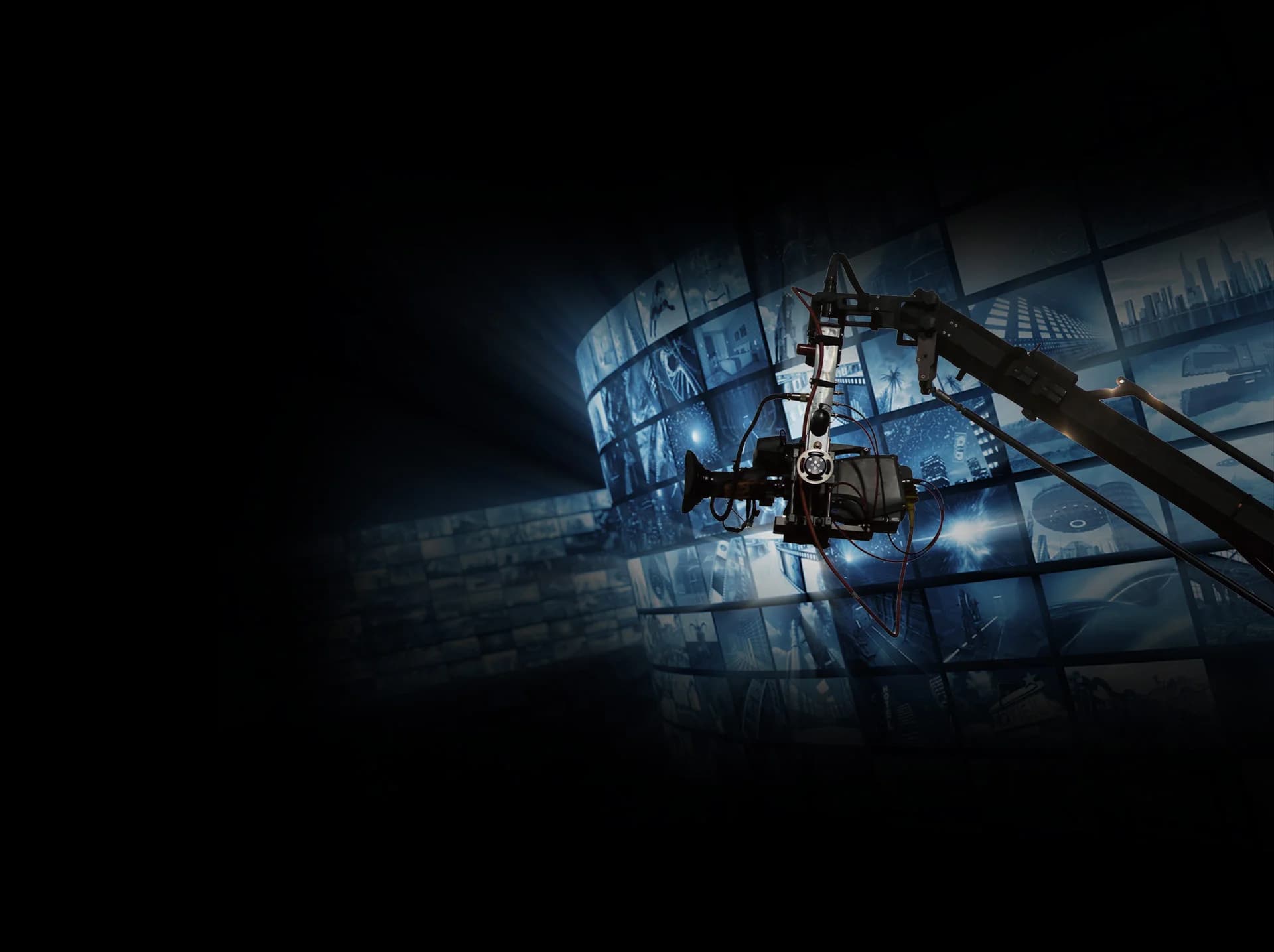
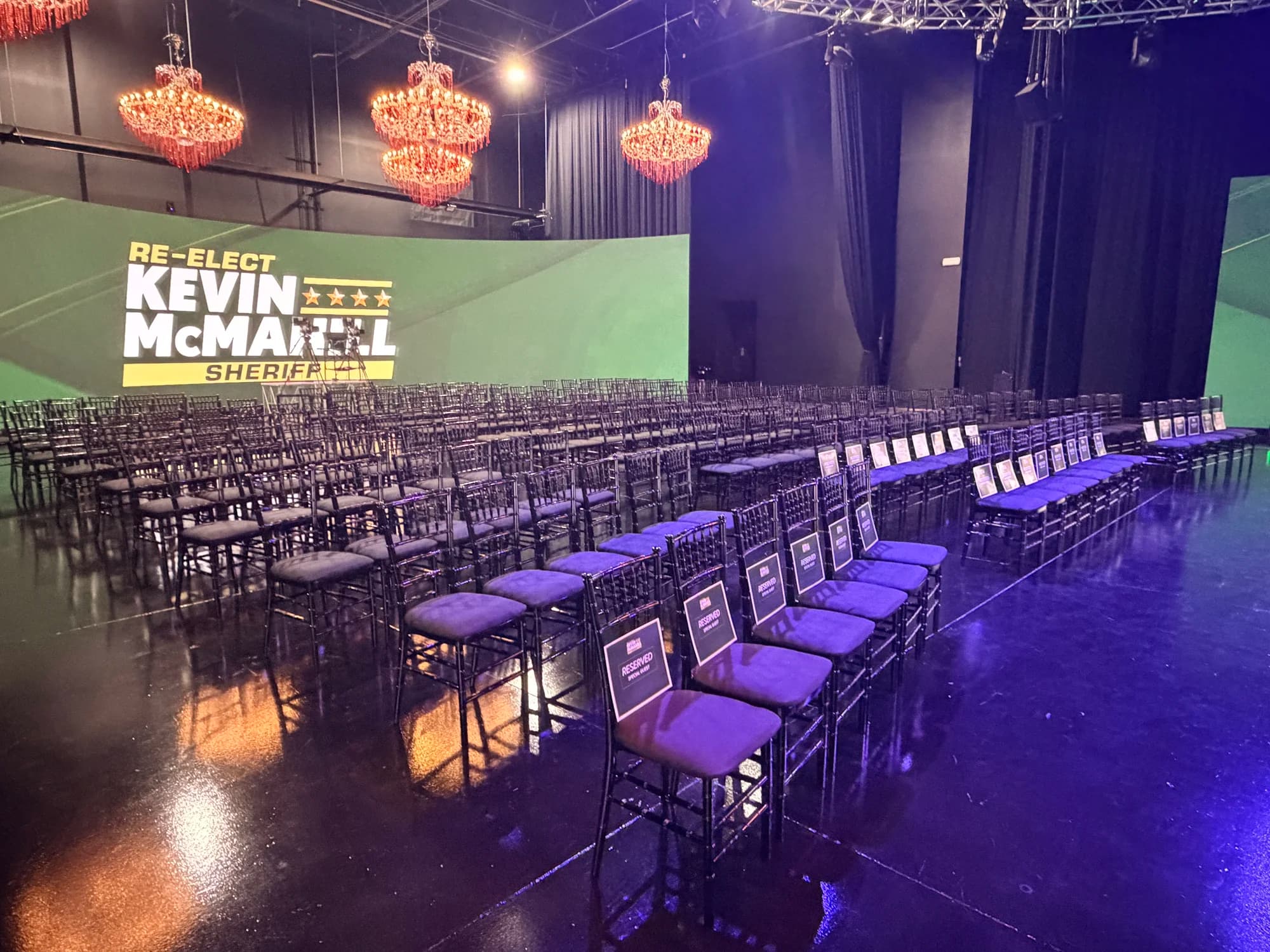
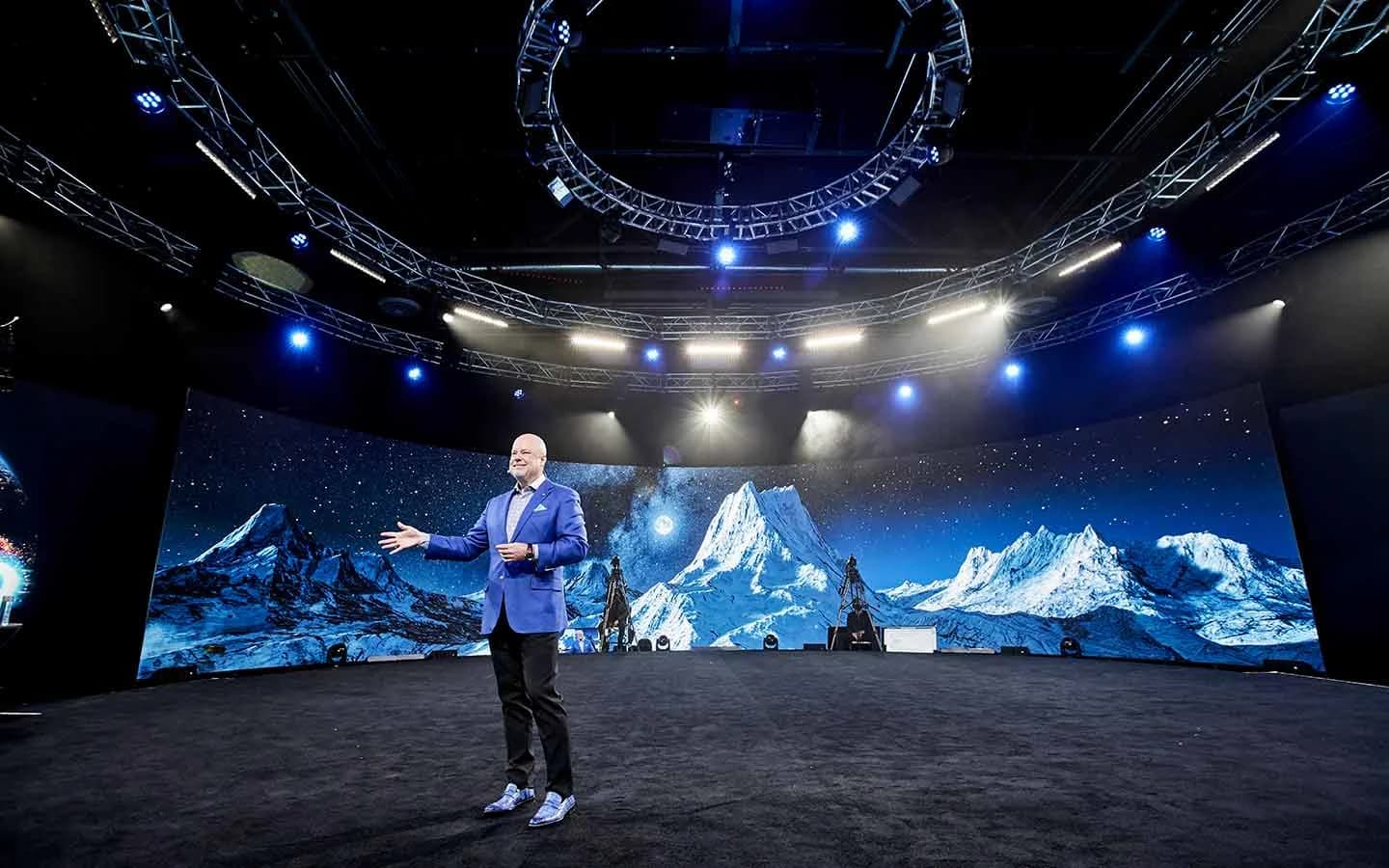
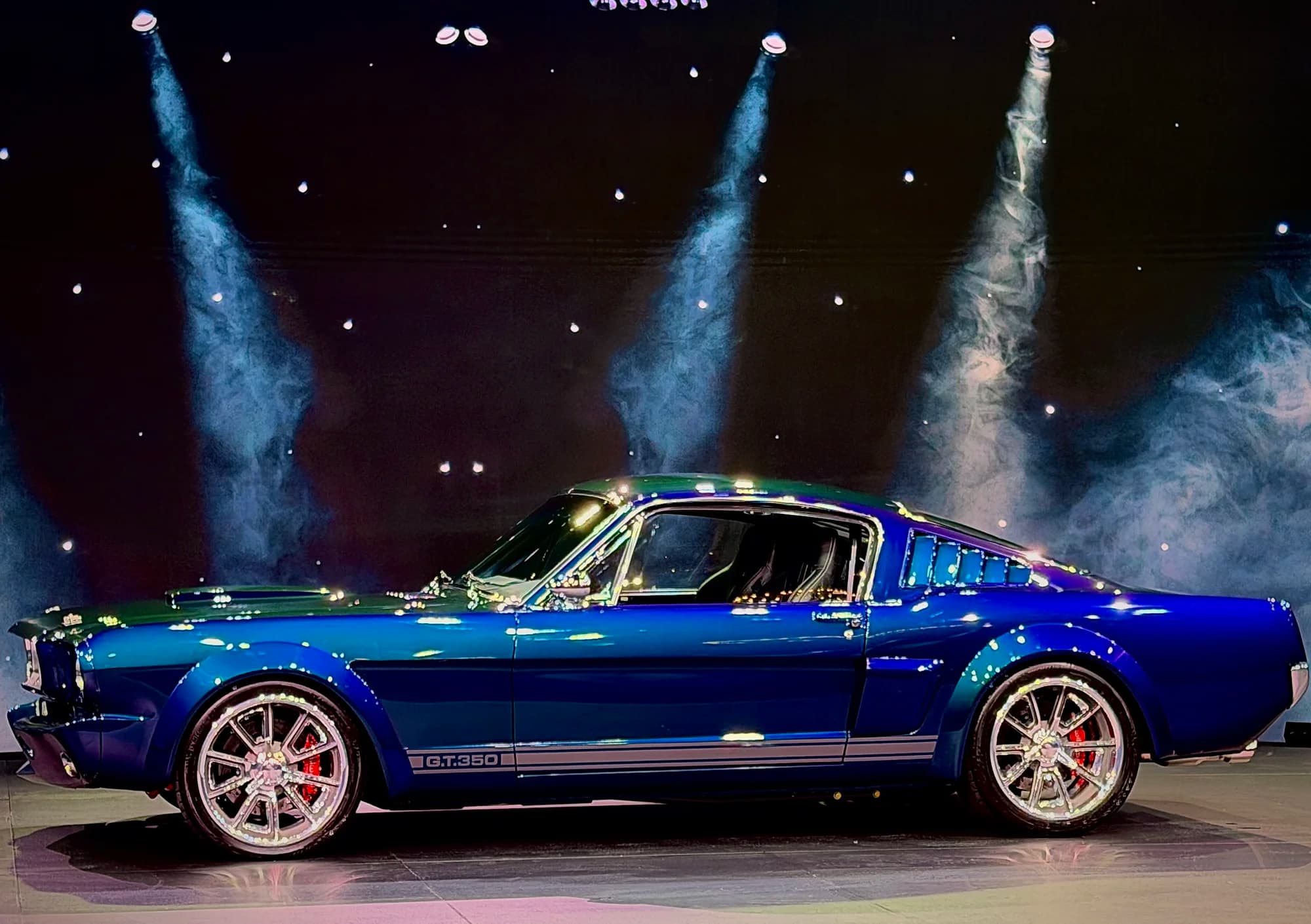
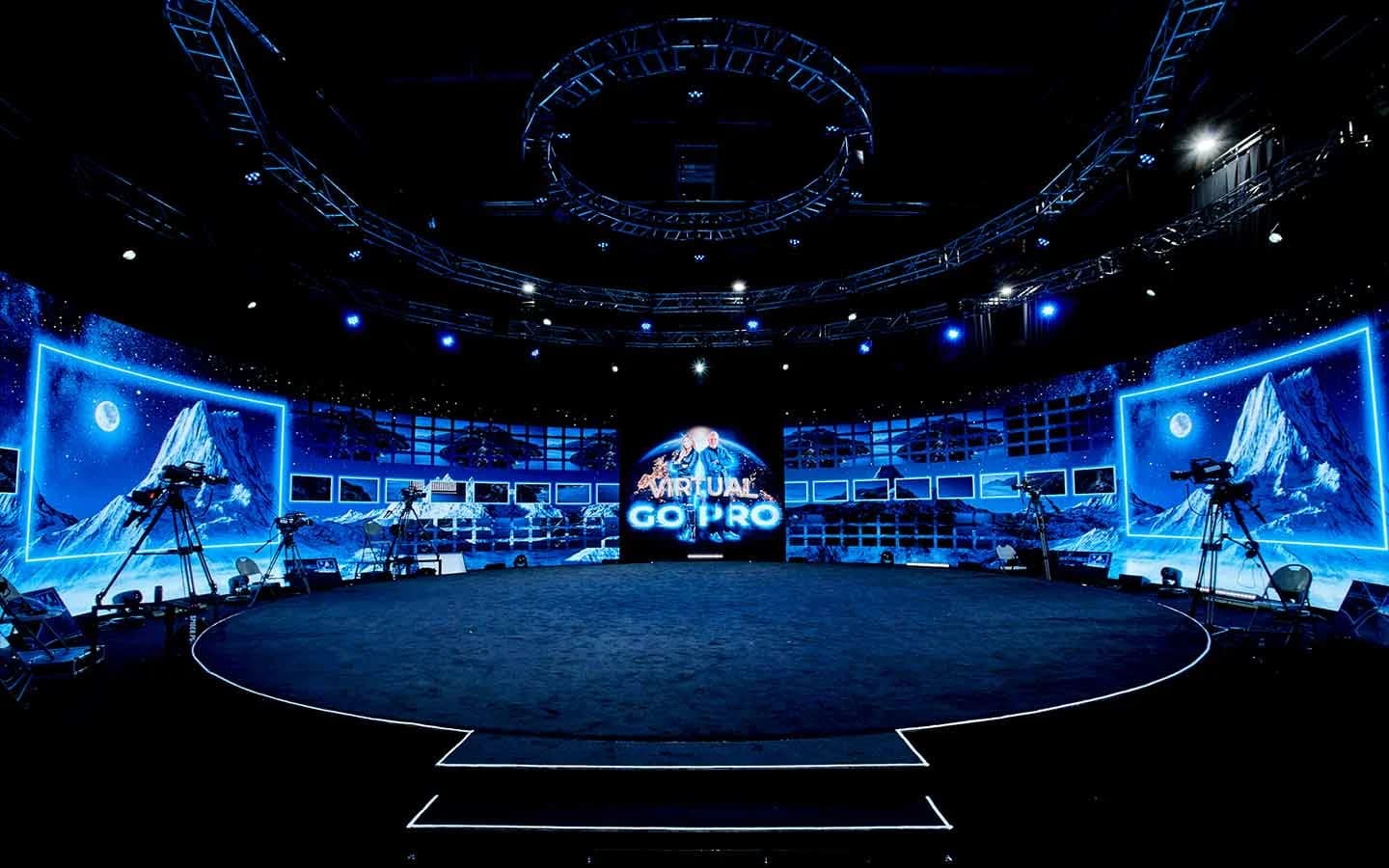
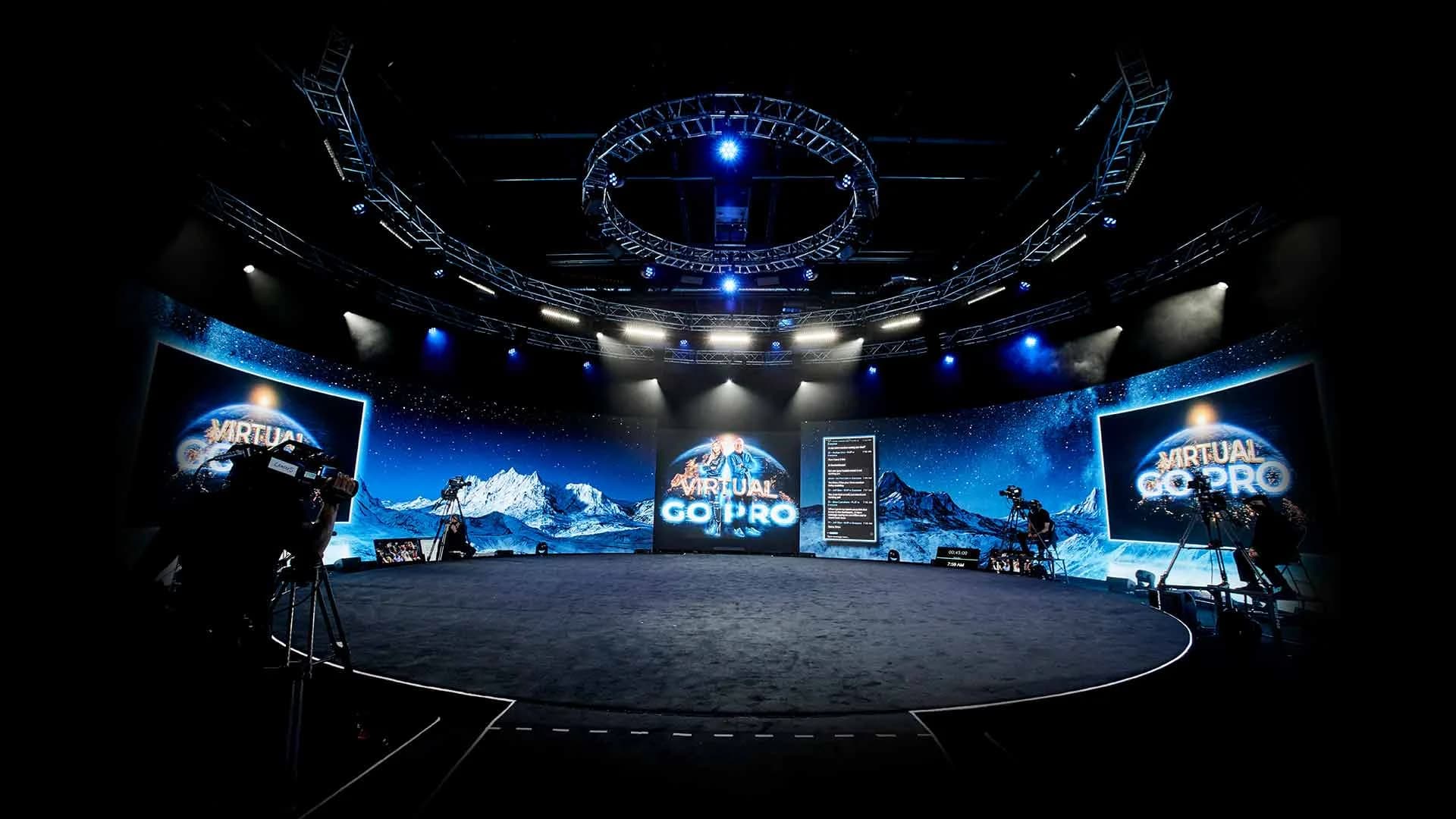
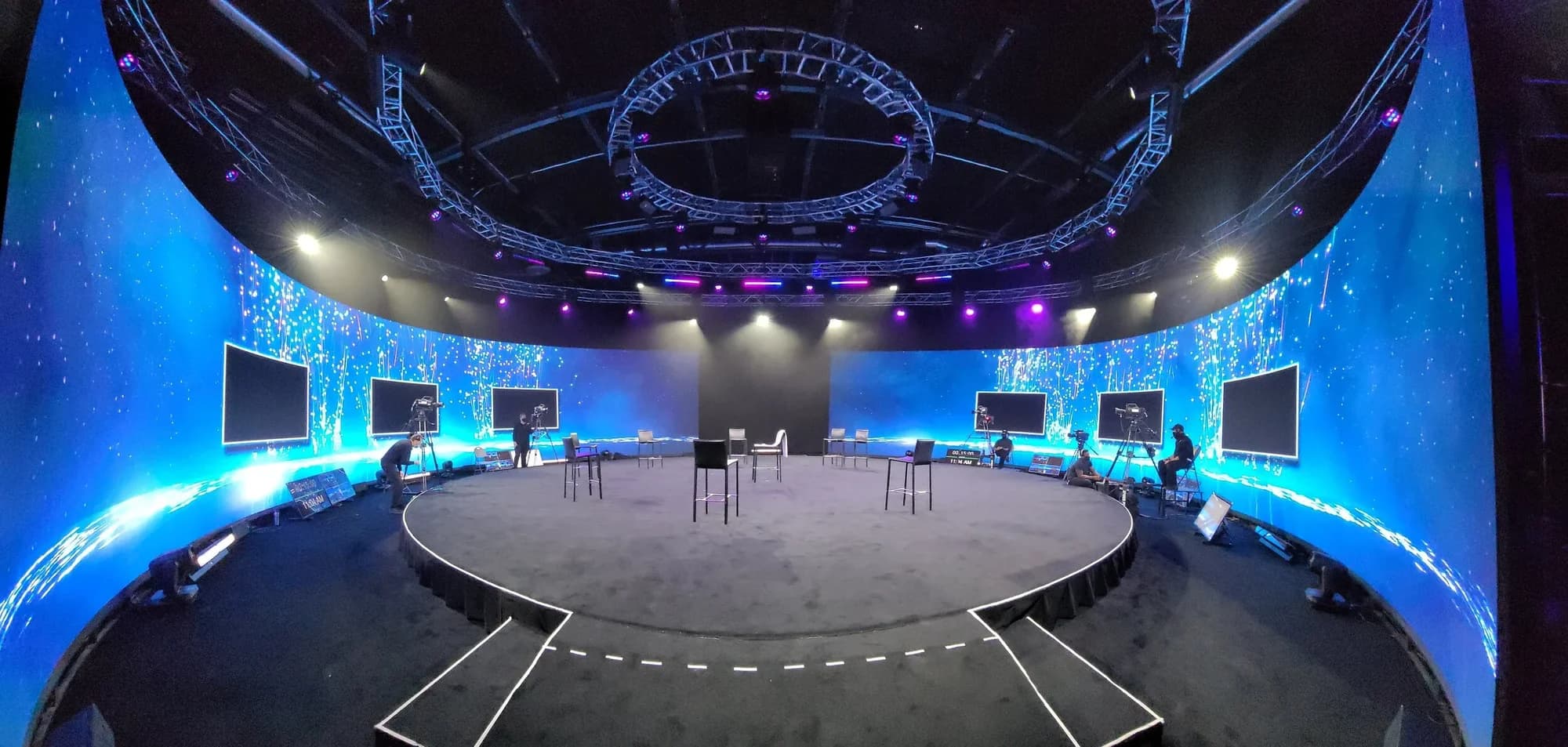
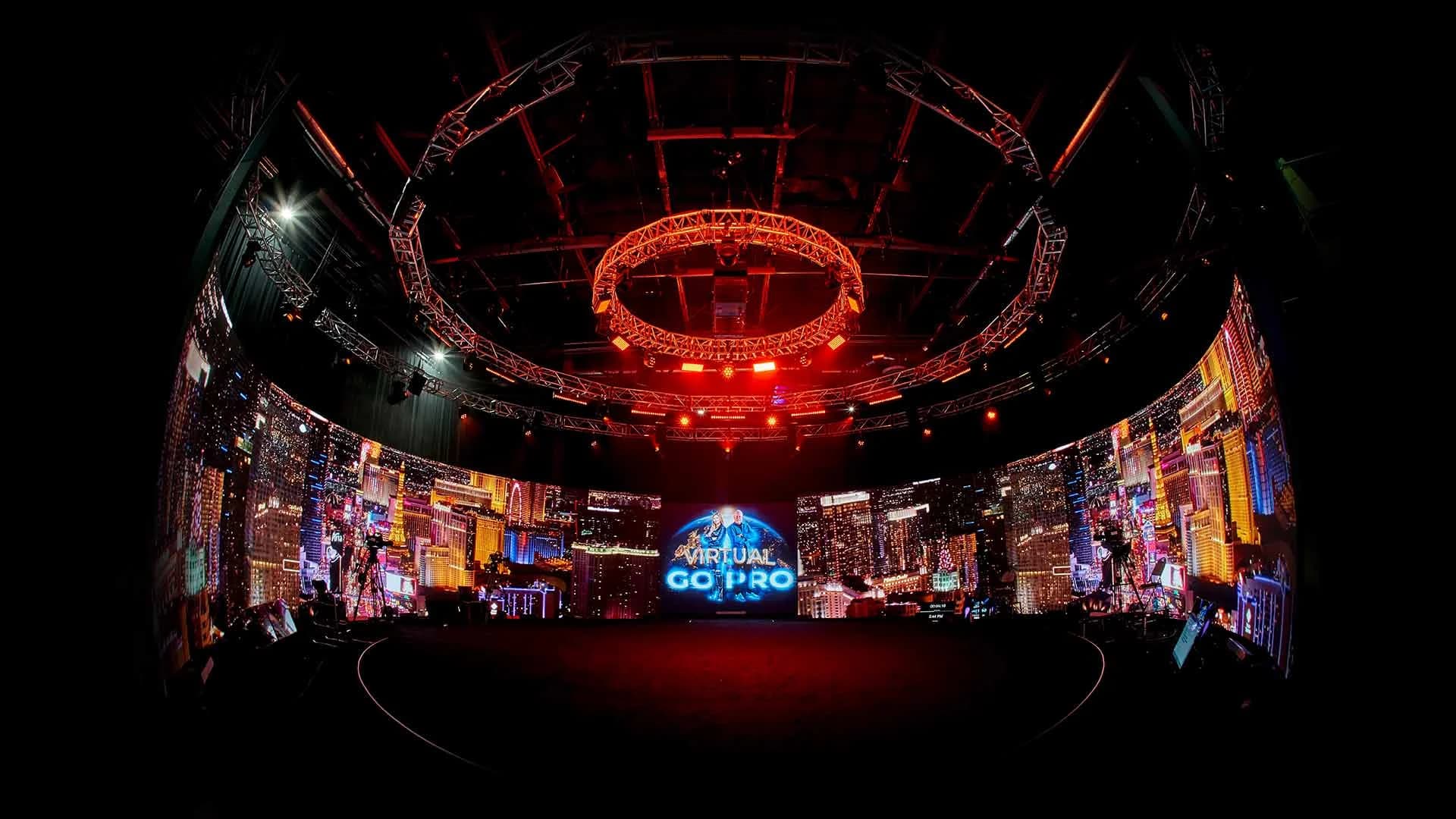
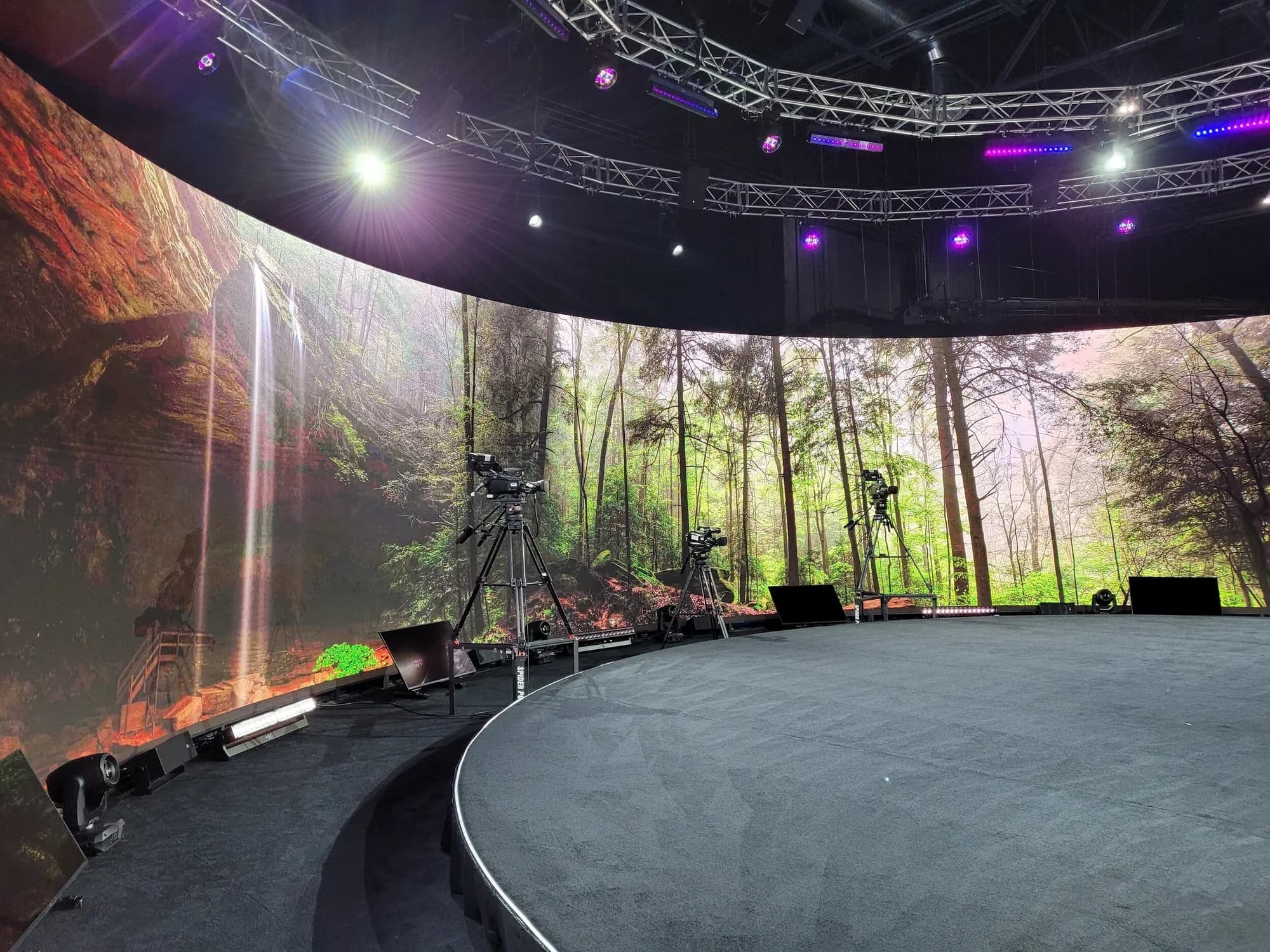
Unreal Engine 5 — the real-time engine behind modern game worlds and virtual production — drives the environments on Worre Studios' 360° LED volume. Worlds are built and blended in advance on a custom-built system, then run live during the show: a producer triggers scene changes, reveals, and full environment swaps from an iPad, no code, no render wait. The audience experiences a place that transforms around them; the production experiences a button press.
Key Takeaways
- UE5 renders environments in real time, which is what makes a mid-show world change possible at all — nothing is a pre-baked video loop pretending to react.
- Environments are pre-built and blended before event day; live operation is deliberately simple — scenes, reveals, and full swaps trigger from an iPad.
- The engine runs on a custom-built system engineered for the studio's 360° geometry, driving the wraparound surface as one continuous world.
- Custom worlds are rendered by the studio's graphic-artist team and carry months of lead time — the single most important planning fact in this article.
- For the audience, the payoff is theatrical: the room is a boardroom, and moments later the boardroom is gone.
Somewhere in most technical buyers' walkthrough of the studio, the question sharpens: the walls are impressive — what's actually driving them? The answer starts with a name game developers have known for years: Unreal Engine 5.
Why a Game Engine Runs a Broadcast Stage
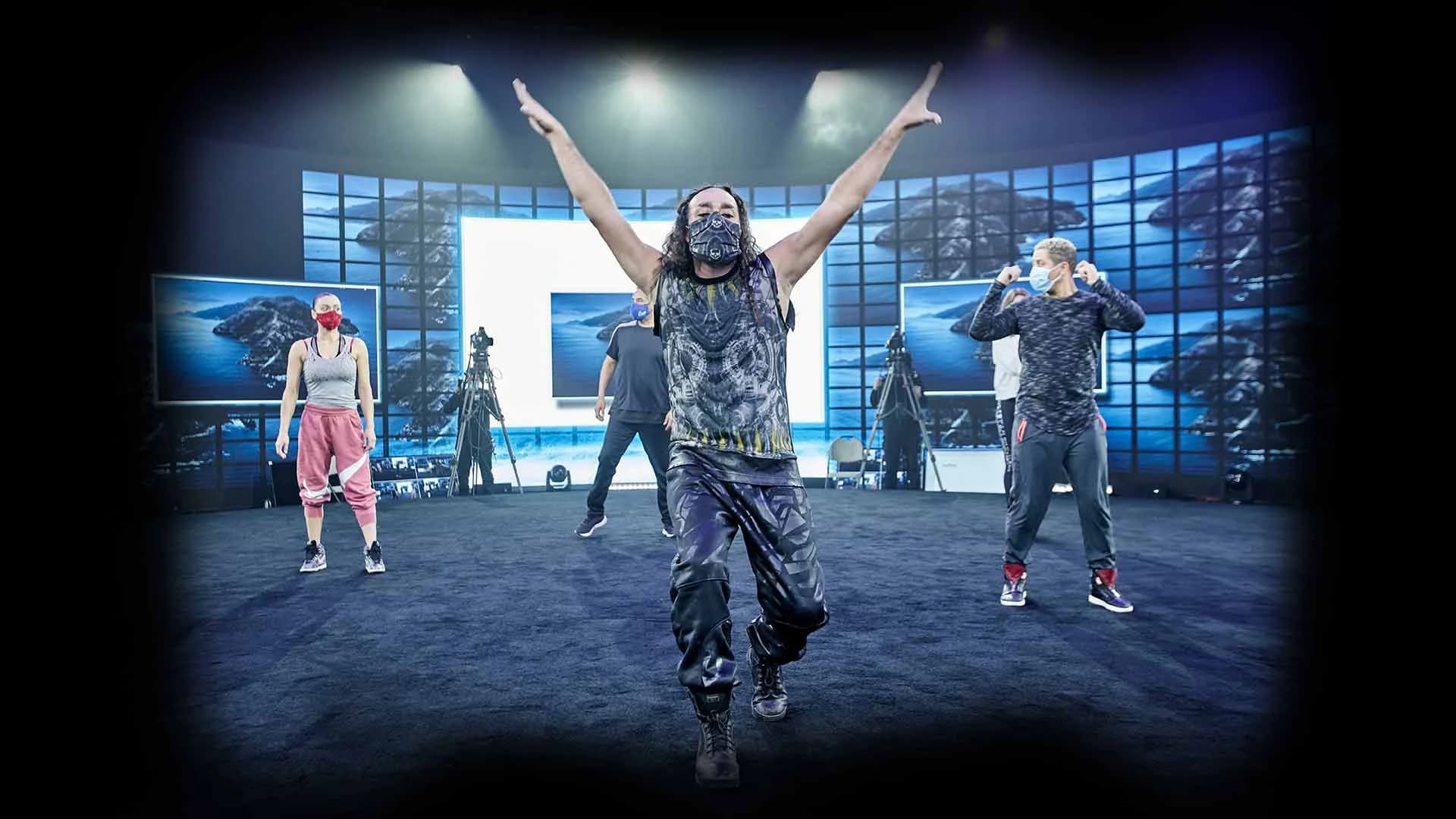
UE5's defining trait is real-time rendering — worlds computed frame by frame as they're experienced, not played back from a file. Game players know it as responsiveness. Film production knows it from virtual production stages, where actors perform inside rendered environments instead of in front of green screens. Live events are the format the capability was quietly waiting for.
A video backdrop is a recording of a decision someone made weeks ago. A real-time environment is a decision you can still make during the show. When the world on the walls is being rendered live, it can change live — which turns the environment from scenery into a cast member.
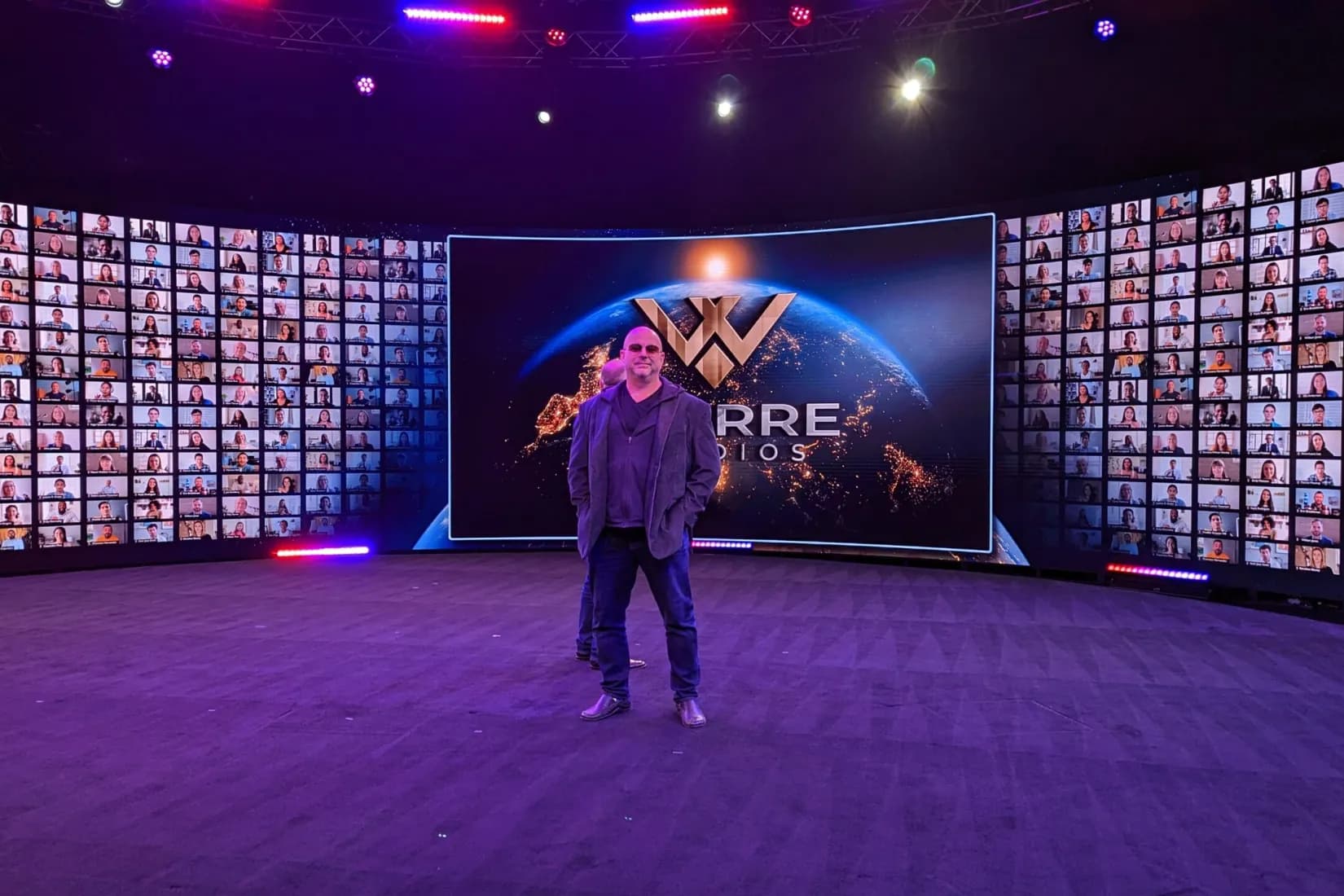
A video backdrop is a recording of a decision someone made weeks ago. A real-time environment is a decision you can still make during the show.
Pre-built, Blended, and Triggered from an iPad
The studio's implementation splits the work the way live production demands: complexity up front, simplicity on show day.
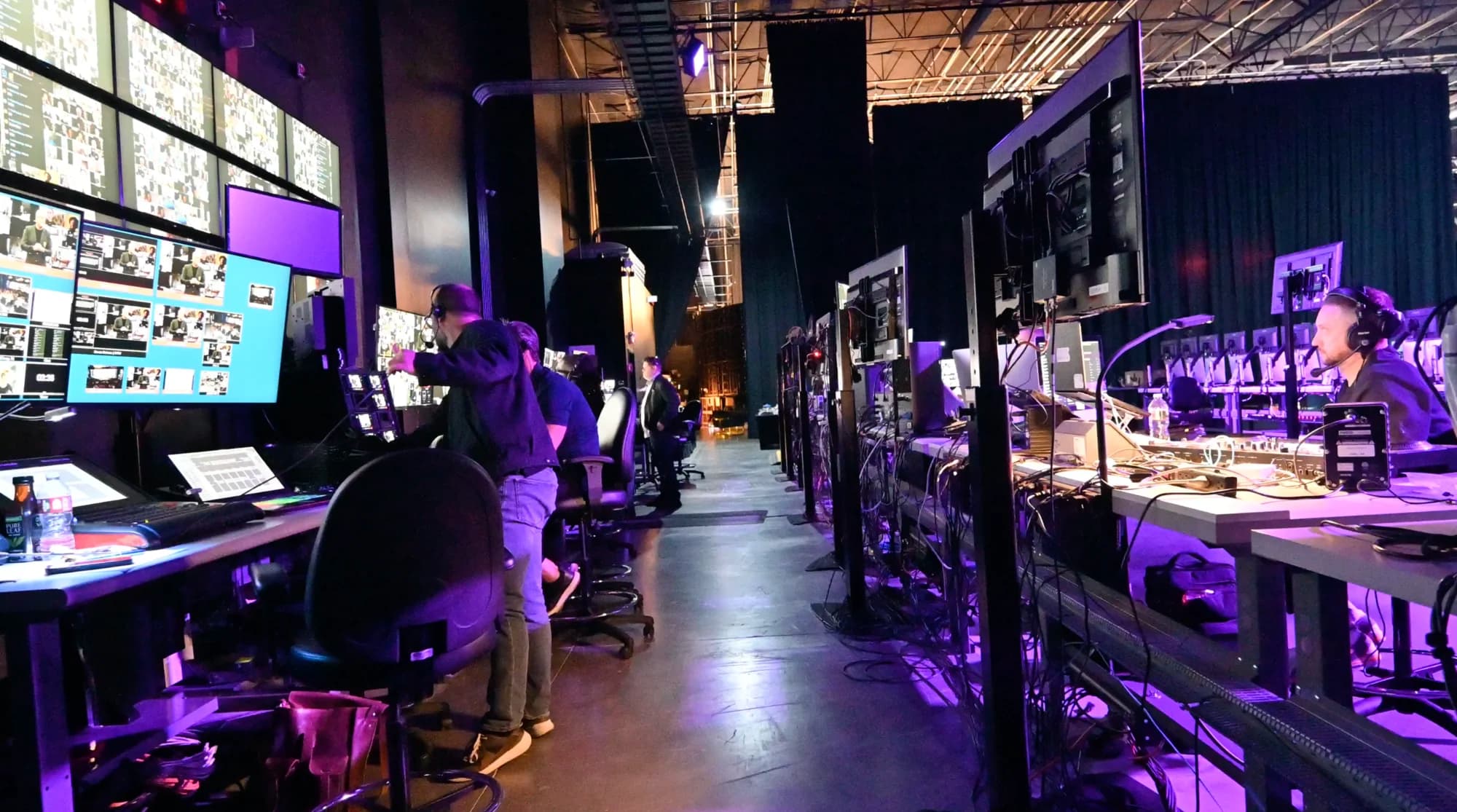
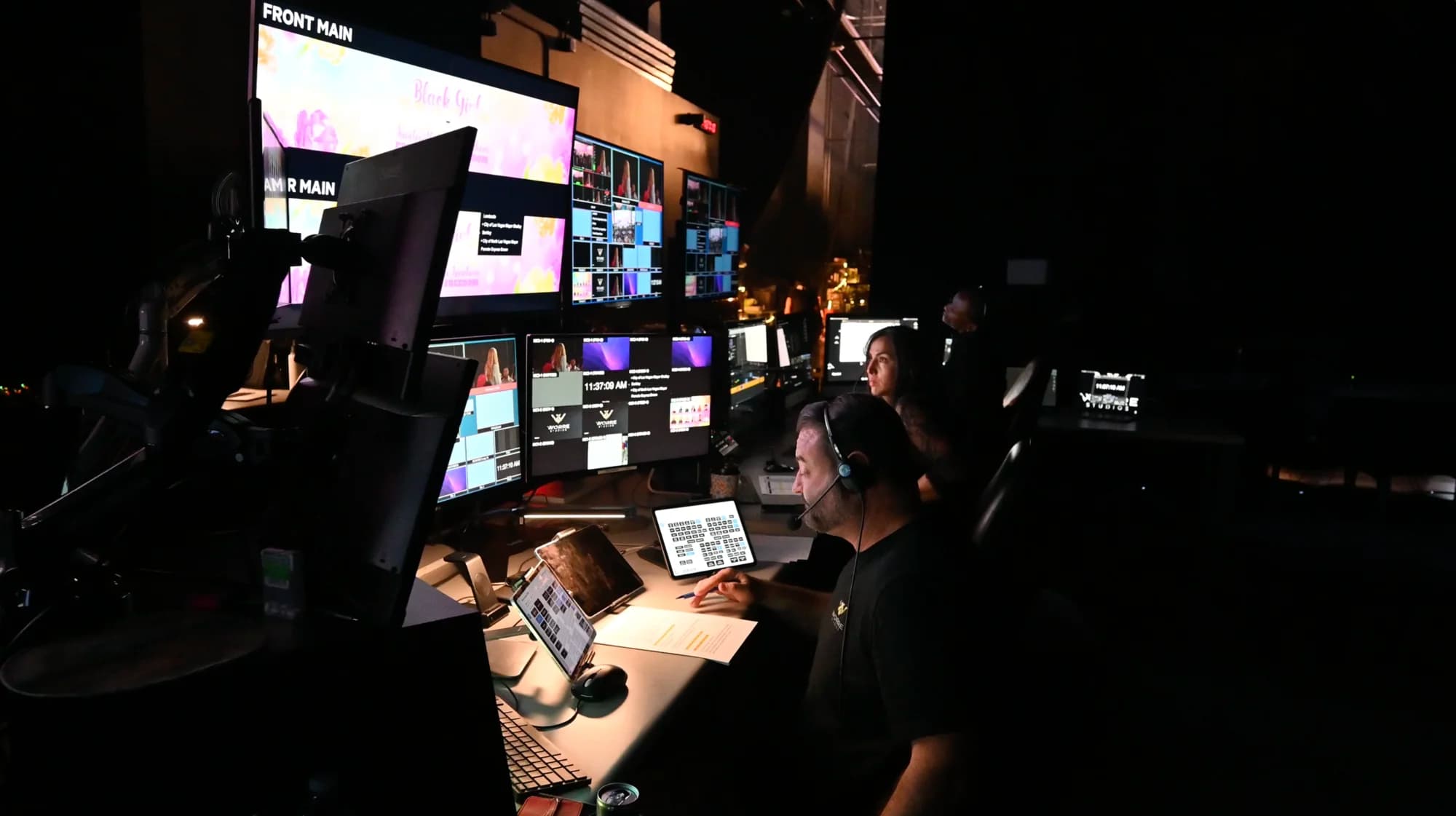
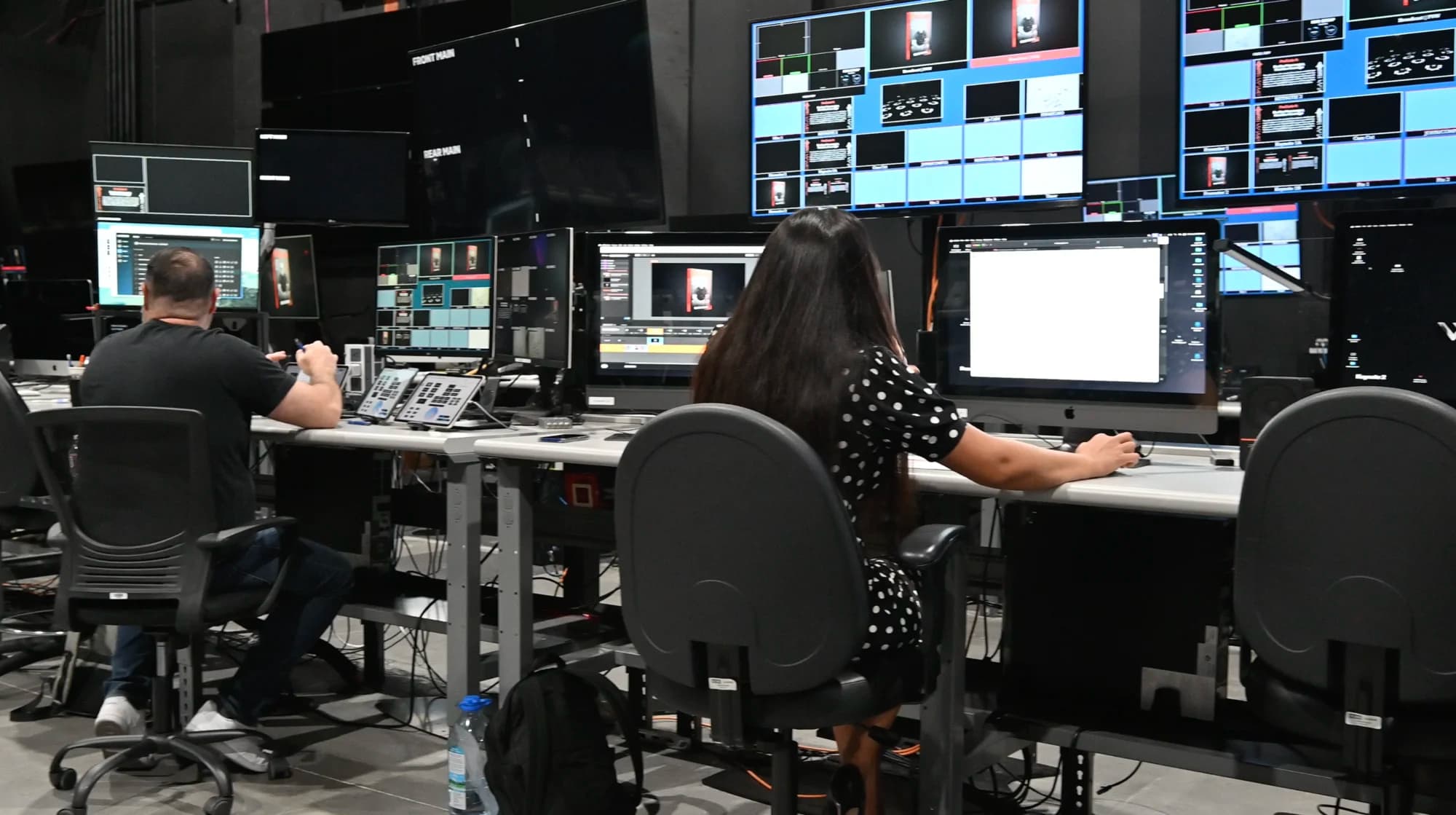
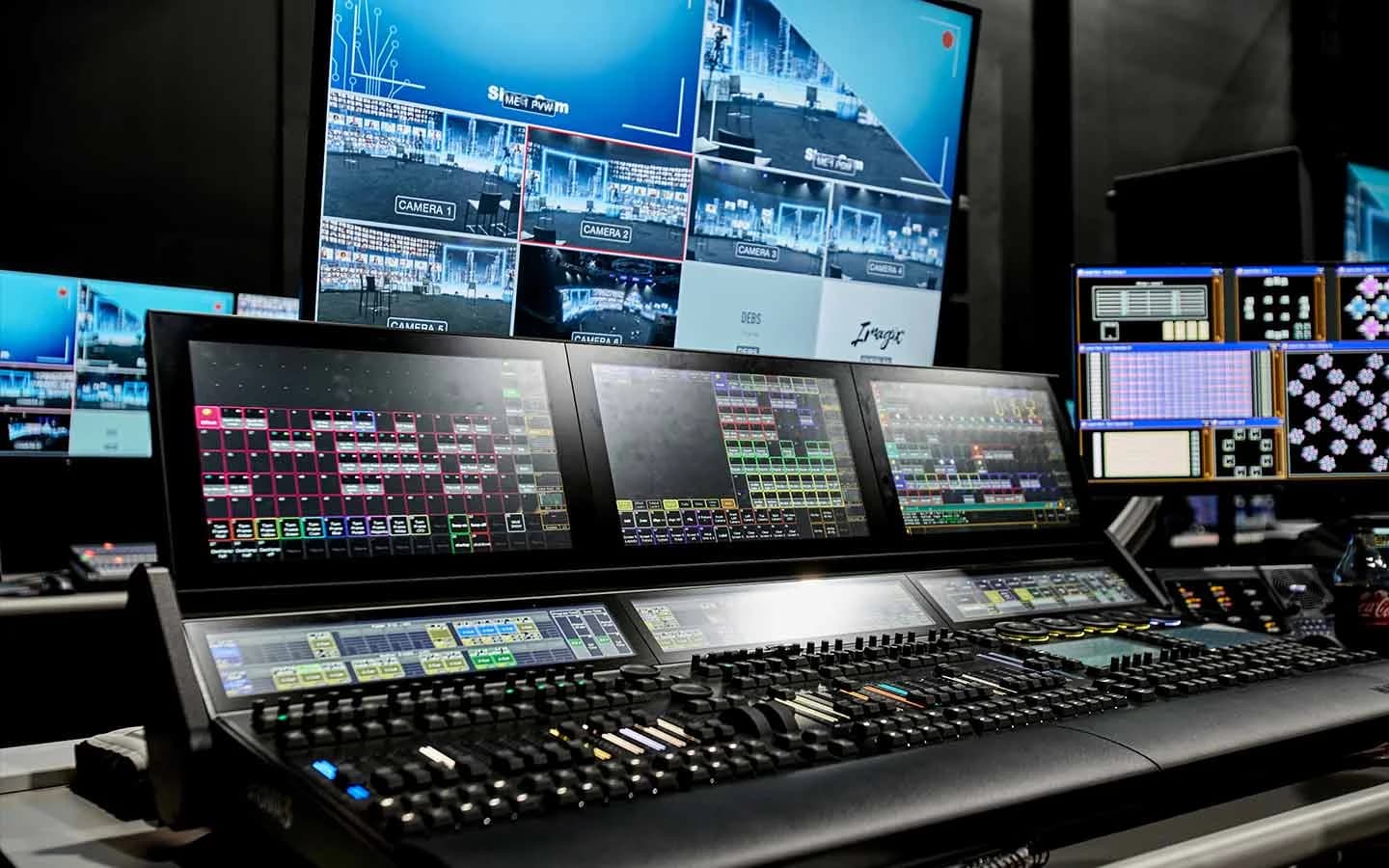
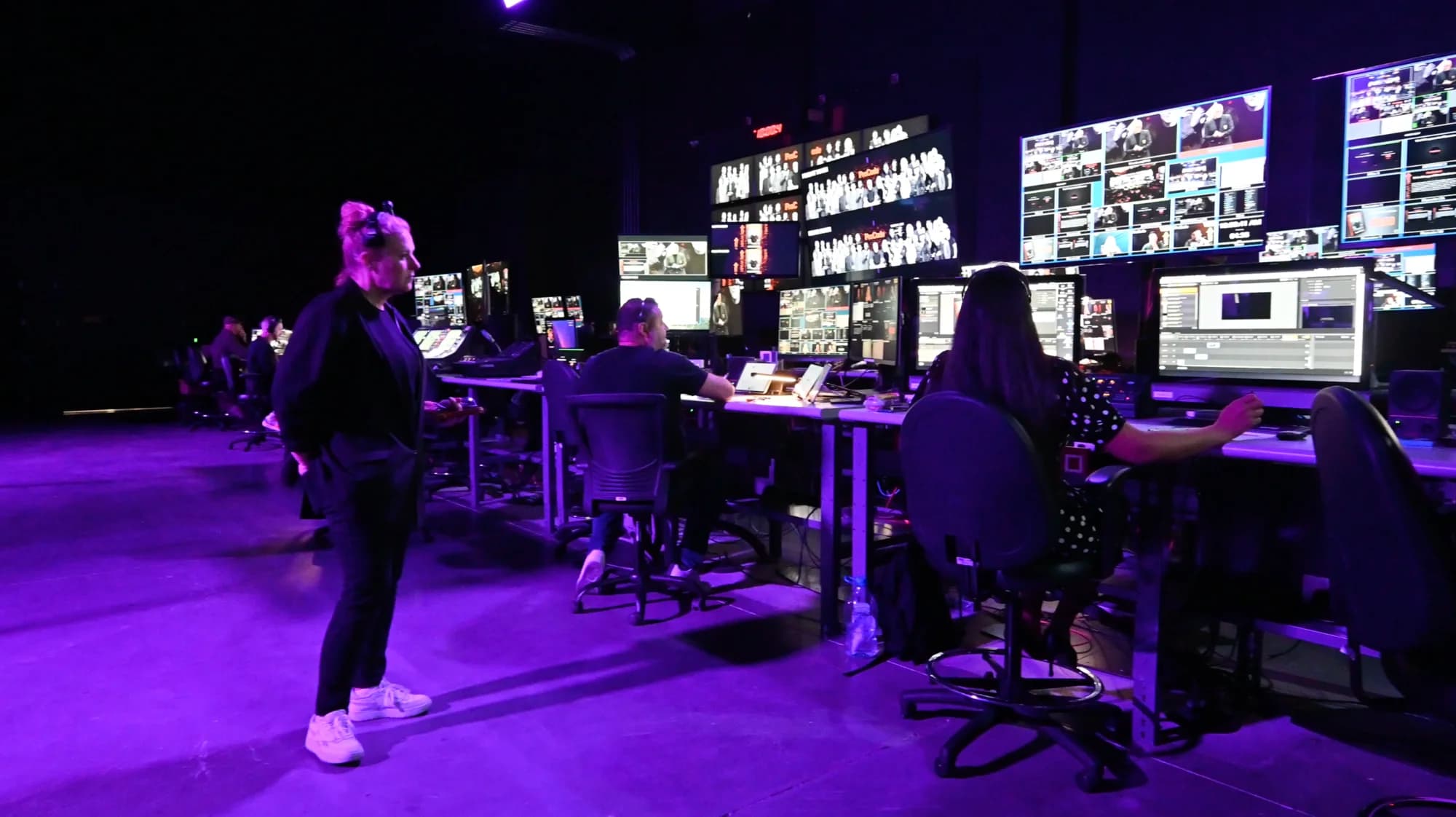
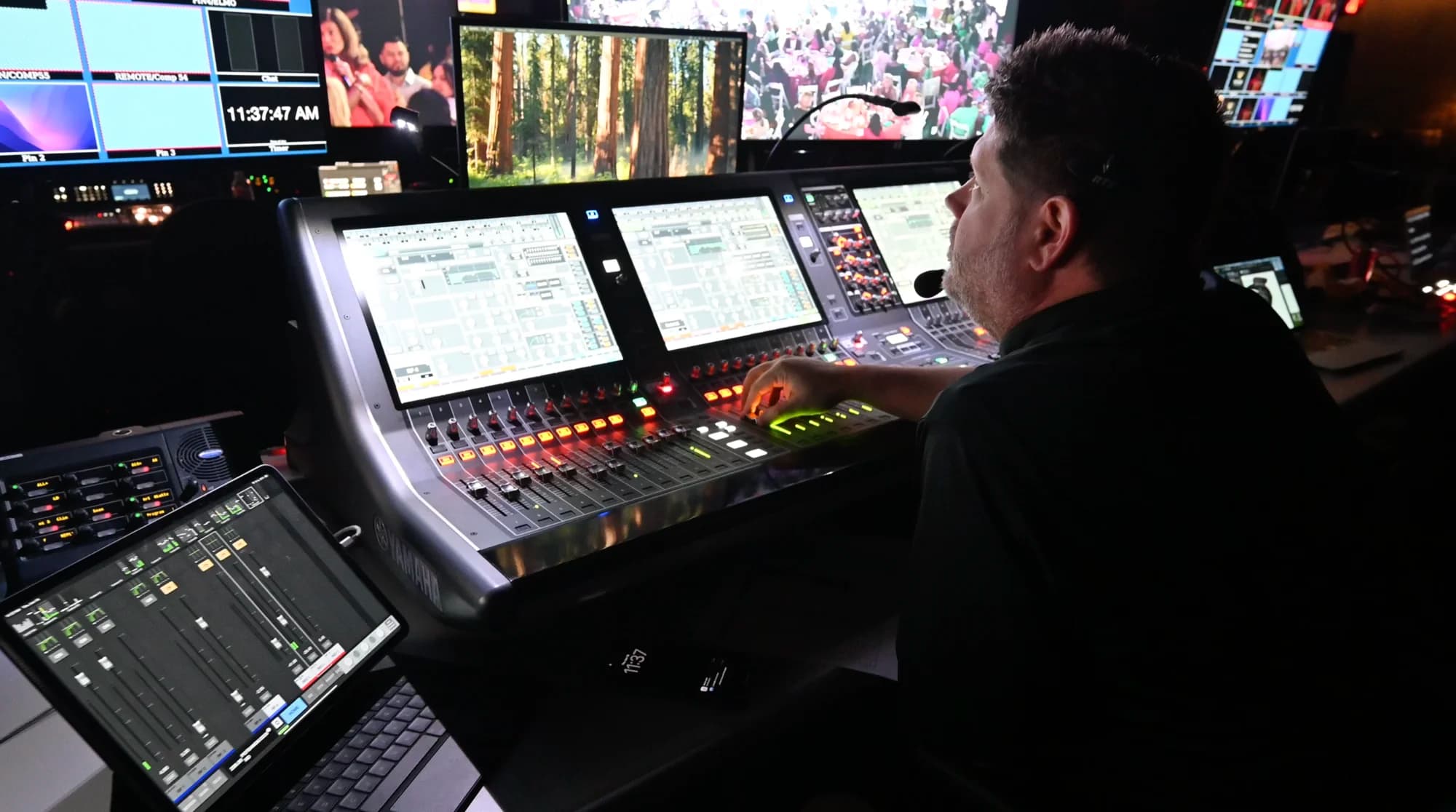
Environments are designed, built, and blended in advance on a custom-built system engineered for the room's 360° geometry — the wraparound surface runs as one continuous world rather than a set of coordinated screens. By event day, the creative decisions are made and loaded. Live operation is a producer with an iPad: cue a scene change, fire a reveal, swap the entire environment. No code, no render pause, no technician typing under pressure.
The design principle matters more than the gear. Live shows fail at their most complicated moment, so the studio's pipeline moves every complicated moment into pre-production — what remains during the broadcast is deliberately close to pressing a button.
What It Looks Like from the Audience
Rendered environments give a show a vocabulary that physical staging can't match on any budget:
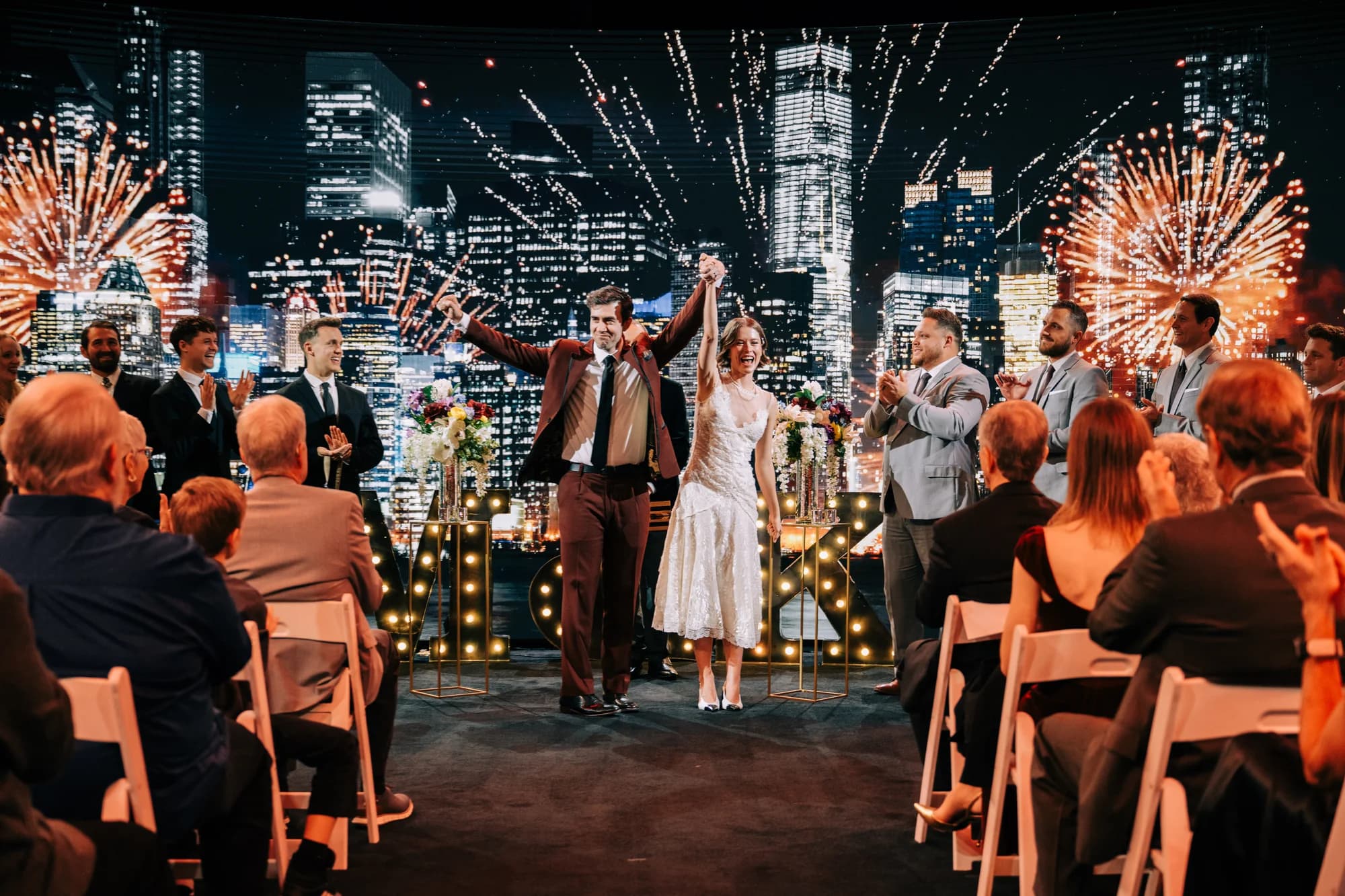
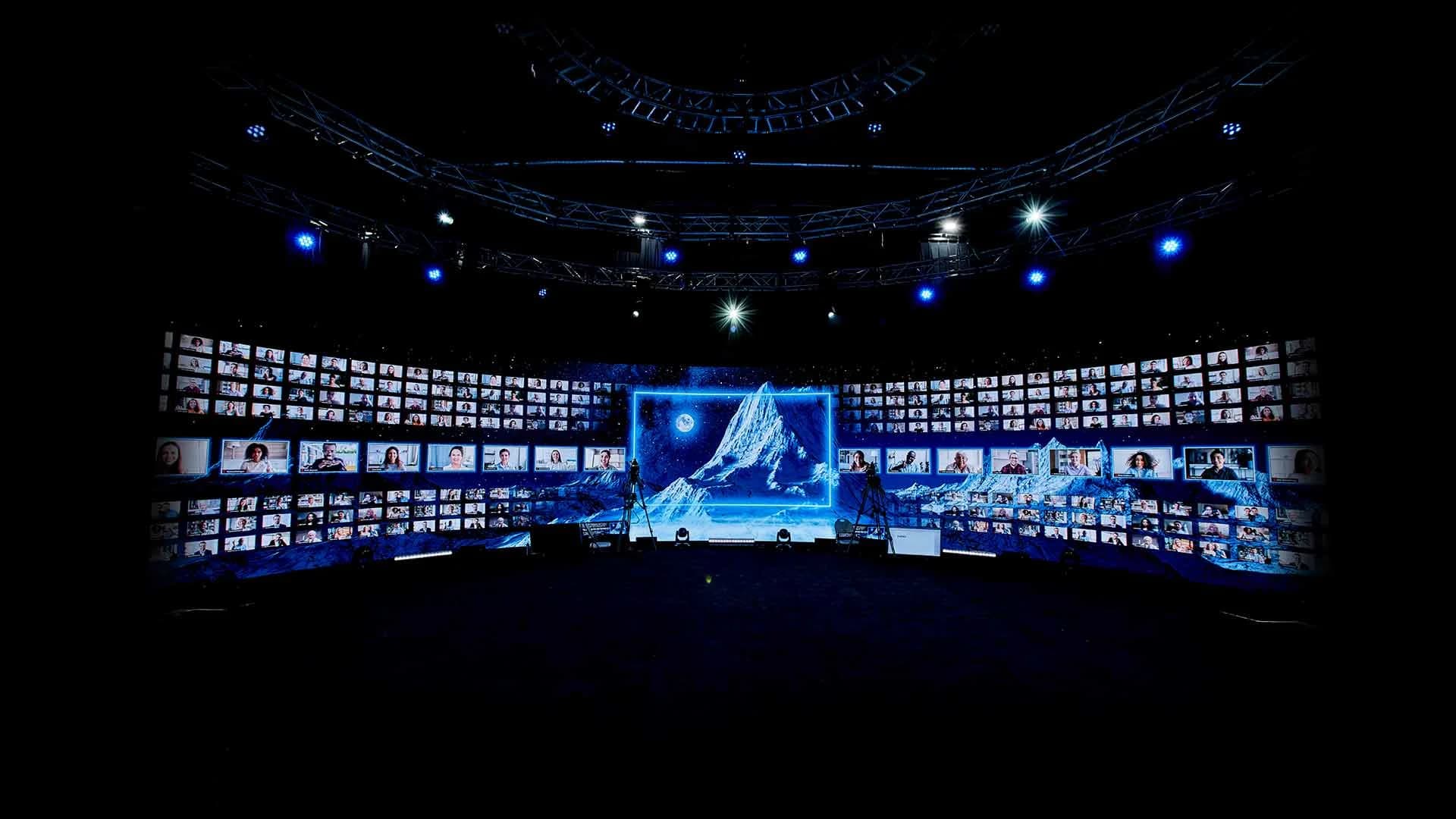
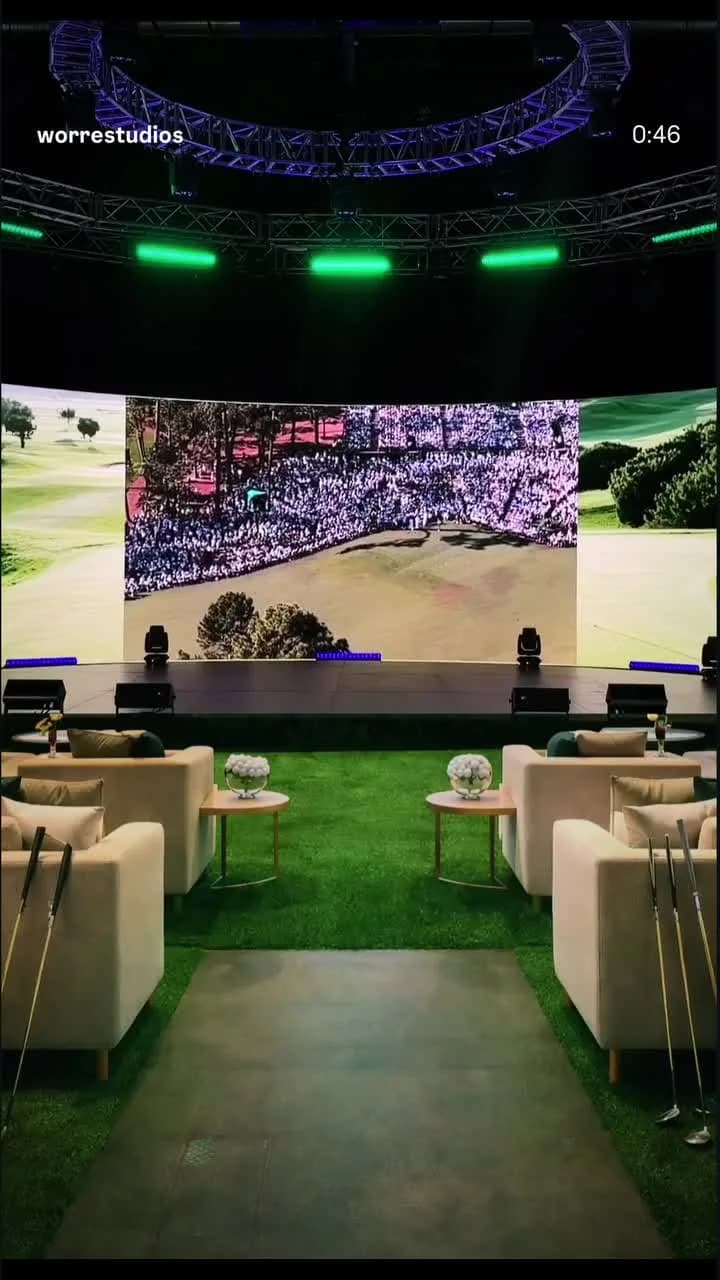
- Full world swaps. The keynote happens in a rendered auditorium; the product reveal happens somewhere else entirely — a city, a landscape, an abstract brand world — seconds later.
- Reveals as moments. A product, a logo, or an announcement built into the environment itself and detonated on cue, the "explode your logo" spectacle the wraparound surface was built for.
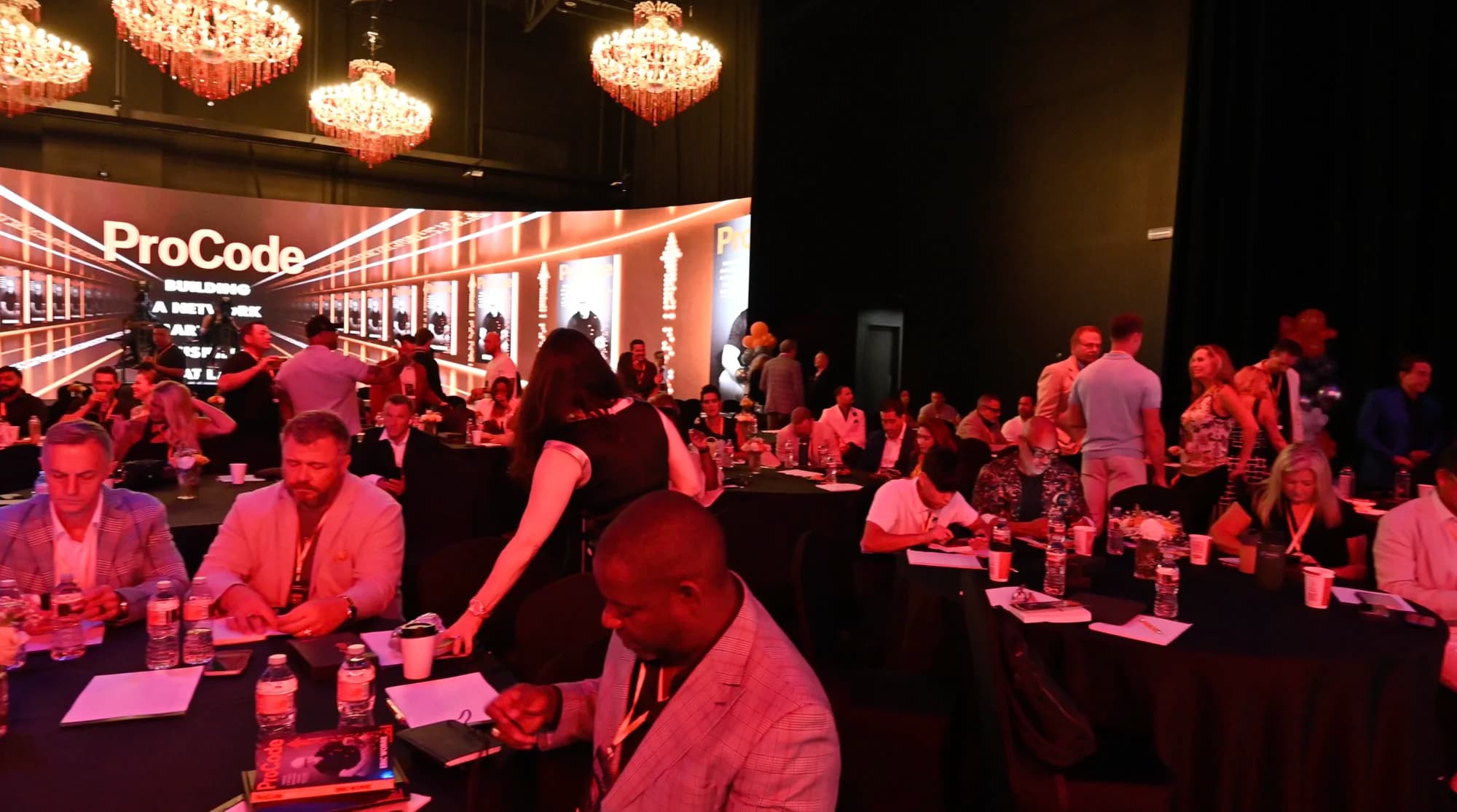
- Continuity across a long show. Multi-segment events can give every segment its own world — the studio has built as many as 8–10 distinct environments for a single production — without a stagehand touching anything.
And when the job is film rather than events, the same walls switch to green or blue for keying — the volume serves virtual production and VFX compositing as readily as it serves a broadcast.
The One Planning Fact That Matters Most
Custom Unreal environments are rendered by the studio's graphic-artist team, and fully custom worlds carry months of lead time. Real-time rendering makes the show instant; it doesn't make the build instant. Teams that bring their content ambitions to the first exploratory call get environments designed for their event's geometry and story. Teams that raise it a month out get a menu instead of a commission.
The rest of the technical picture — the LED system, control room, and broadcast infrastructure the engine feeds — lives on the Technology page. If the question behind your question is "what does this let our event do," start a studio inquiry and ask for the walkthrough; the room answers faster than the article.
Frequently Asked Questions
Rendering the environments on the studio's 360° LED volume in real time — rendered worlds that change during the show, driving scene changes, reveals, and full environment swaps as live production cues.
A producer, from an iPad. Environments are pre-built and blended on a custom-built system before event day, so live operation is triggering cues — no code and no rendering delays during the broadcast.
Content is scoped per project — the studio's graphic-artist team renders custom environments built for the room's 360° geometry, and outside creative collaborates through the production process. Raise it in the exploratory calls and the pipeline gets planned around your assets.
Fully custom Unreal worlds carry months of lead time. Scope content in your first planning conversations — the earlier the creative brief lands, the more the environment can be designed to the event rather than adapted to it.
The same engine family, yes — UE5 powers virtual production stages across film and television. The studio's walls also switch to green or blue for traditional keying, so the room supports VFX-driven film work alongside live events.

Written by the Worre Studios Content Team and reviewed by Ben Groen, Ticketing & Interactive Platform Lead. The pipeline described — UE5 environments on a custom-built system, iPad-triggered live operation, and in-house environment rendering — reflects the studio's installed production workflow. Full technical specifications live on the Technology page. Last reviewed July 5, 2026.
More from The Front Row
Give Your Event a World of Its Own.
Custom environments take months to build well — which means the best time to talk about yours is now. Bring the brand; we'll bring the engine.